



Welcome to Encyclopædia Iranica Foundation
The Encyclopaedia Iranica Foundation was established in 1990 with the mission to guarantee the Encyclopædia Iranica's intellectual independence and ensure its ongoing publication both in digital and print versions. Learn More
-

Cinema Iranica
Cinema Iranica provides historical articles on movies, genres, film movements, filmographies, directors, composers, stars, cinematographers ...
start exploring -

Women Poets Iranica
Women Poets Iranica is an integrative encyclopedia of postclassical, modern, and contemporary women poets.
start exploring
Encyclopædia Iranica
The Encyclopædia Iranica is a comprehensive research tool dedicated to the study of Iranian civilization in the Middle East, the Caucasus, Central Asia, and the Indian subcontinent.
Featured Articles
-
BAḠLĀN
The temple excavated at this site appeared to be a fire-temple of dynastic character, dedicated for the rulers of the Kushan dynasty. It was founded perhaps early in the reign of Kanishka, and restored in the year 31 of a different era, probably of Kanishka I’s own enthronement.
-
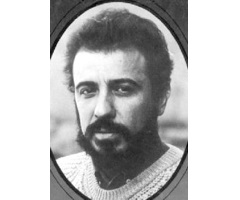
ḤĀTAMI, ʿALI
(b. Tehran, 1944; d. Tehran, 1996), Iranian scriptwriter and film director. For all his interest in dealing with the characters and incidents shaping the political and social history of the Qajar and Pahlavi periods, Ḥātami’s films are not particularly concerned with faithful representation and historical accuracy.
Encyclopædia Iranica
Published in English, Encyclopædia Iranica is a multi-volume, multi-disciplinary work designed to provide a detailed and accurate picture of an important world civilization over a span of several thousand years. It is the most extensive compendium ever conceived on the past and present culture of the Iranian peoples and their contribution to the broader history of human civilization.
The Encyclopædia Iranica Foundation, Inc. was established in 1990 as an independent not-for-profit 501(c)(3) public foundation registered in New York State. The Foundation’s main purpose is to promote the cause of Encyclopædia Iranica and to ensure its continuation as an independent scholarly databank.
The Foundation has established an endowment fund to support the Encyclopædia Iranica project, and funds the majority of its costs. The Foundation’s charter empowers it to carry out the Encyclopædia Iranica project independently.
Encyclopædia Iranica is a non-partisan, non-political, non-religious, non-ideological, and an entirely independent compilation of objective, documented, and reliable information that has drawn on the expertise of leading scholars world-wide at major universities and academies in North America, Europe and Asia.
Students, scholars, and all those eager to learn more about Iranian peoples and their culture will find the Encyclopædia Iranica an indispensable source of information. Those Iranians brought up abroad, interested in learning about their cultural heritage, will particularly benefit from this objective and unbiased resource.
News
Encyclopædia Iranica Foundation Announces Pathway Book Service As Its New Distribution Partner
Encyclopædia Iranica Foundation has partnered with Pathway Book Service to distribute its printed publications. (Continued)
University of Toronto and the Encyclopædia Iranica Foundation Announce Innovative Multiyear Partnership
Heralding a dynamic era for Iranian Studies, we are delighted to announce an innovative multiyear partnership between the University of Toronto and the Encyclopædia Iranica Foundation. (Continued)
Events
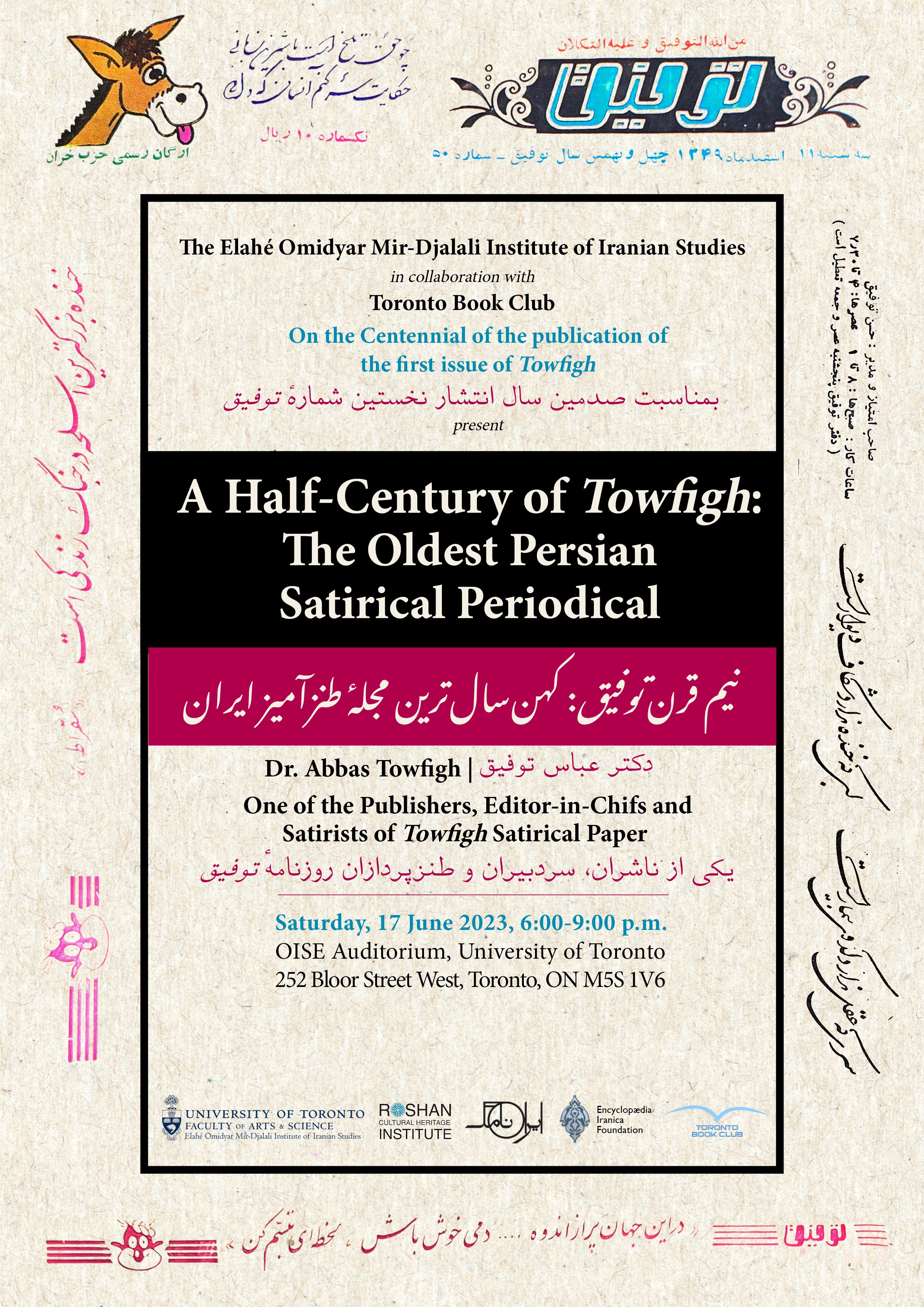
A Half-Century of Towfigh: The Oldest Persian Satirical Periodical