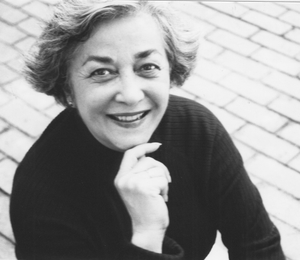
On July 3, 2026, Iranian and world literature lost an irreplaceable voice with the death of Shahrnush Parsipur, one of the most fiercely original and indomitable figures in modern Persian letters. Novelist, short-story writer, translator, essayist, and humanist, Parsipur died at eighty in a hospital outside San Francisco, following a heart attack. For the last thirty-two years, she lived in exile, far from the country whose language, history, wounds, and women had sustained her imagination. Her absence leaves an irreparable void in Persian letters and in the hearts of those who turned to her work for courage and consolation.
Shahrnush Parsipur was born in Tehran to Ali Parsipur, a judge and later a lawyer; and Fakhr al-Moluk Vala, an educated homemaker whose presence marked her early years. She began writing at thirteen; by her late teens, she had won fiction competitions and was publishing in local periodicals. Literary talent, for Parsipur, was not just a gift but an instinct for survival.
She married filmmaker Nasser Taghvai in 1967 (their son, Ali, was born before their separation in 1973) and studied sociology at the University of Tehran. Early works, stories, novellas, and her first novel, The Dog and the Long Winter (1976), already displayed the psychological risk and fable-like strangeness that would make her indispensable.
Censorship, imprisonment, and exile did not prevent Parsipur from transforming womanhood and feminine consciousness into a terrain of metaphysical inquiry and political revolt. She was jailed four times, more than any other Iranian woman writer of her generation and spent nearly five years in prison. In 1974, she resigned from National Iranian Radio and Television in protest over the execution of dissident poets, and soon after moved to France to study at the Sorbonne. Her intellectual restlessness, ranging from Taoism to modern physics, shaped her style, often described as magical realism, though it is better read as the fusion of speculation and social realism.
The 1979 revolution called her back to Iran, but soon after, she was arrested alongside her mother and two brothers. She spent nearly five years in prison without formal charge; a trauma recounted in her Prison Memoirs (Kissing the Sword), one of the starkest records of Iran’s prison literature. Even in prison, her will to write endured: she began the initial drafts of Touba and the Meaning of Night in Qezel Hesar prison, only to have them confiscated by the authorities. After her release, she tried to support herself by running a bookstore, resuming work on the novel, but again faced coercion: when summoned to the prosecutor’s office and asked to inform on her customers, she closed the bookstore within ten days rather than collaborate. These decisions were catastrophic on a personal level, but uniquely characteristic of her moral courage and rigor, rooted in a belief that literature must preserve a private jurisdiction that the state cannot enter.
When Touba and the Meaning of Night appeared in 1989, it became a defining event in post-revolutionary Persian literature, selling out within weeks and establishing Parsipur as an indispensable voice. The novel follows Touba, a 17-year-old woman, through the convulsions of twentieth-century Iran: child marriage, aristocratic power, patriarchy, religious longing, and guilt, and complicity. Touba’s house, always on the verge of cracking, becomes a figure for Iran itself: a dwelling of memory, dread, inheritance, and fracture. Parsipur’s method is neither documentary realism nor decorative magical realism, though it borrows from both. It is closer to visionary historiography: the rewriting of a nation’s history through a woman’s consciousness.
If Touba and the Meaning of Night made Parsipur famous, Women Without Men made her dangerous. Written in the 1970s but published in 1989, the novella is set against the political crisis of the 1950s, yet its true subject is women’s sovereignty over their bodies and desires. In spare, hallucinatory prose, Parsipur brings together five women –Mahdokht, Zarrinkolah, Faizeh, Munis, Farrokhlaqa – each fleeing a different form of confinement, seeking refuge in a garden near Tehran. The garden is a sanctuary, a utopia, a graveyard, and a laboratory; its fragile freedom reveals how persistent the old order remains, even outside its walls.
For this candor, Parsipur paid dearly. Women Without Men was banned in Iran and became an excuse for another imprisonment. She was detained, harassed, and pushed into silence, but the book itself defied the ban: it was translated into numerous languages and, in 2009, was adapted by Shirin Neshat into a film that won the Silver Lion at the Venice Film Festival. Through Neshat’s film, Parsipur’s protagonists and her sanctuary garden traveled farther than her censors and jailers could have imagined.
After Touba and Women Without Men, Parsipur continued to write, often under conditions that would have silenced a less obstinate mind. She completed Blue Logos, a philosophical novel shaped by her fascination with metaphysics and science, though its publication in Iran was obstructed. Later, she published works in the US and Sweden: Prison Memoirs, Shiva, On the Wings of the Wind, Tea Ceremony in the Presence of the Wolf, Heat in Year Zero, Asia Between Two Worlds, and A Little Spring. Her translations of Confucius, the Long March, the Salem witch trials, parapsychology, Lao Tzu, Amin Maalouf, and Wu Cheng’en revealed the breadth of her intellectual range. Few Iranian writers of her generation moved so restlessly between fiction, mythology, social critique, and speculative thought.
After her fourth imprisonment and the continued ban on her books, Parsipur left Iran for a year, traveling across the United States, Canada, and Europe to lecture. On returning to Iran, further encounters with the security forces, over mandatory hijab, her publications, and the very terms of her public existence, made clear that the country had left her little room to live as a writer. When she received an invitation to participate in an event in Germany, she did not hesitate. “I had to live elsewhere for a while, just so that I could breathe. I have never returned to Iran,” she later wrote in the final lines of her prison memoir.
From the mid-1990s, Parsipur lived in the United States, first as a political refugee and then a citizen. She traveled widely and became a towering figure of the Iranian diaspora’s literary and political conscience. She wrote essays for Persian-language publications in Iran, Canada, the US, and Europe, and was honored by Brown University, the Hellman-Hammett Award, Encyclopedia Iranica, the Premio Feronia, and a Nobel nomination in 2024. Such honors mattered but never compensated for the fact that one of Iran’s major novelists spent much of her mature life unable to publish freely in her homeland.
Parsipur’s legacy endures because her protagonists are rarely simple heroines. They are contradictory, damaged, funny, frightened, visionary, complicit, brave. They want love and solitude, chastity and sex, learning and revenge, transcendence and, sometimes, simply a room in which no one is authorized to interpret them. In giving them that complexity, Parsipur expanded the moral and imaginative realm of Persian fiction. She also changed the scale on which the Iranian woman could appear in the novel. Before Parsipur, women had been present as beloveds, mothers, symbols, rebels, allegories of nation or modernity. In her work, they became centers of consciousness through which history itself had to be refashioned and reread. The private was not only political but also archival: a woman’s fear, a widow’s fantasy, a prisoner’s destroyed notebooks, a body turning into a tree, not as isolated experiences but as the buried grammar of a century.
To read Parsipur is to encounter a writer who never mistook survival for submission. She wrote through censorship, incarceration, exile, illness, poverty, and the relentless confiscation of her voice. Her subject was nothing less than the struggle to become human in a world determined to keep women symbolic rather than free. That she transformed these conditions into works of such strangeness, wit, and philosophical daring is the measure of her extraordinary achievement.
In her final months, Parsipur watched her homeland engulfed by internal oppression and bombardment. She stood firmly with her people and against the war, insisting that freedom and independence for Iranians could only be achieved on their own will. Her unwavering moral courage to the end of her life was a rare testament to her devotion to Iran.
Parsipur is gone, but her women remain: walking toward gardens, burning manuscripts, cracking houses, becoming trees, returning from death, and asking what freedom might mean when even the soul has learned to obey. They will go on troubling the sleep of tyrants and consoling those who understand that, at its highest pitch, literature is not merely a witness to suffering, but a force of transformation.
Fatemeh Shams