
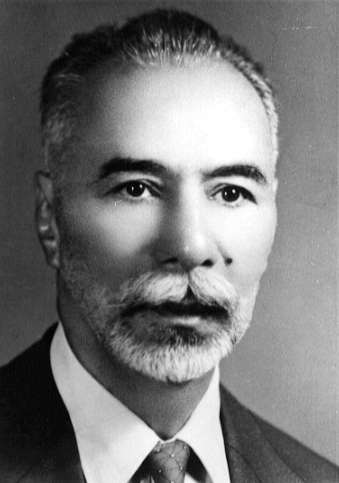



iii. Music
It was from his very childhood that Nūr-ʿAlī Elāhī began playing the tanbūr, the lute that traditionally accompanies the devotional songs (ḏekr; q.v.) and dances of the Ahl-e Ḥaqq and is considered sacred by them. Acknowledged as a virtuoso on the tanbūr by nine, he demonstrated an uncommon creativity which was expressed through the development of a new musical technique involving five fingers of both hands (rather than the customary 3 or 4 fingers), the enhancing of the aesthetic aspect through numerous rhythmic and gestural patterns, and the considerable development of ornamentation. He also modified the sound and expressive possibilities of the tanbūr by doubling the first string. Another of Elāhī’s achievements was his ability to transcend a musical tradition with a limited and scattered repertoire and raise it to the level of a classical art. He established a repertoire of approximately seventy-five melodic types and modes (called dastgāh) which provide the support for his improvisation, in addition to approximately a hundred brief melodies or sacred hymns (sarband) which he interpreted in his own ornamental style. The repertoire includes old sacred melodies as well as profane melodies from the stock of Kurdish folk music. In every instance they are original or personal versions arranged, developed, or recomposed by him in the spirit of a sacred art. Among melodies that are not found, or no longer found, in the traditional repertoires, sacred or profane, it is probable that a certain number were personal compositions. The inventory that he left includes the following tunes, categorized into four genres.
Mystical (ʿerfānī) tune. Šayḵ-amīrī (17 forms), Bābā-faqīhī, Šāh-ḵošīnī, Kākā-redāʾī, Bābā-sarhangī, Bābā-nāʾusī, ʿĀbedīnī, Yādgārī, Sayyed-moḥammadī
Traditional tunes. Bālā-dastān, Zīr-dastān, Šāh-ḥosaynī, Šowāna šowāna, Do balā, Karīm-ḵānī, Bārīa bārīa (or Bārgā bārgā), Šīrīn mayā ḵāl, Ḵoršīd-e ḵāvar, Saḥarī-e Sayyed Ḵāmūš, Ḡarīb hāy ḡarīb (or Ḡarībī), Ṣanam hāy ṣanam, Tārī tārī, Gel wa dara, Qaṭār, Mollā-moṣṭafāʾī, Naftīya, Hejrānī, Darvīš Allāh-waysī, ʿAbd-al-bāqī Khan, Kūča-bāḡī, Lāva lāva, Sārū-ḵānī, Ṭarz-e maʿmūlī, Haft ḵān-e Rostam, Ṭarz-e Arkavāzī, Ṭarz-e mūya, Ṭarz-e jaʿfarī, Ṭarz-e Ḵān Bābā Ḵān, Ṭarz-e Ā-Sayyed Berāka, Ṭarz-e Ā-Teymūr, Zamzama-ye ṭarz, Nakīsā o Bārbad, Šīn-e ṭarz, Forūd-e ṭarz, Šīrīn o Farhād, Rāz o nīāz, Sūz o godāz, Yār mobārak bād, Bādā bādā.
Dances (bāzī). Šān-jonbānak, Farangī, Jelow-šāhī, Jangārā, Savār savār, Saḥarī, Gol o ḵār, Pā kotakī, Šīrīna Leylāna, Amāna o yār, Fatā pāshā-ye gūrān, Fatā pāshā-ye kermānšāhī, Harātī, Čapī, Larzāna, Samā, Sangelī samā, Qara-čūpī, Ḵān-amīrī, Gardūna (or Geryān), Sejārān, Halpareka.
Outside mystical circles, many people, including renowned musicians such as Ruḥ-Allāh Ḵāleqī (I, p. 145) and Mūsā Maʿrūfī (p. 14) have attested to the originality of his music as well as its exceptional intensity and impact on the listener.
Elāhī did not play outside a devotional context and his musical performance had all the meditative, emotional, and kinetic characteristics of a ḏekr (ḵafī andjalī) and a samāʿ. Many of his musical sessions have been recorded by his relatives, some extracts of which have been published on compact disks (La musique céleste d’Ostād Elāhi, 2 vols. Le Chant du Monde, Paris, 1995; Iran. La musique céleste d’Ostād Elāhi, Le Chant du Monde, Paris, 1996).
For a music sample, see Nakisā va Bārbad.
For a music sample, see Šeyḵ Amiri Suite.
Bibliography
J. During, Musique et mystique dans les traditions de l’Iran, Paris, IFRI-Peeters, 1991.
Idem, “Les dastgāhs sacrés des Ahl-e haqq du Kurdistan. Approche comparative et procédés de transformation” in J. Elsner and G. Jähnichen, eds., Regionale maqām-Traditionen in Geschichte und Gegenwart, Berlin, 1992.
R. Ḵāleqī, Sargoḏašt-e mūsīqī-e īrānī, 2 vols., Tehran, 1333 Š./1954.
M. Mokri, “La musique sacrée des Kurdes ‘Fidèles de Vérité’ en Iran,” in Encyclopédie des musiques sacrées, Paris, 1968, pp. 441-53.
M. Maʿrūfī, “Dar bāra-ye mūsīqī wa mūsīqīdān,” Majalla-ye mūsīqī-e Īrān, no. 97, 1339 Š./1960, p. 14.