



i. Life
Nimā Yušij was the eldest son of Ebrāhim Khan Nuri, a wealthy landowner of Yuš engaged in farming and cattle breeding, and Ṭubā Meftāḥ, of Georgian origin (for an autobiographical account presented by Nimā, see Noḵostin kongra-ye nevisandegān-e Irān, pp. 62-65; see also Āryanpur, 1972, II, p. 466; idem, 1995, p. 579).

Figure 1. Nimā Yušij at his home in Tehran. Photograph by Bahman Moḥaṣṣeṣ (public domain).
Nimā spent his early days in the idyllic surroundings of his birthplace, to which he remained attached for the rest of his life (see Ṭāhbāz, 1963; Āryanpur, 1972, II, p. 466). There he learned how to read and write from the village cleric. His family left Yuš when Nimā was twelve years old and settled in Tehran (Jannati ʿAṭāʾi, 1955a, p. 18). He and his younger brother were educated at the Marvi Primary School and then both enrolled at St. Louis, the French Catholic Mission school (Kiāni Haftlang, p. 47; see FRANCE xv. French Schools in Persia). He graduated on 15 June 1917. At St. Louis, he was a classmate of the future poet and scholar, Ḥosayn Pežmān Baḵtiāri (Etteḥād, p. 237). St. Louis “formed the backdrop for a crucial stage in his intellectual growth” (Karimi-Hakkak, 2004, p. 24).
Shortly after graduation, Nimā was employed as a minor clerk in the archives division of the Ministry of Finance (Wezārat-e dārāʾi), where he worked intermittently for eight years, “in stinking rooms where the air itself felt imprisoned” (Ṭāhbāz, 1996b, p. 72). He was drawn to the Jangali Movement (q.v.) in Gilān, but that romantic urge was shelved with the tragic death of Mirzā Kuček Khan in 1921 and the dissipation of the movement.
In 1921, Nimā published, at his own expense, “Qeṣṣa-ye rang-e parida, ḵun-e sard,” a long autobiographical narrative poem. It coincided with the appearance of Yeki bud, yeki nabud (q.v.; Berlin, 1921) by Mohammad-Ali Jamalzadeh, (Moḥammad-ʿAli Jamālzāda, q.v.), a harbinger of modern Persian fiction, and Jaʿfar Ḵān az farang āmada (q.v.; Tehran, 1922) by Ḥasan Moqaddam, the first modern play published in Iran. Nimā’s poem was a traditional maṯnawi (rhymed couplets), written in a clear and lucid style. It was followed by the first part of “Afsāna,” a dramatic poem in which the essentials of “Qeṣṣa-ye rang-e parida” are readdressed in allusions and poetic ambiguities (see below). The poem was published in three consecutive issues of Qarn-e bistom (Esfand 1301/Feb.-March 1922; Eslāmiya, pp. 47-48), a weekly journal founded by Moḥammad-Reżā Mirzāda ʿEšqi (q.v.) in 1921, and is generally regarded as a unique contribution to the modernization of Persian poetry and its liberation from the systemic constraints of classical prosody (see ʿARUŻ). It was dedicated to Neẓām Wafā (1888-1964), a noted poet of the time who was Nimā’s teacher at St. Louis school and nurtured his poetic talent (Āryanpur, 1972, II, p. 467).
“Ey šab” (O night), a noted mosammaṭ (see STANZAIC POETRY) by Nimā, and arguably one of his most romanticized poems (Jaʿfari, p. 237), was published in 1923 in Now Bahār, a journal founded by Moḥammad-Taqi Malek-al-Šoʿarāʾ Bahār (q.v.; Ṣadr Hāšemi, IV, pp. 311-16). The dramatized opposition of day and night in the poem evokes “Yād ār ze šamʿ-e morda yād ār,” a celebrated eulogy by ʿAli-Akbar Dehḵodā (q.v.) for Mirzā Jahāngir Khan Širāzi (d. 1908), the editor of Ṣur-e Esrāfil (see CONSTITUTIONAL REVOLUTION vi. The Press). The poem was emulated frequently by an impressively wide swathe of poets, making it an essential installment in the history of modern Persian poetry (Ḵānlari, 1988, p. 263; Āryanpur, 1972, II, p. 468; Klyashtorina, Critical Perspectives, p. 388; Āryanpur, 1972, pp. 470-71):
Hān ey šab-e šum-e waḥšatangiz ,
Tā čand zani be jānam ātaš;
Yā čašm-e marā ze jāy barkan,
Yā parda ze ru-ye ḵod foru kaš;
Yā bāzgoḏār tā bemiram,
Kaz didan-e ruzgār siram.
(Majmuʿa-ye āṯār-e Nimā , ed. Ṭāhbāz, pp. 36-37)
O inauspicious night, the cause of terror,
How long wilt thou scorch my soul?
Either wrench/pull out my eyes,
Or throw off the veil from your face;
Or leave me alone and let me die,
For I am weary of contemplating the world.
On 27 April 1926, Nimā married his maternal cousin ʿĀlia Jahāngir, a schoolteacher and niece of Mirzā Jahāngir Khan Širāzi; their only son, Šerāgim, was born in 1943. The couple moved to Māzandarān in 1928 and subsequently took up teaching positions at small schools in other towns in northern Iran. The diary that he kept in those years, “reveal some of his earliest habits as he works through analogies and metaphors to express the range of his feelings” (Karimi-Hakkak, 2004, p. 41). In one entry, he likens the city of Āstāra (q.v.) in Gilān to an infirmary for wounded soldiers. A cold winter and unheated classrooms gave the dejected Nimāan occasion to vent his anger at the headmaster. The squabble escalated, and Nimā was forced to leave Āstārā in the dead of winter. The journey to Rasht (q.v.) during the exceptionally harsh winter lasted eight long days. He returned to Tehran with his wife in 1933 (Āryanpur, 1995, pp. 597-98), and shortly thereafter he traveled to Yuš, where, in the solitude of the nights of December 1934, he composed Qalʿa-ye Saqrim, a long narrative maṯnawi evocative of the story of the “Black Dome” from Nezami’s Haft peykar, and dedicated it to the memory of his friend, Jahāngir Sartip-pur.
Nima was employed in 1936 as a full-time teacher of literature at the German-Iranian Vocational School (Madr a sa-ye ṣanʿati-e Irān o Ālmān), but this job too was short-lived (Ḵāmaʾi, p. 14). In 1938, he was offered a position in the Music Department of the Ministry of Education (Edāra-ye musiqi-e kešvar). The founding of Majalla-ye musiqi in 1939 by Ḡolām-Ḥosayn Minbāšiān (q.v.) presented a fortuitous opportunity for Nimā to rub shoulders with some of Iran’s most prominent artists and intellectuals, including Sadeq Hedayat (q.v.), ʿAbd-al-Ḥosayn Nušin, and Moḥammad-Żiāʾ Haštrudi. Haštrudi had anthologized Nimā’s poems in his Montaḵabāt-e āṯār… (1924), alongside poems by Bahār, Dehḵodā, and Adib-al-Mamālek Farāhāni (q.v). For the first time in his life, Nimā was engaged in a vocation of his liking, and his literary career flourished as a result. His essay “Arzeš-e eḥsāsāt dar zendagāni-e honarpišagān” was first serialized in Majalla-ye musiqi (Dey 1318-Āḏar 1319/December 1939-November 1940), and later published as a monograph in 1956. Fifteen of his poems, including his celebrated “Qoqnus,” were also published in various issues of the magazine. The publications stirred the ire of traditionalists who dismissed them as ill-constructed prose (Żiāʾi, p. 155; Abbas Milani, p. 901), and, at the same time, laid the foundation for Nimā’s poetic fame (Āl-e Aḥmad, 1978, pp. 22-25).
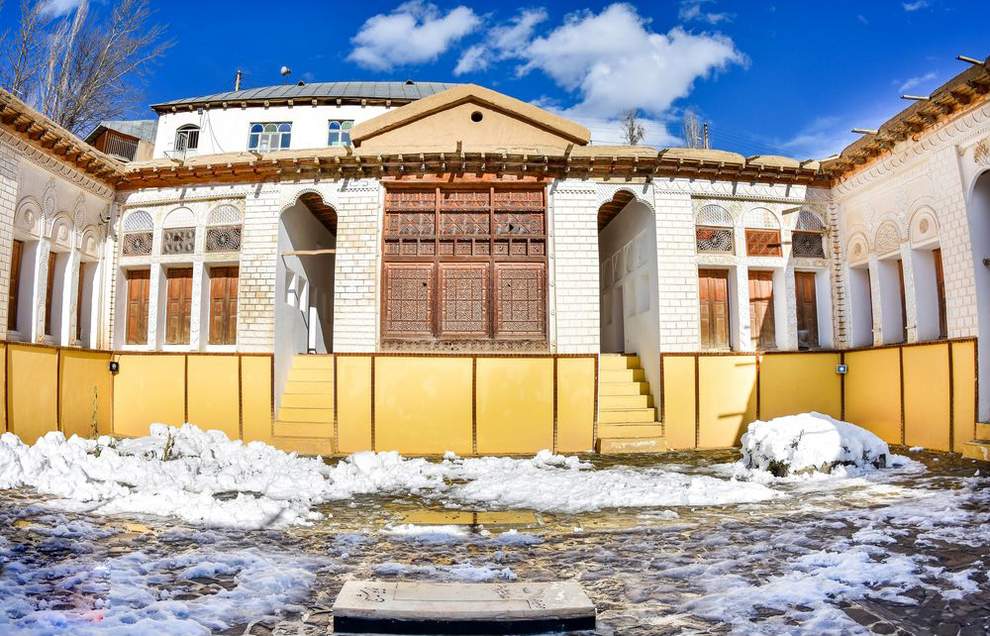
Figure 2. Grave of Nimā Yušij in the courtyard of the family home in Yuš, between that of his sister, Bahjat-al-Zamān, and his close friend, Sirus Ṭāhbāz. Photograph © Bahar News (use permitted with citation of the source, cdn.baharnews.ir/images/docs/000193/n00193434-t.jpg).
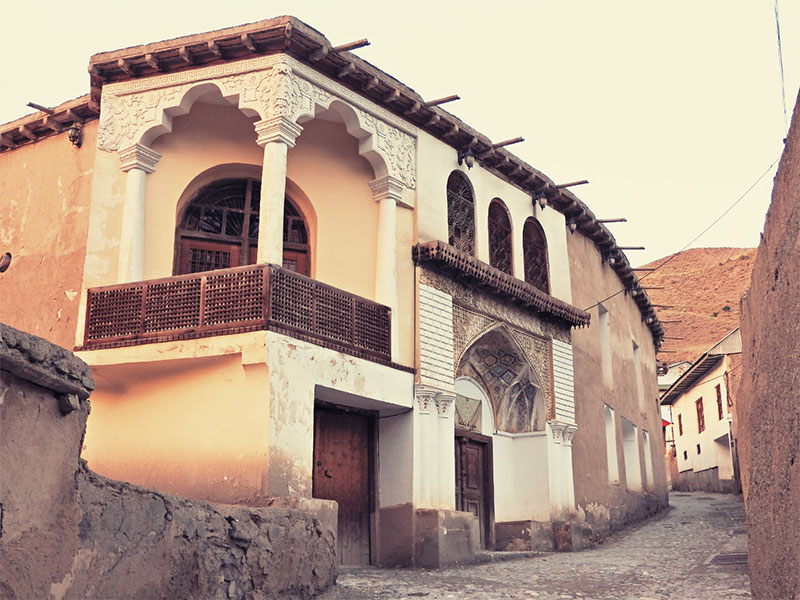
Figure 3. The Nimā Yušij home and museum in Yuš. Photograph © Fardanews (use permitted with citation of the source, www.fardanews.com/fa/amp/news-586555).
The Allied occupation of Iran and Reżā Shah’s subsequent abdication in 1941 were followed by a rare and brief interlude of free expression in the country. Left-leaning prisoners of conscience were released, the Tudeh (Tuda) party was founded, and literary and intellectual activity blossomed. Nimā worked with newspapers and periodicals affiliated with the Tudeh party, including Rahbar, edited by Anwar Ḵāmaʾi, and Nāma-ye mardom, edited by Jalāl Āl-e Aḥmad (q.v.) and Eḥsān Ṭabari (see COMMUNISM ii and iii). That collaboration was motivated, at least partially, by the opportunity to connect with readers rather than a serious commitment to communist politics. That said, “Nāqus,” a poem he composed in 1944, is a thinly veiled commentary on Iran’s political condition and reflective of a loose affinity with ideals espoused by the Tudeh party.
Bārid ḵᵛāhad az dam-e in abr-e por-kešeš,
(Kaz āhhā-ye mā’st);
Bārān-e rowšani,
Mānanda-ye tagarg….;
Wa kešthā-ye suḵta ān ruz,
Ḵᵛāhad šodan čonān
Bidār golsetān.
(“Nāqus,” in Nāqus, Tehran, 1967, pp. 9-30)
Rain shall pour from this mighty cloud,
(Built of our sighs);
A clear rain,
Like a hail…,
And the burnt harvest that day,
Shall awaken,
As a flower garden.
(tr. Ghanoonparvar, 1984, pp. 42-43)
The progressive streak in his character that attracted Nimā to the Tudeh party was lost ultimately to his innate pessimism, just as the attractions of urban life never diminished his desire to return to the idyllic surroundings of his home village. He spent his days in Tehran in a small, damp room that seldom saw the sun, yearning to return to the simple life in Yuš (Nimā, 1984, p. 338). The aesthetics of rural life, so often overlooked by ideologically committed authors and poets of the period, are extolled in many of his poems and letters.
Extensive infighting and discord among the Tudeh party’s leadership culminated in 1947 in the resignation of several prominent politicians and literary figures, including Jalāl Āl-e Aḥmad, Rasul Parvizi, and Nāder Nāderpur.Nimā, however, maintained his ties with the Tudeh party for several more years, addressing social concerns through his lexical, rhetorical, and symbolic manipulations of language. He published extensively in the party’s journals and periodicals, and was praised by Eḥsān Ṭabari, a leading figure of the party, as the founder of a new poetic style in Iran (Ṭabari, p. 2).
The Tudeh party was decimated in the aftermath of the Coup d’État of 1953 (q.v.). Sympathizers, as well as intellectuals in its orbit, were viewed with suspicion, and a good number, including Nimā were arrested (Āl-e Aḥmad,1965, p. 42). Nimā’s brief imprisonment triggered a gradual disavowal of his previous aspirations, to the point where he regarded party leaders as political fools and cultural philistines, and he denounced them as liars with the blood of the people on their hands (Āraš, no. 2, 1340 Š./1961, p. 58; Ṭāhbāz and Lāhuti, p. 62).
The rest of Nimā’s life was spent in relative seclusion. He shuttled back and forth between Yuš and Tehran, taking refuge in the memories of bygone days. His last poem, “Šab hama šab,” dated November 1958, exemplifies his outlook on life, and once again, his insatiable urge to manipulate the rhymes and rhythms of classical prosody. In the margins he wrote: “I have deliberately composed this poem in two meters.”
Šab hama šab šekasta ḵᵛāb be čašmam,
Guš bar zang-e kārvānastam….;
In manam mānda be zendān-e šab-e tira ke bāz,
Šab hama šab,
Guš bar zang-e kārvānastam.
(Majmuʿa-ye āṯār-e Nimā Yušij, ed., Ṭāhbāz, p. 633)
Night, all night, with broken-slumber eyes,
I listen for the caravan’s chime…;
Prisoner to this dark night again I remain, as
Night, all night,
I listen for the caravan’s chime.
Breaking with his routine of summer visits, Nimā made his last trip to Yuš in the winter of 1959. Pneumonia forced him to return on mule back to Tehran, where he died a few days later. Contrary to instructions set forth in his will that he be interred in Yuš, he was buried initially in Tehran, but in 1993 his son, Šerāgim, reinterred the body at the family home as Nimā had wished (https://amordadnews.com/36707/; Figure 2). His residence in Yuš was converted into a museum in 1996 (Gol-Moḥammadi, p. 24; Figure 3).