




KREFTER, FRIEDRICH ANTON PHILIPP (b. 15 October 1898, Emden; d. 25 January, 1995, Bad Honnef; Figure 1). The German architect Friedrich Krefter was one of the leading scholars on Persepolis. From his participation in the excavations 1931 to 1935 and his rebuilding of the so-called Harem to his reconstruction drawings and models in the 1970s he presented lasting contributions to our knowledge about the Achaemenid capital.
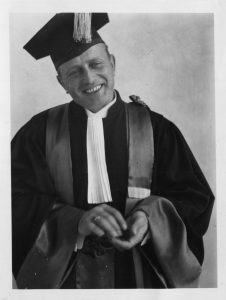
Figure 1. Krefter in Tehran during his appointment as professor, March 21, 1936. Photograph courtesy of Heiko Krefter.
Having finished high school at the Schillergymnasium Münster in 1917, Friedrich Krefter was drafted for service in World War I. From 1919 to 1922 he studied architecture in Hannover and Braunschweig. He travelled extensively in Italy and worked for several architects. In 1925 he joined the Berlin architectural bureau of Carl Theodor Brodführer (1884-1960), brother-in-law of Ernst Herzfeld. On Brodführer’s recommendation Krefter started to work for the latter in February 1925 and calculated the measurements Herzfeld had taken during his stays in Pasargadae and Persepolis in 1923-24 (Krefter, 1979, p. 13). Working together on maps for these sites Krefter became Herzfeld’s closest collaborator. Accordingly, Herzfeld asked Krefter to accompany him to Pasargadae, for the first archaeological excavations in Persia after the abolition of the French monopoly. From March to September 1928 Krefter worked for Herzfeld. He recorded architecture and finds in plans and sketches at Pasargadae and helped to document inscriptions and reliefs in Naqš-e Rostam and Persepolis. Back in Germany he became chief architect for Brodführer again, designing, for example, a sanitarium/spa at Bad Pyrmont, a home for the elderly in Berlin, and several private houses.
In 1931 Krefter returned to Persia to work with Herzfeld in Persepolis. Since 1923 Herzfeld had tried to excavate in Persepolis which until 1928 was impossible because of the French monopoly and afterwards difficult as he could not find the financial resources in Germany (Mousavi, pp. 156-65). When he finally started his excavations with the help and in the name of the Oriental Institute of the University of Chicago, his first choice for a collaborator was Krefter. From March 1931 to the end of 1934 both worked together during the excavation of Persepolis. One of Krefter’s first tasks was the excavation and reconstruction of the so-called Harem, which since its completion in December 1931 served as living and work quarter for the team as well as guesthouse for visitors. Much of the excavation’s documentation until 1935, especially drawings of the architecture, was prepared by Krefter who also acted as deputy during Herzfeld’s absences.
Despite their seemingly good cooperation and the high esteem in which both men held each other, numerous letters preserved in the Archives of the German Ministry of Foreign Affairs in Berlin and the Oriental Institute Chicago show that in 1934 their relation became increasingly untenable. While Krefter still admired Herzfeld deeply, he felt mistreated by him. In a letter to James Breasted (1865-1935), director of the Oriental Institute, which he sent in copy to Herzfeld and the German ambassador to Iran, Wipert von Blücher (1883-1963), Krefter announces his decision to leave. In a letter to Herzfeld (26 June 1934) Krefter recounts that when hiring him for Persepolis Herzfeld had promised him the chance to work on the architecture of Persepolis as a Ph.D. dissertation, but now kept everything for himself. Krefter also accused Herzfeld of jealousy, because it was him who had found Darius I foundation tablets at a spot where Herzfeld did not want to excavate, because he thought it an unfinished hole for the sewer and not the place for a deposit (Politisches Archiv des Auswärtigen Amtes, Teheran, Pkt. 26 Herzfeld vol. 3). In his reply of 29 June 1934 Herzfeld refuted both allegations and told Krefter that he would leave Persepolis anyway, but that Krefter had destroyed the necessary trust between him and Breasted (ibidem). With difficulties about the continuation of work at Persepolis mounting, Krefter was urged by Breasted and von Blücher to stay on. After Herzfeld had left Persepolis in November 1934, Krefter took over responsibility until Erich Schmidt (1897-1964), the newly appointed director, arrived in May 1935. Considering the severe discord Krefter’s continued loyalty not only towards the project, but also to Herzfeld is most remarkable. In his publications he always quotes Herzfeld in highest respect and his recollections of their joint work are full of praise (Krefter, 1979).
In May 1935 Krefter was appointed professor of History of Architecture at the newly founded University of Tehran (cf. Figure 1, Krefter as professor at Tehran 21 March 1936) by its founding rector and minister of education, ʿAli Aṣḡar Hekmat. Krefter returned to Germany in 1937, expecting or at least hoping for a professorship at the Technical University Berlin-Charlottenburg, which failed. In a curriculum vitae written in 1950 he ascribes this to his refusal to join the National Socialist German Workers’ Party, known as the Nazi Party. Instead, he became lecturer at the “Staatsbauschule” in Berlin-Neukölln, a precursor of the “Beuth Hochschule für Technik Berlin” (University of Applied Sciences).
In May 1940 he was drafted to the army and returned in June 1946, after more than a year as prisoner of war, to his wife Maria, whom he had married in 1941. He moved to Rhöndorf near Bonn into the house which he had designed for his parents in 1928, and where he was a friendly neighbor of Konrad Adenauer (chancellor of Germany 1949–1963). Krefter opened an architecture firm and designed a number of private homes and hotels in the region. In 1953 he decided to return to his professorship in Berlin, but due to the political situation he opted for early retirement at the end of March 1961 and left for Rhöndorf again.
A year later Heinz Luschey, head of the recently-founded Tehran branch of the Deutsches Archäologisches Institut (also see Germany ii. Archeological excavations and studies) asked Krefter on the occasion of the exhibition “7000 Years of Art in Iran” at Villa Hügel in Essen, whether he would be willing to create reconstruction drawings of Persepolis (Krefter, 1969). For Krefter this was a unique chance to return to the subject of his life. In April 1963 he started to work on his magnus opus “Persepolis-Rekonstruktionen”. Preparation of the book was interrupted as well as facilitated by the commission of the German government to create a model of Persepolis in the scale of 1:200, which the Federal Republic presented to Moḥammad Reza Shah Pahlavi (r. 1941-1979) on the occasion of his coronation celebrations in 26 October 1967 (on the model which he built together with his wife, cf. Krefter, 1969). His book was finally published in 1971. Combining Herzfeld’s and his observations with the detailed plans provided by Erich Schmidt (1953/1957) and André Godard’s later excavations Krefter painstakingly discusses stone working techniques and architectural details. At the core of the book are numerous meticulous reconstruction drawings, which allowed unprecedented insights into the grandeur of the palatial building complexes of Persepolis. It still forms the basis of modern virtual reconstructions. On the other hand, Krefter revived Herzfeld’s idea of a unified planning by Darius I. In his view the whole complex was mainly built as site for the Nowruz festival.
The model, which was on show at the Irān Bāstān Museum at Tehran, and his book finally brought Krefter, who had been nearly forgotten in the field, the late recognition as scholar he deserved. In addition, Oscar White Muscarella in his review (p. 425) not only praises the clear and scholarly explanations, but also acknowledges Krefter’s unusual “respect for the work of his colleagues and predecessors” and the book’s “humanistic qualities [which] should set an example for others to follow.” In 1974 Krefter was awarded the Großer Verdienstorden (The Order of Merit of the Federal Republic of Germany). On the occasion of his 90th birthday a special exhibition “Persepolis – Ein Weltwunder der Antike” was organized in Munich.
70 years after Krefter was introduced to his life-long passion, Persepolis, by Herzfeld, he died on 25 January 1995 at the age of 96. He was the only member of the Chicago expedition to visit Persepolis after World War II.
Bibliography
Works by Krefter
——. “Zur Steinmetztechnik von Persepolis,” Festschrift für Wilhelm Eilers, Wiesbaden, 1967, pp. 429-41.
——. “Achämenidische Palast-und-Grabtüren,” AMI, N.S. 1, 1968, pp. 99-113.
——. “Persepolis im Modell: Das Modell der Palastterrasse von Persepolis im Maβstab 1/200 und die Probleme seiner Erstellung,” AMI, N.S. 2, 1969, pp. 123-37.
——. Persepolis-Rekonstruktionen: Der Wiederaufbau des Frauenpalastes, Rekonstruktionen der Paläste, Modell von Persepolis, Berlin, 1971.
——. “Pasargadae und Persepolis, die persischen Hauptstädte des achämenidischen Weltreiches, ” in: Deutsch-iranische Gesellschaft (ed.), Festschrift aus Anlass der Gründung des iranischen Kaiserreiches vor 2500 Jahren durch Kyros den Grossen. Köln 1971, pp. 30-4.“Neues von Persepolis,” AMI, N.S. 5, 1972, pp. 253-56.
——. “Persepolis. A Propos: Beiträge zur Funktionsbestimmung,” AMI, N.S. 6, 1973, pp. 153-61.
——. “Mit Ernst Herzfeld in Pasargadae und Persepolis 1928 und 1931–1934,” AMI, N.S. 12, 1979, pp. 13–25.
——. “Persepolis in Farbe,” AMI, N.S. 22, 1989, pp. 131-32.
——. “Die blauen Schuhe, ” AMI, N.S. 24, 1991, pp. 57-9.
Sources:
Mousavi, Ali. Persepolis: Discovery and Afterlife of a World Wonder. Berlin, Boston: De Gruyter, 2012.
Muscarella, Oscar White. “Persepolis Rekonstruktionen. Friedrich Krefter.” Journal of Near Eastern Studies 33, no. 4 (1974): 423-25.
Schmidt, Erich F. Persepolis I: Structures, Reliefs, Inscriptions, Chicago, 1953; II: Contents of the Treasury and Other Discoveries, Chicago, 1957.
Trümpelmann, Leo. Persepolis: Ein Weltwunder der Antike. Mainz: P. von Zabern, 1988.