



KHULDĀBĀD (Ḵoldābād, “Abode of Eternity”; also called Khultābād) is a town in Aurangābād district in the Indian state of Maharashtra. Located at lat 20° 00´ 24´´ N and long 75° 11´ 33´´ E, Khuldābād is situated 8 km north of Daulatābād and 4 km from the Ellora caves. It was originally called Rawża (“Garden of Paradise”). After the death of the Mughal Emperor Awrangzēb in 1707, his mortal remains were buried in the town in a simple open grave (PLATE I) at the feet of Shaikh Zayn-al-Din Širāzi (d. 1369). Drawing from Awrangzēb’s royal epithet ḵold makān (“dwelling in paradise”), the town came to be known as Khuldābād (Ernst, 2004a, pp. 223-24; 2004b, p. 114 ; Green, 2012, pp. 167-68).
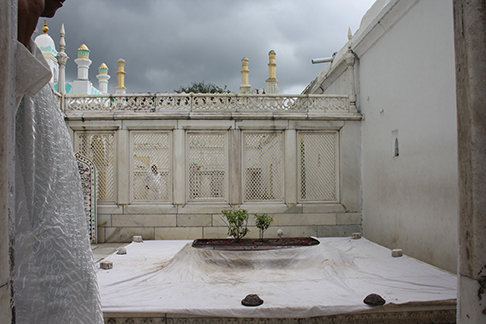
Though the etymological origin of the name Khuldābād is only three centuries old, the historical antecedents of this region date back to the Satavahanas, who were feudatories of the mighty Mauryan Empire in the 3rd century B.C. Khuldābād is located on the ridge above the Ellora caves, patronized by the Rashtrakuta Empire between the 8th and 10th centuries (Sohoni, p. 13).
In the 13th century, the Yadava capital of Devagiri (Deogiri) came to be used as a launching pad for Turkic invasions deeper into the Deccan (q.v.). The imperial quest of the Tughluqid dynasty for a pan-Indian empire was manifested through the reigns of Sultan Ḡiāṯ-al-Din Toḡloq (r. 1320-25) and his son Moḥammad b. Toḡloq (r. 1325-51). To provide momentum to his South Indian campaigns, the Sultan decided to create a second capital in Devagiri, renaming the town Daulatābād (Dawlatābād, “Abode of Prosperity”) in 1327. A large section of Delhi’s Muslim elite was forced to migrate to the new capital. A significant element of this elite population was constituted of Muslim holy men (Sufis), who traveled along with a large number of intellectuals, religious scholars, administrators, poets, warriors, and artisans.
On their arrival in Daulatābād, the caravan of Sufi saints, popularly estimated at 1,400, settled not in the imperial capital but in the neighboring town of Rawża, named after the common term for Sufi shrines in South Asia. Numerous Sufi shrines dot the valley today (PLATE II). Arrival of the Sufis in Khuldābād is commemorated through the mosque popularly known as the Masjed-e Čahārdah Ṣad Awliyā (“Mosque of Fourteen Hundred Saints”; see Ernst 2004a, pp. 102, 236; PLATE III).
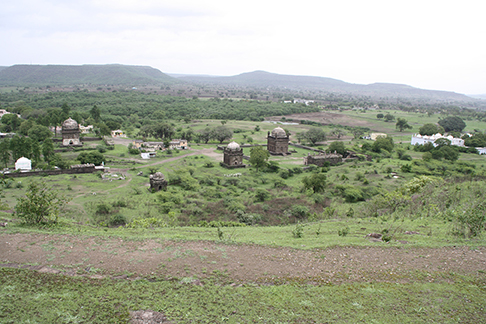
PLATE II. Khuldābād landscape, dotted with shrines. Photograph courtesy of the author.
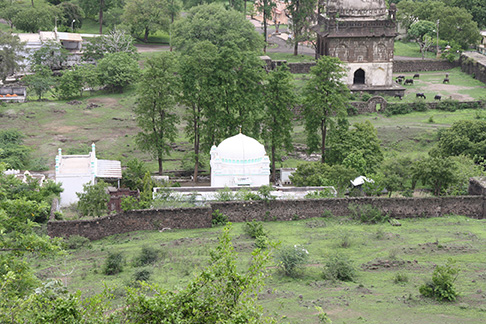
PLATE III. Masjed-e Čahārdah Ṣad Awliyā (Mosque of Fourteen Hundred Saints), Khuldābād. Photograph courtesy of the author.
One of the earliest Sufi saints from north India to settle in Khuldābād, long before the transfer of the capital, was Shaikh Montajab-al-Din Zar Zari Zarbaḵš ‘the Giver of Gold’ (d. 1309), the disciple of the north-Indian Češti (see ČEŠTIYA) Sufi master Shaikh Neẓām-al-Din Awliyāʾ (d. 1325). Montajab-al-Din settled toward the northern side of the town on Hodā Hill, where his meditation cell can still be found, as well as his nearby shrine complex (PLATE IV).
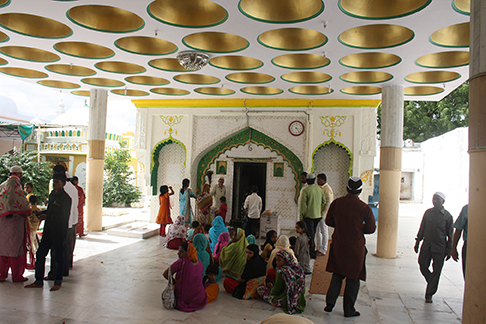
PLATE IV. Shrine of Shaikh Montajab-al-Din Zar Zari Zarbaḵš, Khuldābād. Courtesy of the author.
Of the many who joined the caravan of Sufis from Delhi was Montajab-al-Din’s younger brother Shaikh Borhān-al-Din Ḡarib (d. 1337), also a disciple of Neẓām-al-Din. Such was Borhān-al-Din’s repute as a Sufi saint that the Fāruqi dynasty (q.v.) of Khandesh named its main city, Burhānpur (q.v.), after him (Ernst 2004a, pp. 208-15; 2004b, pp. 106-7, 109, 114; PLATES V, VI, VII, VIII).
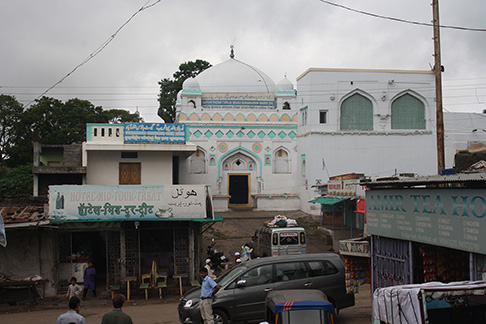
PLATE V. Shrine of Shaikh Borhān-al-Din Ḡarib, Khuldābād. Photograph courtesy of the author.
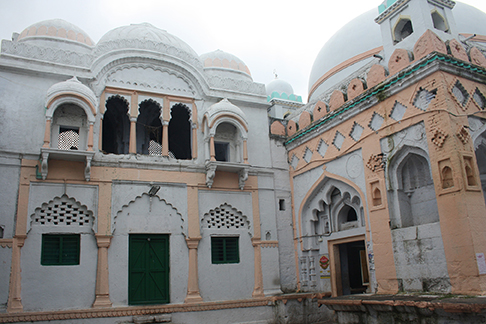
PLATE VI. Naqqār-ḵāna (galleries for playing drums) inside the shrine of Shaikh Borhān-al-Din Ḡarib, Khuldābād. Photograph courtesy of the author.
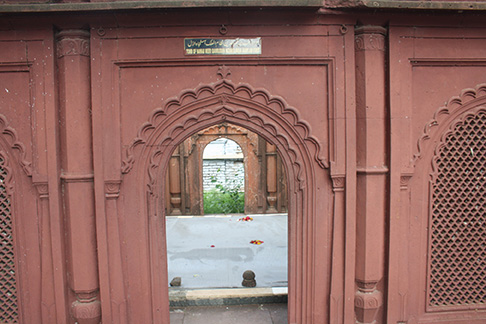
PLATE VII. Tomb of Neẓām Āṣaf Jāh I near the grave of Shaikh Borhān-al-Din Ḡarib, Khuldābād. Photograph courtesy of the author.
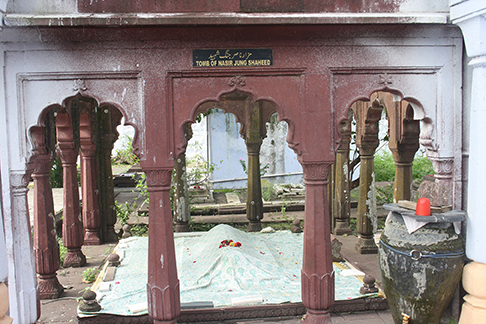
PLATE VIII. Tomb of Nāṣer Jang near the grave of Shaikh Borhān-al-Din Ḡarib, Khuldābād. Photograph courtesy of the author.
Borhān-al-Din’s principal disciple was Shaikh Zayn-al-Din Širāzi, whose shrine lies across the street from his master (PLATE IX). Being the twenty-second descendent in the Češti order, Zayn-al-Din was popularly known as “the twenty-second master” (Urdu baʾis ḵᵛāja). He refused to appoint a successor and therefore pass on his cloak to him in the traditional way. This led to the belief that the cloak that the Prophet Moḥammad wore on the night of his ascension, and which Zayn-al-Din had received from his masters, was preserved in a small chamber alongside Zayn-al-Din’s shrine (Ernst 2004a, pp. 138, 208; PLATE X).
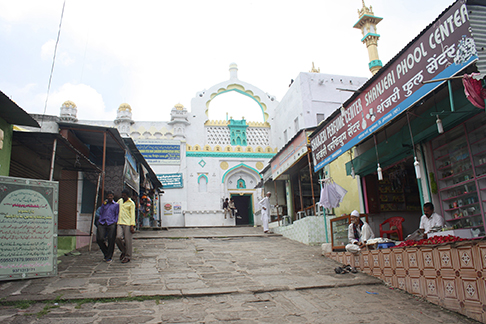
PLATE IX. Shrine of Shaikh Zayn-al-Din Širāzi, Khuldābād. Photograph courtesy of the author.
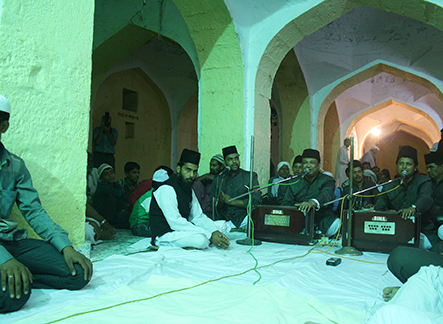
PLATE X. Qawwāli performance at the shrine of Zayn-al-Din, Khuldābād. Photograph courtesy of the author.
Other notable shrines of Khuldābād include that of Shaikh Yusof Ḥosayni Raju Qattāl (d. 1330; PLATE XI); Shaikh Jalāl-al-Din (d. 1247), better known as Ganj-e Ravān (“Flowing Treasure”), buried to the west of Khuldābād (PLATE XII); Shaikh Moʾmen ʿĀref (d. 1200?), buried at the foot of the hills east of Daulatābād Fort; the poet Amir Ḥasan Sejzi (d. c. 1336), the author of Fawāʾed al-foʾād, a collection of the sayings (malfuẓāt) of Neẓām-al-Din Awliāʾ; and Mir Ḡolām-ʿAli Āzād Belgrāmi (q.v.; fl. 1704-86), the author of Rawżat al-awlīāʾ, an account of ten saints buried at Khuldābād (Ernst, 2004a, p. 91; 2004b, pp. 106-7, 119).
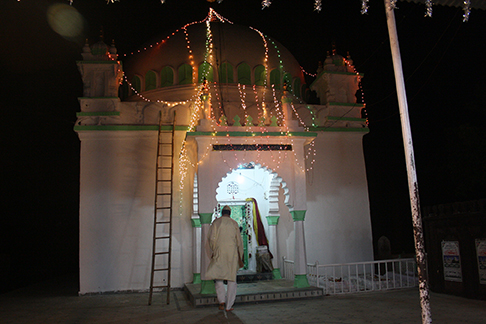
PLATE XI. Shrine of Shaikh Yusof Ḥosayni Raju Qattāl, Khuldābād, decorated for ʿors. Photograph courtesy of the author.
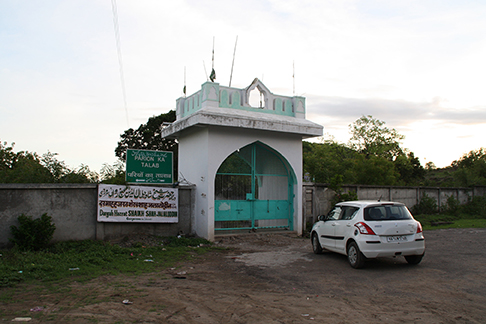
PLATE XII. Shrine of Shaikh Jalāl-al-Din, Khuldābād. Photograph courtesy of the author.
The valley of Khuldābād is bounded by high brick walls from the time of Awrangzēb, punctuated by seven imposing gateways: Nagarḵāna (PLATE XIII), Pangra, Langda, Mangalpeṯ, Qunbi ‘Ali, and Ḥāmdādi Darvaza, together with a small postern called Azam Shahi. The street that runs through these gates in a north-south axis contains the two major shrines mentioned above (Borhān-al-Din’s shrine on the west side, and Zayn-al-Din’s on the east) along with Lāl Bāḡ built by Khān Jahān Bahadur, the foster brother of Awrangzēb, and the funerary garden of Jahān Bānu Begum, the daughter-in-law of Awrangzēb (Sohoni, p. 13; Green, 2012, p. 169).
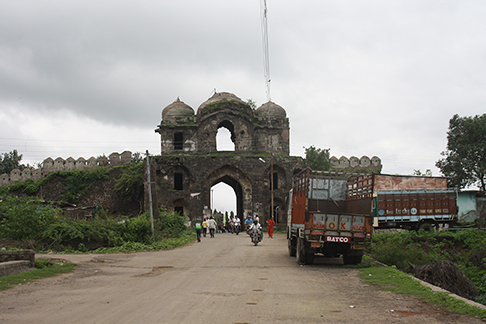
PLATE XIII. Nagarḵāna gate, one of the seven gates of Khuldābād. Photograph courtesy of the author.
Apart from the Mughal Emperor Awrangzēb, other royal figures who chose to have Khuldābād as their last resting place include Aḥmad Shah, the first ruler of Ahmadnagar (q.v.); Malik Ambar (Malek ʿAnbar; PLATE XIV), founder of Aurangābād; Awrangzēb’s son Aʿẓam Shah, builder of the Bibi Ka Maqbara (his mother’s mausoleum); Neẓām-al-Molk (d. 1748; PLATE VII), the first Āṣafjāhi ruler; and his son Nāṣer Jang (d. 1750; PLATE VIII), along with numerous later Neẓāms (Ernst, 2004b, p. 114; Green, 2012, pp. 25, 285-86, 288).

PLATE XIV. Tomb of Malik Ambar (Malek Anbār), Khuldābād. Photograph courtesy of the author.
Bibliography
Ḡolām-ʿAli Āzād Belgrāmi, Rawżat al-awlīāʾ, Delhi, 1996.
N. Chandramouli, ed., Religion and Society in Peninsular India, 6th-16th Centuries CE, New Delhi, 2015.
Sadia Dehlvi, Sufism: The Heart of Islam, New Delhi, 2009.
Richard M. Eaton, A Social History of the Deccan 1300-1761: Eight Indian Lives, Cambridge, 2008.
Carl W. Ernst, “Royal Policy and Patronage of Sufi Shrines in Mughal Revenue Documents from Khuldabad,” in A.R. Kulkarni, M.A. Nayeem, and T.R. de Souza, eds., Mediaeval Deccan History: Commemoration Volume in Honour of P. M. Joshi, Bombay, 1996, pp. 76-91.
Idem, “Fārūqī Dynasty,” Encyclopaedia Iranica, IX, 1999, pp. 378-79.
Idem and Bruce B. Lawrence, Sufi Martyrs of Love: The Chishti Order in South Asia and Beyond, New York, 2002.
Idem, Eternal Garden: Mysticism, History and Politics at a South Asian Sufi Center, New Delhi, 2004a.
Idem, “Khuldabad: Dargahs of Shaykh Burhanuddin Gharib and Shaykh Zaynuddin Shirazi,” in Mumtaz Currim and George Michell, eds., Dargahs: Abodes of Saints, Mumbai, 2004b, pp. 104-19.
Kashshaf Ghani, “Succeeding the Master: Locating Chishtia Sufis in the Political and Social Environs of Peninsular India,” in N. Chandramouli, ed., Religion and Society in Peninsular India, 6th–16th Centuries CE, New Delhi, 2015, pp. 216-30.
Idem, “Tomb Complexes in Khuldabad,” Sahapedia, http://www.sahapedia.org/tomb-complexes-khuldabad (accessed on 15 August 2018).
Nile Green, “Geography, Empire and Sainthood in the Eighteenth Century Muslim Deccan,” Bulletin of the School of Oriental and African Studies 67, 2004, pp. 207-25.
Idem, “Oral Competition Narratives of Muslim and Hindu Saints in the Deccan,” Asian Folklore Studies, 63, 2, 2004, pp. 221-42.
Idem, “Translating the Spoken Words of the Saints: Oral Literature and the Sufis of Aurangabad,” in L. Long, ed., Translation and Religion: Holy Untranslatable? Buffalo, N.Y., 2005, pp. 141-50.
Idem, Indian Sufism Since the Seventeenth Century: Saints, Books and Empires in the Muslim Deccan, London, 2006.
Idem, Making Space: Sufis and Settlers in Early Modern India, New Delhi, 2012.
Scott Kugle, “Burhan al-Din Gharib: Enduring Sufi Example in the Eternal Garden of Khuldabad,” Deccan Studies 7/2, 2009, pp. 82-111.
M. S. Mate and T. V. Pathy, eds., Daulatabad: A Report on the Archaeological Investigations, Pune, 1992.
Elizabeth Merklinger, Indian Islamic Architecture: The Deccan 1347-1686, Warminster, U.K., 1981.
George Michell and Mark Zebrowski, Architecture and Art of the Deccan Sultanates, Cambridge, 1999.
George Michell, Southern India: A Guide to Monuments, Sites and Museums, New Delhi, 2013.
Helen Philon, ed., Silent Splendour: Palaces of the Deccan 14th-19th centuries, Mumbai, 2010.
M. Z. A. Shakeb, “The Role of the Sufis in the Changing Society of the Deccan, 1500-1750,” in L. Lewisohn and D. Morgan, eds., The Heritage of Sufism: Late Classical Persianate Sufism (1501-1750), 3 vols., Oxford, 1999, III, pp. 361-75.
H. K. Sherwani and P. M. Joshi, eds., History of Medieval Deccan (1295-1724), 2 vols., Hyderabad, 1973-74.
Moazzam Siddiqi, “Āzād Belgrāmī,” Encyclopaedia Iranica III, 1987, pp. 171-73.
Muhammad Suleman Siddiqi, The Bahmani Sufis, Delhi, 1989.
Pushkar Sohoni, Aurangabad with Daulatabad, Khuldabad and Ahmadnagar, Mumbai, 2015.