



Introduction. The overview entries on folklore in the Encylopaedia Iranica under FOLKLORE STUDIES i. OF PERSIA and ii. OF AFGHANISTAN, survey in broad outlines folklore in different Iranian provinces, including Khorasan, as well as outside Iran’s borders. More specifically, they present a wide range of topics common to all regions, though with important local variants (Marzolph, 1998, pp. 326-67). The sources range from observations dispersed in foreign and Iranian travelogues, local histories, and religious manuals, to more recent scholarly monographs that study the oral culture of a region, including significant calendrical dates, and religious commemorative reenactments, popular stories, and public recitals of poems in local dialects.
In the specific case of Khorasan, there are also closer neighborly ties to consider. Although this entry focuses solely on the folklore of urban and rural Khorasan, administratively divided into three separate provinces since 2004, there are close affinities with customs in regions well outside the current borders of the Iranian province to the north and to the east. Moreover, the momentous historical changes affecting the wider historical Khorasan, usually referred to as “Greater Khorasan” (see KHORASAN i. CONCEPT OF KHORASAN), particularly in recent centuries, and the rapid pace of modernization, have had a direct bearing on local customs. The need to historicize the context of the data and, as far as possible, delineate customs witnessed in the past from current ones, have become all the more urgent in order to avoid the pitfalls of anecdotal timelessness that often shroud the description of urban or rural communities and their activities. To avoid the illusions of a time warp, recent eyewitness reports must be clearly distinguished from much earlier descriptions culled from travelogues, chronicles, or manuals of conduct. The prescriptions offered in earlier discourses, such as ‘Aqāyed al-nesā’ (Kolṯum-nana) of Āqā Jamāl Ḵvānsāri (d. 1713) are still at times quoted without allowing for their implicit irony and sly humor. While the similarity in the accounts from different regions and decades or even centuries can be regarded as a testament to the tenacity and longevity of many widely shared beliefs and customs, there is always the possibility of a narrator embellishing his or her account by incorporating details no longer in evidence or seldom or ever practiced.
Two studies on folklore in Iran, both first published in 1938, can be regarded as significant early reference works for the country in general and Khorasan in particular. Bess Allen Donaldson (q.v.; 1879-1974), a Presbyterian missionary and a longtime resident of Mashhad, published her detailed account of local customs in The Wild Rue: A Study of Muhammadan Magic and Folklore in Iran. In her forthright and proselytizing preface, she expresses her admiration for the modernizing achievements of the Pahlavi state. “This book,” she declares at the outset, “represents the old life, with its fears and superstitions, which, happily, are now beginning to pass away” (p. vii). As in the case of many other cultural observers, her overriding conceptual perception of a two-tier system, making a sharp distinction between low and high culture, and old discredited superstitions closely related to popular religious beliefs from modern, enlightened, and secular views, underpins her observations. Though later questioned by many historians of popular belief and religion in different eras and disciplines for its inherently ahistorical binary reductivism when employed indiscriminately (Brown, pp. 17-19), the same dichotomy is often tacitly implied by later writers of otherwise markedly different persuasions (Šokurzāda, pp. 12-13; Rahnema, passim).
Croyances et coutumes persanes (q.v.) by Henri Massé (1886-1969) is less moralistic and subjective in tone. It offers an overview of Persian folklore and draws on comments from several eminent Iranian scholars. Its format follows the organizing principles of the classic study by ethnographer Arnold van Gennep’s Les rites de passage (Paris, 1909), a “from cradle to grave” narrative. This approach is also followed, more or less closely, though with added critical insights and corrections, by later major contributions in folklore studies in Persian, including Maḥmud Katirāʾi’s Az ḵešt tā ḵešt (1969), with particular focus on Tehran, and, more significantly for this entry, by Ebrāhim Šokurzāda’s ʿAqāyed va rosum-e ʿāmma-ye mardom-e Ḵorāsān, a landmark study that has undergone several editions and is one of the most frequently cited sources for folklore in Iran since its first publication in 1967 (all page references in this article are to its 2014 posthumous edition).
In the period stretching from the mid-20th century to the first decades of the 21st, the expansion of literacy and the consciousness of rapid changes, reshaping the fabrics of the society as a whole, have encouraged the production of local histories of towns and villages in an endeavor to record traditions and modes of life before their imminent disappearance. These monographs add further detail to the pioneering and comprehensive works of Massé and Šokurzāda in relation to their specific towns and villages. In particular, one of the most valuable contributions of many of these local researchers is their recording and preservation of the oral literature: songs, formulaic repartees, short verses including do-bayti s (q.v.) in local dialects that are part and parcel of most communal ceremonies, differing from place to place and dialect to dialect.
As with other works of scholarship in social sciences and cultural history published in Iran, the revolution of 1978-79, and its ideological reverberations and aftermath, have had a radical impact on the ongoing debates on religion, modernity, and divergent perceptions of national identity. The wide range of authorial approaches to social sciences, informed by current critiques of orientalism and postcolonialism, has already given birth to a self-reflective secondary literature, with a number of studies examining the ideological underpinning affecting the anthropologist’s or folklorist’s view of the material (Nadjmabadi, Vejdani, Fazeli, passim).
This entry first follows the order and arrangement employed by Massé, Šokurzāda, and Katirāʾi in a shortened format. It should also be borne in mind that references to available data in different localities do not imply an implicit exclusivity. Many localities may share the same customs with interesting variations but lack accessible documentation to substantiate the claim. An essential component of the folklore of Khorasan, that of its tribes, Kurdish and Turkmen, as well as religious minorities, is studied elsewhere in the Encyclopaedia.
Birth. The customs described in the literature on Khorasan have much in common with those recorded in other parts of Iran and featured elsewhere in the Encyclopaedia (see, for example, CHILDREN ii. IN MODERN PERSIAN FOLKLORE). On Khorasan, both Šokurzāda (pp. 96-115) and Donaldson (pp. 24-34) contain a wealth of descriptions, only some of which are cited here.
Several women usually assist at childbirth. A nail is hammered into the door of the room, thereby figuratively nailing down the pain in the mother’s belly and hastening the birth. Other women in the room peel onions and garlic and throw them into the fire to ameliorate birth pains. Wild rue ( esfand ; q.v.) is also burnt in a charcoal brazier for the same purpose. If delivery is further delayed, sprigs of dried cyclamen (panja-ye Maryam) are placed in water. This alludes to the story of the Virgin Mary giving birth to Jesus under a palm tree in a secluded spot (Qurʾan, 19:22-23) and, according to legend, squeezing a cyclamen in her fist at the moment of delivery (Donaldson, p. 27). Another custom associated with difficult births or frequent miscarriages is that of preparing a special dish of ḥalwā (q.v.) as a votive offering, blessed with the name of the twelve Shiʿite Imams (Šokurzāda, p. 98, 187), and distributing portions following delivery and later on amongst the poor in the community.
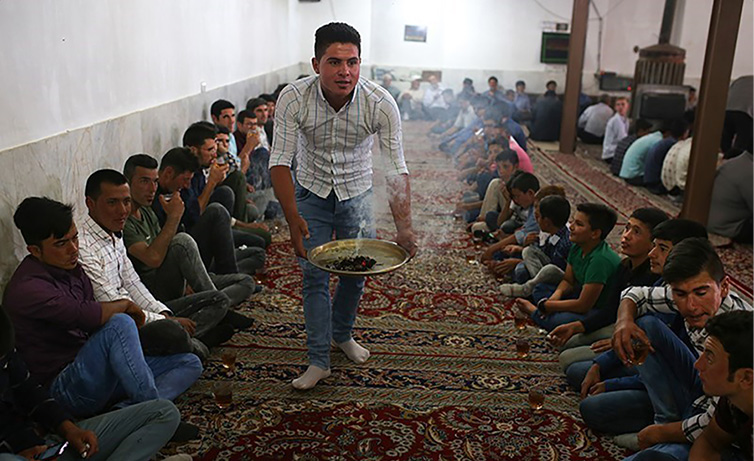
Plate I. Burning wild rue (esfand) at a wedding reception at a Kurmānji village in North Khorasan province. Photograph by Ḥāmed Jaʿfarnejād, Tasnim News. Licensed under Creative Commons Attribution 4.0 International.
After delivery, the midwife separates the placenta and pricks it with a needle in order to prevent the transmission of misfortune to the mother. The placenta is then buried in the ground, sometimes along with a lump of charcoal for luck (Donaldson, p. 27).
Several measures are then adopted to protect the mother and the baby from evil spirits. The newborn is washed and a strip of white cotton cloth, usually sixty centimeters long and thirty centimeters wide, is cut and tailored into a loose sleeveless shirt to cover the body, with a slit at the center to allow for the head. This must be worn for seven days in the case of infant girls and ten in the case of boys. It is called pirāhan-e qiāmat (the Resurrection Day robe), alluding to the garment that will protect the skin against the scorching rays of the sun as it descends down from heaven on the day of resurrection and hovers in close proximity to human beings (Šokurzāda, p. 100; Katirāʾi, p. 28).
The midwife then lays the infant by the mother’s side and draws a line, called ḥesār-e Maryam (“the fortress of Mary”) around the bed. “Often while doing this the person will say, ‘I am making a fortress and Mary and the child of Mary will keep it’ or ‘I am making a fortress for whom? For Mary and her child, may it be blessed’” (Donaldson, p. 29; see also Šokurzāda, p. 101).
She also places a metal tray and a few onions on her bed to protect the baby and the mother from Āl (q.v.), a notorious female ogre often depicted as an emaciated hag, a snatcher of human organs (Katirāʾi, p. 273), and a deadly menace to mothers and their newborn babes. While exercising identical destructive powers, Āl is known by different names in many regions in the Middle East, from Iraq to Afghanistan, and from the Caucasus, to southern parts of Russia and Central Asia (Jamāl Ḵᵛānsāri, pp. 19-20; Drower, pp. 213-14; Mills, 2003, pp. 11-12; Astarian, p. 149).
Āl and other evil spirits are also thought to be on the prowl at the end of the fifth day and during the following night, called the night of the sixth, šab-e šiš, or šow šiš in Birjand (Reżāʾi, p. 352). As with other and more celebrated nocturnal celebrations such as that of the longest night (šab-e yaldā), the precautions against the forces of darkness and the communal attempt at their banishment provide the pretext and the occasion for convivial feasting and lively conversation all night long, accompanied by playing of the flat drum (see DAF[F] AND DĀYERA), with the newborn, as the center of attention, being passed around dotingly from person to person accompanied by the recitation of appropriate verses (Šokurzāda, pp. 105-6; Donaldson, pp. 29-30). The night is also significant as it is the occasion when an elder of the family or a local religious figure enounces the name of a prophet or one of the Imams in the baby’s ear (Šokurzāda, p. 105), though the baby’s personal name is usually chosen earlier (Reżāʾi, p. 352).
The first visit after the day of delivery by the mother and baby to rural or town bathhouses (q.v.) is another occasion for celebration as well as an opportune time to ward off malign spirits (Šokurzāda, pp. 106-10). The timing of the first visit corresponds to the length of the period during which the baby had worn the pirāhan-e qiāmat. For women who have given birth to daughters, it is fixed for the seventh day after delivery, and in the case of boys, the tenth. Previous rituals are followed up. According to Donaldson, “the mother must perform certain rites, the onion which she had under her pillow during confinement, to keep Āl away, she now takes with her and steps upon it when she puts it on the second or third step as she descends to the bath, the knife or scissors which cut the cord must also be there” (p. 31).
Once the mother has undergone her own elaborate stages of cleansing while attended to by other women, it is the baby’s turn to be washed with water and powdered cedar. He or she is then held over the mother’s head and clean water is poured over the baby and on the mother’s head from a bowl known as jām-e čehel kelid (“the cup of forty keys”; PLATE II). This is a well-known talismanic bowl used to ward off Āl and other evil spirits. It is made of brass or copper and has forty pieces of metal attached to it. The design of the pieces vary, some resembling ordinary keys and some more rectangular in shape. The surface of the bowl and the metal pieces are inscribed with Qur’anic verses or magical phrases (Mašāyeḵi, pp. 184-91; Šari‘atzāda, p. 517).
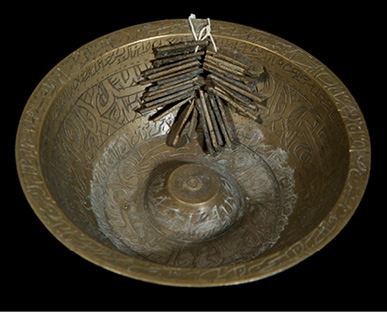
A 19th/early 20th century jām-e čehel kelid (bowl or cup of forty keys). 12.5 x 4 cm. Harvard University, Middle Eastern Division. Widener Library. Harvard College Library, 14124A13_0001. Provided by Harvard University.
Marriage . As with the topic of birth, aspects of social customs and well-established ceremonies of marriage are discussed under several headings in this Encyclopaedia, including ʿAQD; ʿAQD-NĀMA, ʿARUSI, ḤEJLA, DIVORCE, MOTʿA, and GENDER RELATIONS, as well as under topics such as HENNA that contain material related to its elaborate use at weddings (ḥanā-bandān) in Khorasan.
Wedding ceremonies follow several stages, and vary considerably from place to place. Other factors, such as the religious outlook of the family, social standing, and attitudes vis-à-vis modernity, all affect, as Šokurzāda points out, the options available at each stage. The bride’s hairstyle, for example, can either be set in the traditional manner (see COSMETICS) or copied from illustrations in Western fashion journals (p. 20). The same choices apply to the bride’s trousseau and the bridegroom’s outfit (p. 33). The content of the songs that usually accompany the different rituals also vary depending on how strictly religious the celebrating families are or if the bridegroom happens to be a sayyed (p. 28). Among the more religiously inclined, one of the most widespread features of rural and urban weddings, singing and communal dancing accompanied by music, is discarded in favor of reciting verses imbued with religiosity, recalling the wedding of holy figures, without any accompanying music (p. 35). Fleets of cars, motor cycles, and minibuses have replaced horses and carriages in cities when it comes to a still very popular countrywide feature of weddings: ʿarus-kašān or ʿarus-bari, the boisterous journey to the bride’s future home in which the bridegroom’s party escort the bride from her parents’ home with a great deal of fanfare (PLATE III).
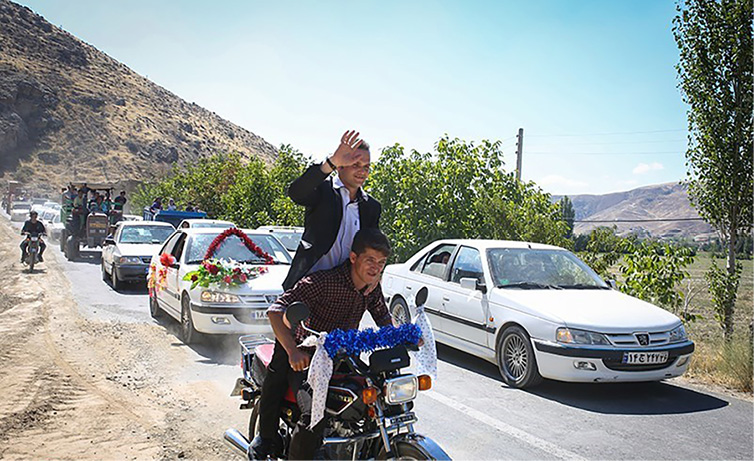
Plate III. A modern ʿarus-kašān procession in the area of Ḡolāmān, North Khorasan province. Photograph by Ḥāmed Jaʿfarnejād, Tasnim News. Licensed under CC by 4.0 International.
Plate III. A modern ʿarus-kašān procession in the area of Ḡolāmān, North Khorasan province. Photograph by Ḥāmed Jaʿfarnejād, Tasnim News. Licensed under CC by 4.0 International.
The initial search and the betrothal offer (ḵāst[a]gāri) are negotiated by women but here again much depends on the specific circumstances and how closely the bride and the bridegroom are known to each other and related. A wide variety of verses in different dialects in towns and villages are declaimed in the formal process of seeking a bride as a prelude to the actual visit to the bride’s home (Šokurzāda, p. 18, for examples from Qāyen and Kāšmar).
The marriage ceremony itself usually takes place at the home of the bride in the afternoon in a ground floor room with no basement underneath. A basement would be an ill omen foretelling the breakup of the marriage (Šokurzāda, pp. 21, 23).
Other symbolic rituals take place during the wedding ceremony. A copper tub is placed upside down on the ground with a few eggs tucked inside, a reference to the future children. Some mercury may be poured on a saucer, its perpetual tremor an allusion to the panting hearts of the love-struck couple.
In the evening, a group of the groom’s family transport the bride (ʿarus-kašān) to the groom’s home as noted above. The groom greets the arriving party, throwing a few pomegranate seeds or other peeled fruit and a few lumps of sugar over the bride’s head. In some localities, the groom’s parents present gifts to the bride before she crosses the threshold. A bowl of water is also sometimes placed there for the bride to stumble over and spill the contents, a good omen (for water as a symbol of light and good fortune, see ĀB ii. WATER IN MUSLIM IRANIAN CULTURE). An egg too may be smashed against the wall at the same time to ward off the Evil Eye ( čašm-zaḵm , q.v.). As pointed out before, each of these stages (ḵastagāri, ʿaqd, ḥanābandān, ʿarus-kašān, šab-e ʿarusi, etc.) are accompanied by appropriate songs, which vary from place to place (Šokurzāda, pp. 17-46; Barābādi, 2005, pp. 376-86; Mašāyeḵi, pp. 169-82).
Death. Burial and mourning ceremonies in Khorasan, as elsewhere in Iran, follow well-established religious rules. There are, however, some customs that fall outside the defined religious prescriptions (see CEMETERIES).
Those present at the bedside of a recently deceased person would each place some money in the deceased’s pocket or inside his or her shawl. This is intended as a tip for the person in the mortuary responsible for the ritual washing of the corpse (Šokurzāda, p. 47; Katirā’i, pp. 248-49).
If a person dies at night, a brick is placed above his or her head to support a candle or light, and a bowl of sherbet is placed at its side, a harbinger of the blessed pool in paradise. If the death occurs on a Saturday, the neighbors on the right side should make an infusion of borage (gāv-zabān, q.v.) with sugar candy (nabāt) for the family of the deceased (Šokurzāda, p. 47).
In Mashhad, before burial of the body, the coffin is taken to the shrine of Imam Reżā (see ASTĀN-E QODS-E RAŻAWI) for a ritual circumambulation thrice round the shrine (Šokurzāda, p. 49). As well as reciting appropriate prayers in Arabic during the procession, at one stage at the entrance, the procession halts for a few moments to allow one of the mourners to chant a lament based on a ḡazal by Hafez (qq.v), though trimmed to fit the occasion (Ḥāfeẓ, ed. Ḵānlari, no. 359, p. 734; Šokurzāda, p. 49).
The memorial gatherings for the deceased appear similar to those in the rest of the country with the seventh and the fortieth day marked as particularly significant commemorative occasions (Šariʿatzāda II, pp. 276-79).
In Tāybād, Bāḵarz, and Māḵunik, the news of a death is dispatched by messengers to relatives in other villages in a “black letter” (siāh-nāma) with the top of the letter torn as a sign of mourning (Mašayeḵi, p. 194; Barābādi, 2005, 398-99).
Calendrical customs and festivals. The timing of these celebratory or mourning events vary, depending on whether they follow the solar calendar or, in the case of events of religious significance, the lunar calendar. This duality can on occasions lead to a clash of loyalties and sentiments when a day of religious mourning, observed according to the lunar year, happens to coincide with a day of festive celebrations, based on the solar year.
1. Events according to the solar calendar. These celebrations, directly related to the cycle of the four seasons, and the agricultural year, share pre-Islamic origins and a long and well-documented history of being observed both inside and outside the current borders of Iran among people of different religions, languages, and ethnicites. Many of the significant dates and ceremonies are described in a series of entries in this Encyclopædia (see FESTIVALS), as well as in specific entries such as the long list of celebrations around the spring equinox, Nowruz (q.v.). Here the references are limited to customs specific to various towns and villages in Khorasan.
Čahāršanba-suri (q.v.): The last Wednesday of the Iranian solar year is associated with many customs and celebrations and can be divided into the all-inclusive ones, with the most well-known and specific feature being that of jumping over bonfires, and those restricted to women in relation to their quest for suitable spouses (baḵt-gošāʾi; Šokurzāda, pp. 66-71). The quest for good fortune is a significant feature in folk literature throughout Iran and appears in one way or another in other days of celebrations as well, such as that of the thirteenth day after the New Year, as noted below.
The explanation for choosing the Wednesday before the New Year for lighting bonfires and the fact that the celebrations take place in public spaces accompanied with communal singing and dancing exemplify the inherent complexities of some folkloric traditions when confronted with differing ideologies and current political developments. On the one hand, according to Šokurzāda (p. 63), most people in Khorasan regard the choice of the date historically, in the context of a decision by Moḵtār b. Abi ʿObayd Ṯaqafi (d. 687) at the outset of his uprising (see KAYSĀNIYA) on the night of Wednesday, 14 Rabi‘ I 66/18 October 685 to avenge the martyrs of Karbala (q.v.; Ṭabari, tr. XX, p. 197, n. 646). As narrated in the Moḵtār-nāma, a richly romanticized popular biography, Moḵtār had ordered his Shiʿite supporters to light fires on their roof tops to distinguish themselves from their adversaries (Moḵtār-nāma, n.d., p. 100; Moḵtār-nāma, 1988, pp. 175-76). In spite of this grafting of a Shiʿite narrative onto already existing traditions from pre-Islamic eras, the day has provided a frequent occasion for confrontation between the religious authorities and groups of both sexes celebrating the evening in public spaces by dancing and singing.
Another ceremony associated with the Wednesday before the new year is fālguši (augury by hearsay; see DIVINATION and FĀL-NĀMA). This entails the young covering their faces and going out incognito. Whatever they hear first from a passerby serves as an augury for the coming year (Mirniā, 1983, p. 142). As is to be expected, the advent of the new year is also the occasion for many other forms of augury and divination, particularly in relation to the matrimonial prospects of the young. In particular, the preparation of the traditional dish of samanu (Šokurzāda, pp. 207-8; see HAFT SIN) involves elaborate procedures for predicting the future of the young girls and women involved in its preparation, accompanied by recitation of verses in different dialects (Taklifi-Čapašlu, pp. 245-48 on Darragaz).
The days before the New Year also provide an opportunity for street performers in villages and towns going from door to door and being rewarded for their songs and musical performances. These include the figure of Ḥāji Firuz (q.v.), who is usually called Jigi Jigi Nana Ḵānom in Khorasan, a reference to a well-known song (Šokurzāda, pp. 120-21) and its famous performer. He sings and plays the tambourine at the new year as well as during circumcision (q.v.) celebrations (Bahālgardi, pp. 24-26; Šokurzāda, p. 75).
New Year’s Day: The schedule for the new year day itself, including the precise moment of the beginning of the spring equinox (taḥwil-e sāl) when the traditional new year prayer is recited in Arabic (Reżā’i, pp. 453-44) round the ceremonial cloth ( sofra ; q.v.) displaying seven traditional items ( haft sin ; q.v.), follows similar patterns throughout the country with some local variations. Other items are also placed on the New Year ceremonial spread. Five candles are placed on the sofra in Darragaz (q.v.), as an allusion to the Āl-e ʿĀbā (q.v.; the revered figures of the Prophet, his daughter Fāṭema, his son-in-law ʿAli b. Abi Ṭāleb (q.v.), and their sons, Ḥasan and Ḥosayn). In Ferdows (q.v.), yogurt, cheese, a sugar cone and a bottle of water are placed on the four corners of the spread, while in Nishapur milk is also included on the spread (Māku’i, pp. 60-61; Reżā’i, p. 453 for details for Birjand).
Sizdah bedar: The thirteenth day of the first solar month, Farvardin, marks the end of the new year celebrations and, as in other parts of Iran, it is a day that should be spent outside the home in the open country to ward off evil and enjoy alfresco meals and entertainments. In Birjand, the first Saturday and Wednesday after the new year also fall in the same category and are spent outdoors (Reżā’i, p. 455; Šokurzāda, pp. 81-82).
Two other solar calendric dates, šab-e yaldā and sada, should also be noted. Both have a long history in different parts of Iran and more particularly in Khorasan and are described in detail in the entries SADA FESTIVAL and ČELLA.
Šab-e čella (šab-e yaldā): In Khorasan, the night of the winter solstice, the longest night of the year, is called šab-e čella (Šokurzāda, pp. 59-60) and, as in other parts of Iran, celebrated in family gatherings in which a variety of fruits and nuts are consumed through the night, with each item being deemed beneficial in warding off various ailments and maladies in the months ahead (Omidsalar, pp. 123-25). There are also local traditions involving more elaborate ceremonies. In the picturesque village of Aḵlumad to the north of Mashhad, the men of village used to indulge in pyrotechnics by whirling slings with fireballs at their end and reciting traditional verses for the occasion (Šokurzāda, p. 60).
Sada: In most villages in Khorasan, the festival of sada is celebrated for three nights on the tenth day of the month of Bahman, around 30 January (Šokurzāda, pp. 84-88). It involves villagers collecting shrubs to serve as firewood to be lit and burnt on rooftops during the festivities accompanied by dancing and reciting poems, including verses specifically composed for the occasion, marking its date in the agricultural year, fifty days before the New Year and a hundred before harvesting the wheat (Šokurzāda, p. 87). References to both šab-e yaldā and sada abound in Persian literature, particularly in panegyrics addressed to the Ghaznavids (q.v.) and their notables as well as in historical works, including a detailed description of a particularly elaborate sada celebration in the presence of the Ghaznavid ruler Masʿud in the year 426/1034-35 as described by the historian Abu’l-Fażl Bayhaqi (q.v.) in his History (Bayhaqi, tr., II, p. 99; III, n. 29, p. 255 for further references to sada in Persian literature).
2. Events according to the lunar calendar. The lunar year abounds in significant dates of mourning as well as the celebration of important religious festivals. These are observed throughout the country but often contain significant variations from village to village and region to region. Several entries in the Encyclopaedia, including ʿALAM VA ʿALĀMAT, ʿARBAʿIN, ʿĀŠURĀʾ, ʿAZĀDĀRI, CANDLE, DASTA, FASTING, FESTIVALS, NAḴL, and TAʿZIA, describe the specific ceremonies associated with each date, and the performances and the props associated with different religious processions.
For specific towns in Khorasan, most monographs on individual localities highlight local traditions in their evolving historical context. In some cases, the active presence and patronage of various religious processions and events by the local magnates are particularly noteworthy, particularly before the Revolution of 1979. In the case of Birjand, for example, the regional overlord, Amir Šawkat-al-Molk (Moḥammad Ebrāhim ʿAlam, q.v.; 1881-1944) played a significant role in financing and fostering the local religious traditions (Barābādi, passim; Reżā’i, pp. 462-96). In most villages, the community at large takes an active part. Several villages scattered throughout the province have been noted throughout the decades for their spectacular reenactment of the religious processions and passion plays of the month of Moḥarram. In this context visual evidence from photographs, films, and videos demonstrate the impact of recent innovations. The taʿziya at Fadiša southwest of Nishapur now attracts an audience in the thousands and in design and performance owes much to elaborate stage management and modern theatrical and cinematographic techniques, while those in other parts of Khorasan adhere to the traditions of past decades (for Dizaj, Moḡān, and Ruyān in the Šāhrud region, see Šariʿatzāda, II, pp. 296-309).
There are also other lunar Islamic dates with a long history and possible pre-Islamic connections. For example, šab-e barāt (or šab-e čak) is commemorated in Khorasan and elsewhere during three nights in the middle of the month of Šaʿbān (the thirteenth, fourteenth, and fifteenth) with evening visits to cemeteries. Carpets are laid out there and ḥalwā (q.v.), dates, and fruit are brought along as well as a special bread, roḡan juši, baked for the occasion. Professional Qur’an reciters are also often employed to recite by the graveside (Ravāqi, pp. 214-15). As in the case of the solar festivities of sada and šab-e yaldā, there are frequent references to šab-e čak from early Persian poetry to the more recent, including a reference to the many illuminations that brightened the night in a verse by Rudaki (858-941; Ravāqi, p. 206). There are clearly similarities with other cultures, which also devote a night to the commemoration of the spirits of the dead, and more specifically the Zoroastrian festival of Frawardigān (q.v.).
Ramadan (Ramażān) rituals: Along with common religious practices, there are some noteworthy local customs such as Allāh Ramażāni. In several cities, including Birjand, and Kāšmar, the youth gather together after the end of the day’s fasting (q.v.) in their neighborhood from the first to the fifteenth day of Ramadan. They choose a leader as well as another person as a kind of keeper in charge of the gifts that they anticipate collecting. They then set off and proceed from door to door, reciting a long poem describing and praising the month of Ramadan (Reżā’i, pp. 487-92; text and transliteration in Šokurzāda, pp. 340-42). In exchange they are given gifts of all sorts, such as money, walnuts, raisins, almonds, etc. These are all collected and placed in a bag by the keeper, which he had brought along. Having received the gifts, the youth offer prayers for the donors in exchange. The residents of homes who had refused to reward them would be scolded by the group before leaving. On the other hand, if the group had been too persistent or excessive in their demands, the homeowners might retaliate by throwing bowls of water at the youth from the rooftop to drench them and drive them away (Šokurzāda, p. 340).
Another day of particular significance in the month of Ramadan is the 27th, the death date of ʿAbd-al-Raḥmān b. Moljam, the Kharijite (see KHARIJITES IN PERSIA) who had assassinated ‘Ali b. Abi Ṭāleb. To celebrate his demise, some urban roughnecks would even give up fasting for the day. It is also an occasion for girls seeking husbands, or women with special wishes of their own, to visit homes in the area and, with their faces covered, bang spoons against pots or pans (qāšoq-zani) to raise some money, a practice which is even more widespread on another already mentioned festive day, cahāršanba-suri (q.v.; Enjavi, I, p. 126). The money is earmarked for the purchase of cloth for making a shirt or čādor (q.v.), which is then sewn and tailored the same evening in the mosque as a favorable portent for achieving the intended goal in the near future (Reżā’i, pp. 494-45; Vakiliān, p. 125). In some cities, including Jājarm, at the end of the month of fasting, the bridegroom’s family would send his prospective bride presents on the ʿId-e Feṭr (Vakiliān, p. 170).
Folk literature. The oral literature of Khorasan and its many recorded popular stories and legends (referred to as owsana in Khorasan) were the subject of many studies in the 20th century, both in Iran and elsewhere (Radharapetian, pp. 49-132). The thematic analysis by Adrienne Boulvin along with the translations of several folktales by E. Chocourzadeh (Ebrāhim Šokurzāda) in the two-volume Contes populaires persans du Khorassan (Paris, 1975) is particularly noteworthy. Since then, there has been a steady publication of monographs devoted exclusively to popular stories from different towns by a number of scholars including Ḥamid-Reżā Ḵazā’i and Moḥsen Mihandust, as well as the inclusion of local tales in more comprehensive monographs, such as those by Šokurzāda, ʿAli-Aṣḡar Šariʿatzāda, and Sayyed ʿAli Mirniā.
Bibliography
- ʿA.-A. ʿAbbāsi, Zohān: diār-e yāqut-sorḵ, Birjand, 2018.
- A.-Q. Amini, Fulklur-e Irān: dāstānhā-ye amṯāl, 3rd ed., Isfahan,1973.
- G. Asatrian, “Āl Reconsidered,” Iran and the Caucasus 5, 2001, pp. 149-56.
- Č. Aʿẓami Sangesari, “Bāvarhā-ye ʿāmmiāna-ye mardom-e Sangesar,” Honar o mardom 92, 1970, pp. 47-56.
- ʿA. Bahālgardi, “Ḵatnasurān dar Birjand,” Honar o mardom 15, 1963, pp. 24-26.
- S. A. Barābādi et al., Mardom-šenāsi-e marāsem-e ʿazādāri māh-e Moḥarram dar ṣahrestān-e Birjand, Tehran, 2002.
- S. A. Barābādi and Ḡ. Šoʿaybi, Mardom-šenāsi-ye rustā-ye Māḵunik, Birjand, 2005.
- I. Basgöz, “Rain Making Ceremonies in Iran,” Iranian Studies 40/3, 2007, pp. 385-403.
- Abu’l-Fażl Bayhaqi, Tāriḵ, tr. C. E. Bosworth, and rev. M. Ashtiany , as The History of Beyhaqi, 3 vols, Boston, Mass., 2011.
- T. Bineš, “Lahja-ye Mašhadi,” in Ḥ. Yaḡmā’i and I. Afšār, eds., Nāma-ye Minovi, Tehran, 1971, pp. 60-76.
- Kāẓem Musawi Bojnurdi et al., eds., Dāneš-nāma-ye farhang-e mardom, 5 vols., 2012- .
- Idem, ed., Dāʾerat al-maʿāref-e bozorg-e eslām, 24 vols., Tehran, 1988- .
- ‘A. Bolukbāši, Naqd va naẓar, Tehran, 1998.
- A. Boulvin, “Oslub-e ʿelmi-e tanẓim-e mawādd-e qeṣṣahā-ye ʿāmmiāna,”Soḵan 21, 1971, pp. 1159-70.
- Idem, Contes populaires persans du Khorassan I: Analyse thématique accompagnée de la traduction de trente-quatre contes; II. Trente-six contes, tr. A. Boulvin and E. Chocourzadeh [E. Šokurzāda], Paris, 1975.
- Ch. Bromberger, “A propos du quelques travaux récents sur le conte populaire,” L’Homme 19/2, 1979, pp. 53-68 (review of Boulvin, 1975).
- P. Brown, The Cult of the Saints: Its Rise and Function in Latin Christianity, Chicago, 1981.
- J. Calmard, “Mohammad b. al-Hanafiyya dans la religion populaire, le folklore, les legends dans le monde turco-persan et indo-persan,” Cahiers d’Asie Centrale 5/6, 1998, pp. 201-22.
- A. Christensen, Contes persans en langue populaire, Copenhagen, 1918.
- C. Colliver Rice, Persian Women and Their Ways, London, 1923.
- M. Dehqan, “The Milwarî Dexazim of Ja‘far Qolī Zangalī: A Kurmanci Lyric Verse from Northern Khurasan,” The International Journal of Kurdish Studies 21, 2007, pp. 145-54.
- Idem, “The Record Heritage of Khurasani Kurdish Tribes,” Journal of the Society of Archivists 30/1, 2009, pp. 81-91.
- G. Doerfer and W. Hesche, Türkische Folklore-Texte aus Chorasan, Turcologica 38, Wiesbaden, 1998.
- B. A. Donaldson, The Wild Rue: A Study of Muhammadan Magic and Folklore in Iran, London, 1938.
- E. S. Drower, “The Wild Rue: A Study of Muhammadan Magic and Folklore in Iran,” Journal of the Royal Asiatic Society 2, 1940, pp. 212-14 (book review).
- L. P. Elwell-Sutton, “Family Relationships in Persian Folk-Literature,” Folklore 87/2, 1976, pp. 160-66.
- Idem, “Folktales in Iran,” Folklore 93/1, 1982, pp. 98-104.
- A. Enjavi, Jašnhā va ādāb o moʿtaqadāt-e zemestān, 2 vols., Tehran, 1973-75.
- B. Farahvaši, Ādāb va rosum-e nowruzi dar šahrhā-ye Ḵorāsān …, ed. H. Gerāmi-Farahvaši, Tehran, 2007.
- N. Fazeli, Politics of Culture in Iran, Abingdon, U.K., 2006.
- Ch. Goldberg, Turandot’s Sisters: A Study of the Folktale AT 851, Abingdon, U.K., 1993.
- Ḥāfeẓ, Divān, ed. P. Nātel Ḵānlari, vol. I, 2nd ed., Tehran, 1983.
- G. R. Hawting, “Mukhtār b. Abi ʿUbayd,” in EI² VII, 1965, pp. 521-24.
- Ṣ. Hedāyat, Farhang-e ʿammiāna-ye mardom-e Irān, compiled by Jahāngir Hedāyat, Tehran, 1999 (a posthumous collection of the author’s folklore studies, including Neyrangestān).
- L. Honarfar, “Yādegārihā-ye Tāybād,” Honar va Mardom 172, 1977, pp. 8-22; 173, 1977, pp. 6-17.
- S. Ḥ. Ḥosayni, Farhang‑e mardom-e Bār, Tehran, 2013.
- W. Ivanow, “Notes on Khorasani Kurdish,” Journal and Proceedings of the Asiatic Society of Bengal 23, 1927, pp. 167-236.
- Idem, “Persian as Spoken in Birjand,” Journal and Proceedings of the Asiatic Society of Bengal 24, 1928, pp. 235-351.
- Āqā Jamāl Ḵᵛānsāri, ʿAqāyed al-nesāʾ (Kolṯum-nana), ed. M. Katirā’i, Tehran, 1969.
- M. Katirā’i, Az ḵešt tā ḵešt, Tehran, 1969.
- M. J. Ḵāvari, Qeṣṣahā-ye mardom-e Hazara, Tehran, 2006.
- Ḥ. R. Ḵazā‘i, Afsānahā-ye Ḵorāsān: Nišābur, Mashhad, 2000a.
- Idem, Afsānahā-ye Ḵorāsān (Doḵtar-e kafš talā): Torbat-e Ḥaydariya, Mashhad, 2000b.
- Idem, Afsānahā-ye Ḵorāsān: Sabzavār, Mashhad, 2003a.
- Idem, Afsānahā-ye Ḵorāsān: Esfarāyen, Mashhad, 2003b.
- Idem, Afsānahā-ye Ḵorāsān: Birjand, Mashhad, 2006a.
- Idem, Afsānahā-ye Ḵorāsān: Ṭabas, Mashhad, 2006b.
- Idem, Afsana-ye šeʿrhā, Mashhad, 2006c.
- Idem, Tāriḵ-e šafāhi va maktub-e Nahrayn‑e Ṭabas, Mashhad, 2015a.
- Idem, Afsāna-ye bārān yā bārān ḵᵛāhi dar Irān, Mashhad, 2015b.
- A. Krasnowolska, “Sada Festival,” Encyclopaedia Iranica Online, http://dx.doi.org/10.1163/2330-4804_EIRO_COM_1159, accessed 13 July 2021.
- G. Lazard, “Un conte persan local de Gīv (region Bīrjand)” in Iran and Iranian Studies: Essays in Honor of Iraj Afshar, ed. K. Eslami, Princeton, 1998, pp. 306-15.
- A. Mahdavi Dāmḡāni, “Dāstān-e ‘żāmen-e āhu’ va gardāvaranda-ye Šāhnāma-ye manḏur,” in Ḥāṣel-e awqāt, Tehran, 2002, pp. 451-60.
- U. Marzolph, Typologie des persischen Volksmärchens, Beiruter Texte und Studien 31, Beirut and Wiesbaden, 1984.
- Idem, “Folklore and Anthropology,” Iranian Studies 31/3-4, 1998, pp. 325-32.
- Idem, “Cultural Property and the Right of Interpretation: Negotiating Folklore in the Islamic Republic of Iran,” Journal of Folklore Research, 49/1, 2012, pp. 1-24.
- M. J. Mašāyeḵi, Farhang-e mardom-e Tāybād va Bāḵarz, Mashhad, 2009.
- H. Massé, Croyances et coutumes persanes, 2 vols., Paris, 1938.
- M. Mihandust, Samandar-e čel gis: daftari az čand qeṣṣa keh dar Ḵorāsān šanida ast, Tehran, 1973.
- Idem, “Padidahā-ye wahmi-e dirsāl dar janub-e Ḵorāsān,” Honar o mardom, no, 171, 1976, pp. 44-51.
- Idem, Owsanahā-ye čand mawżuʿi va derangi dar eṣṭelāḥ-e ‘makr-e zan’, Tehran, 2005.
- M. A. Mills, “What(’s) Theory,” Journal of Folklore Research 45/1, 2008, pp. 19-28.
- M. A. Mills and A-A. Ahrary, “Folklore Studies i. Of Afghanistan” EIr. X, 2001, pp. 75-78.
- M. A. Mills et al., South Asian Folklore: An Encyclopedia, New York, 2003.
- S. ʿA. Mirniā, Ilāt va ṭawāyef Darragaz II, Mashhad, 1983.
- Idem, Farhang-e mardom (Fulklur-e Irān), Tehran, 1991.
- Moḵtār-nāma (Koliyyāt-e haft jeldi Moḵtār-nāma), Tehran, n.d., p. 100.
- Moḵtār-nāma, ed. M. Čangizi, Tehran, 1988, pp. 175-76.
- M. E. Moqimi, Joḡrāfiyā-ye tāriḵi-ye Širvān, Mashhad, 1991.
- Sh. R. Nadjmabadi, ed., Conceptualizing Iranian Anthropology: Past and Present Perspectives, New York, 2009.
- A. Najmabadi, The Story of the Daughters of Quchan: Gender and National Memory in Iranian History, Syracuse, 1998.
- M. M. Nāṣeḥ, Do-baytihā-ye ʿāmmiāna-ye Birjandi: šeʿr-e delbar, Mashhad, 1994.
- Idem, Do-baytihā-ye ʿāmmiāna-ye Birjandi: šeʿr-e negār, Mashhad, 1998.
- Idem, Do-baytihā-ye ʿāmmiāna-ye Birjandi: šeʿr-e ḡam, Mashhad, 2000.
- Idem, Do-baytihā-ye ʿāmmiāna-ye Birjandi: šeʿr-e deldār, Mashhad, 2011.
- Ḥ. Naṣiri Jāmi, Taḥlil-e sāḵtār va darunmāya tarānahā-ye kohan-e šarqi bar asās-e tarānahā-ye Jām, Mashhad, 2002.
- M. Omidsalar, “Čella i. In Persian Folklore,” EIr., V, 1992, p. 123.
- M. Ḥ. Papoli-Yazdi and ʿAbbās Jalāli, “Āʾinhā-ye bārān ḵᵛāhi dar zamān-e ḵošksālihā,” in Taḥqiqāt-e Joḡrāfiyāhi 14/ 3-4, Mashhad, 1999, pp. 186-211.
- M. Qahramān, Faryādhā-ye Torbati, Mashhad, 2004.
- E. Qayṣari, “Torbat-e Jām va Tāybād,” Farhang Irān-zamin 25, 1982, pp. 64-97.
- M. Qolipur, Afsānahā-ye diār-e Toršiz, Kāšmar, 2002.
- J. Radhayrapetian, Iranian Folk Narrative: A Survey of Research, New York and London, 1990.
- A. Rahnema, Superstition as Ideology in Iranian Politics: From Majlesi to Ahmadinejad, New York, 2011.
- ʿA. Ravāqi, “Šab-e čak,” in Ḥ. Yaḡmā’i and I. Afšār, eds., Nāma-ye Minovi, Tehran, 1971, pp. 205-16.
- J. Reżā’i, Birjand-nāma, Tehran, 2002.
- R-‘A. Šākeri, Atrak-nāma: tāriḵ-e jāmeʿ-e Qučān, 2nd ed., Tehran, 2000.
- N. Sālḵorda, “Naḏr dar rustā-ye sada-ye Birjand,” Najvā-ye farhang nos. 8-9, Summer-Fall, 2008, pp. 95-100.
- S. ʿA.-A. Šariʿatzāda, Farhang-e mardom-e Šāhrud, Šāhrud, 1992.
- M. Sayyedi, Čerāḡ-e barāt-e Ḵorāsān, Mashhad, 1996.
- S. Shahshahani, “History of Anthropology in Iran,” Iranian Studies 19/1, 1986, pp. 65-86.
- E. Šokurzāda [Šakurzāda; Ibrahim Shokurzade, E. Chocourzadeh; see also under Boulvin, 1975], ‘Aqāyed o rosum-e ‘āmma-ye mardom‑e Ḵorāsān, Tehran, 1967; 2nd. ed., Tehran, 1984; 3rd.ed., Tehran, 2012; posthumous new edition, 2014.
- Idem, “Souvenirs de l’Iran ancien dans le folk-lore du Xorasan,” in Commémoration Cyrus: Hommage Universel, Acta Iranica 3, Première Série, 3 vols., Tehran and Liège, 1974, III, pp. 361-78.
- E. C. Sykes, “Persian Folklore,” Folklore 12/3, 1901, pp. 261-80.
- S. Ḥ. Tābanda Gonābādi (Reżā ‘Ališāh), Tāriḵ va joḡrāfiyā-ye Gonābād, 2nd ed., Tehran, 2000.
- Moḥammad b. Jarir Ṭabari, The History of al-Ṭabarī, vol. XX, tr. G. R. Hawting, Albany, 1989.
- A. Taklifi Čapešlu, Adabiāt-e ʿāmma-ye šahrestān-e Darragaz, Mashhad, 2000.
- P. Tanavoli, Ṭelesm: gerāfik-e sonnati-ye Irān, Tehran, 2006.
- K. Tavaḥḥodi, Esfarāyen: diruz, emruz, Mashhad, 1995. A. Vakiliān, Ramażān dar farhang-e mardom, Tehran, 1987.
- A. Van Gennep, Les rites de passage, Paris, 1909.
- Idem, “Notes d’ethnographie persane,” Revue d’ethnographie et de sociologie 4, 1913, pp. 73-89.
- Idem, Manuel de folklore français contemporain: du berceau à la tombe, 2 vols., Paris, 1943-46.
- F. Vejdani, “Appropriating the Masses: Folklore Studies, Ethnography, and Interwar Iranian Nationalism,” International Journal of Middle East Studies 44, 2012, pp. 507-26.
- Ḥ. Zanguʾi, Amṯāl va ḥekam-e mardom-e Ḵorāsān-e janubi, Tehran, 2005.