



In the context of the cultural policy of the Islamic Republic, the music of Khorasan, like the music of other regions of Iran, is designated by the term nawāḥi (regional) or maqāmi (music using melody-types) in contrast with the term musiqi-e sonnati (traditional music, classical music) or dastgāhi (see DASTGĀH). Compared to other regions of Iran, Khorasan is where the most fieldwork has been carried out.
The music of Khorasan is the result of a long process of interaction, for more than a millennium, between speakers of Iranian and Turkic languages, and between settled and nomadic peoples living in Greater Khorasan, which included part of Central Asia and Afghanistan. The musical traditions of Khorasan are diverse, and each area has its distinct musical styles and genres that have many parallels with the music of its geographic neighbors; for example, the music of northern Khorasan with the music of southern Turkmenistan, and the music of eastern Khorasan with that of western Afghanistan. The administrative boundaries, defined in 2004, divide Khorasan into three provinces: Ḵorāsān-e Šemāli (Northern Khorasan), Ḵorāsān-e Rażawi, and Ḵorāsān-e Janubi (Southern Khorasan). These boundaries do not align exactly with the musical traditions practiced in these areas, which are distinguished mostly by languages. For example, the regions of Qučān and Daragaz in the north, where the main languages of the repertoire are Khorasani Turkish, Kurmanji Kurdish, and Turkmen, are now part of Rażawi Khorasan, where Persian is the dominant language. In this article, the terms “eastern musical area” and “northern musical area” refer to zones of musical practices which cross over administrative boundaries.
Categories of musicians. Professional, semi-professional, or amateur, Khorasani musicians are specialized in various musical genres. The main categories of performers are those who perform or accompany sung poetry and those who are entertainers, mainly instrumentalists accompanying dance.
Sung poetry. Sung poetry, both narrative and lyric genres, is central to Khorasani culture. The repertoires of the various types of singers are closely related to the languages of the area. The main form of sung poetry in Khorasan is the quatrain, čahār-bayti or do-bayti (q.v.) in Persian. Other terms such as ḡaribi (from ḡarib, a stranger or outsider) and faryād (cry) are also used. The main instrument accompanying sung poetry is the long-necked lute, dotār (q.v.); other instruments are the spike fiddle, kamānča (q.v.) or qijāk (among Turkmen), and the ney (end-blown flute). There are several types of Khorasani dotār, each corresponding to a regional or ethnic tradition (see Darviši, 2001, pp. 119-211).
Sung poetry in the northern musical area. Various genres of sung poetry have been cultivated in Khorasan, mainly by three types of professional and semi-professional musicians: baḵši (bard), naqqāl (reciter and singer of the epic Šāh-nāma), and darviš (reciter and singer of religious poetry; see Blum, 1978). Most naqqāls and darviš in Khorasan have been affiliated with either the Ḵāksār (q.v.) or the Šāh Neʿmat-Allāhi order of dervishes. Religious poetry has an important place in their repertoire (Blum, 1978, pp. 19-20).
Today the most prominent musical figures in northern Khorasan are the Khorasani baḵši (q.v.) and the Turkmen bagşy, bards or singers of tales similar to the aşıq in Azarbaijan and Turkey. According to baḵšis, baḵši means recipient of a gift (baḵšeš) given by God to enable a man to sing in several languages, to play the dotār, to narrate tales, to compose songs, and to be able to make his instrument (Youssefzadeh, 2002b, p. 58; idem, 2010, p. 63). A Khorasani baḵši is a soloist, whereas it is common for a Turkmen bagşy to be accompanied by a second dotār player and/or a player of the spike fiddle qijāk. A Khorasani baḵši sings a number of poetic genres in Khorasani Turkish, Kurmanji Kurdish, and Persian, while the Turkmen bagşy sings only in his own language.
The core of the baḵši’s repertoire is the Turkish dāstān (story or tale) or ḥekāyat, a performance genre cultivated throughout Central Asia, Azarbaijan, eastern Anatolia, and among the Turks living in the Balkan countries (e.g., Başgöz, Reichl, Żerańska-Kominek). It has a prosimetric form, in which sections of spoken prose alternate with sung poetry accompanied by the dotār. The majority of verse passages are exchanges of sung quatrains between the protagonists themselves, or addressed to God (see Blum, 1996; idem, 2009a, pp. 222-24; Youssefzadeh, 2018a). The prose parts are more descriptive. In performance, the sung quatrains of a dāstān are generally in Khorasani Turkish and the prose recitation is in Persian, Khorasani Turkish, or Kurmanji Kurdish, depending on the audience. The subjects of the dāstān fall into three main categories: romances (e.g., Karam and Aṣli Ḵān, Ṭāher and Zohra), religious and mystical tales (Ebrāhim Adham, Bābā Rowšan), and heroic tales (Köroğlu, q.v.), some of which are known in a large area from Anatolia to Xinxiang in Chinese Turkistan (see Youssefzadeh and Blum, 2022, for a critical edition of the dāstān-e Šāh Esmāʿil va Golzār Ḵānum).
Narratives in Kurmanji Kurdish and Persian are mostly all in verse. Those composed in the late 19th or early 20th century range in subject from lamenting or praising the deeds of regional rebels such as Jāju Khan and Sardār ʿEważ to praising outlaws such as Rašid Khan (Blum, 2008). Verses on Jāju Khan and Sardār ʿEważ were collected by Wladimir Ivanov in 1918-20 in Khorasan (see Ivanov, pp. 171-72, 185-86; Tawaḥḥodi, 1988 [first ed.], III, pp. 235-38, 416-17). Later narratives praise the heroes of the 1979 Revolution and the martyrs of the Iran-Iraq War (1980-88; Youssefzadeh, 2008). Important narratives with religious and didactic themes are attributed to regional poets. The most famous is the late-19th-century Kurmanji Kurdish poet Jaʿfarqoli Zangeli. His poems have a prominent place in the repertoire of musicians (see Tawaḥḥodi, 1990 for a critical edition of Jaʿfarqoli’s poetry). Jaʿfarqoli is often compared to the great 18th-century Turkmen poet Magtymguly (Maḵtumqoli Farāḡi; 1733-82), whose poems are also sung in northern Khorasan (see Maḵtumqoli Farāḡi; Diahji). Many baḵšis perform several types of religious poetry in Persian such as taʿzia or šabih (passion play), nawḥa-ḵᵛāni (singing laments), and čāvoši-ḵᵛāni (singing pilgrims songs).
Sung poetry in the eastern musical area. In eastern Khorasan, in the areas of Torbat-e Jām, Tāybād, Ḵvāf, and Kāšmar, unlike in northern Khorasan, the singer (ḵᵛānanda) and the dotār player (navāzanda) are often not the same person. It is also common for two dotār players to accompany one or more singers. Eastern Khorasan has a large population of Sunni Muslims, forming the only Persian-speaking Sunni minority in Iran. It is related both historically and culturally to the Herat region of Afghanistan, which was formerly part of eastern Iran and an important cultural center in the 15th and 16th centuries. Many musicians of the Torbat-e Jām or Taybād regions trace their lineage to musicians in Herat. Some of the musicians of eastern Khorasan still travel to Herat to perform on special occasions such as the New Year.
Khorasan as a whole has been an important center of Sufism for centuries, and various orders are still to be found there. Many contemporary musicians of eastern Khorasan belong to the Mojaddedi branch of the Naqšbandi order, established in the region in the early 19th century. Music plays an important role in its rituals, which are conducted in private homes, rather than in a ḵānaqāh (q.v.; Darviši, 1997, pp. 17-18; Blum and Khalilian). Other rituals may be performed in the shrine of a saint.
In eastern Khorasan, the singer (ḵᵛānanda), like the baḵši of northern Khorasan, memorizes a great many verses from numerous sources. The renowned singer Nur-Mohammad Dorpur (d. 2015) from the Torbat-e Jām area claimed to know more than one thousand verses (Youssefzadeh, 2015). The influence of Persian literature, cultivated in Khorasan from the 10th century onward, is central to the sung poetry of Khorasan. Poems attributed to great figures of Sufism such as ʿAbd-Allāh Anṣāri, Rumi (d. 1273), Farid-al-Din ʿAṭṭār, ʿAbd-al-Raḥmān Jāmi, and Aḥmad-e Jām (d. 1141 qq.v.) among others, to more contemporary authors such as Ḵalifa Ḥāji Jalāl-al-Din Feqhi Saljuqi (d. 1973) or Ḵalifa Abd-al-Raʿuf Majidi (penname: Šāyeq), both important figures of the Naqšbandi order, have a prominent place in singers’ repertoires. The poems use several poetic forms, such as čāhār-bayti, ḡazal (q.v.), and maṯnawi (rhyming couplet). The most common is the čahār-bayti with the rhyme scheme aaba.
Some narratives in Persian (with the mixture of prose and poetry) such as Moḡol doḵtar or Najma are found in various regions of Iran and western Afghanistan (see Kuhi Kermāni; Massé, pp. 441-42; CD, Afghanistan: le rubâb de Hérat, 1993, track 11).
Popular entertainers. Various types of entertainers remain active in Khorasan such as ʿāšeq, kāseb or jat, while others such as luṭi (q.v.) have been extinct since the 1979 Revolution. The luṭi used to sing verses praising or mocking authorities and dance accompanying himself on a dāyera (frame drum; see DAF[F] AND DAYERA).
In northern Khorasan ʿāšeqs (‘lover,’ not to be confused with the ʿaşıq of Azarbaijan, who is similar to the baḵši) are popular entertainers who supply music for weddings and circumcisions and other social activities such as košti (wrestling). Professional musicians are Kurds with a nomadic background. They perform in ensembles. An ʿāšeq ensemble usually consists of two men, one playing a double-headed drum, dohol (see DRUMS), and the other sornā (shawm), qošma (double clarinet), kamānča (q.v.), or violin (on the concept of ʿāšeq in Khorasan, see Blum, 1972, tr., 2002). Dancers and acrobats sometimes become part of the performance. Since the 1980s, electronic keyboards are also used to play popular dance tunes. ʿĀšeq traditions and skills are passed on in an extended family. Each musician usually plays more than one instrument and some also sing. They accompany traditional dances called bāzi (i.e., play), such as Anāraki, Yek Qarṣe, Do Qarṣe, Se Qarṣe, Šeš Qarṣe, each with a distinctive rhythm (Raqṣhā-ye šemāl-e Ḵorāsān; Raqṣhā-ye šarq-e Ḵorāsān; for an account of a wedding in Khorasan, see Nowruzi). In certain villages and neighborhoods in northern Khorasan, ʿāšeq predominate, such as Ḵānloq, north of Širvān, or Ẓolmābād, a suburb of Sabzavār. The repertoire of the ʿāšeq also includes some of the same tunes and verses performed by the baḵši, such as Allāh Mazār, Jāju Ḵan, and Köroǧlu (usually performed for a košti). It also includes many verses dealing with their nomadic background.
In eastern Khorasan, the role of popular entertainers is fulfilled by a group called kāseb (“tradesman”) or jat (q.v.). They are mostly craftsmen (e.g., carpenters, ironworkers). Unlike the singers and dotār players of eastern Khorasan, who are mostly Sunni, the kāsebs are mainly Shiite. They play instruments such as the sornā and the dohol. Jat is also the name commonly used for gypsies (q.v.) and the Baloch; other names are ḡorbati and qerešmāl, who were also itinerant professionals with dual occupations such as ironworking and music making (Blum, 1974, pp. 99-104; Sykes; Sakata, p. 8). Kāsebs, like the ʿāšeqs, have their own neighborhood and meeting place (pātoq). Čub-bāzi (q.v.; dance with sticks) is very popular in Khorasan, especially in the east and south. Mostly danced by men, it is performed solo or in groups accompanied by dohol and sornā. Considered heroic (ḥamāsi), it is often featured in festivals of regional music. Dohol and sornā also accompany Asb-e čubi (wooden horse), a dance by one man standing within a wooden horse. A pair of musicians, one playing dotār and the other singing and/or playing dotār accompany āhu-bara (baby deer), popular in the Nišāpur region. A cord attaches the dotār to a wooden deer and when the musician plays he makes the deer dance.
In the shrine of Imam Reżā at Mashhad (see ĀSTĀN-E QODS‑E RAŻAWĪ), for centuries the naqqāra-ḵāna (lit. “kettledrum house”; see DRUMS) ensembles with karnā s (q.v.), sornās, and kettledrums have performed on special occasions and immediately before and after sunrise and sunset.
Social contexts and performers. Many musicians of Khorasan trace their art back for seven to nine generations. In the past, musicians were attached to the household of a local khan or sardār (commander), for whom they performed almost exclusively. It was the custom for the local rulers to employ a musician in their service. For example, baḵši Sohrāb Moḥammadi’s grandfather was in the service of Yār-Moḥammad Sardār (d. 1903; see Blum’s notes to Musiqi-e šemal-e Ḵorāsān, 2015). Whether professional or semi-professional, the Khorasani musician nowadays is not able to make a living from his music alone. He may also be a farmer, a shepherd, a laborer, or a barber. In fact, many semi-professional musicians of Khorasan have worked as barbers, also extracting teeth and performing traditional medicine (cupping, bleeding), such as Ḥāj Qorbān Solaymāni (d. 2008) and Ḥāj Ḥosayn Yegāna (d. 1992), from northern Khorasan; and Naẓar-Moḥammad Solaymāni (d. 1978) and Ḡolām-Ḥosayn Samandari (d. 2012), from eastern Khorasan. A barbershop is also a meeting place for musicians to get together and to exchange their knowledge. In Afghanistan, marginalized categories of barber-musicians are associated with instruments other than the dotār, such as the dohol and the sornā (Sakata, pp. 78-81; Slobin, p. 32).
As elsewhere in Iran and some parts of the Middle East, musicians who accompany sung poetry, such as baḵši and navāzanda, have a higher social status than the musicians who play for dancing, such as ʿāšeq or kāseb. The former usually perform indoors, and their music is mainly for listening or for accompanying rituals; the latter perform outdoors, and their music is primarily for dancing.
In contrast to Turkmenistan, where women have been active as baḵšis since about the second half of the 20th century (Turkmenistan: Chants des femmes bakhshi), in Khorasan and the Turkmen plain, it is exclusively a world of men. In Khorasan, we know of only one woman, Golnabāt ʿAṭāʾi (1959-2019), from Bojnurd, who claimed to be a baḵši since she played dotār and learned portions of the repertoire from her ex-husband, Barāt-ʿAli Moqimi (1957-2021) (Iran-Bardes du Khorassan, tracks 4 and 5). Although, since the 1979 Revolution, female solo singing has been restricted to all-female audiences (Youssefzadeh, 2018b, p. 665), in village celebrations, the gender separation is not as strict as in urban areas. For example, Golnabāt, like many other musicians in Khorasan, traveled widely where her services were needed and where she sometimes performed for a mixed audience.
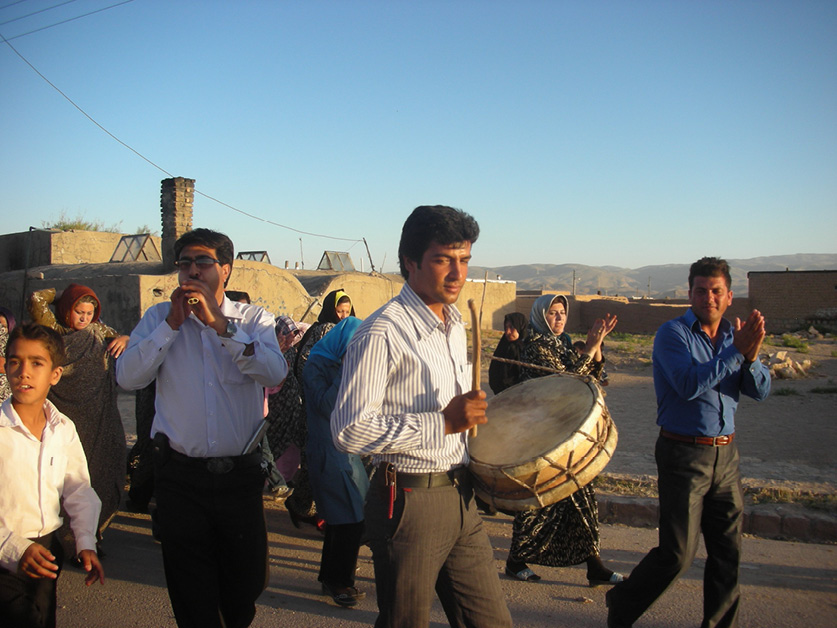
Plate I. A group of ʿāšeqs: Qeli Ḵošnavāz, dohol, and Pir ‘Ali Šākeri, qošma, at a wedding ceremony in Almājoq, July 2010. Photograph by and courtesy of the author.
Life-cycle celebrations such as circumcisions and weddings, and small gatherings in private homes, have long been an ideal venue for music performance. Wedding celebrations that in the past would sometimes stretch over several days are now reduced to a one-day or two-day event (see PLATE I). The people of the modern era do not have the time, leisure, or perhaps the interest to listen, for example, to a multi-evening dāstān; now dāstāns are usually performed and transmitted under the reduced form of individual songs. In Khorasan, teahouses were once one of the major venues for performances of baḵši, naqqāl, and darviš (Blum, 1972, pp. 29-40). This tradition did not survive the sociopolitical changes of the latter part of the 20th century. After the 1979 Revolution, most of the teahouses were closed (Youssefzadeh, 2002b, pp. 63-64).
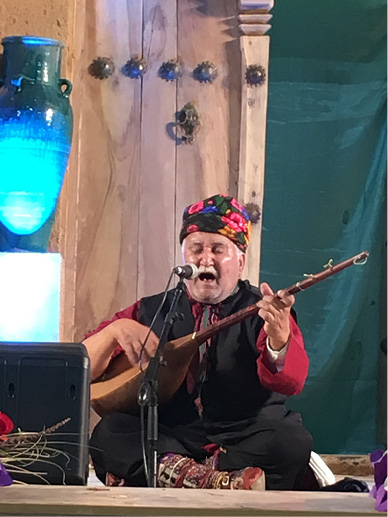
Plate II. Sohrāb Moḥammadi from Āšḵāna, Northern Khorasan, at the festival of regional music in Sanandaj, May 2016. Photograph by and courtesy of the author.
Since the late 1960s, another major venue for Khorasani musicians has been festivals. They were featured for the first time in the Shiraz Arts Festival (1967-77, q.v.) and the Ṭus Festival (1973-77), both sponsored by National Iranian Radio and Television (NIRT). Since the 1990s, festivals of regional music have become the most prominent venue for the performances of Khorasani musicians. The musicians are considered to be custodians of Iran’s cultural heritage and are featured in many festivals and concerts of regional music organized in Tehran and elsewhere. These festivals, often thematic (celebrating political or religious events) and sometimes competitive (prizes are given to the best musicians) are organized mostly by two government units, the Music Division of the Ministry of Culture and Islamic Guidance (Wezārat-e farhang wa eršād-e eslāmi) and the Arts Division of the Organization for the Propagation of Islam (Ḥawza-ye honari-e sāzmān-e tabliḡāt-e eslāmi; on festivals, see Youssefzadeh, 2000, pp. 49-54). Sometimes publications related to the festivals are issued (e.g., Darviši, 1997; 2004). In the festivals of regional music, the musicians have to dress in their traditional costumes and must limit their performance to music of their region; in the past it was common to include items from the repertoires of other regions (see PLATES II and III). In November 2010, UNESCO honored the music of Khorasani baḵšis by adding it to its “List of the Oral and Intangible Cultural Heritage of Humanity” (https://ich.unesco.org/en/RL/music-of-the-bakhshis-of-khorasan-00381).
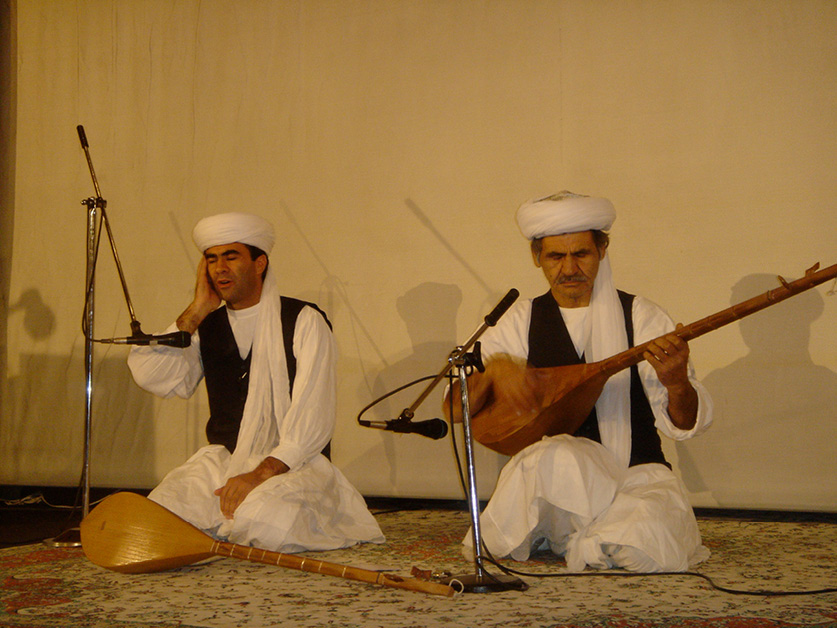
Plate III. Sarvar Aḥmadi and Ḥabib Ḥabibifar from Torbat-e Jām, Tehran, January 2006. Photograph by and courtesy of the author.
Since the late 1960s, radio and television have become important performance venues for Khorasani musicians. They include regional stations and, in Tehran, the very popular Radio Āvā and Radio Payām, among others, as well as regional television stations and the Islamic Republic of Iran Broadcasting (IRIB; Ṣedā va simā-ye Jomhuri-e eslāmi-e Irān) international television station Jām-e Jam, aimed at Iranians living abroad. Moreover, since the late 1990s, Khorasani musicians have been invited to Europe and the United States for various world festivals.
Written and oral transmission. In both northern and eastern Khorasan, the musicians who specialize in sung poetry usually rely on printed books, manuscripts, and notebooks (ketābča) to learn the repertoire of narratives and poems. Musicians’ notebooks, in which they copy verses and stories, are highly valued by most of the musicians.
The published sources of the Turkish dāstāns are chapbooks, available cheaply in the market, some of which have been reissued in Gonbad-e Qābus and Tabriz, in Turkmen and Azeri Turkish, respectively (e.g., Dordi Qāżi, Sāʿi). Lithographed versions of dāstāns printed in Central Asia and Afghanistan have circulated among the baḵšis since the early 20th century. The divāns of poets from eastern Khorasan, many of whom were prominent figures of the Naqšbandi order, have been published (e.g., Feqhi Saljuqi; Majidi; see also Moḥammadzāda). The melody types and rhythmic patterns are taught orally. Since the 1990s, in addition to being taught privately, the dotār has been taught in many classes established with the authorization of the Ministry of Islamic Guidance in each region. The students are both male and female.
Two outstanding sources of sound recordings from Khorasan are the “Stephen Blum Collection of Music from Iranian Khorāsān” (original ethnographic sound recordings from 1968 to 2006) at Harvard University Loeb Music Library, and recordings made by Fawzia Majd in the 1970s under the sponsorship of the former NIRT, many of which have been published in recent decades in Tehran (e.g., Musiqi-e šemāl-e Ḵorāsān, 2003a, 2003b, 2004, 2005a, 2005b). Apart from these recordings and many others that have been issued with a permit (mojawwez) from the music office (daftar-e musiqi) of the Ministry of Islamic Guidance (see Youssefzadeh, 2000, pp. 44-49), there are many field recordings of Khorasani musicians (from private gatherings, festivals, etc.) recorded often by amateurs that have been circulating in the form of cassettes among musicians and music lovers. Some of them can be found in today’s local audio disc (CD) shops, where they are often digitized and are labeled after a master musician (e.g., Musiqi-e Torbat-e Jam, 2002, by Sarvar Aḥmadi; Musiqi‑e šemāl-e Ḵorāsān, 2015, by Sohrāb Moḥammadi) or merely labeled as regional (maḥalli). Cassette recordings and more recently CDs are other tools for learning. Ḥamid Ḵeżri (b. 1969), a native of Qučān, has learned melodies mostly from the tapes that he made himself while visiting bards or culled from radio archives (see Iran: Le dotār du Khorassan; Youssefzadeh, 2009).
Musical characteristics. Khorasani music consists of melody types, usually called āhang (tune) or maqām (Rāḥati, 2012a; Masʿudiya, 1992b). The Turkmen, in addition to the term maqām, use the term sāz (instrument) for instrumental repertoire (Masʿudiya, 2000, p. 23). Some maqāms or āhangs are named after prominent figures, such as Navāʾi (the 15th-century statesman and poet Mir ʿAlišir Navāʾi), popular throughout Khorasan (with distinct characteristics in each region), and Šāh Ḵatāʾi (the pen name of Shah Esmāʿil I Ṣafawi, q.v.). Other maqām’s names often refer to the name of an item in the repertoire.
Musical characteristics are also related to instrumental technique. On all dotārs, the high-pitched string (zir) provides the melody; the lower-pitched string (bam) has different functions. On the dotār of northern Khorasan and the Turkmen, the bam, when stopped by the thumb, produces a sort of polyphony with the zir. In the east, the lower string mostly provides a continuous drone. On the dotār of northern Khorasan, the bam is tuned a fourth or a fifth lower than the zir. On the dotār of eastern Khorasan, the bam is tuned in one of six different ways depending on the melody-type used (Darviši, 2001, pp. 126-27). Most dotārs in northern Khorasan have between eleven and thirteen adjustable frets and have a chromatic scale; in the east, they have between nine to eighteen and three-quarter-tone intervals are used. The musical system is built around two conjunct tetrachords or pentachords. The range of pitches remains within a minor tenth. Certain pitches have a more prominent function, similar to those of the dastgāh of Persian classical music (see IRAN xi. MUSIC). Varieties of asymmetric meters such as 5/8 and 7/8, called aksak in Turkish or lang in Persian, are common in both areas (Majd, 2002; see also Youssefzadeh and Blum, 2016; Blum, 2019). The melody types used in both areas permit the repetitions of lines and the use of vocables (syllables that do not belong to the poem). Some of these do not carry lexical meaning but are essential in expressing the singer’s feeling and emotion. They can occur at the beginning, middle, or end of a verse and are indispensable to sung poetry (see Blum, 2018).
Characteristics of the northern musical area. In the Turkish dāstān, most of the poems are sequences of sung quatrains, from two to ten, separated by instrumental interludes. The poems use both the syllabic versification of Turkic popular poetry with lines of eight syllables (divided as 4+4, 5+3, or 3+5) or eleven syllables (divided as 6+5 or 4+4+3), and one of the quantitative meters (ʿaruż; q.v.) of classical Persian poetry: fifteen syllables in the ramal meter, which is associated with specific melody-types (see Blum, 1978, pp. 49-84; idem, 2006; idem, 2009b; Youssefzadeh, 2002b, pp. 197-260; Rāḥati, 2012b). The musician’s concern is “to know the verses that best fit particular tunes as well as the tunes that are most appropriate to a given story or poem” (Blum, 2009a, pp. 208-9). The baḵši ʿAli Ḡolāmreżāʾi (1932-2021) claims that “according to his audience’s mood and the poem selected, he can choose happy (šād), moving (suznāk), martial (razmi), or melancholy (ḥoznāvar) airs” (Youssefzadeh, 2002a, p. 840).
Some melody types accommodate verses in more than one language. For example, Šāh Ḵatāʾi and Navāʾi can be adapted for verses in Khorasani Turkish, Kurmanji Kurdish, and Persian. Navāʾi is often performed to introduce a Turkish narrative. The verses lamenting the death of Sardār ʿEważ use lines of eleven syllables (divided as 6+5), which are rare in Kurdish poetry but prominent in Turkish poetry. The baḵši Sohrāb Moḥammadi, during the Iran-Iraq War (1980-88), adapted this melody type and poetic schema to compose a song for his son Ḥosayn while he was on the front (Youssefzadeh, 2008, p. 287).
Jaʿfarqoli’s verses are lines of fourteen syllables (divided as 7+7), which are sung to a few tunes named after him. The most common format of Khorasani Kurdish poetry is tristichs—groupings of three lines of eight syllables each (often divided into two groups of four syllables), with a series of refrain lines and a common rhyme. (For anthologies of Khorasani tristichs, see Tawaḥḥodi, 1995; Rostami, 2007.) Lo is a Kurmanji Kurdish vocal genre performed by both baḵšis and ʿāšeqs. Ferdowsi’s Šāh-nāma is in motāqareb meter with eleven syllables in each half-line. A naqqāl would also sing verse narratives of Imam ʿAli’s heroic deeds (ḡazawāt) in the same meter and to the same melodies as Šāh-nāma (examples in the audio disc Naqqāli dar šemāl-e Ḵorāsān).
Characteristics of the eastern musical area. While in northern Khorasan the repertoire is mostly vocal, in the east there is also a substantial repertoire of purely instrumental music (Majd, 2002; Masʿudiya, 1980). The main form used in sung poetry is čahār-bayti, which can be performed as a vocal or an instrumental piece. The metric organization of a čahār-bayti is distinct; each line is composed of two hemistiches of eleven syllables, each organized in short and long syllables in the hazaj meter with the rhyme scheme aaba. Each line of two hemistiches of the čahār-bayti is often separated by a dotār interlude.
Several melody types are associated with the čahār-bayti, such as Sarḥaddi, Hazāragi, Jamšidi, and Kuča-bāḡi. Sarḥaddi is the most popular and is found in northern Khorasan as well as in the south, in the regions of Ferdows, Gonābād, Qāʾenāt, Birjand (q.v.), and Nehāvand (Majd, 2002, p. 61). Some maqāms are considered principally instrumental, such as Jal, Šāh Ṣanam, Mašq Peltān, Oštor Ḵajuy, and Allāh, although some are also sung, such as the maqām Allāh, which is often performed (both played and sung) in the Naqšbandi’s ḏekr (q.v.) sessions during which some participants may enter a state of ecstasy (Majd, 2002, p. 57). The two most popular maqāms of the Torbat-e Jām region are Allāh-madad (‘Help, O Allah’) and Navāʾi. The former is addressed to Shaikh Aḥmad-e Jām (q.v.; d. 1140) whose mausoleum is situated in the city of Torbat-e Jām. Navāʾi, on the other hand, is a maqām popular throughout Khorasan, however with distinct regional characteristics (Blum, 2006). Some of the maqāms performed by musicians of the Torbat-e Jām region are also performed in the Herat region of Afghanistan (Traditional Music of Herat, tracks 3 and 10).
Quatrains performed in the south have become well-known through the performances of Simā Binā (b. 1944), a famous Iranian female singer. A native of Southern Khorasan (Birjand), she has reinterpreted some of the same melodies in her compositions (Musiqi-e janub-e Ḵorāsān).
Interaction with other peoples and music continues to shape the music of Khorasan. Some of the new generation of Khorasani musicians have moved to Tehran or abroad, while others have remained in Khorasan. Both groups continue the tradition and explore other new modes of expression, often called musiqi-e talfiqi (from talfiq “putting together”) as in the case of Ḥamid Ḵeżri, a dotār player who now lives in France and is part of a trio (KNS) which combines electronic music and dotār. Classical musicians also collaborate with Khorasani musicians, such as the late Moḥammad-Reżā Šajariān (1940-2020) and Kayhān Kalhor with Ḥāj Qorbān Solaymāni on the album Night Silence Desert (2000) or Ẕu’l-faqār ʿAskariān and Ḡolām-Ḥosayn Ḡaffāri performing at the Tālār-e Waḥdad in Tehran with the famous classical singer Sālār ʿAqili and Kayvān Sāket’s orchestra in 2013.
Examples of music from Khorasan are available in the following audio clips:
Dāstān-e Šāh Esmāʿil o Golzār Ḵānom
Monājāt-e Ḵᵛāja ʿAbd-Allāh Anṣāri
Bārelāha, karima
“Song in Praise of Opium”
Bibliography
- John Baily, “Recent Changes in the Dutār of Herat,” Asian Music 8/1, 1976, pp. 29-64.
- Ilhan Başgöz, Hikāye: Turkish Folk Romance as Performance Art, Bloomington, Indiana, 2008.
- Stephen Blum, “The Concept of the Āsheq in Northern Khorasan,” Asian Music 4/1, 1972, pp. 27-47; tr. Humān Asʿadi, as “Mafhum-e ʿāšeq dar farhang-e musiqāʾi-e šemāl-e Ḵorāsān,” Faṣl-nāma-ye Māhur 17, 2002, pp. 9-29.
- Idem, “Persian Folksong in Meshhed (Iran), 1969,” Yearbook of the International Folk Music Council 6, 1974, pp. 86-114; tr. Nātāli Čubina, as “Tarāna-ye mardomi dar Mašhad,” Faṣl-nāma-ye Māhur 39, 2008, pp. 7-38.
- Idem, “Changing Roles of Performers in Meshhed and Bojnurd, Iran,” in Bruno Nettl, ed., Eight Urban Musical Cultures: Tradition and Change, Urbana, 1978, pp. 19-89.
- Idem, “Rural and Urban Interchange in the Music of Northeastern Iran,” in Daniel Heartz and Bonnie C. Wade, eds., Report of the Twelfth Congress, Berkeley 1977, International Musicological Society, Kassel, 1981, pp. 608-11.
- Idem, “Musical Questions and Answers in Iranian Xorasan,” Annuario degli Archivi di Etnomusicologia dell’Accademia Nazionale di Santa Cecilia 4, 1996, pp. 145-63.
- Idem, “Navā’i: A Musical Genre of Northeastern Iran,” in Michael Tenzer, ed., Analytical Studies in World Music, New York, 2006, pp. 41-57.
- Idem, “Remembering Warriors in Song,” in T. Marković and V. Mikić, eds., Musical Culture and Memory, Belgrade, 2008, pp. 273-89.
- Idem, “Modes of Theorizing in Iranian Khorasan,” in Richard K. Wolf, ed., Theorizing the Local: Music, Practice, and Experience in South Asia and Beyond, New York, 2009a, pp. 207-24.
- Idem, “Şah Xəta’i as Name and Genre,” in Proceedings of International Musicological Symposium ‘Space of Muğam’, Baku, 2009b, pp. 92-97.
- Idem, “The Terminology of Vocal Performance in Iranian Khorasan,” in Rachel Harris and Martin Stokes, eds., Theory and Practice in the Music of the Islamic World: Essays in Honour of Owen Wright, London, 2018, pp. 237-70.
- Idem, “Meter and Rhythm in the Sung Poetry of Iranian Khorasan,” in Richard K. Wolf, Stephen Blum, and Christopher F. Hasty, eds., Thought and Play in Musical Rhythm, Oxford, 2019.
- S. Blum and M. A. Khalilian, Musical Ontology of the Naqshbandi Order in Eastern Iran (paper presented at the annual meeting of the Society of Ethnomusicology), Columbus, Ohio, 2007, unpublished (available at www.academia.edu/7892211/Musical_Ontology_of_the_Naqshbandi_Order_SEM_2007_).
- Bahman Bustān and Moḥammad-Reżā Darviši, Haft awrang: Morur-i bar musiqi-e sonnati o maḥalli-e Irān, Tehran, 1991.
- Alexander Chodźko, Specimens of the Popular Poetry of Persia, London, 1842.
- Mollā Dād-ʿAli, Divān-e bāḡ-e gol-e Dād-ʿAli, ed. Faḵr-al-Din Zendadel, Torbat-e Jām, 2005.
- Moḥammad-Reżā Darviši, Āʾina va āvāz: Majmuʿa-maqālāt dar-bāra-ye musiqi-e nawāḥi-e Irān, Tehran, 1997.
- Idem, Dāʾerat al-maʿāref-e sāzhā-ye Irān I/Encyclopaedia of the Musical Instruments of Iran I: Chordophones in Regional Music, Tehran, 2001; Dāʾerat al-maʿāref-e sāzhā-ye Irān II/Encyclopaedia of the Musical Instruments of Iran II: Membranophones, Idiophones in Regional Music, Tehran, 2005.
- Idem, ed., Musiqi-i ḥamāsi-e Irān, Tehran, 2004.
- ʿAbd-al Raḥman Diahji, Zendagi-nāma va bargozida-ye ašʿār-e Maḵtumqoli Farāḡi, Tehran, 1994.
- Gerhard Doerfer, “The Influence of Persian Language and Literature among the Turks,” in Richard G. Hovannisian and Georges Sabagh, eds., The Persian Presence in the Islamic World, Cambridge, 1991, pp. 237-49.
- Gerhard Doerfer and Wolfram Hesche, Türkische Folklore-Texte aus Chorasan, Wiesbaden, 1998.
- Ḥājj Morād Dordi Qāżi, ed., Dāstān-e Ṣāyād Hamrā, n.p., 2001.
- Idem, Zohra va Ṭāher, Gonbad-e Qābus, 2005.
- Idem, Dāstān-e Šāh Ṣanam-e ḡarib, Gonbad-e Qābus, 2006.
- Jalāl-al-Din Feqhi Saljuqi, Manẓuma-ye jalāli, ed. Ḥabiballāh Šāhini, Torbat-e Jām, 1992.
- Wladimir Ivanov, “Notes on Khorasani Kurdish,” Journal of the Asiatic Society of Bengal, n.s. 23, 1927, pp. 167-235.
- Hušang Jāvid, Musiqi-ye šemāl-e Ḵorāsān, Tehran, 2015.
- Ḥosayn Kuhi Kermāni, Čahārdah afsāna az afsānahā-ye rustāʾi-e Irān, Tehran, 1935.
- Fawzia Majd, “Maqāmhā-ye sāzi-e Torbat-e Jām, be rewāyat-e Nazar-Moḥammad Solaymāni” Faṣl-nāma-ye Māhur 16, 2002, pp. 51-66.
- Idem, Nafir-nāma, 2nd ed., Tehran, 2011.
- ʿAbd-al-Raʾuf Majidi, ed., Divān-e Šāyeq, Torbat-e Jām, 2007.
- Henri Massé, Croyances et coutumes persanes, suivies de contes et chansons populaires, 2 vols., Paris, 1938.
- Moḥammad-Taqi Masʿudiya, Musiqi-e Torbat-e Jām, Tehran, 1980.
- Idem, “Die Begriffe Maqām und Dastgāh in der turkmenischen Musik des Iran,” in Jürgen Elsner and Gisa Jänichenm, eds., Regional Maqām-Traditionen in Geschichte und Gegenwart, Berlin, 1992a, pp. 377-97.
- Idem, “Der Begriff des Maqām in der persischen Volksmusik,“ in Rüdiger Schumacher, ed., Von der Vielfalt musikalischer Kultur: Festschrift Josef Kuckertz zum 60, Geburtstag, Salzburg, 1992b, pp. 311-34.
- Idem, Musiqi-e Torkamani: Āvā-nevisi va tajzia va taḥlil, Tehran, 2000.
- Maḵtumqoli Farāḡi, Divān-e Maḵtumqoli Farāḡi, Gonbad-e Qābus, 1990.
- Ḡafur Moḥammadzāda, Farhang-nāma musiqi-e Torbat-e Jām, Tehran, 2015.
- Jahāngir Naṣri Ašrafi, Gusān-e pārsi: Barrasi-e naql o naqqāli dar nawāḥi-e Irān, Tehran, 2006.
- Elnāz Nowruzi, “Mošāhedāt-i az yek marāsem-e ʿarusi dar Ḵorāsān,” Faṣl-nāma-ye Māhur 33, 2006, pp. 191-98.
- Bābak Rāḥati, “Goftogu bā Karbalāʾi baḵši ʿAbbāsqoli Ranjbar,” Faṣl-nāma-ye Māhur 49, 2010, pp. 159-66.
- Idem, “Mafhum-e maqām dar musiqi-e baḵšihā-ye Ḵorāsān,” Faṣl-nāma-ye Māhur 56, 2012a, pp. 43-59.
- Idem, “Tajzia va taḥlil-e maqāmhā-ye haftgāna-ye musiqi-e baḵšihā-ye šemāl-e Ḵorāsān,” Faṣl-nāma-ye Māhur 57, 2012b, pp. 35-64.
- Karl Reichl, Turkic Oral Epic Poetry: Traditions, Forms, Poetic Structure, New York, 1992.
- ʿAzim Rostami, Majmuʿa-ye yek-ṣad o se ḵešti-e kormānji, Mashhad, 2007.
- Ḥosayn Sāʿi, Divān-e Šāh Esmāʿil va Golʿeẕār-e dāstāni, Tabriz, 2001. Hiromi Lorraine Sakata, Music in the Mind: The Concepts of Music and Musician in Afghanistan, Kent, Ohio, 1983.
- Mark Slobin, Music in the Culture of Northern Afghanistan, Tucson, Ariz., 1976.
- Bertold Spuler, “Bakhshi,” in EI2 I, Leiden, 1986, p. 953.
- Percy Molesworth Sykes, “Notes on Musical Instruments in Khorasan, with Special Reference to the Gypsies,” Man 9, no. 94, 1909, pp. 161-64.
- Kalim-Allāh Tawaḥḥodi, ed., Divān-e ʿerfāni-e Jaʿfarqoli Zangeli, Mashhad, 1990; 2nd ed., 2002.
- Idem, Ḥarakat-e tāriḵi-e Kord ba Ḵorāsān dar defāʿ az esteqlāl-e Irān, 6 vols., Mashhad, 1982 [revised 1992]-2007.
- Idem, ed., Tarānahā-ye Kormānji-e Ḵorāsān, Mashhad, 1995.
- Saʿid Ṭehrānizāda, Dastur-e dotār I, Tehran, 2008.
- I. I. Tsukermann, Khorasankii Kurmandzhi: Issledovanie i teksty, Moscow, 1986.
- Farrokh Vahabzadeh-Mortazavi, “Le dotar et sa musique dans le Khorasan et en Asie Central (une étude d’ethnomusicologie comparative),” Ph.D. diss., École des Hautes Études en Science Sociales de Paris, 2010.
- Ameneh Youssefzadeh, “The Situation of Music in Iran Since the Revolution: The Role of Official Organizations,” British Journal of Ethnomusicology 9/2, 2000, pp. 35-61.
- Idem, “ʿAlī Āqā Ālmājoqī: The Life of a Khorasani Bakhshi,” in Virginia Danielson, Scott Marcus, and Dwight Reynolds, eds., Garland Encyclopedia of World Music VI, New York, 2002a, pp. 839-41.
- Idem, Les bardes du Khorassan iranien: Le bakhshi et son repertoire, Leuven and Paris, 2002b; revised Pers. tr. ʿAlireżā Manāfzada, as Rāmešgarān-e šemāl-e Ḵorāsān: Baḵši va repertuar‑e u, Tehran, 2010.
- Idem, “Singing the Martyrs: Revolutionary and Patriotic Songs in the Repertoire of the Khorasani Bards,” in Tatjana Markovic and Vladimir Mikic, eds., Musical Culture and Memory, Belgrade, 2008, pp. 281-89.
- Idem, “Iran: Le dotār du Khorassan, featuring Hamid Khezri. Recorded and Edited by Wolfgang Obrecht,” Asian Music 40/2, 2009, pp. 156-60 (review article).
- Idem, “Ba yād-e Nur-Moḥammad Dorpur,” Faṣl-nāma-ye Māhur 68, 2015, pp. 135-36.
- Idem, “Whispering to God: Monājāt, a Sung Prayer in Iranian Khorasan,” in Rachel Harris and Martin Stokes, eds., Theory and Practice in the Music of the Islamic World: Essays in Honour of Owen Wright, London, 2018a, pp. 252-63.
- Idem, “Veiled Voices: Music and Censorship in Post-Revolutionary Iran,” in Patricia Hall, ed., The Oxford Handbook on Music Censorship, Oxford, 2018b, pp. 657-74.
- Ameneh Youssefzadeh and Stephen Blum, “Kontrol-e ritm dar do ejrā-ye dāstān-e Šāh Esmāʿil dar Ḵorāsān,” Faṣl-nāma-ye Māhur 71, 2016, pp. 41-57.
- Idem, Shāh Esmāʿil and His Three Wives: A Persian-Turkish Tale as Performed by the Bards of Khorasan, Studies on Performing Arts and Literature of the Islamicate World 12, Leiden, 2022.
- Slawomira Żerańska-Kominek, “Music of Turkmenistan,” in Virginia Danielson, Scott Marcus, and Dwight Reynolds, eds., Garland Encyclopedia of World Music VI: The Middle East, New York, 2002, pp. 965-77.
- Discography (listed alphabetically by title).
- A collection of music from Khorasan with free public access and no restrictions on use may be found at “The Stephen Blum Collection of Music from Iranian Khorāsān,” Harvard University Loeb Music Library, online at https://library.harvard.edu/collections/stephen-blum-collection-music-iranian-khorasan).
- Afghanistan: le rubâb de Hérat/The Rubâb of Herat, played by Mohammad Rahim Khushnawaz, recording and notes by John Baily, Archives Internationales de Musique Populaire 25, Geneva, 1993 (VDE CD-699).
- Āvā-ye ṣaḥrā/Sounds from the Plain, performed by Simā Binā et al., Canoga Park, Calif., 1997 (Caltex Records).
- Iran: Bardes du Khorassan, recorded and notes by Ameneh Youssefzadeh, Paris, 1998 (Ocora Harmonia Mundi C-560136).
- Iran-Khorassan: L’Histoire de Tāher et Zohre, performed by Rowšan Golafruz, annotated and produced by Ameneh Youssefzadeh, Paris, 2004 (Inédit/Maison des Cultures du Monde W 260116).
- Iran: Le dotār du Khorassan, Hamid Khezri, recorded and ed. by Wolfgang Obrecht, notes by Cloé Drieu, Archives internationals de musique populaire 76, Geneva, 2005 (review by Ameneh Youssefzadeh, Asian Music 40/2, 2009, pp. 156-60).
- Maqāmha-ye sāzi Torbat-e Jām/The Instrumental Maghâms of Torbat-e Jâm, performed by Naẓar-Moḥammad Solaymāni, program notes by Fawzia Majd, Tehran, 2003 (Mahur CD-137).
- Music of the Bards from Iran: Northern Khorasan, performed by Ḥāj Qorbān Solaymāni, notes by Ameneh Youssefzadeh, Los Angeles, 1995 (Kereshmeh CD-106).
- Musiqi-e ḥamāsi-e Irān 5: musiqi-e šemāl-e Khorāsān/Epic Music of Iran 5: Music from North Khorasan; Musiqi-e ḥamāsi-e Irān 6: musiqi-e šemāl-e Khorāsān/Epic Music of Iran 6: Music North Khorasan; Musiqi-e ḥamāsi-ye Irān 8: musiqi-ye Khorāsān, Torbat-e Jām/Epic Music of Iran 8: Music of Khorasan, Torbat-e Jām; Musiqi-e ḥamāsi-e Irān 9: musiqi-e Khorāsān, Sabzevar/Epic Music of Iran 9: Music of Khorasan, Sabzevar), comp. by Moḥammad-Reżā Darviši, Tehran, 2004 (Markaz-e musiqi-e ḥawza honari).
- Musiqi-e janub-e Ḵorāsān/Musique du sud du Khorasan/Music of South Khorassan, performed by Simā Binā, n.p., 1999 (Buda Records, Musique du Monde 92583-2).
- Musiqi-e Ḵorāsān: Torbat-e Jām, Quchān, Daregaz/ Music of Khorâsân, comp and notes by Farida Rāhnemā (Musiqi-e nawāḥi-e Irān 74, Mahur CD-556).
- Musiqi-e nawāḥi-e Irān (Regional Music of Iran), 16 albums, Tehran, 1998.
- Musiqi-e šemāl-e Ḵorāsān/Music from Northern Khorâsân, performed by Baḵši Awliāqoli Yegāna, comp. and notes by Fawzia Majd, Tehran, 2003 (Musiqi-e nawāḥi-e Irān 33, Mahur CD-136).
- Musiqi-e šemāl-e Ḵorāsān/Music from Northern Khorâsân, performed by Rowšan Golafruz, comp. by Ameneh Youssefzadeh, Tehran, 2005a (Musiqi-e nawāḥi-e Irān 10, Mahur CD-184).
- Musiqi-e šemāli-e Ḵorāsān/Music of Northern Khorâsân, performed by Moḵtār Zanbilbāf Moqaddam, program notes by Fawzia Majd, Tehran, 2005b (Musiqi‑e nawāḥi-e Irān 6, Mahur CD-177).
- Musiqi-e šemāl-e Ḵorāsān/The Music of Northern Khorâsân, performed by Sohrāb Moḥammadi, notes by Stephen Blum, Tehran, 2015 (Musiqi-e nawāḥi-e Irān 50, Mahur CD-418).
- Musiqi-e šemāl-e Ḵorāsān: Dāstān-e Zohra va Ṭāher/Music from Northern Khorâsân: The Story of Zohré and Ṭāher, performed by Moḥammad Ḥosayn Yegāna, program notes by Fawzia Majd, Tehran, 2003 (Musiqi-e nawāḥi-e Irān 40, Mahur CD-154).
- Musiqi‑e šemāl-e Ḵorāsān: Dāstān-e Ebrāhim Adham/Music from Northern Khorâsân: The Tale of Ebrâhim Ad-ham, performed by Moḥammad Ḥosayn Yegāna, program notes by Fawzia Majd, Tehran, 2004 (Musiqi-e nawāḥi-e Irān 39, Mahur CD-172).
- Musiqi-e šemāl-e Ḵorāsān: Dāstān-e Šāhzāda-ye Zarrin ʿEḏar/Music of Northern Khorasan: The Romance of Prince Goldface, performed by Golafruz Baḵši Ḥamrā, program notes by Fawzia Majd, Tehran, 2005b (Musiqi-e nawāḥi-e Irān 12, Mahur CD-418).
- Musiqi-e šemāl-e Ḵorāsān, Širvān/The Music of Northern Khorasan, Širvān, ʿAli-Rezā Eslāmi, dotār and vocal, comp. and notes by Saied Tehrānizādeh, Tehran, 2018 (Musiqi-e nawāḥi-e Irān 71, Mahur CD-535).
- Musiqi-e šemāl-e Ḵorāsān: Sornā-navāzi/Music of Northern Khorasan: Sorna Playing, performed by ʿAli-Akbar Bahāri and Moḥsen Bahāri, Tehran, 2016 (Musiqi-e nawāḥi-e Irān 62, Mahur CD-457).
- Musiqi‑e Torbat-e Jām/Music of Torbat-e Jâm, performed by Nur-Moḥammad Dorpur and Ḏolfaqār ʿAskaripur, Tehran, 1999 (Mahur CD-42).
- Musiqi-e Torbat-e Jām/Music of Torbat-e Jâm, performed by ʿAbd-Allāh Sarvar Aḥmadi, Tehran, 2002 (Mahur CD-91).
- Musiqi-e Torbat‑e Jām/Music of Torbat-e Jâm, performed by Ḡolām-ʿAli Purʿaṭāi et al., Tehran, 2016 (Musiqi-e nawāḥi-e Irān 66, Mahur CD-487).
- Musiqi-e Torkaman Ṣaḥrā/The Music of Turkaman-Sahrâ, performed by Naẓarli Maḥjubi et al., Tehran, 2003 (Mahur, CD-123).
- Naqqāli dar šemāl-e Ḵorasan/Naqqâli in Northern Khorâsân, recorded and notes by Stephen Blum, Tehran, 2007 (Musiqi-e nawāḥi-e Irān 19, Mahur CD-227).
- Raqṣhā-ye šarq-e Ḵorāsān: Torbat-e Jām/Torbat-e Jâm Dances, East Khorâsân, performed by Ḡolām-ʿAli Neynavāz et al., comp. by Manṣura Ṯābetzādah, Tehran, 2003 (Mahur CD-150).
- Raqṣhā-ye šemāl-e Ḵorāsān: Kormānji/Kormânji Dances, Northern Khorâsân, performed by Ḥešmat Saʿādati et al, comp. by Manṣura Ṯābetzādah, Tehran, 2003 (Regional Dances of Iran 2, Mahur CD-143).
- The Traditional Music of Herat/La Musique traditionnelle d’Hérat, recording and notes by John Baily and Veronica Doubleday, Paris, 1996 (UNESCO Collection of Traditional Music of the World, Auvidis CD D-8266).
- Turkmenistan: Chants des femmes bakhshi, performed by Akhmurad Chariev, Shemshat Hodjaeva, Djamala Saparova, and Leila Shadurdieva, Paris, 1995 (Maison des cultures du monde audio disc W 260064).