



Khorasan in modern Islamist ideology is a byproduct of the influx of Muslim fighters (moj ā hedin) into Afghanistan after the Soviet Union invaded the country in 1979 during the Cold War. For the varied groups contesting Soviet presence, the revival of the pre-modern concept of Khorasan held specific, and at times contradictory, meaning. Leveraged by the Islamist militant network Al-Qaeda (al-Qāʿeda) in the mid-1990s and adopted by a unit of the Islamic State of Iraq and Syria (ISIS), the militant group that came to prominence in Iraq and Syria in 2013 and gained followers in its proclaimed caliphal province (wel ā ya) of Khorasan including parts of Afghanistan, Pakistan and adjacent areas, the term saw a resurgence in its political currency, which had been dormant since the early 20th century.
The concept of Khorasan as a geographical space and its political, cultural, and historical references have continually changed since the former Sasanian region became part of the Omayyad Muslim empire in the 1st/7th century (see KHORASAN i.-iv.). The history of the region between the Muslim conquest and the 6th/13th centuries “is the history of a marginal region becoming a center and then again a margin” (Durand-Guédy, p. 2). In the 13th/20th century, the region once again gained prominence, this time in Afghanistan’s historical narrative, beginning with an article in 1932 by Mir Ḡolam Mohammad Ḡobār that positioned the country as part of Āryānā, “Land of the Aryans,” in pre-Islamic times (see ARYANS, ERĀN WĒZ; i.e., present-day Afghanistan and parts of Iran and Pakistan) and as Khorasan, “The Place where the Sun Rises,” after the Islamic conquests (Ḡobār, 1932, pp. 7-40). In this narrative, Abu Moslem Ḵorāsāni (q.v.), the prominent 2nd/8th-century leader of the ʿAbbasid Revolution (see KHORASAN v.), is revered as an Afghan resistance leader who donned black clothing and raised a black banner against foreign (Omayyad) oppression. The symbolisms associated with Abu Moslem’s movement have resonated in Afghan historical consciousness, a notable example being the color of the national flag that, until 1928, was all black with a white seal in the middle (see FLAGS ii.). To situate Abu Moslem further within modern Afghanistan’s geographical boundaries, Afghan narratives designate the village of Sapid Dāž near the modern city of Sar-e Pol as his place of birth rather than the more conventional location near Marv or Isfahan (Dawlatābādi, pp. 198-99; Ḡobār, 1956, pp. 1-113; Kohzad).
From the initial phases of the Afghan moj ā hedin political campaigns against the Soviets (1979-89) to the internal conflict with the Taliban (Ṭālebān) (1994-2001), Khorasan became a term of reference used by some of the local, mainly non-Pashtun, groups to propagate the idea that their armed struggle went beyond freeing the country from the foreign yoke and communism or the Taliban. For them, it was a call to return the country to its pre-1747 political makeup, the time before modern-day Afghanistan emerged as a political unit ruled by Dorrāni (q.v.) Pashtuns (Afḡān proper; see AFGHANISTAN x.). In this construct, the concept of Khorasan serves as a counterbalance to the Pashtun domination of the country, providing a more inclusive or Tajik-centric national construct than the exclusivity of Afghanistan as the “Land of the Afghans/Pashtuns” (Tarzi, 2018, pp. 124-26).
The focus of the Arab jihadists in Afghanistan in the early part of the 1980s was principally on fighting the Soviets in Afghanistan (see also ISLAM IN IRAN xi. JIHAD IN ISLAM). After the formation of Al-Qaeda in the late 1980s and the departure of the Soviets from Afghanistan, this focus began to change to global jihadist agendas, culminating in the return of the former moj ā hed Osama Bin Ladin (Osāma b. Lāden; d. 2011) to Afghanistan as the head of Al-Qaeda’s remodeled organization in 1996. At this juncture, Afghanistan served only as a base of operations for the larger, more elusive goals of establishing an Islamic caliphate, ousting the United States from Saudi Arabia, and destroying Israel. This led to theological, mythical, and geographic symbolisms associated with the historical Khorasan being incorporated into Al-Qaeda’s overall strategic propaganda.
The theological part of Al-Qaeda’s connection to Khorasan is based on a few hadiths (q.v.) linking the geographical location to future events (see Bahari and Hassan, pp. 18-19). The most referenced hadith, of which there are various renditions, conveys the message that there would emerge from Khorasan an army carrying black banners that no one would repel until it raised its banners in Ilia (the name used in early Muslim sources for Jerusalem). In one of these hadiths, the Prophet Moḥammad is alleged to have stated that his followers must join that army even if they have to crawl over ice (Haqqani). The hadith served to amplify symbolism denoting Khorasan’s prophetic role in the ultimate apocalyptic battle between Islam and its enemies. Bin Laden, aware of this connection, wrote in his 1996 declaration of war on the United States that “by the Grace of God” he had found “a safe base in Khorasan” (Bin Laden). This became a primary text for the jihadist movement. Al-Qaeda also created an online magazine, Ṭal āʿi Ḵor āsā n (Vanguard of Khorasan), leveraging the name. In its undated (most probably 2005) inaugural issue, Al-Qaeda identified two additional hadiths that detailed the “virtues of Khorasan” and used them as the justification behind the magazine’s title. One claimed that the Prophet said “When you see black banners coming from Khorasan, follow them, as ‘the Caliph of Allah, the Mahdi’ will be among them.” The second hadith, roughly recounting the ‘Abbasid revolt, narrates the Prophet saying that the deliverance of his own family from suffering will come from the East (another term associated with Khorasan). In most of the current online inquiries about the authenticity of the Khorasan hadiths (e.g., https://abuaminaelias.com/hadith-black-flags-al-mahdi or https://islamqa.info/en/answers/171131; both accessed 1 June 2020), the chains of transmissions for these sayings are contested by responding scholars, and they are categorized as ż a ʾi f (weak). Paradoxically, Ṭal āʿ i Ḵor āsā n mentions that Moḥammad b. ʿIsā Termeḏi (d. 279/892), who compiled the hadith about Jerusalem, had categorized the hadith as ḡarib (strange).
The geographical understanding of Khorasan, which has always fluctuated, according to the archeologist Rocco Rante, “could often be associated with a territorial entity more than an administrative one.” Even though under Samanids in the 4th/10th century (see KHORASAN vi.), Khorasan’s unification with Transoxiana (see MĀ WARĀ’ AL-NAHR) became “official,” in no instance had this region or Greater Khorasan included territories south of the Hindu Kush mountains in Central Afghanistan (Rante, pp. 10, 14). However, in Al-Qaeda’s understanding, Khorasan included Pakistan and parts of northern and northeastern India. The base of operations for Al-Qaeda was the seamless border regions between Afghanistan and Pakistan that they crisscrossed without any regard to the international administrative divisions. This transnational geographical delineation supported not only its physical territorial claims but also its political agenda: Its disregard for international borders emphasized that the Islamic world was a community of believers rather than states with distinct boundaries. This latter construct aligned with most of Al-Qaeda’s local Pakistani jihadist groups, which were purposed to oppose Afghanistan’s territorial claims over Pakistan’s northwestern regions and its notion that these divided geographical spaces were one contiguous Pashtun land. Since the establishment of Pakistan as a separate state in 1947, Afghanistan has regarded its southeastern neighbor as a usurper of Afghan territory. Pakistan on the other hand has tried to defuse the irredentist claims of its neighbor with a series of policies designed to keep Afghanistan weak while replacing “Afghan nationalism with a more Pakistani-controlled pan-Islamism, thus rendering Afghan nationalistic territorial claims irrelevant” (Tarzi, 2012). In 2013, a new online magazine emerged promoting “Khorasan” as the staging grounds for the establishment of a pan-Islamic caliphate. Published by the “Taliban in Khorasan,” Āzā n promoted radicalization, global jihad, and the fomenting of anti-Shiʿite sentiments. The magazine most probably belonged to Tahrik-e Taliban Pakistan (TTP) and not the Afghan Taliban, who did not have an internationalist orientation and did not pay much attention to the Khorasan construct, preferring an Afghan nationalist agenda. Further indication of TTP authorship is that Āzān is published by the “Taliban in Khorasan”; the Afghan Taliban refers to itself as the “Islamic Emirate of Afghanistan” or simply as mojāhedin (Ingram).
The U.S.-led invasion of Iraq in 2003 prompted jihadist organizations, including many in the ranks of Al-Qaeda, to shift their focus westward from Afghanistan and to align with splinter local groups and more independent groups in Iraq and elsewhere in the Arab countries. In Iraq, Abu Moṣʿab Zarqawi (d. 2006) established Al-Qaeda in Iraq based on a vision of the revival of a Sunni caliphate and the elimination of Shīʿism. In a letter to Bin Ladin and his deputy, Ayman Zawāhiri, Zarqawi urged them join him in his modus operandi by prioritizing the targeting of Shī’as before all other enemies. Zarqawi reminded the two Al-Qaeda leaders that “the greatest benefit” of his activities in Mesopotamia “is that this is jihad in the Arab heartland, a stone’s throw” from Mecca, Medina, and al-Aqṣā Mosque (Kepel and Milelli, pp. 251-67). In 2014, for the Sunnis in Iraq who were becoming increasingly marginalized and threatened by the Shiʿa administration in Baghdad, Zarqawi’s message resonated, and his vision gave birth to the establishment of the Islamic State of Iraq and Syria (ISIS). The breakdown of the Syrian state that began in 2011 allowed ISIS to expand westward, gaining territorial strategic depth and significant economic strength (Gerges, pp. 15-18). With its capital in Raqqa, ISIS transformed itself into a state.
The reestablishment of a Sunni caliphate and territoriality changed the notion of Khorasan for ISIS. Being based in Syria and Iraq, and referring to itself since 2014 as Islamic State (IS), ISIS no longer looked to the East for an army to fulfill its destiny because the army had already arrived. Most of the founders of IS, including Zarqawi, had begun their jihadist careers in “Khorasan.” They were the army with black banners, and they had already moved toward their target, the West, which symbolized Rome. IS preserved the black banner as its reference to the hadith about the army with black flags originating in Khorasan. Naming one of its online magazines Dabiq and its news agency Amaq, IS banked on another eschatological hadith, that the last hour would come when an army from Rome (Constantinople) would come to Amaq (present-day Turkey) or Dabiq (a city in northwestern Syria) and would be opposed with an army from Medina. After the Medinan army conquered Rome, they would become voracious and cavalier, leading to the appearance of Dajjāl (q.v.), “the great deceiver.” The Medinan forces would regroup in Syria to fight Dajjāl and be led in prayer by Jesus, son of Mary, who would defeat Dajjāl. Zarqawi wrote in his letter that “[w]e know from God’s religion that the true, decisive battle between unbelief and Islam is in Syria and its surrounding” (Kepel and Milelli, p. 251). Ironically, there are different hadiths concerning where Dajjāl will appear. Some state Dajjāl will appear in Khorasan, Sistan, and, more commonly, Yahudiya, the Jewish quarter of Isfahan in Iran. As IS gained in prominence over Al-Qaeda, the role of Khorasan in organizational narratives waned, as the Greater Syria traditions were more fitting to its geographical positioning and political agenda.
In 2014, usage of Khorasan resurfaced both in Syria and in and around the historical region. The U.S. Department of Defense in September issued a statement announcing the expected expansion of air campaigns beyond Iraq to include attacking “Khorasan Group targets west of Aleppo” (Lund). In this case, the usage of Khorasan most likely was due to the presence of veteran Al-Qaeda fighters in Syria who sought to identify themselves as those originally from the core Al-Qaeda areas and as members of the army with black banners. This group disappeared very quickly, or perhaps it never existed as an organized group, as it may have been more of a media invention resulting from a lack of understanding of some nameless group of Sunni fighters with alleged jihadist credentials from Afghanistan.
As an example of the contradictory understandings of “Khorasan” in modern Islamist ideology, one may note another group that surfaced in September 2013 in Iraq. The Khorasani Brigades (Sarāyā al-Ḵorāsāni), led by ʿAli Yasiri, was a well-armed and effective fighting Shiʿite group that opposed the Islamic State and had direct support from Iran’s Islamic Revolution Guard Corps (IRGC; Sepāh-e pāsdarān-e enqelāb-e eslāmi). It was considered one of most closely linked groups to the IRGC and also had ties to Iraq’s Islamic Vanguard Party (Ḥezb al-ṭaliʿa al-eslāmiya) and became part of Iraq’s Popular Mobilization Units (al-Hašd al-šaʿbi) (Heras, pp. 5, 10). The Khorasani Brigades displayed its affiliation with the IRGC very openly on its symbols (Figure 1) and, according to some sources, was named after either Abu Moslem Ḵorāsāni or “al-Sayyed al-Ḵorāsāni,” a reference to Iran’s Supreme Leader Ayatollah Ali Khamenei (Puxton; Qaidaari).
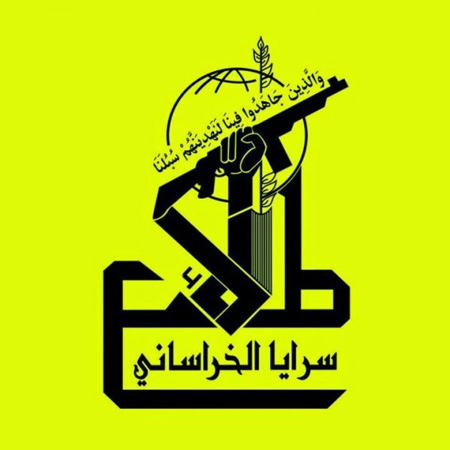
Figure 1. Khorasani Brigades (Sarāyā al-Ḵorāsāni) logo.
In 2015, closer to geographic Khorasan (or more accurately “Greater Khorasan”), another group, an IS affiliate, employing one of the many symbolisms attached to “Khorasan,” appeared in the fluid border lands between Afghanistan and Pakistan. Individuals and small groups of disgruntled jihadists in Afghanistan and Pakistan pledged their allegiance to the IS leader, Abu Bakr al-Baghdādi (d. 2019), and created the Islamic State Khorasan Province (ISKP). The geographical limits of the Islamic State Khorasan Province, true to the region’s history, remained fluid and corresponded to the locations where the group’s forces were operational, countries it targeted for enlisting more recruits, and, finally, the regions that were of utmost importance to its central leadership. In most reports, ISKP’s territorial claims encompassed Afghanistan, Pakistan, Iran, the Central Asian republics, northwestern (or all of) India, and part of Russia (Giustozzi, p. 2). The majority of the ISKP leadership came from Pakistani jihadist groups such as TTP, Laškar-e Ṭāʾeba, or Ḥarakat al-Mojāhedin. Early in ISKP’s formative period, it was joined by the Islamic Movement of Uzbekistan (IMU) and also attracted a number of dissatisfied Afghan Ṭaliban members. While Afghanistan and Pakistan continued to be understood as Khorasan for Islamists of all stripes, the group expanded it to include Central Asia due to the large number of Uzbeks, Tajiks, and Uighurs among its ranks who aspired to extend the movement to their home regions. Additionally, the Pakistani jihadist outfits involved wanted Kashmir in particular and India in general included, as they sought to gain control over these lands. Both the Afghan government and the United States took military action against ISKP, but its most ardent opponent was the Taliban. By 2018, ISKP had lost most of its territorial holdings. The Taliban meanwhile gained greater acceptancy in international circles, including in Iran and Russia, for its opposition to ISKP and its internationalist agendas (Tarzi, 2018).
The idea of “Khorasan” or “Greater Khorasan” has held different and at times conflicting meanings to different groups that emerged as part of the local and international resistance to the Soviet invasion of Afghanistan. For the local non-Pashtun groups in Afghanistan, “Khorasan” rekindled the region’s pre-Pashtun-dominated identity and the glories associated with Abu Moslem. The idea entered modern Islamist mythology and information operations with the establishment of Al-Qaeda in Afghanistan and Pakistan and through the convenience of a series of eschatological hadiths. For Pakistan and its proxy militant Islamist groups, “Khorasan” countered Afghanistan’s nationalism and its irredentist claims on Pakistani territory and brought India into an Islamist construct. In Iraq and Syria, the symbolisms associated with “Khorasan” are used by the Shiʿite Islamists to resist Sunni domination and to link to the Islamic Republic of Iran. For the Islamic State, “Greater Khorasan” became a province in a geopolitical scheme to redraw state boundaries. For Al-Qaeda ideologues, “Khorasan” represented the mythical region from which pan-Islamism would begin and a useful tool to counter Shiʿite Iran’s influence in Central Asia. With the emergence of the Islamic State in Iraq and Syria and the subsequent geographic shift of the operational base to Syria, the hadiths associated with “Khorasan” as a locus of Islamist militancy lost their political currency. For the Islamist ideologies in the late 20th and early 21st centuries, as had happened in the past, Khorasan literally and figuratively loomed first on the margins of the Islamic world, later became central to it, and then returned again to the margins.
Bibliography
- Mustazah Bahari and Muhammad Haniff Hassan, “The Black Flag Myth: An Analysis from Hadith Studies,” Counter Terrorist Trends and Analyses 6/8, 2014, pp. 15-20.
- Osama bin Laden, “Eʿlān al-jehād ʿalā al-Amrikiin al-moḥtallin le-belād al-ḥaramayn,” 1996; available at Combating Terrorism Center at West Point (https://ctc.usma.edu/wp-content/uploads/2013/10/Declaration-of-Jihad-against-the-Americans-Occupying-the-Land-of-the-Two-Holiest-Sites-Original.pdf).
- B. A. Dawlatābādi, Še n ā s-n ā ma-ye Afḡ ā nest ā n, Qom, 1992.
- David Durand-Guédy, “Pre-Mongol Khurasan: A Historical Introduction” in R. Rante, ed., Greater Khorasan, Berlin, 2015, pp. 1-7.
- Fawaz A. Gerges, ISIS: A History, Princeton, 2016.
- M. G. M. Ghobār, “Tāriḵča-ye moḵtaṣar-e Afḡānestān,” in S ā ln ā ma-ye Majalla-ye Kābol, Kabul, 1311/1932, pp. 7-40.
- Idem, “Ẓohur wa nofuẓ-e Eslām wa ‘Arab dar Afḡānestān” T ārī ḵ-e Afḡ ān estān III/1, Kabul, 1956.
- Antonio Giustozzi, The Islamic State in Khorasan: Afghanistan, Pakistan and the New Central Asian Jihad, London, 2018.
- Husain Haqqani, “Prophecy and the Jihad in the Indian Subcontinent,” Current Trends in Islamist Ideology, Vol. 18, 2015, pp. 5-17.
- Nicholas A. Heras, “Iraq’s Fifth Column: Iran’s Proxy Network,” Middle East Institute Policy Paper 2017, No. 2, October 2017.
- Harold J. Ingram, “An Analysis of the Taliban in Khurasan’s Azan (Issues 1-5),” Studies in Conflict and Terrorism 38, 2015, pp. 560-79.
- Ahmad Ali Kohzad, Afḡānest ā n dar Šā hn ā ma: Šā hn ā ma dar Ḵor ā s ā n y ā Šā hn ā ma dar Āryānā, Kabul, 1976.
- Gilles Kepel and Jean-Pierre Milelli, eds., Al Qaeda in Its Own Words, trans. P. Ghazaleh, Cambridge, Mass., 2008.
- Aron Lund, “What is the ‘Khorasan Group’ and Why Is the U.S. Bombing It in Syria?” Carnegie Middle East Center, 23 September 2014 (https:carnegie-mec.org/diwan/56707).
- Matteo Puxton, “Bataille de Mossoul: Saraya al-Khorasani, la milice chiite soutenue et armée par l’Iran“ France Soir, 6 March 2017 (www.francesoir.fr/politique-monde/saraya-al-khorasani-milice-chiite-irakienne-soutien-syrie-iran-bataille-de-mossoul-combats-alep-guerre-etat-islamique-ei-daech-al-yasiri).
- Abbas Qaidaari, “Iran’s New Group in Iraq: Saraya al-Khorasani,” Al-Monitor, 11 January 2015 (www.al-monitor.com/pulse/fr/contents/articles/originals/2015/01/iran-iraq-saraya-al-khorasani.html).
- Rocco Rante, “‘Khorasan Proper’ and ‘Greater Khorasan’ within a Politico-Cultural Framework” in R. Rante, ed., Greater Khorasan, Berlin, 2015, pp. 9-25.
- M. A. Shaban, The ‘Abb ā sid Revolution, Cambridge, U.K., 1970.
- Amin Tarzi, “Political Struggles over the Afghanistan-Pakistan Borderlands” in S. Bashir and R. D. Crews, eds., Under the Drones, Cambridge, Mass., 2012, pp. 17-29.
- Idem, “Islamic State—Khurasan Province” in F. al-Istrabadi and S. Ganguly, eds., The Future of ISIS: Regional and International Implications, Washington, D.C., 2018, pp. 119-147.
- Joby Warrick, Black Flags: The Rise of ISIS, New York, 2015.