




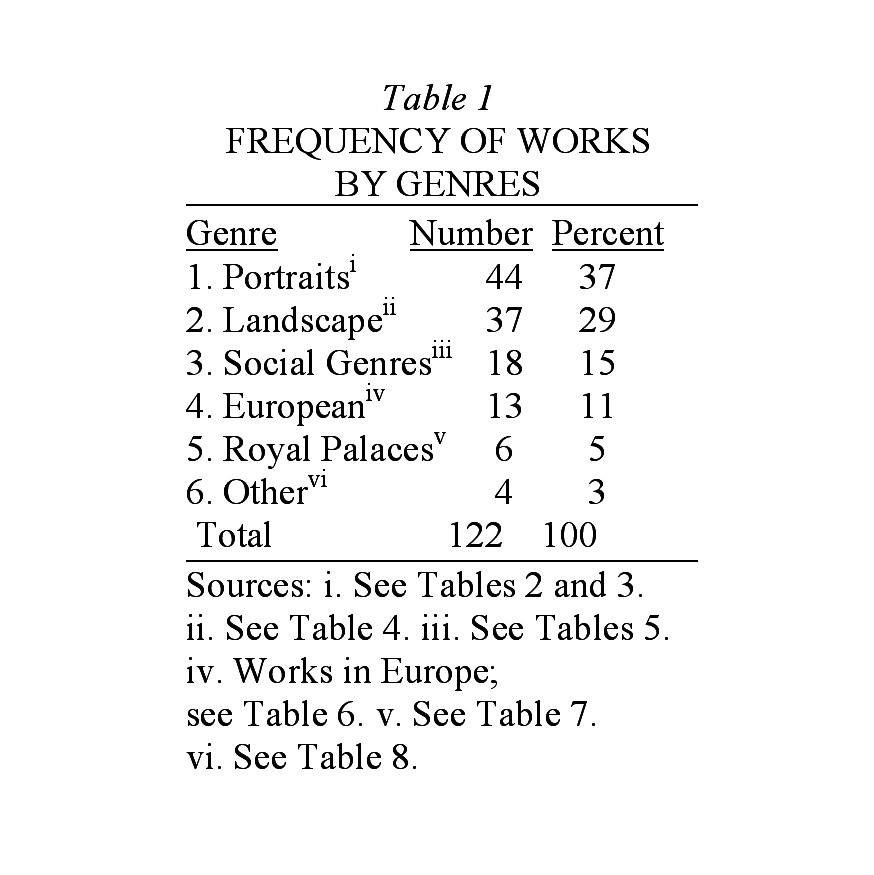
Genres and quantity of works. A meticulous artist with a naturalistic obsession, Kamāl-al-Molk was not a prolific painter (Qarābegiān, pp. 81-92). His available works in collections and catalogues and those mentioned in various lists amount to about 122 known paintings produced over a span of 50 years, stretching from his earliest known dated painting at the turn of 1880s, when he reproduced a portrait of Eʿteżād-al-Salṭana circa 1880 and a portrait of Crown Prince Nāṣer-al-Din Mirzā in 1881, both from their photographs (Kamāl-al-Molk, p. 28; Zoka, 1997, p. 7; the latter portrait is printed in Sohayli-Ḵᵛānsāri, p. 247), to his last works in the early 1930s (some remained unfinished due to his deteriorating vision). Kamāl-al-Molk’s works must have exceeded 122 known works, and some have mentioned as many as 150 works without producing a list of his 150 paintings (see below). Kamāl-al-Molk’s works are mainly in the genres of portraits of courtiers and officials (44 paintings), landscapes (37 paintings), social genres (18 paintings), and royal palaces (6 paintings). He also produced a number of portraits of friends and colleagues and studies of nude models, and he also copied the works of classical masters when he was in Florence and Paris (about 13 paintings). His works include a canvas of Karbalā Square, which constitutes his only work on an urban theme (Figure 10). He produced no works on religious and historical subjects, and only a few still-lifes (see Table 8 below).
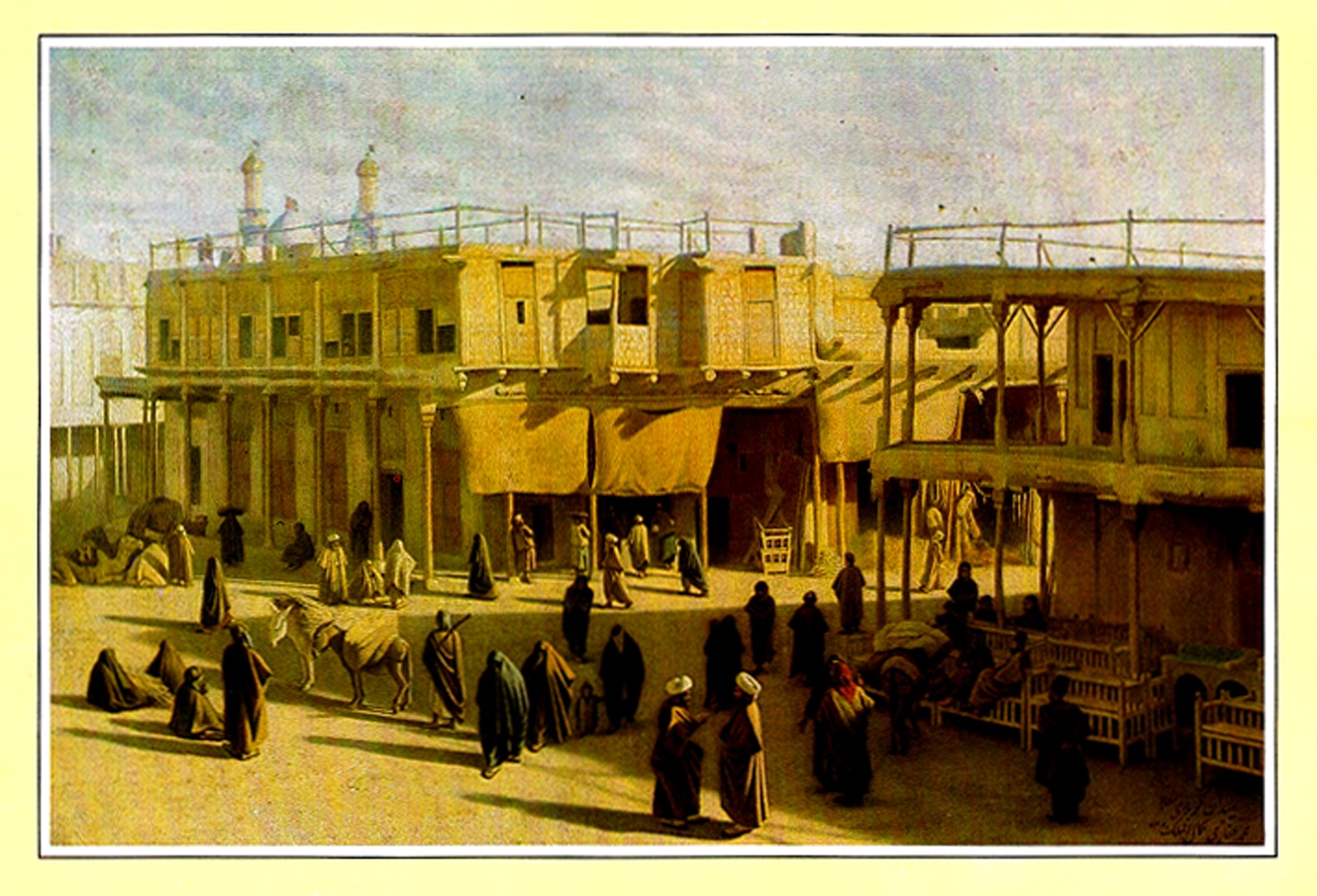
Table 1. Frequency of Works by Genres
Kamāl-al-Molk’s works may be divided into three periods: before his trip to Europe (1880-97), during his studies and works in Florence and Paris (1897-1901), and after his return from Europe (1901-32). Some art critiques—from his loyal students and admirers to some of those who are critical of his works—maintain that most of Kamāl-al-Molk’s works before his studies in European museums may be considered “mediocre,” but that they flourished after his return from Europe (Āštiāni, p. 16; Pākbāz, pp. 243-44; Aghdashlou , p. 231). Pākbāz believes that even during the first period Kamāl-al-Molk’s works gradually developed from a weaker technique in reflecting nature to a more mature one, enabling him to make a careful photographic rendering of the natural models (Pākbāz, p. 243).
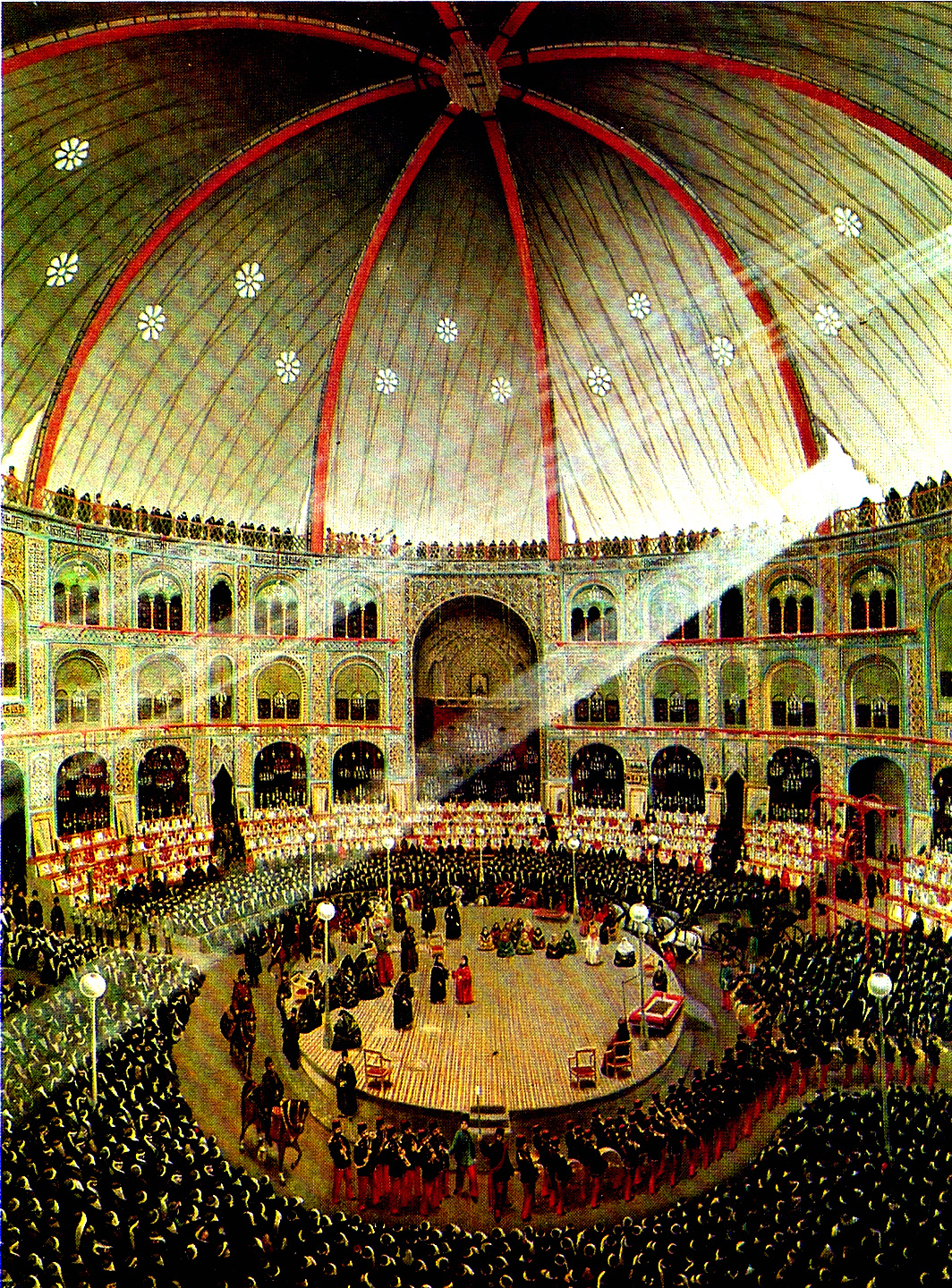
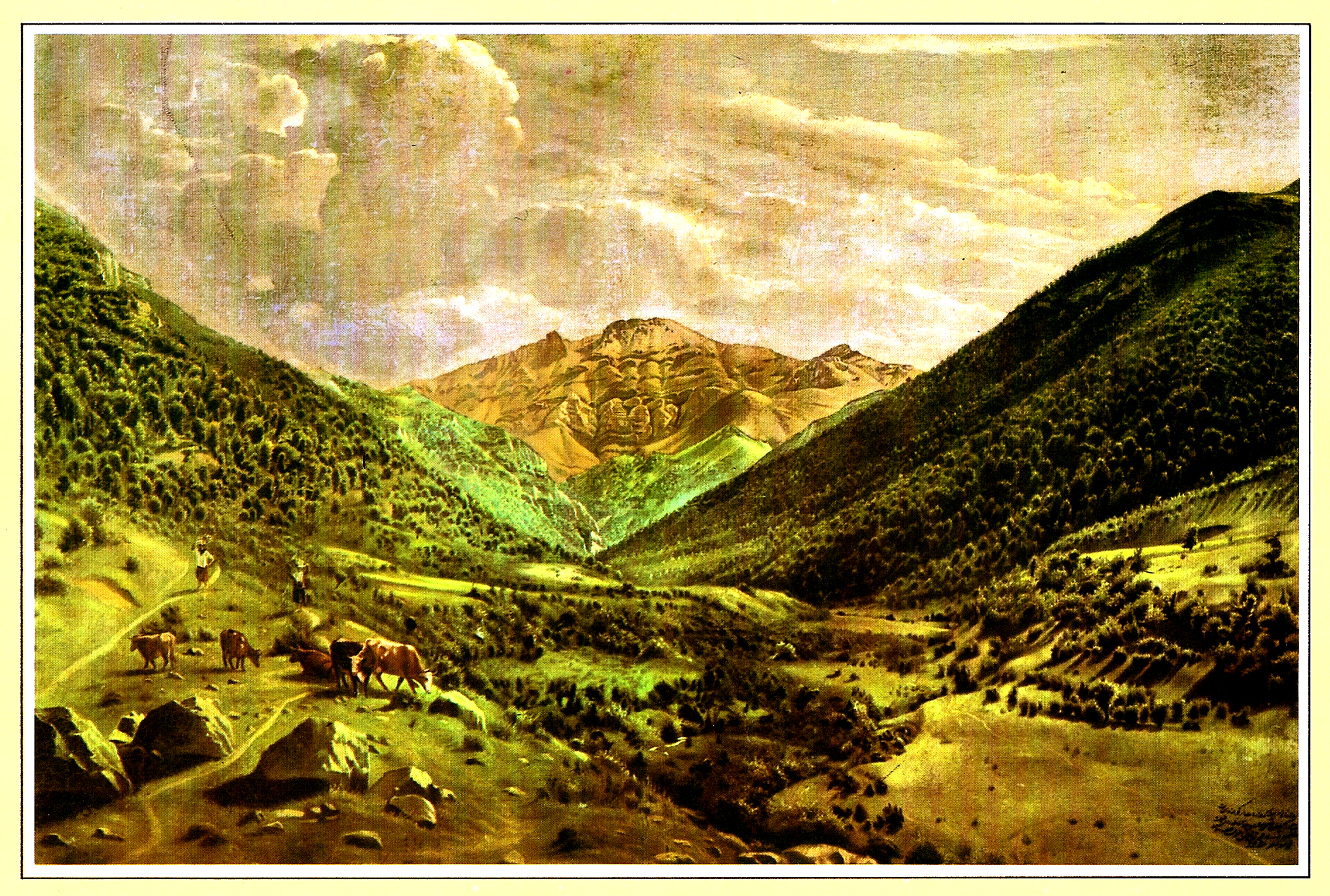
Assessment of works. Evaluating his own works, Kamāl-al-Molk observed that he regarded Ḥawżḵāna-ye Ṣāḥebqerāniya, Hall of Mirrors (Ṭālār-e āʾina; see Figure 2), his own self-portrait, and Karbalā Square (Meydān-e Karbalā; see Figures 1 and 10) as his masterpieces. He adds: “the painting I made of Karbalā Square resembles those of the Rembrandt School” (Kamāl-al-Molk, pp. 36-37). On another occasion, he also mentioned Takiya-ye Dawlat (Figure 3), Landscapes of Zānus Valley (Figure 6), Ābšār Doqolu (Figure 7), Rammāl (Figure 8), and Lār landscape as his favorite works. He indicated his desire to have photographs taken of some of his portraits, including those of Nāṣer-al-Molk, Mošir-al-Dawla, Woṯuq-al-Dawla (Figure 5), Ṣaniʿ-al-Dawla, and Atābak (Amin-al-Solṭan), and a landscape showing Tehran to the Bibi Šahrbānu mountain as seen from the roof of Ṣāḥebqerābiya Palace (a letter from Kamāl-al-Molk to Mirzā ʿAli Khan Maḥmudi, in Sohayli-Ḵvānsāri, pp. 140-41).

Esmāʿil Āštiāni, Kamāl-al-Molk’s student and colleague, believes that it was during the latter period of his life, when he established the Academy of Fine Arts, that the quality of his works flourished. In his view, the following works are Kamāl-al-Molk’s masterpieces. For their composition: “The Baghdadi fortune-teller” (Fālgir-e Baḡdādi), “The Baghdadi goldsmith” (Zargar-e Baḡdādi; see Figure 9), The Villager’s cottage (Ḵāna-ye dehāti), and “The Hall of Mirrors.” As portraits: those of Sardār Asʿad (Figure 4), Ḥājj Sayyed Naṣr-Allah Taqavi, and three of the master’s self-portraits. As landscapes: “Moḡānak garden” (Bāḡ-e Moḡānak), “Shemiran sunset and the Alborz mountain” (Ḡorub-e Šemirān va kuh-e Alborz). Watercolors: The portrait of Mawlāna Mirzā Hādi Khan Ḵošnevis at work, and Kamāl-al-Molk’s self-portrait (Āštiāni, pp. 16-18).
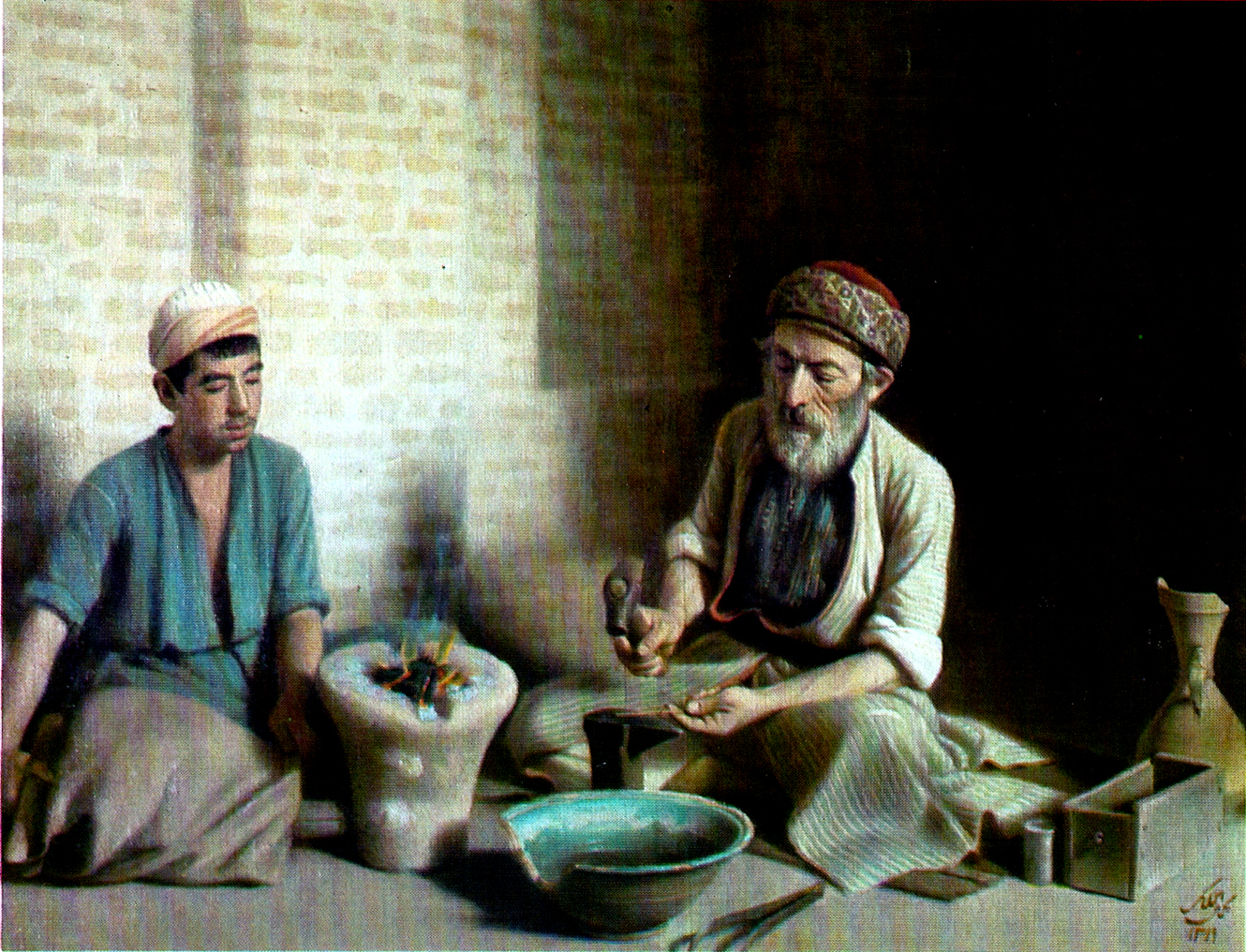
Ruʾin Pākbāz, an ardent admirer of Kamāl-al-Molk, believes that his most accomplished work immediately after his return from Europe is “Goldsmith and his apprentice,” which shows the elegance, power, and skill that he acquired in Europe, revealing the influence of Rembrandt. Following this work, Pākbāz believes Kamāl-al-Molk produced two powerful paintings that constitute the culmination of his career: “Jewish fortune-teller” and “Karbalā Square” (Pākbāz, pp. 244-45).
In an assessment of Kamāl-al-Molk’s works, Idin Aghdashlou notes that at the beginning of his work he showed affinity with early Qajar painting, for instance in Takkiya-ye Dawlat (Figure 3). In some of his early works a close relation with Ṣaniʿ-al-Molk’s style is traceable, for instance in “Royal Musicians,” in which the figures are simply aligned next to each other on a flat plane. He soon developed a deep understanding of the luminosity, tonality, and intensity in the use of color that is manifested in many Persian landscapes and gardens, royal edifices, and halls, where a pleasant and delicate feeling of color is presented. In all likelihood, part of his understanding of the richness of color is traceable to the works of such early 19th-century masters as Mehr-ʿAli and Mirzā Bābā (Aghdashlou, p. 231).
Aghdashlou observes that themes in Kamāl-al-Molk’s works are limited, he did not execute religious or epic paintings, and that what he painted varied during the different periods of his life. When the painting is a courtly one, says Aghdashlou, it naturally depicts such things as figures of kings, princes, dignitaries, musicians, and the royal palaces. It is towards the end of this period that Kamāl-al-Molk shows interest also in painting social types, such as “Uncle Ṣādeq Širāzi” (ʿAmu Ṣādeq Širāzi) and “Used clothes peddlers” (Kohna-forušhā). With two exceptions, he made no portraits of women. He produced mediocre and less accomplished paintings as well, e.g., “Cat and the canary cage” (Gorba va qafas-e qanāri) and the copy portrait of “Beggars: mother and daughter” (Mādar o doḵtar-e gadā). However, after returning from Europe, Kamāl-al-Molk produced beautiful, lively landscapes with poetical atmosphere and color. Some of the works he has created in this period are worth mentioning: portraits of the Qajar ʿAżod-al-Molk, Sardār Asʿad Baḵtiāri, and Ḥājj Naṣr-Allah Taqavi. He shows little interest in urban scenes, the only work of the kind being Karbala Square (Meydān-e Karbalā; Aghdashlou, p. 231).
The following seven tables present a list of 122 paintings, constructed from approximately 73 paintings of Kamāl-al-Molk as recalled by the artist himself with additional works from Sohayli-Ḵᵛānsāri’s catalogue of 75 Kamāl-al-Molk’s paintings, published in Kamāl-e honar (pp. 213-366). Also consulted are a list of 102 works prepared by Karimzādeh Tabrizi (III, pp. 1052-58), and a list of 37 dated and 11 undated works, as well as photographs of 6 works in color, presented in Maktab-e Kamāl-al-Molk (pp. 10-11, 23-35). It should be noted that the number of works by Kamāl-al-Molk must have exceed 122 works as listed in the following seven tables (for an estimate of 150 works by Kamāl-al-Molk, see Karimzādeh Tabrizi, III, p. 1052, although he introduces only 102 works in his list). The works are rearranged here by genre.
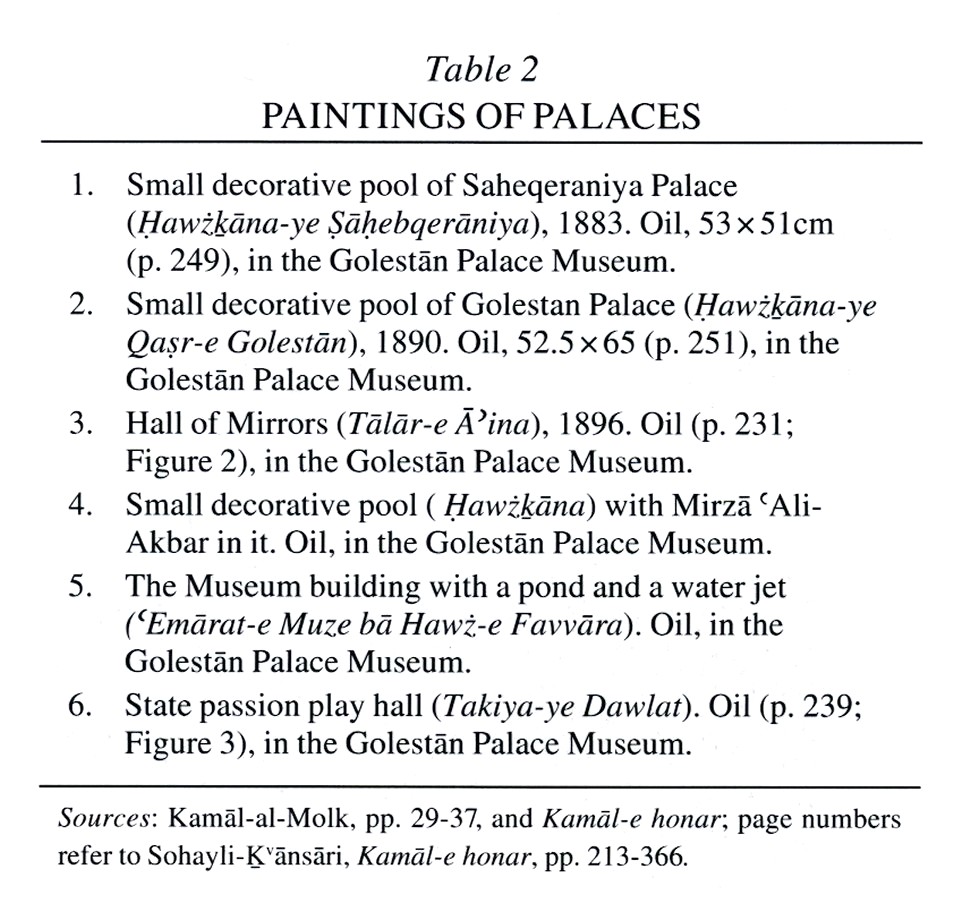
Table 3. Portraits: Nāṣer-al-Din Shah Period
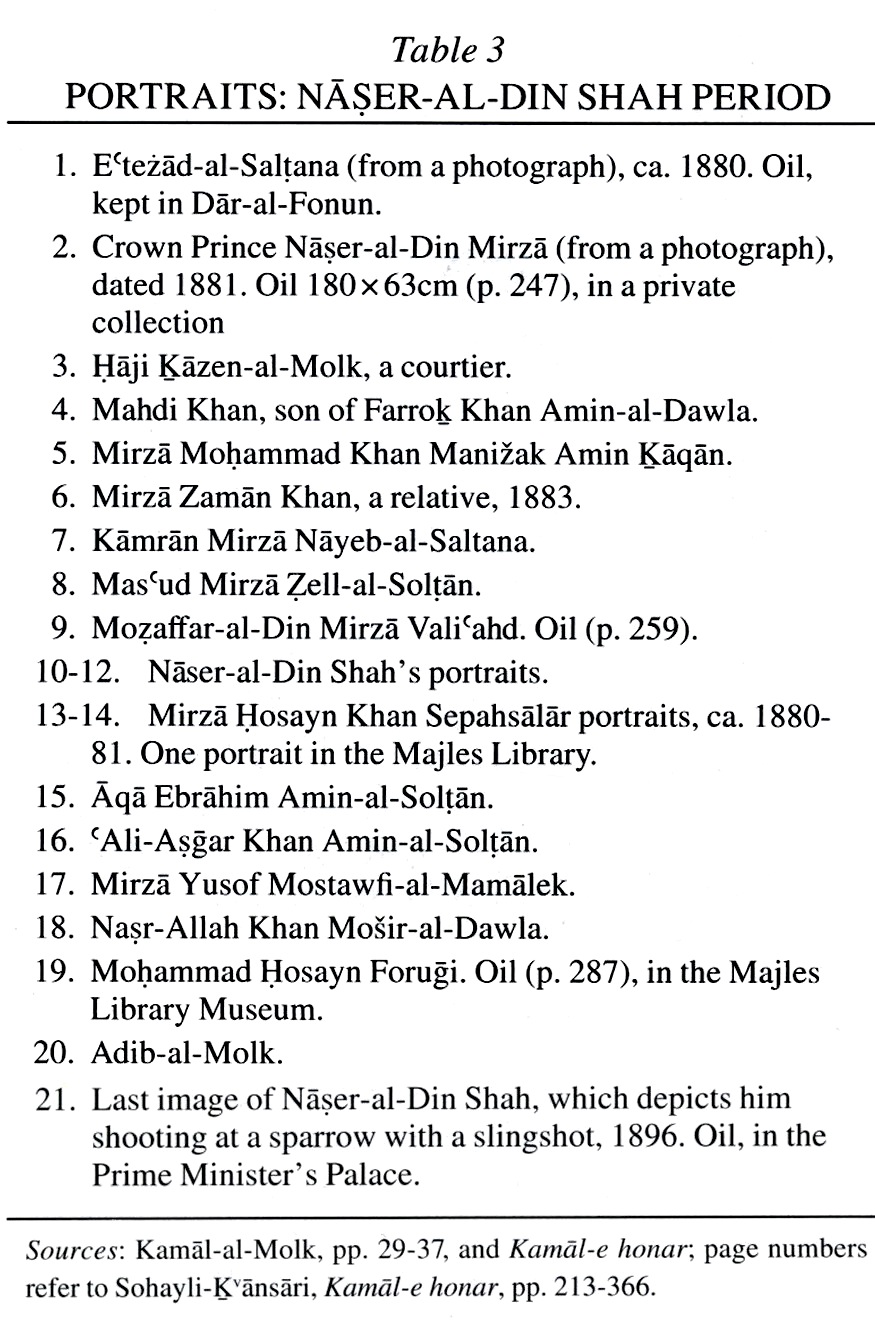
Table 4. Portraits: Moẓaffar-al-Din Shah and Aḥmad Shah Periods
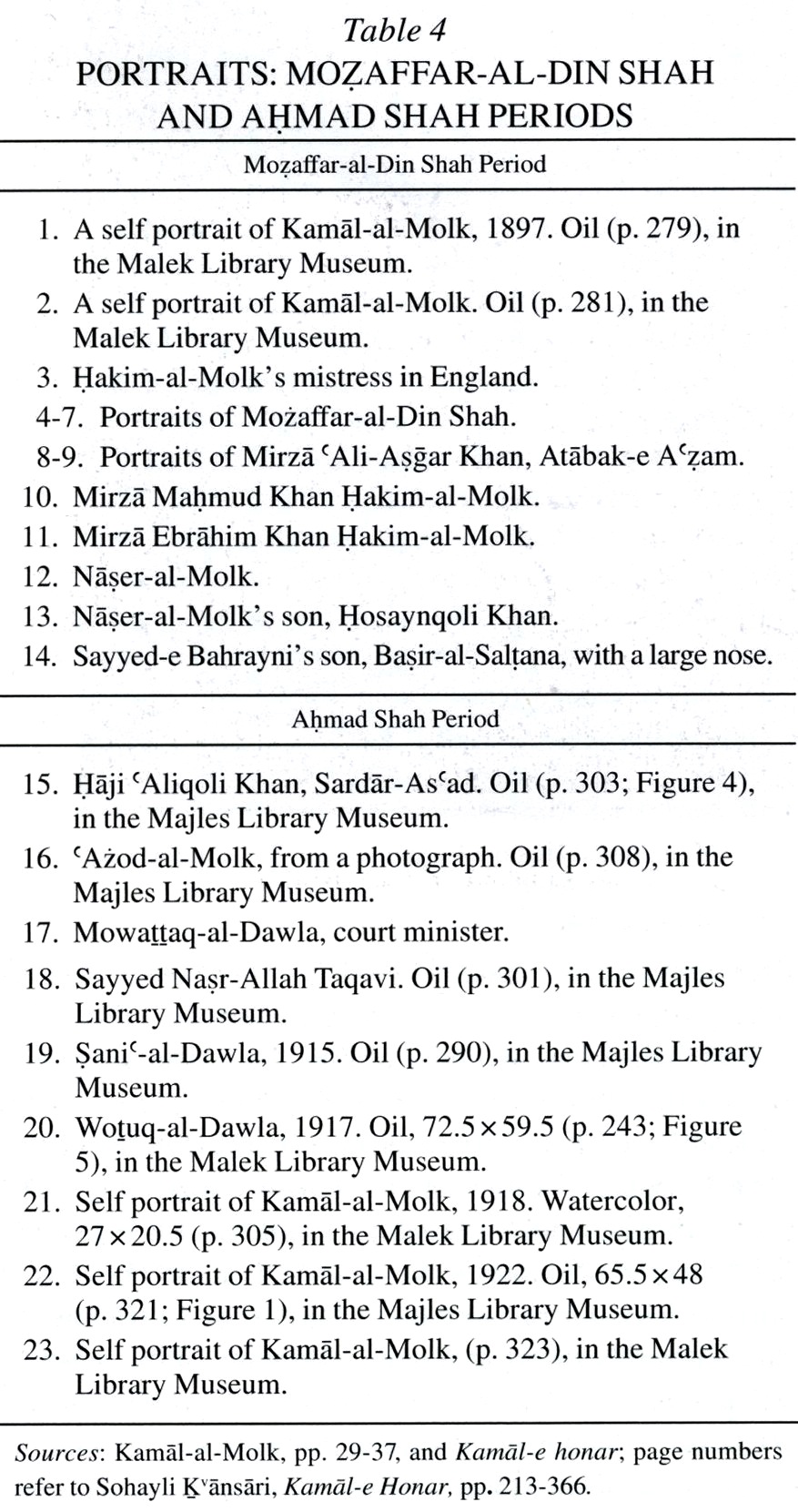
Table 5. Landscapes (Part 1, Part 2)
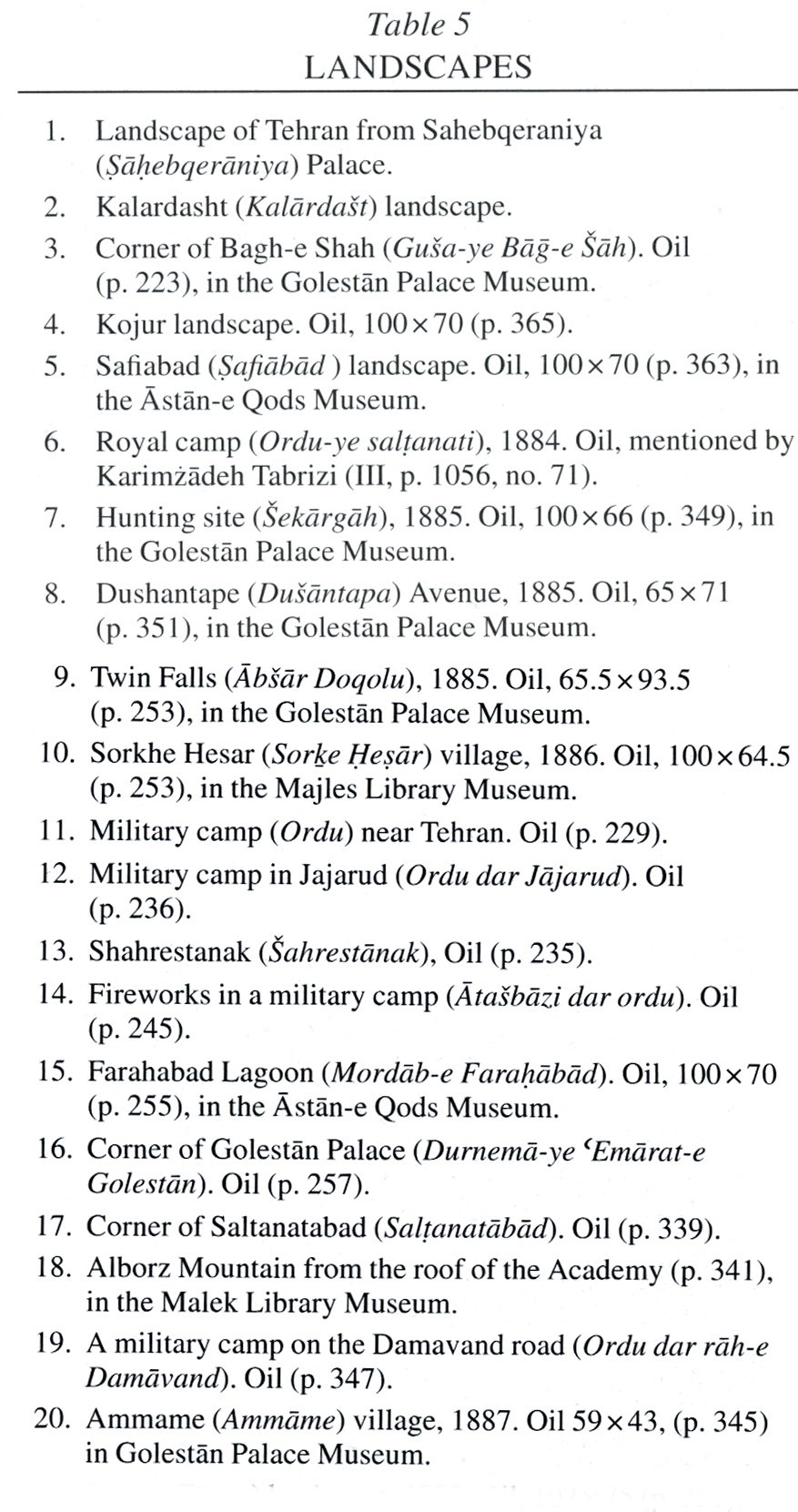
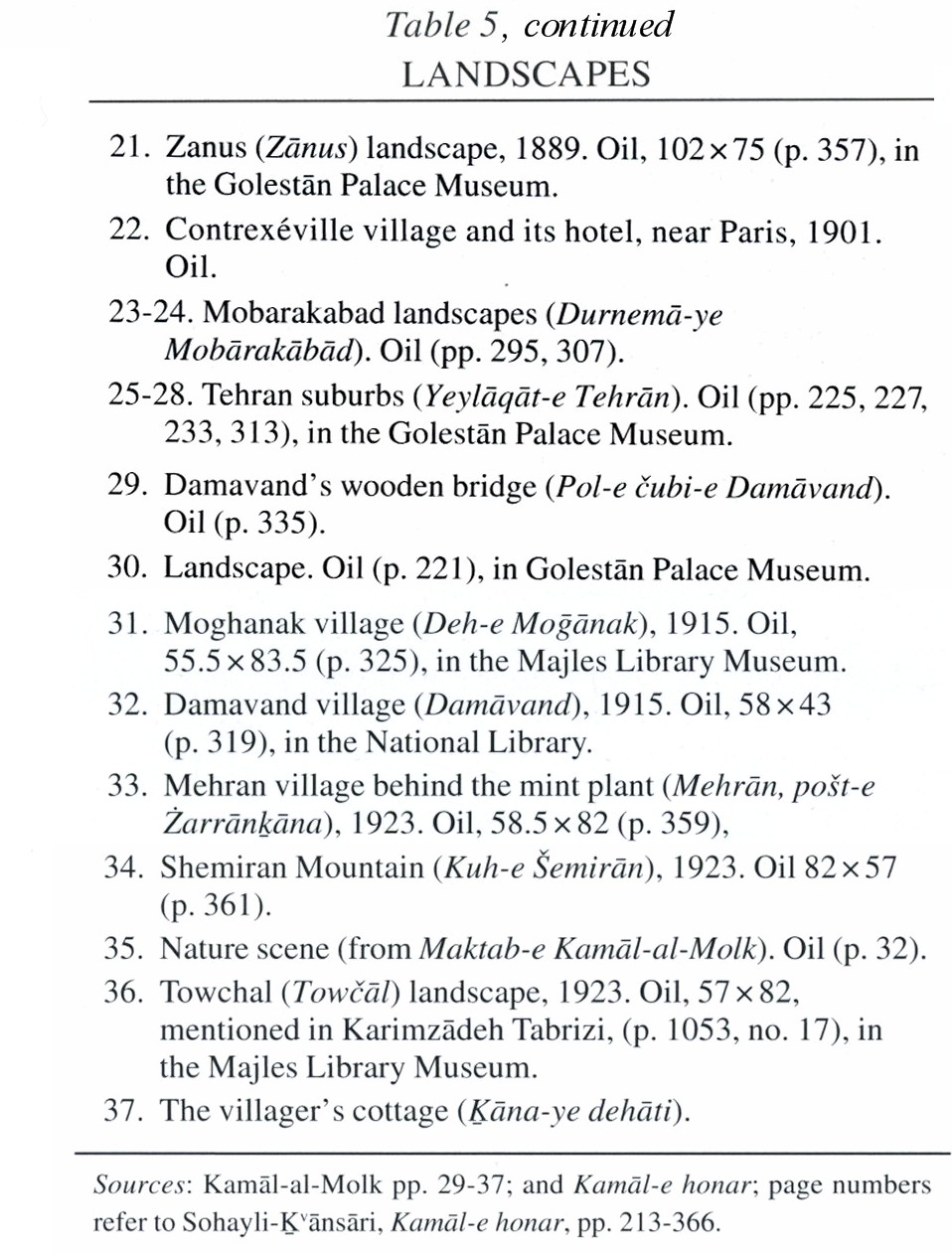
Table 6. Works in the Social genres

Table 7. Works in Florence and Paris (1897-1900)


Final remarks. Kamāl-al-Molk was aiming to develop a national school of European naturalistic art, much as his intellectual peers were aspiring to westernize the country and to promote the Persian language and pre-Islamic Iran in search of an authentic national cultural identity. His themes of the common man and popular subjects sometimes tended towards the “self-orientalizing.” In the works of followers of more modest talent, Kamāl-al-Molk’s style became anecdotal and derivative, even verging on kitsch—developments which were the ambiguous result of pseudo-modernization and production for the tourist trade.
Nevertheless, with his charismatic personage and romantic image as a revolutionary hero and a great modernizer at a time of national decline, Kamāl-al-Molk remains a towering figure in the history and mythology of Persian art from Mani to Behzād and Reżā ʿAbbāsi, and is popularly perceived as the father of modern Persian Painting.
Bibliography
Chahryar Adle and Yahya Zoka, “Notes et documents sur la photographie iranienne et son histoire,” Studia Iranica 12, 1983, pp. 249-80.
Āydin Āḡdāšlu, “Ḵāstgāh-e Kamāl-al-Molk,” in Yād-nāma, pp. 223-38.
Bozorg Alavi, Čašmhāyaš, Tehran, 1952; tr., J. O’Kane as Her Eyes, New York, 1989.
Esmāʿil Āštiāni, “Šarḥ-e ḥāl va tāriḵ-e ḥayāt-e Kamāl-al-Molk,” in Honar o mardom 1/7, 1963, pp. 8-19; repr. in Yād-nāma, pp. 177-98.
Ṣaniʿ ʿAṭāʾi, “Šarḥ-e ḥāl-e Kamal-al-Molk,” a letter to Dr. Qāsem Ḡani (31 August 1940), in Ḡani, IX, pp. 810-16.
Mehdi Bāmdād, Tāriḵ-e rejāl-e Irān dar qorun-e 12, 13, 14 Ḥejri, 6 vols., Tehran, 1968-72.
ʿAbd-al-ʿAli Dastḡayb, Naqd-e āṯār-e Bozorg-e ʿAlavi, Tehran, 1999.
ʿAli Dehbāši, ed., Nāmahā-ye Kamāl-al-Molk, Tehran, 1989.
Maryam Ekhtiar, “The Dār al-Funun: Educational Reform and Cultural Development in Qajar Iran,” Ph.D. diss., New York University, 1994.
Karim Emāmi, “Art xi. Post-Qajar (Painting),” in EIr. II, 1987, pp. 640-46.
Iraj Eskandari, “Kamāl-al-Molk va taḥavvolāt-e naqqāši-e moʿāṣer-e Irān,” in Qāmus 3, 1985; repr. in Yād-nāma, pp. 319-26.
Moḥammad-Ḥasan Khan Eʿtemād-al-Salṭana, al-Maʾāṯer wa’l-āṯār, Tehran, 1888.
Idem, Ruz-nāma-ye ḵāṭerāt-e Eʿtemād-al-Salṭana, ed. I. Afshar, Tehran, 1970.
Willem Floor, “Art (Naqqāshi) and Artists (Naqqāshān) in Qajar Persia,” Muqarnas 16, 1999, pp. 125-54.
M.-ʿA. Foruḡi, “Ḥālāt-e Kamāl-al-Molk,” in Ḡani, IX, pp. 783-802.
Ḡolām-Ḥosayn Ḡaffāri Ṣāḥeb Eḵtiār, “Nāma-ye Ṣāḥeb Eḵtiār be Doctor Ḡani,” in Ḡani, IX, pp. 807-9.
Qāsem Ḡani, Yāddāšthā-ye Doktor Qāsem-e Ḡani, 12 vols., London, 1980-84.
Idem, “Ḵāṭerāti az Kamāl-al-Molk,” in Ḡani V, 1981, pp. 10-25.
Idem, “Nāmahā-ye Kamāl-al-Molk,” in Ḡani, V. Nāmahā-ye Kamāl-al-Molk va Moḥammad Qazvini, London, 1981, pp. 26-162.
Idem, “Dar bāb-e Mirzā Moḥammad Khan Ḡaffāri Kamāl-al-Molk,” in Ḡani, X, London, 1983, pp. 677-85.
Moḥammad Golbon, “Sālšemār-e zendagi-e Kamāl-al-Molk,” in Āyanda 9/12, 1983; repr. in Yād-nāma, pp. 331-36.
Hušang Golširi, Bāḡ dar bāḡ (A garden within the garden), Tehran, 1999.
Ebrāhim Ḥakimi Ḥakim-al-Molk, “Ānčeh Ḥakim-al-Molk rājeʿ be Kamāl-al-Molk negāšteh ast,” in Ḡani, IX, pp. 803-6.
Moḥammad Ḥejāzi, “Kamāl-al-Molk,” in E. Ḵājenuri, Mardān-e ḵowd sāḵteh, Tehran, 1956, pp. 103-18; repr. in Yād-nāma, pp. 155-64.
Michael C. Hillmann, ed., “Major Voices in Contemporary Persian Literature,” Literature East and West 20, l976, pp. 85-98.
Sayyed Moḥammad-ʿAli Jamālzādeh, “Kamāl-al-Molk,” in Honar o mardom 3/35, 1965, pp. 6-19; repr. in Yād-nāma, pp. 81-92; and “Yād-e Kamāl-al-Molk,” in Yād-nāma, pp. 93-96. Kamāl-e honar: see Sohayli Ḵvānsāri.
Kamāl-al-Molk, “Šarḥ-e ḥāl-e Kamāl-al-Molk az zabān-e ḵodaš,” in Ḡani, V, pp. 26-37 (this autobiography is based on an interview of Kamāl-al-Molk by Dr. Ḡani in Nišabur); repr. in Yād-nāma, pp. 11-20.
M.-ʿA. Karimzādeh Tabrizi, Aḥvāl va āṯār-e naqqāšān-e qadim-e Iran va barḵi az mašāhir-e negārgar-e Hend va ʿOṯmāni, London, 1985, III, entry no. 1117, pp. 1031-59.
ʿAli Maḥmudi, two letters to Dr. Ḡani (Maḥmudi, a student and relative of Kamāl-al-Molk, wrote two letters to Dr. Qāsem Ḡani in 1940 and 1941, collecting his memories of Kamāl-al-Molk), in Ḡani X, pp. 707-31.
“Majmuʿa-ye asnād-e montašer našoda dar bāre-ye aʿżā-ye Lož-e Bidāri-e Irān,” Irān 1/48, 4 April, 1995, pp. 6-7.
Ḥassan Mirʿābedini, Sad sāl dāstān nevisi dar Iran (One hundred years of fiction writing in Iran) I, Tehran, 1999.
Maktab-e Kamāl-al-Molk: Majmuʿa-ye āṯār-e Kamāl-al-Molk, Āštiāni, Awliāʾ, Ḥaydariān, Šayḵ, Yāsami, va Šehābi, Tehran, 1986.
Ḥosayn-ʿAli Moʾayyad Pardāzi, “Čeguna bā Kamāl-al-Molk āšnā šodam,” in Ḡani, X, pp. 733-48.
Dust-ʿAli Khan Moʿayyer-al-Mamālek, “Mirzā Moḥammad Khan Ǧaffāri Kamāl-al-Molk,” in idem, Rejāl-e ʿaṣr-e Nāṣeri, Tehran, 1982, pp. 276-77.
M.-T. Moṣṭafavi, “Čand nasl-e honarmand dar yek ḵāndān-e čand ṣad sāla-ye Kāšān,” Naqš o negār 1/7, 1950, pp. 30-44; repr. in Yād-nāma, pp. 21-38.
Ḥ. Narāqī and F. Ḡaffāri, Ḵānadān-e Ḡaffāri-e Kāšān, Tehran, 1974.
ʿAbd-al-Ḥosayn Navāʾi, “Kamāl-al-Molk, āfarinande-ye zibāʾi,” in Eṭṭelāʿāt-e māhāna, 4 July 1949; repr. in Yād-nāma, pp. 97-138.
Ruʾin Pākbāz, “Kamāl-al-Molk: Sonnat-šekan-e bozorg,” in Tamāšā 4/186, 1974; repr. in Yād-nāma, pp. 239-46.
Idem, “Kamāl-al-Molk: Sonnat-šekan va sonnat-gozār,” Honar o mardom 13/150, 1975, pp. 63-67; 151, pp. 63-68; 152, pp. 62-67; 155, pp. 47-51; repr. in Yād-nāma, pp. 247-77.
Mārkār Qarābegiān, “Moḥammad Ḡaffāri Kamāl-al-Molk, honarmand va naqqāš-e bozorg,” Payām-e now 2/9-10, 1946, pp. 81-92; repr. in Yād-nāma, pp. 199-206.
B. W. Robinson, “Art in Iran x. Qajar 2. (Painting)” in EIr. II, 1987, pp. 637-40.
Šarāfat 60, Tehran, 1902; reprint, 1976. Ḥosayn Šayḵ, “Naqqāši yaʿni taqlid-e ṭabiʿat” (an interview by Kāveh Rastegār), Rudaki 4/37-38, 1974, pp. 32-33; repr. in Yād-nāma, pp. 213-16.
A. Sohayli-Ḵᵛānsāri, ed., Kamāl-e honar: Aḥvāl va āṯār-e Moḥammad Ḡaffāri Kamāl-al-Molk (Perfection of the art: life and works of Mohammad Ghaffari Kamal-al-Molk), Tehran, 1989.
Tābeš “Kamāl-al-Molk mardi az Kāšān” (attributed to Kamāl-al-Molk’s cousin, a certain Tābeš, by Ḡani’s son, Cyrus), in Ḡani, V, pp. 38-46.
Ḥasan-ʿAli Vaziri, Kamāl-al-Molk, Tehran, 1946; selection repr. in Yād-nāma, pp. 165-76.
Moḥsen Vaziri-Moqaddam, “Kamāl-al-Molk va peyrovan-e ou,” Rudaki 4/37-38, 1974, pp. 33-36; repr. in Yād-nāma, pp. 279-88.
Wezārat-e maʿāref va awqāf va ṣanāyeʿ-e mostaẓrafa, Sāl-nāma, 1918, “Qesmat-e šešom, Ṣanāyʿ-e mostaẓrefa,” pp. 41-43; repr. Ḡani, X, pp. 698-702.
[Yād-nāma] Yād-nāma-ye Kamāl-al-Molk, ed. D. B. Šabāhang and ʿAli Dehbāši, Tehran, 1985.
Ehsan Yarshater, “Contemporary Persian Painting,” in R. Ettinghausen and E. Yarshater eds., Highlights of Persian Art, Boulder, 1979, pp. 363-77.
ʿAli Yādgār Yusofi, “Kamāl-al-Molk gozašta-gerā-ye sonnat šekan,” in Rastāḵiz 702, 1977; repr. in Yād-nāma, pp. 303-10.
Yahya Zoka, “Mohammd Zaman, The First Iranian Painter to Visit Europe,” in Stuart Welsh and Y. Zoka, Persian and Mughal Miniatures. The Life and Times of Muhammad-Zaman, Tehran, 1994, pp. 18-22.
Idem, Tāriḵča-ye arg-e salṭanati va rāhnemā-ye kāḵ-e golestān, Tehran, 1970.
Idem, Tāriḵ-e ʿakkāsi va ʿakkāsān-e pišgām dar Iran (The history of photography and pioneer photographers in Iran), Tehran, 1997. (The author would like to acknowledge Dr. Layla Diba’s contribution in preparing the part on “Learning and practicing academic painting,” in section ii, above.)