




The demography of Afghanistan is one of the least known in the world, owing to the lack of a complete census (q.v. ii) combined with important but poorly documented structural changes since 1359 Š./1980. It is thus difficult to ascertain the current situation. As recently as thirty years ago the total population of the country could be estimated no more precisely than at 8-15 million inhabitants (Office suisse [OSEC], p. 11; cf. Pulyarkin, p. 34). Even more problematic than the scarcity of statistical material is the reliability of what is available. Most data are mere estimates, subject to government manipulation, with the result that conflicting figures have often been released (N. H. Dupree, 1987, p. 367; Table 21). The best-known example, and the most important factor contributing to demographic uncertainty about Afghanistan, is the successive estimates of the nomadic population, which have been constantly and capriciously inflated (Khalidi, 1991, p. 104). Moreover, official figures became more and more unrealistic in the 1980s, as the government deliberately ignored the flight of millions of refugees (see below) and the resulting decline in the resident population; instead an increase was officially proclaimed. In such a context any attempt to reconstruct the demographic evolution of the country involves insuperable difficulties and can be only very approximate; it is nevertheless certain that there has been a considerable increase in the population during the last century.

Vital statistics. Whatever the actual growth in population has been, the basic determinant is clear: Afghanistan has entered a period of “demographic transition,” characterized by a decline in the crude death rate and stability or even growth of the crude birth rate, hence a boom in natural growth. This transitional phase began comparatively late: An antimalaria program was launched in 1327 Š./1948, and it was only in the late 1950s that the first steps were taken to control other endemic lethal diseases like typhus and smallpox, measures that eventually reduced the general mortality rate. Progress remained slow, however. In 1358 Š./1979, according to the results of the partial census conducted in that year, mortality, and especially infant mortality, was still very high (28.7 per thousand and 190 per thousand respectively), and life expectancy at birth (thirty-nine years) was one of the lowest in the world (Khalidi, 1989, pp. 18 ff.). Lack of safe water supplies (accessible to only about 10 percent of the rural population and 30 percent of urban dwellers; Ministry of Public Health, p. 7), poor health-care facilities (1 physician per 9,840 settled inhabitants in 1358 Š./1979, 1 hospital bed per 2,400 settled inhabitants), and low literacy rates, especially among women (8.8 percent), contributed to a high, though declining morbidity.
In the same census the unadjusted birth rate was 47.9 per thousand, but it has been suggested that it could actually have been near 52 per thousand (Trussell and Brown, pp. 142, 146; Spitler and Frank, pp. 2-3). The natural growth rate was therefore close to 2.6 percent a year, higher in villages (2.7 percent) than in towns (2.2 percent). High natality was supported by four factors. First, marriage was nearly universal, only 1.9 percent of the population remaining single at sixty-five years of age or older (Chu et al., p. 64). Second, women were exposed to long periods of childbearing, owing to the prevalence of early marriages: About 31 percent of the population married before the age of twenty years; in a survey conducted in 1351-52 Š./1972-73 on a sample of 20,257 households scattered throughout the country it was found, in addition, that 6.3 percent of females aged ten to fourteen years and 49.7 percent of those aged fifteen to nineteen were married, compared to only 0.6 and 7.6 percent of men in the respective age groups (Chu et al., pp. 65 ff.). The individual mean age of marriage has been estimated at 17.8 years for rural females, 19.5 for urban females, 26.2 for rural males, and 26.7 for urban males (Trussell and Brown, p. 138). Third, the divorce rate was very low (less than 0.1 percent). Finally, there was no official family-planning policy. The only body concerned with family planning, the privately sponsored Afghan Family Guidance Association, founded in 1347 Š./1968, had a negligible impact: In 1351-52 Š./1972-73 only 3 percent of all married women aged fifteen years or older reported having knowledge of contraception, and only one third of that total claimed actually to have used contraceptive methods; moreover, few among those who had never used contraceptives expressed a desire to use them if available (Chu et al., pp. 117 ff.). As could be expected, knowledge and practice of family planning were more widespread in the better-educated middle and upper urban classes, hence the large differential in fertility observed between towns and villages (respectively 5.3 and 8.8 children per woman of childbearing age in 1358 Š./1979, corresponding to respective crude birth rates of 29 and 51.3 respectively; Khalidi, 1989, p. 13). The average household was, however, larger among city dwellers (6.31 persons) than among villagers (6.16) or nomads (5.6; de Benoist, p. 87), owing to lower infant mortality in towns (130 per thousand) and to the fact that many migrants to towns shared living quarters with friends or relatives.
The age structure of the Afghan population exactly reflected these vital statistics. In 1358 Š./1979, 45.4 percent of the population was less than fifteen years old, and only 3.9 percent was sixty-five years old or older (Khalidi, 1989, p. 7). Such an age structure supports a prediction of continuous high and perhaps increasing population growth.
There was an excess of men over women (51.4 and 48.6 percent of the population respectively, 106 men per 100 women) in 1358 Š./1979. This disparity seems mainly to reflect underreporting of young, marriageable women, possibly combined with high maternal mortality.
The results of the 1358 Š./1979 census (Central Statistics Office [C.S.O.]; Khalidi, 1989) are on the whole consistent with those of the demographic survey in 1351-52 Š./1972-73 (Kerr, pp. 62 ff.; Chu et al.). The only significant exception is life expectancy at birth, put at 34.6 years in the survey, though it has been suggested that this figure is an underestimate (Trussell and Brown, p. 146; Spitler and Frank, p. 7). It can therefore be assumed that the demographic situation in the late 1970s was fairly well established. The same cannot be said about the 1990s.
The civil war, which began in 1357 Š./1978, brought considerable change, especially in mortality, which has not only ceased to decline but has actually increased. The immediate causes have been both situational and structural. First, it has been convincingly suggested that approximately 875,000 people, that is, about 7 percent of the total prewar population, lost their lives in the fighting and bombing between 1357 Š./1978 and 1366 Š./1987 (Khalidi, 1991, p. 106); as the victims were mainly men, there are indications that the traditional deficit of females has been succeeded by a deficit of males (Khalidi, 1991, pp. 110-11, estimating that the sex ratio had dropped to 86 men to 100 women in 1987). Similarly, greater losses in adult age groups have increased the dependency index, especially the proportion of those under twenty years of age (about 60 percent, up from 55 percent). Structural changes include significant deterioration of health facilities, reduced access to health care, and resurgence of malaria as a major epidemic disease, owing to the disruption of the control mechanism (420,000 reported cases in 1364 Š./1985-86, compared to only 36,000 in 1358 Š./1979). Life expectancy at birth must thus have dropped to thirty-eight years, the lowest in the world, while infant mortality has increased to 220 per thousand and maternal mortality to 690 per 100,000 deliveries; in the mid-1980s 21 percent of all pregnancies were unsuccessful because of malnutrition and poor health (U.N. Coordinator, 1988, pp. 80 ff.; idem, 1991, p. 23).
Owing to these factors and provided that natality has kept to its prewar level, natural growth should have slowed, but that cannot be stated with certainty.
Migration patterns. Geographic mobility, both internal and external, has always been significant in Afghanistan, even without reference to nomadic migrations among its population. During the war, however, it took on unprecedented dimensions. Data on migration patterns gathered in the 1358 Š./1979 census have never been processed, and it is thus difficult to determine the prewar figures. According to the sample survey of 1351-52 Š./1972-73, about 75 percent of the settled population was living in the localities of birth, 16 percent elsewhere in the same provinces, and 8 percent in different provinces; 0.6 percent had been born outside Afghanistan. Mobility was much higher in towns; 50 percent of urban dwellers were not living in their birthplaces, but the proportion was only 20 percent in the rural population (Kerr, p. 71), an indication of strong currents of migration from rural to urban settings. These currents are deeply rooted: Hazāra villagers, for example, were already migrating to Kabul in the 19th century (Burnes, p. 231). Such migrations accelerated rather slowly after the mid-20th century, following the extension and modernization of the road network (Jung, p. 5): In 1358 Š./1979 only 15 percent of the total sedentary population lived in cities, a proportion that is reported to have increased to more than 18 percent during the decade of the civil war. Kabul has been the main destination of rural emigration, the only urban center to draw migrants from the entire nation (Barrat, pp. 125 ff.; Jung, pp. 4-5); all other towns have continued to draw migrants only from their own regions. Migrations from one rural region to another, mainly the permanent transfers of nomadic groups, were also important in the past, especially from southern to northern Afghanistan (Tapper; Barfield; Kakar, 1979, pp. 131 ff.), but data that would permit determination of their present importance and permanence are lacking (but see examples in Gille, pp. 14-15).
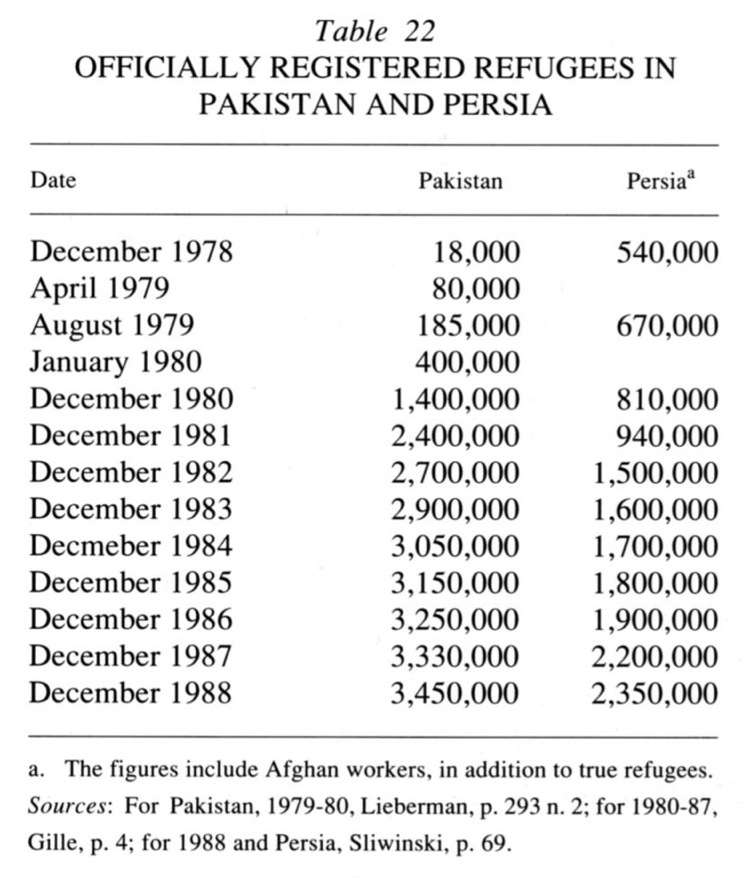
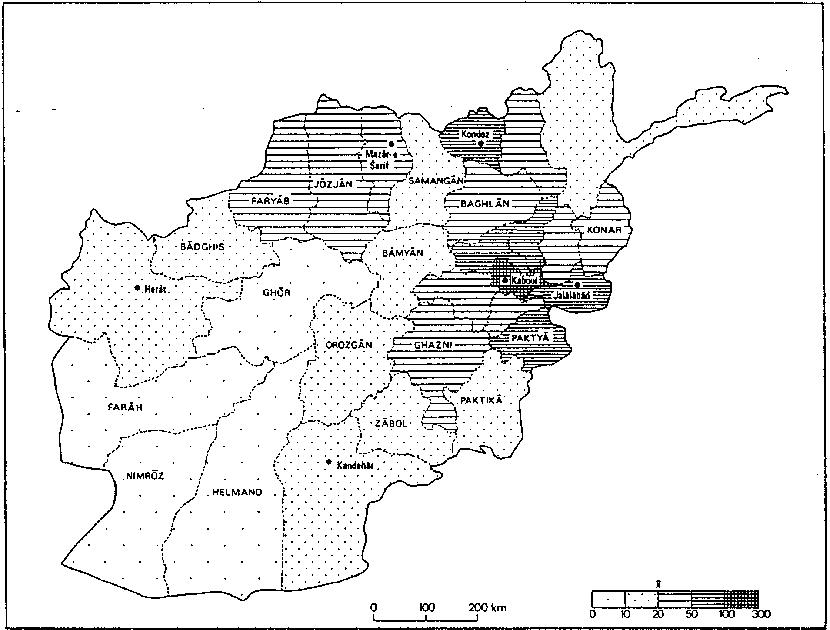
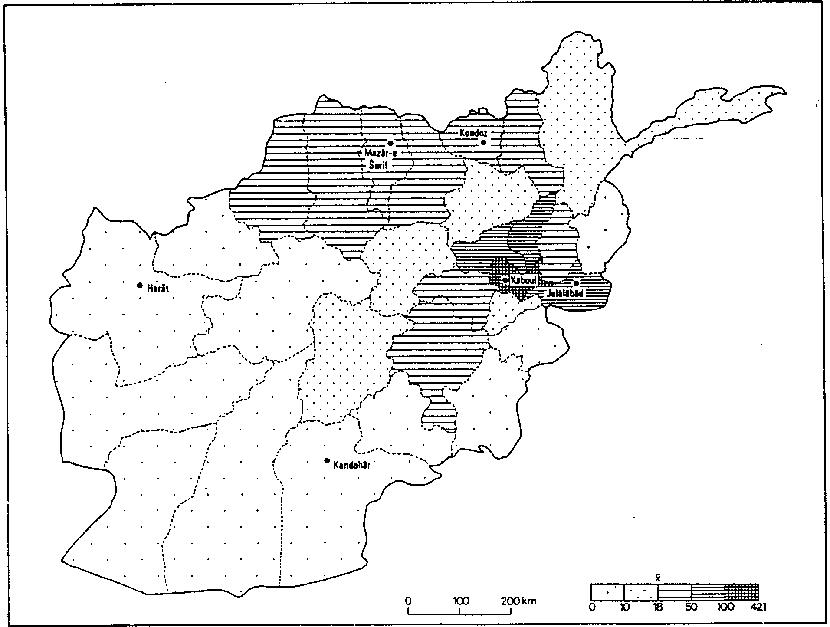
Permanent or temporary emigration of labor to foreign countries, especially India, is another long-established tradition (Balland, 1991). Longer-distance emigration, for example, to Australia (Schinasi; Cigler; Stevens), was always marginal. In recent decades emigration has taken two successive forms. After the first oil “shock” (1352 Š./1973) temporary emigration of Afghan workers to Persia and the Persian Gulf states was paramount; the numbers in the late 1970s have been estimated at 400,000 and 300,000 respectively (Wiebe, p. 98). Such economic emigration was followed by political emigration of “refugees” (mohājerīn), not at all a novelty in Afghan history; in the past several refugee colonies had been established in neighboring countries, for example, by Sadōzī in Multan in the second half of the 17th century (Khan, pp. 3-4) and Hazāra in Quetta and Persian Khorasan (where they became known as Barbarī) in the 1890s and again in 1903-04 (Banbury, pp. 9-10; Kakar, 1971, p. 174). But the events of 1357-58 Š./1978-79 (the communist coup, civil war, Soviet intervention) provided unprecedented impetus to political emigration, which took on the dimensions of a hemorrhage (Table 22). In a few years more than one Afghan of every three became a refugee, constituting the largest community of refugees in the world (see DIASPORA ix-x). In 1366 Š./1987, 3.3 million were enumerated in Pakistan, 2.2 million in Persia, 40,000 in India, 20,000 in Europe, 15,000 in the United States, and 10,000 in other countries, including Canada, Australia, and the Gulf states (Gille, p. 4). Most of these refugees were crowded into hundreds of camps and spontaneous suburban settlements scattered along the Persian and Pakistani borders, where they found a cultural environment close to their own. Refugees came from all regions of Afghanistan, in proportions broadly inverse to their proximity to the relevant boundaries. Consequently the geographical distribution (Figure 16 and Figure 17), as well as the ethnic composition, of the resident population of Afghanistan underwent dramatic change. How durable these changes will prove remains to be seen, however. As soon as the communist regime collapsed in April 1992 a massive movement of voluntary repatriation began. In 1992, 1.275 million refugees from Pakistan and 250,000 from Persia reportedly returned to Afghanistan, assisted by the United Nations High Commissioner for Refugees (U.N.H.C.R.) and the World Food Programme. It seems, however, that some of them returned only temporarily (U.N. Office, pp. 6-7). It was anticipated that up to 2 million more refugees would return in 1993, but actual repatriation lagged far behind those expectations; an estimated half-million returned during the first nine months of 1993, 350,000 of them from Persia. The U.N.H.C.R. anticipated only 235,000 returns during the following six months (U.N.O.C.H.A., p. 5). Whatever the pace of repatriation, it seems obvious that a certain proportion of refugees will neverreturn, for example, those Khirghiz and other Turkic-speaking peoples who were resettled in Anatolia in 1361 Š./1982, a total of about 4,500 individuals (N. H. Dupree, 1987, p. 388; Franz), but also many of those who have been successfully integrated into the labor market in Persia and Pakistan.
Foreign immigration also played a role in the historical demography of Afghanistan. Aside from the successive waves of conquest that have produced the present-day ethnic kaleidoscope of the country, mention should be made at least of the 300,000-400,000 refugees from Soviet Central Asia who arrived in the 1920s and 1930s (Balland, 1975-77, p. 33; Centlivres and Centlivres-Demont) and of 100,000 refugees from war-torn Tajikistan in 1371 Š./1992.
Bibliography
D. Balland, “La diaspora des Turcs de Basse-Asie centrale soviétique au XXe siècle,” Bulletin de la Section de Géographie du Comité des Travaux historiques et scientifiques 82, 1975-77, pp. 23-28.
Idem, “Une tradition migratoire. Les mercenaires afghans en Inde,” in R. Blanadet, ed., Aspects du monde tropical et asiatique. Hommage à Jean Delvert, Paris, 1991, pp. 17-28.
T. J. Barfield, “The Impact of Pashtun Immigration on Nomadic Pastoralism in Northeastern Afghanistan,” in J. W. Anderson and R. F. Strand, eds., Ethnic Processes and Intergroup Relations in Contemporary Afghanistan, Asia Society, Occasional Paper of the Afghanistan Council 15, New York, 1978, pp. 26-34 (mimeograph).
J. Barrat, Kabul, capitale de l’Afghanistan/Kabul, Capital of Afghanistan, Paris, n.d. (1970).
A. de Benoist, La composition des ménages nomades d’Afghanistan d’après les données du recensement de 1979, Thèse de 3e cycle, Université de Paris V, 1984.
N. L. Bunbury, A Brief History of the Hazara Pioneers (Indian Army) 1904 to 1933, unpublished typescript, India Office Library, London, T 14019.
A. Burnes, Cabool, London, 1842; repr. Graz, 1973.
P. Centlivres and M. Centlivres-Demont, “Fron-tières et phénomènes migratoires en Asie centrale. Le cas de l’Afghanistan de 1880 à nos jours,” in M. Centlivres-Demont, ed., Migrations en Asie/Migrationen in Asien, Ethnologica Helvetica 7, Bern, 1983, pp. 83-114; repr. in P. Centlivres and M. Centlivres-Demont, eds., Et si on parlait de l’Afghanistan? Neuchâtel-Paris, 1988, pp. 247-74.
Central Statistics Office, Afghanistan, Natāyej-e moqaddamātī-e noḵostīn sar-šomārī-e nofūs be asās-e parāses-e nomūnawī, Kabul, 1360 Š./1981 (mimeograph).
S. Chu, R. N. Hill, and S. Graham, National Demographic and Family Guidance Survey of the Settled Populations of Afghanistan I. Demography, n.p. (Washington, D.C.), 1975.
M. Cigler, The Afghans in Australia, Melbourne, 1986.
L. Dupree, Population Review 1970. Afghanistan, American Universities Field Staff Reports 15/1, Hanover, N.H., 1970; repr. in H. Brown and A. Sweezy, eds., Population. Perspective, 1971, San Francisco, 1972, pp. 29-53.
N. H. Dupree, “The Demography of Afghan Refugees in Pakistan,” in H. Malik, ed., Soviet-American Relations with Pakistan, Iran and Afghanistan, London, 1987, pp. 366-94.
Idem, “Demographic Reporting on Afghan Refugees in Pakistan,” Modern Asian Studies 22/4, 1988, pp. 845-65.
G. Eger, “Einfluss- und Hinderungsfaktoren einer Geburtenregelung und -beschränkung in Kabul/Afghanistan,” SSIP (Sozialwissenschaftlicher Studienkreis für Inter-nationale Probleme) Bulletin (Basel) 43, 1976, pp. 12-34.
T. H. Eighmy, Afghanistan’s Population Inside and Out. Demographic Data for Reconstruction and Planning, USAID, n.p., 1990.
E. Franz, “Turkstämmige Afghanistanflüchtlinge in der Türkei,” in E. Grötzbach, ed., Neue Beiträge zur Afghanistanforschung, Schriftenreihe der Stiftung Bibliotheca Afghanica 6, Liestal, Switzerland, 1988, pp. 67-69.
R. Furon, L’Afghanistan, Paris, 1926.
E. Gille, ed., Les réfugiés afghans, supp. to Les Nouvelles d’Afghanistan 35-36, 1987.
C. L. Jung, Some Observations on the Patterns and Processes of Rural-Urban Migrations to Kabul, Asia Society, Occasional Paper of the Afghanistan Council 2, n.p. (New York) n.d. (mimeograph).
H. K. Kakar, Afghanistan. A Study in Internal Political Developments, 1880-1896, Kabul, 1971.
Idem, Government and Society in Afghanistan. The Reign of Amir ʿAbd al-Rahman Khan, Austin, Tex., 1979.
G. B. Kerr, Demographic Research in Afghanistan. A National Survey of the Settled Population, Asia Society, Occasional Paper of the Afghanistan Council 13, New York, 1977 (mimeograph).
N. A. Khalidi, Demographic Profile of Afghanistan, National Australian University, Research Note of the International Population Dynamics Programme 106, Canberra, 1989 (mimeograph).
Idem, “Afghanistan. Demographic Consequences of War, 1978-1987,” Central Asian Survey 10/3, 1991, pp. 101-26.
A. N. Khan, A History of the Saddozai Afghāns of Multān, Lahore, 1977.
S. S. Lieberman, “Afghanistan. Population and Development in the ‘Land of Insolence,’” Population and Development Review 6/2, 1980, pp. 271-98.
C. M. MacGregor, Central Asia II. A Contribution towards the Better Knowledge of the Topography, Ethnology, Resources, and History of Afghanistan, Calcutta, 1871.
P. A. Martino and S. F. Schutz, eds., National Demographic and Family Guidance Survey of the Settled Population of Afghanistan III. Tables, n.p. (Washington, D.C.), 1975.
Ministry of Public Health, Afghanistan, Country Profile, Kabul, 1985 (mimeograph).
Office suisse d’expansion commerciale, Afghanistan. Structure économique et sociale. Commerce extérieur, ser. A, Rapport spécial 58, Lausanne, 1950 (mimeograph).
V. A. Pulyarkin, Afganistan, Moscow, 1964.
M. Schinasi, The Afghans in Australia, Asia Society, Occasional Paper of the Afghanistan Council 22, New York, 1980 (mimeograph).
S. M. Shah, Afghan General and Commercial Directory 1327 (1948-49), Karachi, n.d. (1948).
M. K. Sliwinski, “Afghanistan. The Decimation of a People,” Orbis 33/1, 1989, pp. 39-56 (cf. criticisms in Khalidi, 1991).
Idem, “On the Routes of ‘Hijrat,’” Central Asian Survey 8/4, 1989, pp. 63-93 (to be used with caution; cf. review in Abstracta Iranica 13, 1990, pp. 117-18).
J. F. Spitler and N. B. Frank, Afghanistan. A Demographic Uncertainty, Bureau of the Census, International Research Document 6, Washington, D.C., 1978.
C. Stevens, Tin Mosques and Ghantowns. A History of Afghan Cameldrivers in Australia, Melbourne, 1989.
N. Tapper, “The Advent of Pashtūn Māldārs in North-Western Afghanistan,” BSOAS 36/1, 1973, pp. 55-79; repr. slightly revised as “Abd al-Rahman’s North-West Frontier. The Pashtun Colonization of Afghan Turkistan,” in R. Tapper, ed., The Conflict of Tribe and State in Iran and Afghanistan, London, 1983, pp. 233-61.
J. Trussell and E. Brown, “A Close Look at the Demography of Afghanistan,” Demography 16/1, 1979, pp. 137-55.
United Nations, Consolidated Appeal by the Secretary-General of the United Nations for Emergency Humanitarian Assistance for Afghanistan (January to September 1993), Geneva, 1993.
United Nations Coordinator for Humanitarian and Economic Assistance Programmes Relating to Afghanistan, First Consolidated Report, Geneva, 1988.
Idem, Afghanistan. Operation Salam Programme for 1992, Geneva, 1991.
United Nations Office for the Coordination of Humanitarian Assistance, United Nations Consolidated Inter-Agency Appeal for Humanitarian Assistance for Afghanistan 1 October 1993-31 March 1994, Geneva, 1993.
D. Wiebe, “Die afghanischen Arbeitskräftewanderung in die islamischen Staaten,” Orient 20/2, 1979, pp. 96-100.