



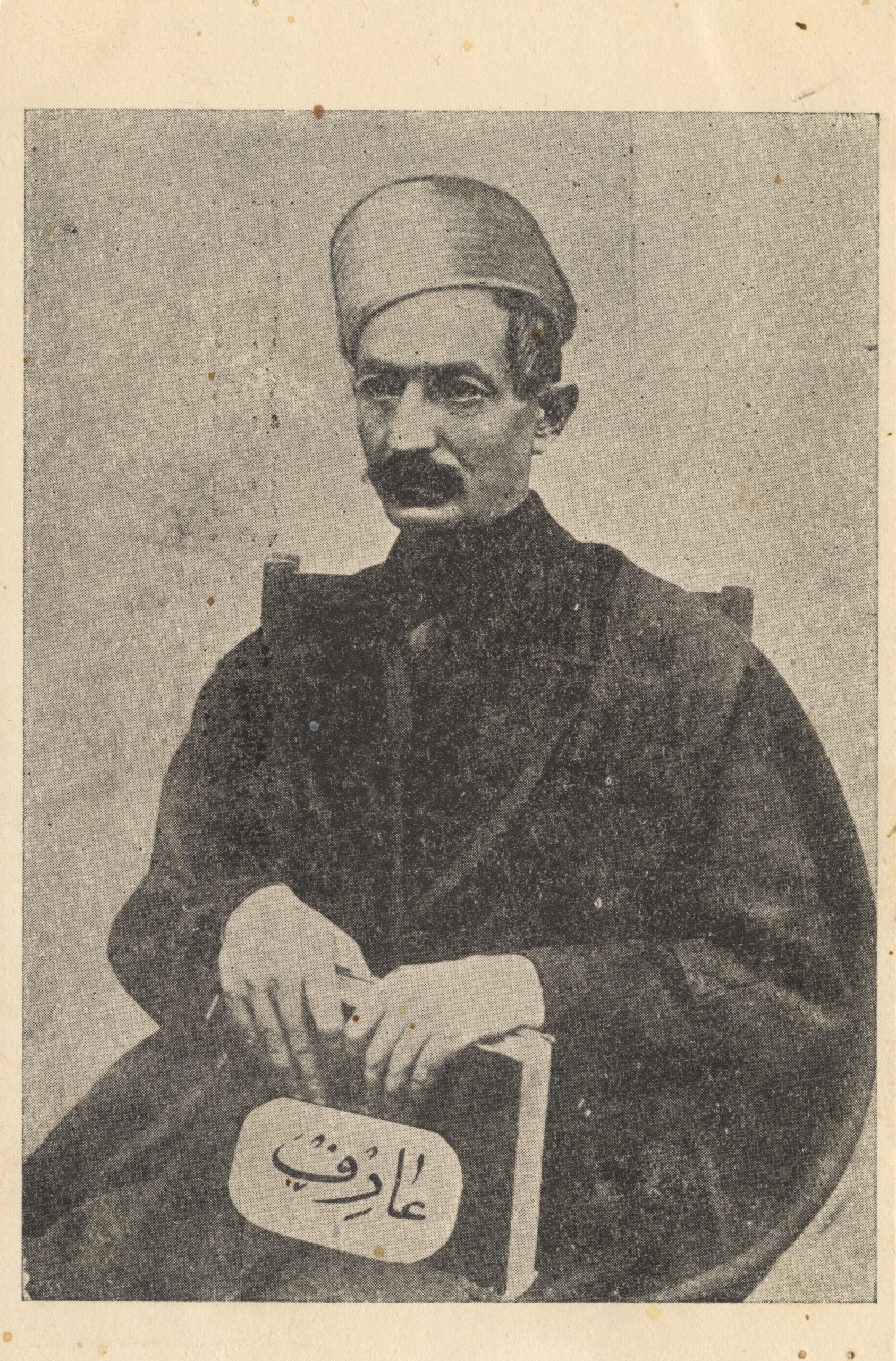
Figure 1. Photographic postcard of ʿĀREF QAZVĪNĪ. Published by Ali Akbar Jahromi & Co., Bombay, 1921–1922. First Series: Influential Contemporary Figures, No. 13. (Personal Collection of Amirali Ardekanian)
ʿĀref was born in Qazvīn, where he studied Persian language and grammar and also some music. His father Mollā Hādī earned his dislike by forcing him to go in for pā-menbarī in order to learn rawża-ḵᵛānī (martyrdom-recitation) and join the ranks of the mollas. About 1316/1898 he went to Tehran, where thanks to the “beauty of his voice,” he was introduced to some of the capital’s leading men, including Mīrzā ʿAlī-Aṣḡar Khan Amīn-al-solṭān, Atābak-e Aʿẓam; later he came to the attention of Moẓaffar-al-dīn Shah, who had him enrolled in the ranks of the royal valets (farrāšān-e ḵalwat); he found this distasteful and finally managed to obtain release. In private life, ʿĀref became “a rogue, an arak-drinker, and a profligate,” a condition aggravated by the failure of his marriage. His rash utterances led to a takfīr (excommunication from Islam) being issued against him. In his last years he became withdrawn and suspicious and was described by some who met him as ill-natured and hot-tempered. A bronchial disorder which finally prevented him from singing added to his despair. Despite his fame and the success of his concerts, which yielded a substantial income, he spent most of his life, and especially his last years, in such misery that he longed for an early death.
ʿĀref “devoted his art to the people” (Āryanpūr, Az Ṣāba tā Nīmā II, p. 357) and used poetry as an effective means of expressing political ideas and stirring emotions. A whole-hearted supporter of the constitutionalists, he left Iran for Turkey with other militants in 1334/1916 and stayed at Istanbul for some time. A single qaṣīda is all that survives from before this journey. A few years later he joined Colonel Moḥammad-Taqī Khan Pesyān who had rebelled in Khorasan (1339-40/1921). When Pesyān died in a clash with Zaʿfarānlū Kurds, he mourned his death in several poems including a famous taṣnīf. He also supported Sardār-e Sepah, the future Reżā Shah, in his call for abolishing the monarchy and the establishment of a republican state. His poetry totals about 150 in the ḡazal, taṣnīf, qeṭʿa, and maṯnawī forms. A fine calligrapher, he studied and copied the poetry of Saʿdī and Ḥāfeẓ. He sometimes wrote melodious verses in a literary style, but, elsewhere he introduced slang that accorded well with the subject and mood; thus Malek-al-šoʿarāʾ Bahār described him as a “poet of the common people.” His most important and impressive works are his taṣnīfāt (song lyrics), which he composed in response to political events of the day and sang to large and enthusiastic audiences. The taṣnīf had sunk to banality in wording and content, but he was able to impart a poetic quality to it. He had little knowledge of formal music but possessed an extraordinarily keen ear; he was both a good judge of music and an original composer. Despite his boasts of mastery, he owed his fame mainly to the mood of the time and the revolutionary content of his poems. His autobiography and some letters are preserved. He eventually went, or according to one source was banished, to Hamadān where he spent his remaining years in solitude and poverty. He died on 1 Bahman 1312/21 January 1934 and was buried in the courtyard of the Ebn Sīnā mausoleum.
Bibliography
Kollīyāt-e dīvān-e Mīrzā Abu’l Qāsem ʿĀref Qazvīnī, ed.
ʿA. Sayf Āzād, 4th ed., Tehran, 1342 Š./1963 (containing ʿĀref’s poems, autobiography, and some letters).
Y. Āryanpūr. Az Ṣabā tā Nīmā, Tehran, 1350 Š./1971, II, pp. 146-5l, 160-68, 349-61.
Ḡ. Rīāżī, Jāvedāna Īraǰ Mīrzā wa bargozīda-ye āṯāraš, Tehran, 1335 Š./1976.
Browne, Lit. Hist. Pers. IV, pp. 223, 345.
Idem, The Press and Poetry of Modern Persia, Cambridge, 1914, pp. 251-53.
V. Kubíčková, in Rypka, Hist. Iran. Lit., pp. 372-73.
A. Bombaci, “Il poeta nazionalista ʿĀref di Qazvīn,” Oriente Moderno 25, 1945, pp. 42-53.
[H. Ḡ. Qāʾem-panāh, ʿĀref Qazvīnī šāʿer-e mellī-e Īrān, Moscow, 1971, in Russian.] Bāmdād, Reǰāl I, pp. 59-60.
Letters from ʿĀref to Zand-doḵt (a lady of distinction in Shiraz) have been published in Zand-doḵt, pīšāhang-e nahżat-e āzādī-e bānūān-e Īrān, ed. Ṭ. Baṣṣārī, Tehran, 1346 Š./1967. pp. 161-79.