
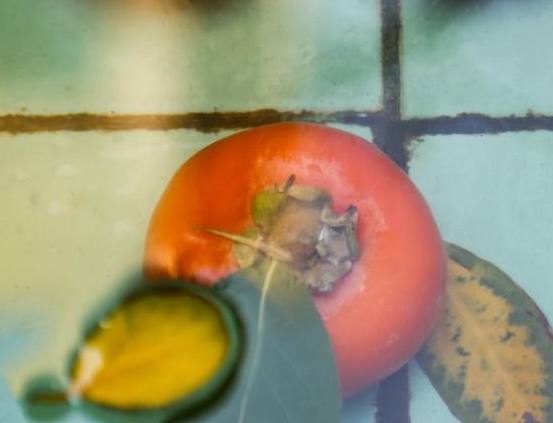



PERSIMMON (Diospyros kaki L.), Persian “ḴORMĀLU,” of the Ebenaceae or ebony family, is an edible fruit with an astringent taste thatturns sweet when fully ripe. This species, also called Chinese, Japanese, oriental persimmon or simply kaki persimmon, has been introduced from China to Iran and acclimatized to various climatic conditions of Iran. The genus Diospyros (Gk. Diós pyrós, lit. “Zeus’s wheat”) has given rise to popular interpretations, such as “divine fruit” or “fruit of god” (Janick, 2005). In Persian, ḵormālu, literally means “date-plum,” referring probably to its sweetness, shape, and color. The word persimmon (lit. “dry fruit”) is an Algonquian word and is not related to Persia.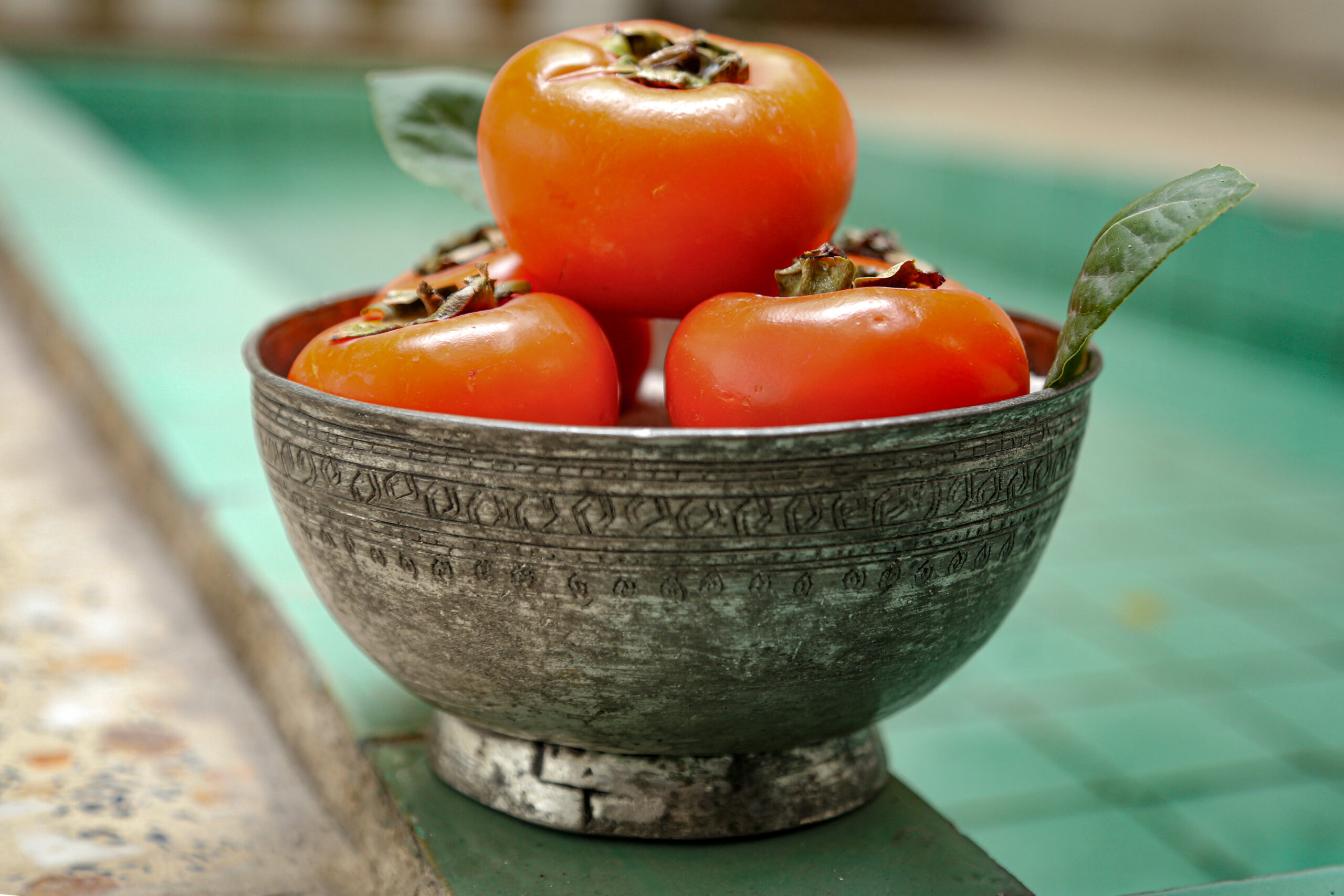
Other species include Caucasian persimmon (Diospyros lotus L.) that grows wild in the forests of the southern Caspian littoral in Iran, often referred to by the local names ḵormandi and kalhu, and is similar to American persimmon or common persimmon (Diospyros virginiana L.). These two species are used as rootstocks for Diospyros kaki. Kaki has practically replaced Diospyros lotus in Europe and West Asia.
The persimmon tree is typically either male or female, but occasionally both types of flowers are produced on the same tree. The sexual expression of a tree may vary from year to year. Some varieties produce seedless fruit by parthenocarpy, i.e., without pollination, which is preferred by consumers.
The unripe, firm persimmon has a high tannin content that makes it astringent and bitter. These water-soluble tannins have strong protein binding. As the fruit ripens, the tannin level is much reduced, giving a sweet and slightly tangy taste to the fruit with a thick, pulpy, jelly-like texture encased in a waxy, thin-skinned shell (Matsuo and Ito, 1978). The fruits ripen in late fall, when the leaves have mostly fallen off the tree. Often, the fully colored, unripe persimmons are harvested and allowed to rest and soften. The high content of the carotenoids in the flesh and peel, in particular betacryptoxanthin and zeaxanthin, along with some lutein, make the kaki fruit nutritionally valuable (Zhou et al. 2011). The phenolic extract from persimmon fruits of Diospyros lotus also showed that it is a potential source of natural antioxidants (Gao et al. 2014). Beverages made of persimmon leaves are commonly used in China (Sun et al. 2011).
Bibliography
Gao, Hui, Ni Cheng, Juan Zhou, BiNi Wang, JianJun Deng, and Wei Cao. “Antioxidant Activities and Phenolic Compounds of Date Plum Persimmon (Diospyros Lotus L.) Fruits.” Journal of Food Science and Technology 51, no. 5 (2014): 950–56.
Janick, Jules. “The Origins of Fruits, Fruit Growing, and Fruit Breeding.” In Plant Breeding Reviews. 2005.
Matsuo, Tomoaki, and Saburo Ito. “The Chemical Structure of Kaki-Tannin from Immature Fruit of the Persimmon (Diospyros Kaki L.).” Agricultural and Biological Chemistry 42, no. 9 (1978): 1637–43.
Moẓaffariān, Wali-Allāh. Farhang-e nāmhā-ye giāhān-e Irān: lātīnī, englīsī, fārsī. Tehran: Farhang-e Moʿāṣer, 1996, 188.
Sun, Lijun, Jianbao Zhang, Xiaoyun Lu, Liyu Zhang, and Yali Zhang. “Evaluation of the Antioxidant Activity of Total Flavonoid Extract from Persimmon (Diospyros Kaki L.) Leaves.” Food and Chemical Toxicology: An International Journal Published for the British Industrial Biological Research Association 49, no. 10 (2011): 2689–96.
Yong Yang, Jun Tao, Yanle Sheng, Chunhua Zhou, and Daqiu Zhao. “Carotenoids in Fruits of Different Persimmon Cultivars.” Molecules 16, no. 1 (2011): 624–36.