
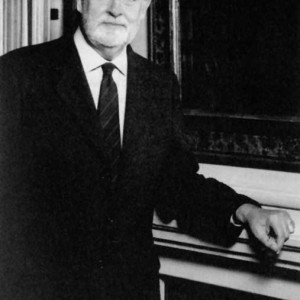
Gherardo Gnoli
( 1937–2012), one of the most distinguished Iranists and historians of religion of his generation, combining an extraordinary scientific output with a constant focus on cultural policy. See GNOLI, GHERARDO.

- BANG i. In ancient Iran
i. In Ancient Iran In the Middle Persian texts bang (mang) is described sometimes as a lethal and sometimes as…
- BAHRĀM (Vərəθraγna) i. In Old and Middle Iranian texts
i. In Old and Middle Iranian Texts BAHRĀM, original meaning “smiting of resistance;” not found in Old Persian; Middle Persian…
- AŠAVAN (possessing Truth)
AŠAVAN (Avestan, also ašāvan-), lit. “possessing truth (aša).” This word is attested in Old Persian as artāvan-, and in Old…
- AŠTĀD
AŠTĀD (Mid. Pers.), Av. arštāt-, Old Iranian female deity of rectitude and justice. Arštāt in Avestan may be “justice” (I….
- AVESTAN GEOGRAPHY
AVESTAN GEOGRAPHY. It is impossible to attribute a precise geographical location to the language of the Avesta. The Avestan texts,…
- BABYLONIA ii. Babylonian Influences on Iran
ii. Babylonian Influences on Iran Introduction. We can distinguish three periods in the influence of Mesopotamian civilization on pre-Islamic Iran:…
- EVIL i. In Ancient Iranian Religions
i. IN ANCIENT IRANIAN RELIGIONS In the eminently dualistic Zoroastrian religion the need to defeat evil was emphasized, and it…
- FARR(AH)
FARR(AH), XᵛARƎNAH, literally, “glory,” according to the most likely etymology and the semantic function reconstructed from its occurrence in various…
- ĒRĪČ MOUNTAIN
ĒRĪČ MOUNTAIN, mentioned in a chapter of the Bundahišn devoted to mountains (TD2, p. 76, l. 15; p. 78, ll….
- ĒR, ĒR MAZDĒSN
ĒR, ĒR MAZDĒSN (Inscr. Mid. Pers. ēr [ʾyly], plur. ērān [ʾylʾn, ʾyrʾn]), an ethnonym, like Old Persian ariya- and Avestan…
- DUALISM
DUALISM, feature peculiar to Iranian religion in ancient and medieval times. There is general agreement on this point, though some…
- DAIVADANA
DAIVADĀNA (lit., “temple of the daivas,”), Old Persian term that appears in the “daiva inscription” of Xerxes (486-65 b.c.e.) at…
- DĀITYĀ, VAŊHVĪ
DĀITYĀ, (VAŊHVĪ) (lit., “the (good) Dāityā”; Mid. Pers. Weh Dāitī), the name of a river connected with the religious “law”…
- DAHYU
DAHYU (OIr. dahyu-), attested in Avestan dax́iiu-, daŋ́hu- “country” (often with reference to the people inhabiting it; cf. AirWb., cot….
- DAHAN-E ḠOLĀMĀN
DAHAN-E ḠOLĀMĀN or, according to Walther Hinz (p. 374 n. 1), Dahana-ye Ḡolāmān “Gateway of the slaves,” site located 2…
- IRANIAN IDENTITY ii. PRE-ISLAMIC PERIOD
IRANIAN IDENTITY ii. PRE-ISLAMIC PERIOD The idea of Iran as a religious, cultural, and ethnic reality goes back as far…
- INDO-IRANIAN RELIGION
INDO-IRANIAN RELIGION. Indo-Iranian comparative studies enable us to distinguish a fund of religious concepts, beliefs, and practices that are common…
- HELMAND RIVER ii. IN ZOROASTRIAN TRADITION
HELMAND RIVER ii. IN ZOROASTRIAN TRADITION According to Avestan geography, the region of the Haētumant River extends in a southwest…
- HĀMUN, DARYĀČA-YE ii. IN LITERATURE AND MYTHOLOGY
HĀMUN ii. IN LITERATURE AND MYTHOLOGY In the literature and mythology of ancient Persia Lake Hāmun occupied, along with the…
- HĀMUN, DARYĀČA-YE
HĀMUN, DARYĀČA-YE (Lake Hāmun, lit. “lake of the plain, lowland”), also called Hāmun-e Helmand (Av. Haētumant- “provided with banks,” AirWb.,…
- SOCIETAS IRANOLOGICA EUROPAEA
SOCIETAS IRANOLOGICA EUROPAEA (SIE), international association in the field of Iranian studies. On the 1st and 2nd of October 1981…
- CONVERSION i. Of Iranians to the Zoroastrian faith
CONVERSION i. Of Iranians to the Zoroastrian faith Although modern Zoroastrians question whether their religion even allows conversion (see vii,…