



MENANT, DELPHINE (b. Cherbourg, 1850; d. Paris, 1932; Figure 1), French ethnologist and Orientalist.
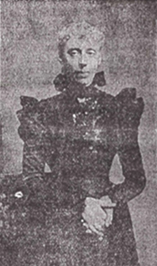
Delphine Menant was born into an old Cherbourg family with a long tradition of scholarly pursuits. Her father was the prominent Assyriologist, Joachim Menant (1820-99). Through her father’s scholarly work on Zoroastrianism (q.v.), she was certainly familiar with and developed an interest in the Parsi communities (q.v.) in India. She studied with the prominent Iranist, James Darmesteter (q.v.; 1849-94) and published the result of her research, Les Parsis: histoire des communautés zoroastriennes de l’Inde, in 1898. Her book was based on B. B. Patel’s Parsi Prakash, the two editions of D. F. Karaka’s History of the Parsis, R. F. Vatcha’s Munbain ō b āhār (The blossoming of Bombay), different reports and information coming directly from Bombay, and the collaboration of Jivanji Jamshedji Modi (q.v.; 1854-1933) and M. M. Murzban (Les Parsis, introd., p. xxii).
In France, Menant’s book was considered the standard work on the Parsis and the most complete and interesting on everything connected with them, from the earliest period of their history to the latest date. It received the coveted distinction of being crowned by the Académie Française (séance of 23 November 1899) and was published under the auspices of the Ministry of Public Instruction of France. But since the book was in French, French was not read widely by the majority of the Parsis, as well as many English readers, a translation in English was undertaken by a Parsi lady, Ratanbai Ardeshir Vakil (1869-95). It was soon interrupted by the death of the translator and only about fifty pages were published in 1902. M. M. Murzban, another Parsi, was commissioned to complete the translation; an annotated and enlarged translation was published in 1917.
In 1900, while an employee at the Musée Guimet, Menant was sent to southwestern India on a mission of the Ministry of Public Instruction of France in order to investigate all matters relating to the religion of the Parsis. On 23 September 1900, Menant left France for India, accompanied by her aged mother and their male servant, François Monty, a Christian from Pondicherry (Rapport, p. 20). They arrived in Bombay (see BOMBAY i. THE ZOROASTRIAN COMMUNITY) on 16 October, where Joachim Menant had established contacts and even friendly relationships with the notables and eminent Parsis of the city; they were consequently warmly welcomed by them and benefited from their help and protection throughout their sojourn in India. In Bombay, they were the hosts of Behramji Merwanji Malabari (1853-1912), a poet and politician and a friend of Menant’s father. Delphine Menant met also Modi, Kharshedji Rustamh Cama (q.v., 1831-1909), and other prominent Parsis.
At the time, there were 119 towers of silence (see CORPSE) in the whole of India and Gujarat (“Chez les Parsis,” p. 168). Bombay had four ātaš bahrāms ‘Victorious Fires’ (see ĀTAŠ); seven towers of silence; and 150 fire temples (see ĀTAŠKADA). In 1901, there were 94,539 Parsis in India: 78,552 of them in the Bombay Presidency, of whom 46,231 were in the city of Bombay (“Parsis et Parsisme,” p. 128). Under Modi’s guidance, Menant visited different hospitals, orphanages, and schools of Bombay; she met priests and notables (Rapport, p. 17); and then she continued her investigations in the Gujarat.
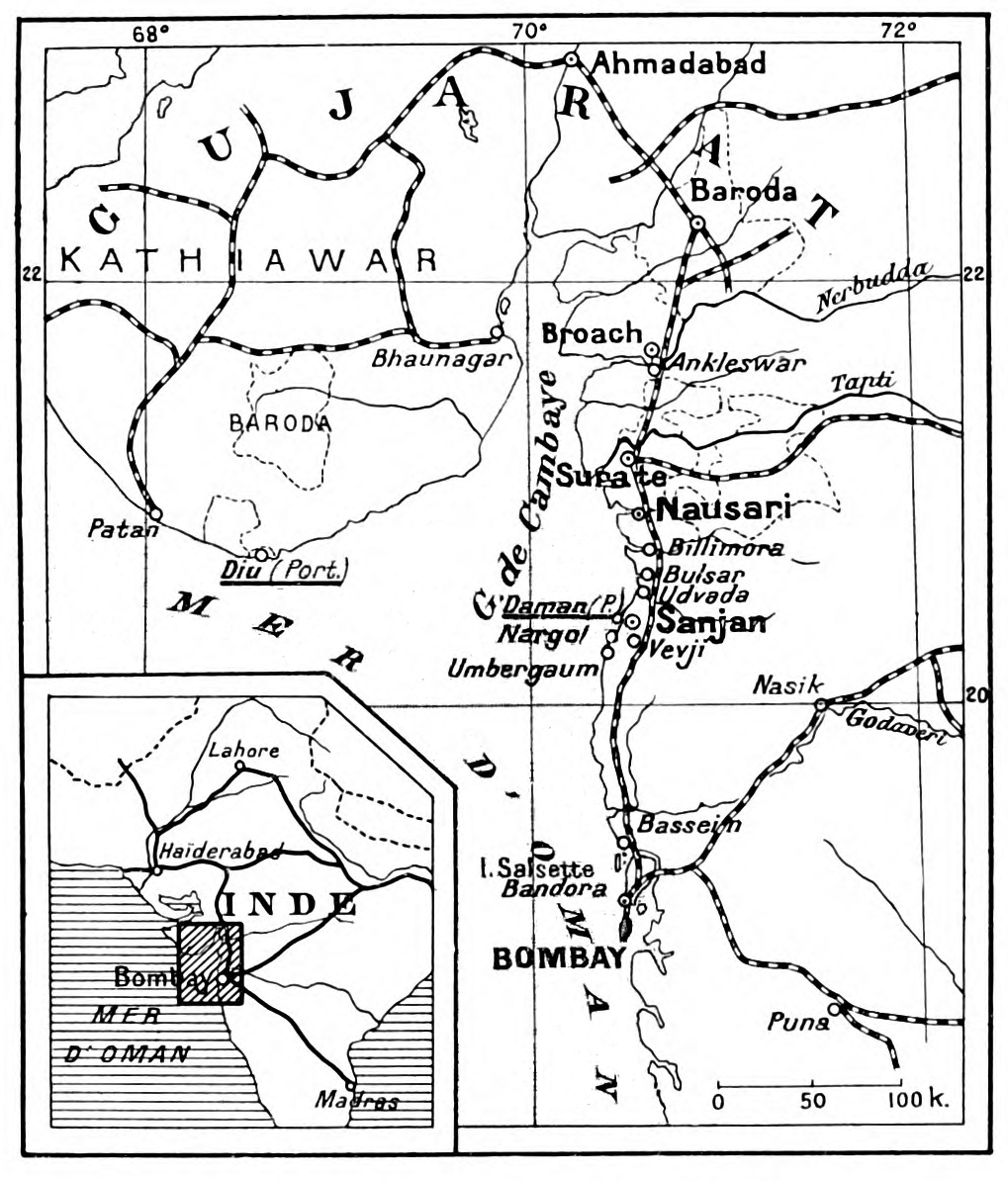
On 19 December 1900, Menant left Bombay by train for Gujarat to live among the Parsis of the rural and urban parts of the district (Figure 2). She observed their social practices regulated by the Panchayat (see BOMBAY PARSI PANCHAYAT; Les Parsis, pp. 236-91; “Chez les Parsis,” pp. 208-9), a system established in the 17th century, to treat the affairs of the Parsi community and apply sanctions against infractions of the communal code (Rapport, pp. 34-35). The report on her mission completed by her extensive article, “Chez les Parsis de Bombay et du Guzerate,” written in a very elegant style, is extremely precious and precise; day by day, she gives a brief description of each city and village she visited, mentioning the number of ātaš bahrāms, agyaris (fire temples), daḵmas (towers of silence), and the ceremonies she could attend.
Religious ceremonies were forbidden to the non-Zoroastrians in India, and the descriptions given in Delphine Menant’s book were based on Modi and Murzban’s information (Les Parsis, introd. p. xxii), but gradually some ceremonies like the naojote ‘new birth’ and the sedra-pušun ‘putting on the sacred girdle’ (see KUSTĪG) became public (Les Parsis, pp. 69-71; 128-44; “Chez les Parsis,” pp. 166-68). Menant attended more than ten marriages during her voyage (Rapport, pp. 40-41); she gives a description of the main stages of the Parsi wedding ceremony (“Chez les Parsis,” pp. 166-68; 214). She reports that funeral ceremonies as described by A. H. Anquetil-Duperron (q.v.; 1731-1805) in the Vendīdād (q.v.), remained unchanged (Les rites funéraires, pp. 147-89; Parsis et Parsisme, pp. 165-66).
She also visited the cities and villages of Umbergaon, Nargol, Sanjan, Udvada, Navsari, Bharuch (Broach), Baroda, Surat, Ahmedabad and Rajkot. She first stopped at Umbergaon. The city had a fire temple and two towers of silence and the Parsis inhabitants worked in the agrarian sector as cultivators, carpenters, textile weavers, and working in the preparation of the toddy, a drink made from the sap of several species of palm which yields a potent brew (Rapport, p. 20; “Chez les Parsis,” p. 172). Then, she went to Nargol (21 December), a prosperous city that had a school, several wells, a fire temple, a tower of silence founded in 1888, and the ruins of another one. Her host, M. Framji Khandaria, had a large house containing a room with an altar in front of which the faithfuls prayed, especially during the festival of Moktād (Skt. mukta atman ‘released soul’; a Parsi term, Frawardīgān [q.v.], among Iranian Zoroastrians) (“Chez les Parsis,” pp. 176-77).
Menant went to Sanjan by boat (25 December). She visited the ruins of a fortress dating from the Portuguese period (Rapport, p. 22). From Sanjan she went to Udvada (27 December), the shelter of a sacred fire since the 8th century and a place of pilgrimage. The city had an ātaš bahrām and two towers of silence; its four small fire temples had been replaced by a new and larger one built by Bai Motlibai Wadia (1811-97) (“Chez les Parsis,” pp. 179-80; Rapport, p. 23). The new temple was vast, an important structure, with a very elegant façade decorated with columns in the pseudo-Persepolitan style with bull capitals supporting the upper wall of the building. It was the most sacred of the Zoroastrian fire temples in India (“Chez les Parsis,” p. 179; Rapport, p. 23).
In Navsari (30 December), Menant was the host of Jamsetji Nusserwanji Tata (1839-1904, the founder of Tata Group, India’s biggest conglomerate) and his son (Rapport, p. 25; “Chez les Parsis,” p. 182). The city, along the Purna River was known as the garden of Gujarat and as an important center of Parsi religious authority. The temples and libraries were located in the Motafalia area. The city had an ātaš bahrām
, four fire temples, five towers of silence (Rapport, p. 25), and a special school founded in 1856 by Sir Cowasji Jahangir Readymoney (1812-78). Its fehrest (genealogy of the sacerdotal class) was well organized since the arrival of Kamdin Zardosht, the first mowbed who came from Sanjan (ca. 1142 CE) for the celebration of the religious ceremonies (Rapport, p. 28).
On 2 January 1901, in Navsari, Menant had the opportunity to attend part of the ceremony of the nāvar, the first initiation into priesthood (Rapport, pp. 28-29; “Chez les Parsis,” pp. 185-86). The next day, in the morning, Dastur Rustamji Jamshedji invited her to the ceremony of the Yasna (q.v.) in the compound of the ātaš bahrām šenšāi (šāhanšāhi ‘royal’), but only for information since this ceremony as well as the access to the fire temples were strictly forbidden to the non-Zoroastrians in India. In the afternoon of that day, she was invited to the ceremony of the care of the sacred fire (Pers. bōy dādan; Guj. boi devi) (Rapport, p. 33; “Chez les Parsis,” pp. 209-10; “L’Entretien du feu sacré,” pp. 101-11).
Menant left Navsari (4 January) for Bharuch, a prosperous city that had seven fire temples and four towers of silence. Bharuch had also a Bohora community, well known for the violent riots that occurred in 1857 between Bohoras and Parsis when a Parsi priest was killed at the door of a fire chamber (Rapport, pp. 36-37; “Chez les Parsis,” p. 197). There, she was the guest of the Khan Bahadur N. S. Giniwalla who invited her to his comfortable bungalow along the Nerbudda River. In the afternoon, she reached Baroda, where she had an invitation from the Maharaja Sayajirao III (1863-1939; Rapport, p. 37; “Chez les Parsis,” p. 198). The city had an ātaš bahrām, two small fire temples and five towers of silence, and a high school for girls (“Chez les Parsis,” p. 204). Returning from a visit to the towers of silence 7 January), Menant had an accident and had to go to Surat where she spent three weeks in the hospital directed by the female doctor Rukhmabai Raut (1864-1955) (Rapport, pp. 37-38; “Chez les Parsis,” pp. 204-5).
In Surat, during her convalescence, Menant had the opportunity to visit the city and discover its surroundings (Les Parsis, p. 382; “Chez les Parsis,” p. 206). Outside the city she saw the European cemetery with Dutch, Armenian, and Bohrā graves (Rapport, p. 36; “Chez les Parsis …,” pp. 212-13). In the Rustampura district, she was particularly interested in the textile weavers weaving the kustīgs (Rapport, p. 33).
Menant left Surat for Rajkot (5 February), making a stop in Ahmedabad for a rest, where only few Parsis were living. Nevertheless, the village had two towers of silence and a fire temple that she had the opportunity to visit as it had just been inaugurated (25 December 1900) and no corpse had been deposited (Rapport, pp. 38-40). She also visited the famous Rajkumar College founded in 1870 for the education of princes.
In Junagadh (10 February), she was the host of the Diwān Saheb (Prime Minister) who installed her in a beautiful bungalow just in front of the Girnar mountains. The next day, she reached the Girnar district, where she visited the Jaina temples and the stone of Aśoka (q.v.; Rapport, pp. 41-42). On 16 February 1901, she went back to Surat and then to Baroda where she started to put in order the massive information she had gathered (Rapport, p. 42).
Menant had the opportunity to observe Parsi society at a time of its profound transformation and modernization. The Parsis were very tolerant and open to European culture. They also rapidly assimilated into Hindu society (“Chez les Parsis,” p. 160). They had close contacts with the British, but very few converted to Protestantism; they persisted in their beliefs and practices but gave up the Persian language and adopted Gujarati (q.v.). Menant regrets that Zoroastrian texts were neglected and the sacerdotal class was disorganized (Rapport, p. 44). The Parsis were interested in the occidental way of life and in its methods of instruction (Les Parsis, pp. 292-358): the European methods of instruction replaced gradually the Gurukula system (traditional schools with at their head a Guru). Parsi ladies had a good level of education, too, and had benefited of an occidental education (Rapport, p. 43; Les Parsis, pp. 332-58). Menant was very lucky to have Modi’s collaboration, and he helped her a lot in her research.
Mary Boyce (q.v.; 1920-2006), who dedicated her book Zoroastrianism: Its Antiquity and Constant Vigor to the memory of Delphine Menant, said: “She studied the Zoroastrians with learning, respect and affection as bearers of an ancient and still living faith.” Indeed, the Parsis were happy and honored to have the visit of a European scholar, so learned and so interested in their religion. Nevertheless, she was sometimes accused of partiality to the Zoroastrians in reporting their relations with the Muslims and Hindus.
On her return home (June 1901), Menant continued to entertain relations with the Parsis and with the French wanting to go to India. In 1902, she presented the report on her scientific mission in India for the Ministry of Public Instruction of France, and at the Académie des Inscriptions et Belles Lettres a major paper on one of the most important ceremonies of the Parsis, the care of the sacred fire (“L’entretien du feu sacré,” pp. 101-9). Among the great number of papers she presented and published, “Les Rites funéraires des zoroastriens de l’Inde” and “Sacerdoce zoroastrien à Nausari,” are particularly well informed.
Delphine Menant also investigated two Ismaʿili (see. ISMAʿILISM) trading communities, the Khojas (q.v.) and the Bohrās (see ISMAʿILISM xvi. MODERN ISMAʿILI COMMUNITIES); their relations with the Hindu and Zoroastrian populations; and the question of Ismaʿilism and of its leader, the Aga Khan. All her personal and administrative letters, her articles on Zoroastrianism, different papers, manuscripts, and documents have been deposited in the Bibliothèque du Musée Guimet; some have been digitized (see bibliography, below).
Bibliography
Works.
“Un Mariage Parsi,” La nouvelle revue 89, 1894, pp. 589-604 (digitized BnF Gallica).
“Docteur Anandabai Joshee,” Lanouvelle revue 92, 1895, pp. 835-57 (digitized BnF Gallica).
“Lettres inédites d’Eugène Burnouf et de Manackji Kharshedji,” La nouvelle revue 96, 1895, pp. 491-514 (digitized BnF Gallica).
Dossiers biographiques Boutillier du Retail: Documentation sur Behramji M. Malabari, Paris, 1892-1896 (together with Sylvain Lévi; digitized BnF Gallica).
“La Pundita Rukhmabai,” Revue encyclopédique Larousse 160, 1896, pp. 165-68 (regarding the publication of the book The High Caste Hindu Women, which had a great success in England and America because of the introduction by Rachel Bodley, senior female doctor of the Women’s Medical College of Pennsylvania.)
“Docteur Rukhmabai,” Revue encyclopédique Larousse 160, 1896, pp. 368-71.
“Miss Freany Cama,” Revue encyclopédique Larousse 160, 1896, pp. 668-71.
L’Éducation dans l’Inde: la femme parsie, Paris, 1898.
Les Parsis: histoire des communautés zoroastriennes de l’Inde, Annales du Musée Guimet, Bibliothèque d’Études 1, Paris, 1898, pp. xxiv-480; repr. Osnabrück, 1975 (digitized BnF Gallica; vol. II was never published).
Un Réformateur Parsi dans l’histoire contemporaine de l’Inde: Behramji M. Malabari, English tr. Dayarama Gidumal Shahani, introd. D. Menant, preface J. Menant, Paris, 1898, pp. xcvi-300 (digitized BnF Gallica; translation of Dayaram Gidumal, The Life and Work of Behramji M. Malabari, Bombay, 1888).
Notes de voyage aux Indes (1900-1901), MS Bibliothèque du Musée Guimet (37 pp.; manuscript relating Delphine Menant’s visit to the nunnery of Bandora on 15 November 1900, with interesting photographs and drawings by D. Menant; also considerations on the difficulties of her travel through Gujarat in those uncomfortable palanquins when Menant was weakened by the heat and dysentery).
“La Littérature Moderne de l’Inde,” in Revue encyclopédique Larousse 363, Paris, 1900, pp. 646-51.
“Zoroastrianism and the Parsis,” The North American Review 172/530, 1901, pp. 132-47.
Rapport sur une Mission Scientifique dans l’Inde Britannique, Nouvelles Archives des missions scientifiques 10, Paris, 1902 (digitized BnF Gallica).
The Parsis, part. English tr. by Ratanbai Ardeshir Vakil, introd. by Delphine Menant, London, 1902.
“L’Entretien du feu sacré dans le culte mazdéen,” Académie des inscriptions et belles lettres 46/2, 1902, pp. 101-11 (Compte-rendu de la séance 14 Mars 1902).
“Notes sur les grandes cérémonies du culte mazdéen,” Académie des inscriptions et belles Lettres 46/4, 1902, p. 414 (Compte-rendu de la Séance 4 Juillet 1902).
“Les Parsis à la cour d’Akbar,” review of J. J. Modi’s The Parsis at the Court of Akbar and Dastur Meherji Rana, in Revue de l’histoire des religions 50, 1904, pp. 39-52.
“Parsis et Parsisme,” Annales du Musée Guimet: Bibliothèque de vulgarisation 16, 1904, pp. 119-74 (Conférence Musée Guimet 27 Mars 1904; digitized BnF Gallica).
“Réforme religieuse et sociale dans l’Inde,” Annales du Musée Guimet: Bibliothèque de vulgarisation 18, 1906, pp. 175-228 (digitized BnF Gallica).
“Anquetil-du Perron à Surate,” Annales du Musée Guimet: Bibliothèque de vulgarisation 20, 1906, pp. 81-139 (Conférence Musée Guimet 11 Mars 1906; digitized BnF Gallica).
“Zoroastriens en Perse,” Revue du monde musulman 3, 1907, pp. 193-220; 421-52 (digitized BnF Gallica).
“Influence of Max Müller’s Hibbert Lectures in India,” The American Journal of Theology 11/2, 1907, pp. 293-307.
“Zoroastre d’après la tradition parsie,” Annales du Musée Guimet: Bibliothèque de vulgarisation 30, 1908, pp. 223-76 (Conférence Musée Guimet; digitized BnF Gallica).
“Chez les Parsis de Bombay et du Guzerate,” Le tour du monde: Journal des voyages et des voyageurs n.s. 14, 1908, pp. 157-68; 15, 1908, pp. 169-80; 16, 1908, pp. 181-92; 17, 1908, pp. 193-204; 18, 1908, pp. 205-16.
“Le Rajkumar Collège de Rajkot,” Revue du monde musulman 6, 1908, pp. 1-51 (Conférence Musée Guimet, digitized BnF Gallica).
“La Prise de Sanjan par les Musulmans,” Revue du monde musulman 8, 1909, pp. 145-79 (digitized BnF Gallica).
“Le ‘Gurukula’ d’Hardwar,” Revue du monde musulman 8, 1909, pp. 492-94 (digitized BnF Gallica).
“Le Collège des Chefs à Lahore,” R
evue du monde musulman 9, 1909, pp. 44-81 (digitized BnF Gallica).
De Monumenten van den Girnar: De Aarde en haar Volken, Paris, 1909, pp. 81.
Bij de Parsis’s van Bombay en Gudsjerat: De Aarde en haar Volken, Paris, 1909-10.
“Les Bohoraz du Guzarate; Le Bureau de renseignements des musulmans de l’Inde;” Revue du monde musulman 10, 1910, pp. 82-90; 459-93.
“A Bombay,” Revue du monde musulman 12, 1910, pp. 509-13.
“Chez les Parsis,” Revue du monde musulman 11, 1910, pp. 309-12.
“Chronique de l’Inde: La Begum de Bhopal, Recensement,” Revue du monde musulman 11, 1910, pp. 121-24 (digitized BnF Gallica.)
“Indes (Livres et Revues): Musulmans et Hindous; La tombe d’Akbar à Sikandarah; Une Histoire arabe du Guzarate,” Revue du monde musulman 11, 1910, pp. 149-50; 160-67.
“Indes (Notes et Documents): Erection d’un monument commémoratif de l’arrivée des Parsis dans l’Inde,” Revue du monde musulman 11, 1910, pp. 258-59; 371-76.
“Indes britanniques: La Répression de la sédition dans l’Inde d’après les princes musulmans; Chez les Parsis,” Revue du monde musulman 12, 1910, pp. 307-12.
“Les Khodjas du Guzarate,” Revue du monde musulman 12, 1910, pp. 214-32; 406-24 (digitized BnF Gallica).
“Les Parsis de Bombay et du Guzarate,” Revue du monde musulman 12, 1910, pp. 309-12.
“Les Rites funéraires des Zoroastriens de l’Inde,” Annales du Musée Guimet, Bibliothèque de vulgarisation 35, 1910, pp. 141-98 (Conférence Musée Guimet 27 Mars, 1904; digitized BnF Gallica).
“Chronique des Indes”: “Moslem League,” “‘Moslem League’ de la présidence de Bombay,” “Les émeutes à Bombay à l’occasion du Moharram,” “Université musulmane,” “Le Féminisme dans l’Inde musulmane,” “Université Musulmane,” “Comrade,” “Rapport entre Anglo-Indiens et Indigènes,” “Article de l’Aga Khan,” “Éducation musulmane,” “Mort du Nawab de Junaganh,” “A Patiala,” Revue du monde musulman 13, 1911, pp. 334-39; 570-77 (digitized BnF Gallica).
“Chronique des Indes”(notes et documents): “Université musulmane,” “L’Aga Khan à Lahore,”; “L’Aga Khan à Bombay,”; “Réunion des Musulmans à l’Anjuman-i Islam Hall,” “Opinion du Leader sur l’Aga Khan,” “Opinion du Maharajah de Bikanir sur l’administration de Lord Minto et la ligue politique des princes musulmans et hindous,” “Au Conseil du vice-roi et au Conseil législatif de Bombay,” “Mort du Maharajah de Jodhpur”; “Nomination d’un indigène en qualité d’assistant du professeur T. W. Arnold,” Revue du monde musulman 14, 1911, pp. 100-109 (digitized BnF Gallica).
“Chronique de l’Inde”: “La Bégum de Bhopal,” “Recensement,” Revue du monde musulman 14, 1911, pp. 371-76 (digitized BnF Gallica).
“Chronique des Indes”: “Education musulmane,” “Propagande en faveur de l’Université musulmane dans le Belouchistan,” “Le Durbar et ses conséquences,” “Les hautes fonctions dans l’Inde,” “Le Bill de M. Bhupendranath Basu,” “Émeutes à Madura et à Khulna,” “Dinapore,” “La ‘Fatika’ d’Afzul khan,” “Le Sanatorium de Dharampur,” “Mort du docteur Seyed Ali Bilgrami,” Revue du monde musulman 15, 1911, pp. 118-33 (digitized BnF Gallica).
“Quelques Pages de l’Histoire du Bhopal,” Revue du monde musulman 15, 1911, pp. 227-88 (digitized BnF Gallica).
“Chronique de l’Inde”: “Mort du Nizam d’Hyderabad,” “Université musulmane,” “Tayyaba Begum,” “La Conférence provinciale d’éducation musulmane,” “Les Pèlerins de la Mecque,” “La Question du Cow-killing,” Revue du monde musulman 15, 1911, pp. 355-68 (digitized BnF Gallica).
“Chronique de l’Inde”: “Le Nizam d’Hyderabad,” “Mort du Maharajah de Kuch Behar et mariage du Maharajah de Gwalior,” “ ‘All India Moslem League’,” “La Conférence provinciale du Bengale,” Revue du monde musulman 15, 1911, pp. 499-508 (digitized BnF Gallica).
“L’Inde Portugaise – Bassein,” Revue Politique et Littéraire: Revue Bleue 49/2, 1911, pp. 137-41; 165-70; 205-207.
“Observations sur deux manuscrits orientaux de la Bibliothèque nationale,” Journal Asiatique 18/1, 1911, pp. 107-18; JA 11/1, 1913, pp. 619-32 (digitized BnF Gallica; on the Vendidad Sadé, MSS supp. Persan 27 and 1079).
“Social Evolution among the Parsis,” Journal of the Iranian Association, January 1911, pp. 265-70.
“A propos de l’Université Musulmane d’Aligarh,” Revue du monde musulman 21, 1912, pp. 268-89 (digitized BnF Gallica).
“Gerald Aungier, gouverneur de Bombay (1669-1677),” La revue politique et litteraire: La revue bleue 24-31 August, 1912, pp. 277-85 (digitized BnF Gallica).
“Sacerdoce zoroastrien à Nausari,” Annales du Musée Guimet: Bibliothèque de vulgarisation 36, 1912, pp. 221-89 (Conférence Musée Guimet; digitized BnF Gallica).
“Pèlerinage aux temples Jainas du Girnar,” Annales du Musée Guimet: Bibliothèque de vulgarisation 39, 1913, pp. 189-239 (Conférence Musée Guimet, 1912; digitized BnF Gallica).
“Une Evolution sociale chez les Parsis,” Revue d’ethnographie et de sociologie, Institut ethnographique international de Paris, 1914, pp. 118-30; 168-80; 235-47 (discussions over the possibility of admitting people of other faiths into the Parsi community).
Studies.
Abraham Hyacinthe Anquetil-Duperron, Extracts from the Narrative of Anquetil du Perron’s Travels in India, Chiefly Those Concerning His Researches in the Life and Religion of Zoroaster…, tr. from French by Kavasji Edalji Kanga, Bombay, 1876.
Mary Boyce, Zoroastrianism: Its Antiquity and Constant Vigor, Costa Mesa, Calif. and New York, 1992.
Numa Broc, Dictionnaire illustré des explorateurs et grands voyageurs français du XIXe siècle, 4 vols., Paris, 1988-2003, II, pp. 325-26.
Dosabhai F. Karaka, History of the Parsis, Including Their Manners, Religion and Present Position, 2 vols., London, 1884.
Murzban Muncherji Murzban, The Parsis in India: Being an Enlarged and Copiously Annotated, up to Date English Edition of Mlle. Delphine Menant’s ‘Les Parsis’, 3 vols., Bombay, 1917, repr. Bombay, 1994-96.
Jivanji J. Modi, A Few Events in the Early History of the Parsis and Their Dates, Bombay, 1905.
Idem, The Religious Ceremonies and Customs of the Parsees, Bombay, 1922, pp. 552; 2nd ed., 1937, rep. Bombay, 1979.
Bomanjee B. Patel, Gujarat Parsis from Their Earliest Settlement to the Present Time, Bombay, 1898.
Bomanjee B. Patel and Rustam B. Paymaster, Parsee Prakash, vols. I-VII, Bombay, 1898-1942.
R. F. Vatcha, Munbainō bāhār, 2 vols., Bombay, 1874.