



ŠĀMLU, AḤMAD (AHMAD SHAMLU; b. Tehran, 21 Āḏar 1304/11 Dec. 1925; d. Tehran, 2 Mordād 1379/23 July 2000; Figure 1), a celebrated poet of the second half of the 20th century, and a pioneer of free verse in Persian. He wrote under several pseudonyms, including Alef Ṣobḥ, Alef Bāmdād, and Bāmdād.
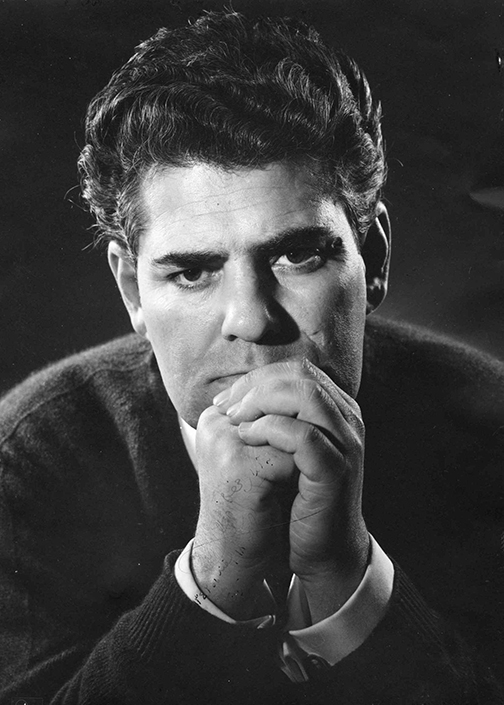
Figure 1. Aḥmad Šāmlu. Photograph by Hādi Šafāʾiya, Tehran, 1963.
Life. Aḥmad Šāmlu was the second of six children, and the only son, born to Ḥaydar Šāmlu (d. 1958), an army colonel, and Kawkab ʿErāqi (d. 1972). His paternal grandfather was originally from Kabul, but political reasons forced him to leave Afghanistan and migrate to Iran. Šāmlu’s maternal grandfather came from Bukhara, and his maternal grandmother from the Caucasus (Pourazimi, 2017a, p. 66).
Šāmlu spent his early childhood in a number of cities as the father was sent to various postings, and the family accompanied him to Zāhedān, Rasht, Isfahan, Gorgān, and Urmia. Šāmlu attended local schools wherever they were stationed. The family relocations also brought him into contact with the diverse dialects, customs, and cultures within Iran, a formative experience reflected in his poetry and utilized in his later studies of colloquial Persian. In 1940, the family moved to Tehran where he continued with his secondary school education, first at the Irānšahr High School and later at Firuz Bahrām (q.v.). Eager to learn German, he subsequently left Firuz Bahrām school and enrolled in the German-Iranian Technical College for a while before the family moved again to accompany the father during his new assignment in Gorgān (Pourazimi, 2017a, p. 73). He left school before graduating and began a career in journalism (see below) during the Allied occupation of Iran in 1941. In 1942, he was imprisoned for nearly two years on account of his active participation in opposing the presence of the Allied Forces in Iran (Moḥammad-ʿAli, p. 17). While in prison Šāmlu composed dramatic pieces in prose. These were later published in newspapers and journals, and in 1947 in the collection Āhanghā-ye farāmuš-šoda, with an introduction by Ebrāhim Dilmaqāniān.
After the Coup d’État of 1332 Š/1953 (q.v.), Šāmlu briefly joined the Tudeh (Tuda) party (see COMMUNISM) but was soon arrested and imprisoned until the winter of 1954. He disregarded his father’s advice and refused to sign a political recantation that would have secured his release. He refers to this incident in “Nāma,” a poem addressed to his father during his incarceration in the Qaṣr prison. In the published edition of the poem in his Šekoftan dar meh (1970), the same prison poem is backdated to 1944 and his incarceration by the Allies in order to evade the strict censorship imposed at the time.
Marā to dars-e forumāya-budan āmuzi?
Ke tawba-nāma nevisam be kām-e došman bar . . .
To rāh-e rāḥat-e jān gir o man maqām-e maṣāf;
To jā-ye amn o amān gir o man ṭariq-e ḵaṭar.
(“Nāma,” in Majmuʿa-ye āṯār, 2001, pp. 687-90)
You teach me to be a coward, father?
To register repentance at my enemy’s will . . .
Take your soul to safety, father, and I my body to the battlefield.
Shelter yourself in comfort, and leave me in my great danger.
(tr. in Karimi-Hakkak, 1977, p. 205)
From 1969 to 1972, at the invitation of the National Iranian Radio and Television (NIRT), Šāmlu made several films about Persian folklore (see below). The research culminated in the publication of his critically acclaimed Ketāb-e kuča, an encyclopedic compendium of Persian proverbs and idioms (see below). His other appointments were directly related to his research. He was a member of the Farhangestān-e zabān-e Irān (the Academy of Persian Language and Literature) from 1970 to 1976 and a consultant for research projects at the Tehran offices of Bu-ʿAli Sinā University of Hamadān. He was also a guest lecturer on Persian literature at the Āryāmehr University for three semesters, starting in February 1973 (Sarkisiān, 2000, p. 912; Pourazimi, 2017a, p. 280).
Šāmlu left Iran in November 1977 for England and the United States in protest against oppression and censorship. He had a short-lived association in 1978 with Irānšahr, a periodical founded in London by Ḥosayn Bāqerzāda, with which the famous Iranian writer Ḡolām-Ḥosayn Sāʿedi (q.v.) also cooperated. His tenure as the journal’s editor-in-chief ended abruptly on 1 February 1979 with a resignation note expressing his disagreement “with Irānšahr’s political views as expressed in the previous issue,” (Irānšahr, no. 15, 12 Bahman 1357/1 February 1979; Bāqerzāda, pp. 389-415).
After the Revolution of 1978-79, Šāmlu returned to Iran, and he was blacklisted as an author in 1982. For twelve years, none of his works were granted a publishing permit. However, his poetry readings became available on tape through the Ebtekār and Māhur Institutes in 1982 (Pourazimi, 2017a, 311-12; Moezi Moghadam, p. 514).
Šāmlu married Ašraf-al-Moluk Eslāmiya, a primary school teacher, in Tehran in 1947. They had three sons, Siāvaš (1948), Sirus (1950), Sāmān (1952) and a daughter Sāqi (1954). The marriage ended in divorce in 1957. In that same year, Šāmlu married Ṭusi Ḥāʾeri, but that marriage, too, was dissolved in the winter of 1961. In 1964, he married Ritā Ātānṯ Sarkisiān, better known as Āidā (Pourazimi, 2017a, pp 39-41; Figure 2).
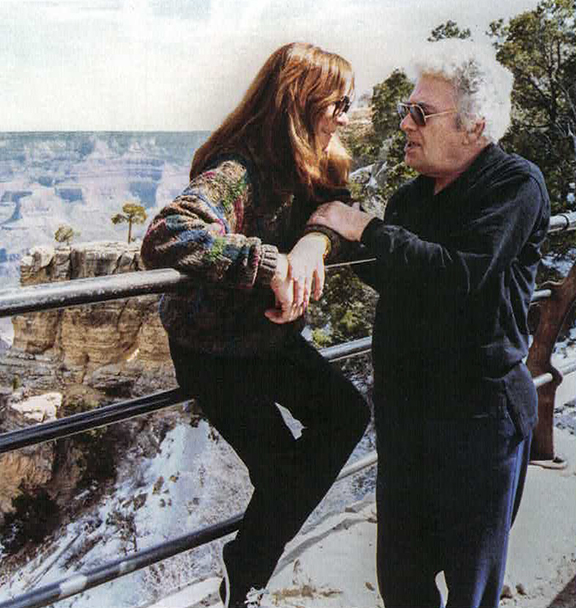
Figure 2. Aḥmad Šāmlu and his wife Āidā (Ritā Ātanṯ) Sarkisian at the Grand Canyon, Arizona, 1991. Photograph by Vidā Šayḵ-ol-Eslāmi. After S. Purʿaẓimi, Man bāmdādam saranjām, Tehran, 2017, p. 786.
The final decade of Šāmlu’s life was marred by ill health as a result of diabetes and high blood pressure. In 1997, his right leg had to be amputated below the knee due to gangrene. He died on Sunday, 23 July 2000, and was buried in the Emāmzāda Ṭāher cemetery at Karaj (q.v; Pourazimi, 2017a, pp 330-41).
Šāmlu’s poetry. Persian literary circles in Šāmlu’s time were embroiled in heated debates between those loyal to the conventions and norms of traditional prosody and metrics (see ʿARUŻ), and modernists who sought to liberate poetry from what they perceived as the strictures of classical verse. However, as noted by a critic, “the variety of Shamlu’s experiments with the language, the diversity of his poetic music, the multifariousness of his imagery and the stubborn independence of his poetic ideas demonstrate his refusal to fall into any easily identifiable category” (Karimi-Hakkak, 1977, p. 201).
In an interview published in the journal Zamāna, Šāmlu recalled the exact moment when he was introduced to the poetry of Nimā Yušij: “On the first day of 1325 Š.[21 March 1946], I saw a picture of Nimā in the newspaper Pulād, along with a synopsis of his poem ‘Nāqus’ and I was mesmerized” (“Goft-o-gu,” p. 23). He published his first poetry collection, Āhanghā-ye farāmuš-šoda, in 1947, with laudatory introductions by Ebrāhim Dilmaqāniān and A. Farzāna, and a brief note by Nāṣer Naẓmi. The collection was comprised of 85 pieces of poetry and prose written from 1943 to 1947. Šāmlu, however, referred to its publication as “a juvenile mistake of publishing a bunch of weak, … meaningless, and sentimental pieces” (Šāmlu, 1947, pp. 5-6). Several critics shared Šāmlu’s discontent with the collection. They argued that the poems were tainted by an overtly emotional air and betrayed a poet entangled with and confined by his personal and cliché-ridden suffering and sorrows (Purnāmdāriān, 2002, pp. 96-97; Dastḡayb, 1975, pp. 20-31), to the point that “no one could imagine their author would turn into a visionary, accomplished, and mature poet” (Barāheni, 1966, p. 109).
Not all commentators, however, concurred with these harsh assessments. In his review, Morteżā Keyvān (1921-54), a member of the military branch of the Tudeh party, while pointing to the flaws in the collection, predicted that Šāmlu would become the foremost poet of šeʿr-e bi-wazn, i.e., poetry free from the dictates of meter and rhyme (Keyvān, pp. 36-37). Nonetheless, Šāmlu always excluded Āhanghā-ye farāmuš-šoda from the list of his collected works. “Perhaps no other modern Iranian poet had criticized his own romantic juvenilia to such an extent for its disregard of humanistic values” (Moḵtāri, p. 272). Yet, as Moḥammad-Reżā Šafiʿi Kadkani (2012, p. 233) has observed, one of Šāmlu’s finest poems, “Ḵᵛāb-e vejingar” was first published in this collection:
Ḵᵛāb čun darfekanad az pāyam,
ḵasta miḵˇābam az āḡāz-e ḡorub.
Lik ān harza ʿalafhā ke be dast,
rišakan mikonam az mazraʿa ruz,
Mikanamšān šab dar ḵᵛāb hanuz…
(in Majmuʿa-ye āṯār, 2001, p. 313)
As sleep knocks me out cold,
Drained, I fall asleep as dusk sets in.
Yet those weeds that by hand,
In daytime I pluck out in the fields,
In my dreams at night I root out still.
Šāmlu became acquainted with the film director and cosmopolitan intellectual Fereydun Rahnemā (1930-75) in 1951. The latter was instrumental in introducing Šāmlu to world literature: “Getting to know someone who knew the contemporary poetry of the world so very well was like discovering an infinite hoard of treasure. Éluard and Lorca, Desnos and Neruda, Hughes and Senghor, Prévert and Michaux, Jiménez and Machado, expanded my concept of poetry and what I had learnt from Nimā and introduced me to the multitude layers of poetical potential inherent in any language” (in Ḥariri, pp. 144-45).
In July 1951, Šāmlu published two books of poetry. The first was given solely the numerical title “23,” a direct reference to the exact date of its composition, the eve of 23 Tir 1330/15 July 1951, a tragic day when army troops had shot some demonstrators in Tehran (Majmuʿa-ye ašʿār, p. 593). The poem was described by a critic as “void of any poetic structure in a strange prose-like language” (Dastḡayb, 1975, p. 90). It was followed by the publication of Qaṭʿ-nāma, a selection of four poems composed from 1950 to 1951, with an introduction by Fereydun Rahnemā, who also subsidized its publication. The painful recollection of what Šāmlu had published in Āhanghā-ye farāmuš–šoda appears as a recurrent motif in the collection (e.g., “Sorud-e mard-i ke ḵodaš rā košta ast,” in Qaṭʿ-nāma, pp. 57-67). The poem marks the beginning of the path that his poetry took in moving away from the ambiguity inherent in the natural world, as encountered in Nimā’s verse, which is among Nimā’s most salient contributions to Persian poetry, to the concrete language of symbolic political poetry of the 1960s and 1970s, which was readily discernible to anyone familiar with the polemic of the leftist movements (for a comprehensive study of Šāmlu’s language in Qaṭʿ-nāma, see Purnāmdāriān, 2002, pp. 313-401). The publication of Qaṭʿ-nāma brought Šāmlu’s friendship with Nimā to an end. “Liberating poetry from the strictures of the old and new prosody was indeed the result of the great lesson I learnt from Nimā himself, but he … distanced himself from me after the publication of Qaṭʿ-nāma and never agreed to hear my explanations” (in Ḥariri, p. 156).
Āhanhā va eḥsās was printed by the Yamini printing house in August 1953, but the copies were seized and destroyed at the same location by the military authorities a week before the Coup d’État of 1332 Š./1953 (Pourazimi, 2017a, p. 412). Years later, Šāmlu recalled that the collection “contained weak political poems, many of which were already published in the left-leaning press of the period” (Šāmlu, 1988, p. 593).
None of Šāmlu’s early collections displayed any intimations of the poet who was to emerge in 1957 with the publication of Havā-ye tāza, a selection of seventy poems composed from 1947 to 1956. The chronological arrangement of poems in eight chapters charted the path Šāmlu’s poetry had taken in less than a decade and displays not only his conscious decision to abandon rhyme and the metrical prosody of traditional Persian poetry, but also his challenge to move beyond Nimaic prosody in order to create a style of his own (Purnāmdāriān, 2012, pp. 105-106; Barāheni, 1995, pp. 147-48).
In his extensive review of Havā-ye tāza, entitled “Damzadan-i čand dar havā–ye tāza,” which appeared in twelve successive issues of the daily Ṣobḥ-e jahān, Mehdi Aḵavān-e Ṯāleṯ (Akhavan-e Saless, q.v.), while acknowledging the book’s flaws, called Šāmlu “one of the most outstanding and talented poets of today” (Aḵavān-e Ṯāleṯ, pp. 25-71). The collection is a testimony to Šāmlu’s belief in the power of poetry and its function as an ordering principle, linking him to many near contemporary poets, and above all to Vladimir Mayakovsky (1893-1930), the Russian poet, playwright, and spokesman for Russian Futurism, whose imprint on some of Šāmlu’s poetry is easily discernible (Klyashtorina, pp. 419-32; Šafiʿi Kadkani, 2002, p. 58). Havā-ye tāza included some of Šāmlu’s most celebrated poems, such as “Meh,” which “was published in the stifling social and political atmosphere dominating Iran after the 1953 coup d’état,” and “typifies the political-symbolic landscape of the engagé poetry of Iran in the 1950s” (Vahabzadeh, 2004, p. 202). The intonation of the long and short syllables in each line of the poem, and the pursuant accenting of meaning are strengthened by the graphic notation of the poem:
Biāban rā sarāsar meh gereft’ast.
Čerāḡ-e qarya panhānast.
Mawji garm dar ḵun-e biābānast.
Biābān, ḵasta,
lab-basta
nafas-beškasta…
Bā ḵod fekr mikardam agar meh hamčonān tā ṣobḥ mipāʾid mardān-e jasur az ḵofyagāh-e ḵod be didār-eʿazizān bāz-migaštand.
(in Majmuʿa-ye āṯār, 2001, pp. 114-15)
Fog has covered the desert.
The village light is concealed.
There is a warm wave in the desert’s blood.
The desert—weary,
silent,
out of breath—
. . . I thought should the fog persist till dawn, the daring men would return from their hiding-places to visit their loved-ones.
(tr. after Vahabzadeh, 2004, p. 203)
The collection also included “Pariā,” which was “a skillfully executed collage of Persian folk tales, nursery rhymes, and popular verses from children’s games with which the average native speaker of Persian is generally familiar” (Ghanoonparvar, p. 130). The poem, a telling example of how Nimā’s innovations have helped in extending the possibilities of Persian poetry, enjoyed widespread acclaim as a successful adaptation of folk poetry in modern Persian literature (Ḵānlari, p. 281; Kiānuš, p. 46; for analysis of the poem, see Ghanoonparvar, pp. 129-47; Karimi-Hakkak, 1977, pp. 201-6; Hemmasi, pp. 64-78; Ṭabibzāda, pp. 121-45).
Yeki bud, yeki nabud
Zir-e gonbaḏ-e kabud
Loḵt o ʿur tang-e ḡorub
Se tā pari nešasta bud
Zār o zār gerya mikardan Pariā
Mes-e abrā-ye bāhār gerya mikardan Pariā…
(Majmuʿa-ye āṯār, 2001, pp. 195-204)
Once upon a distant time,
Under the blue sky of a distant clime
Stark-naked, as the day was done,
sat three Fairies,
Bitterly, bitterly cried the Fairies
Like clouds of spring cried the Fairies . . .
(tr. Mohammad R. Ghanoonparvar and Diane Wilcox, in Hillmann, p. 180)
“Roksānā,” another noted poem in Havā-ye tāza, contains long prose-like sentences and, reminiscent of Nimā’s Afsāna, revolves around a dialogue between a lover and his beloved. “Šāmlu’s meditations on the beloved…[in ‘Roxana’]…elevates [the beloved] to the status of a goddess of love, life, and death, not definable by a presumed set of attributes, nor does she display a fixed set of characteristics” (Papan-Matin, 2005, p. 14; the poem has been translated into English by Arthur Lane and Firoozeh Papan-Matin, in Papan-Matin, 1992, pp. 31-49).
Bāḡ-e āyena, a selection of 38 poems composed from 1957 to 1959, also included some of Šāmlu’s most celebrated poems, including “Māhi” and “Bārān.” The collection, along with Havā-ye tāza, heralded Šāmlu’s passage through and beyond the immediate dynamics of Nimaic prosody, displaying his rendition of poetical phrases as structured in folk tales and everyday language.
Šāmlu’s engagement with innovation and novelty in Qeṣṣa-ye doḵtarā-ye Nana Daryā, arguably one of his most popular folkloric poems, seems to have in places taken a toll on the clarity of the poem’s diction. Nonetheless, critics have traced the influence of western poetry on Šāmlu’s rendition of compound images in the collection (Šams Langarudi, II, p. 576) and have praised him for “his unrivalled success in recreating western rhetoric in contemporary Persian poetry” (Šafiʿi Kadkani, 2012, p. 239). Although there are still occasional echoes of heroic and lyrical overtones of Šāmlu’s previous poems in his later work, loneliness, despair, and death appear with growing intensity in the background of most of the collection’s poems.
Two collections of Šāmlu’s poems in free verse, Laḥẓahā o hamiša, a selection of 17 poems from 1960 to 1961, and Āidā dar āyena, a selection of 13 poems penned from 1962 to 1964, were published in a single volume in September 1964. Šāmlu’s unique depiction of love in Āidā dar āyena and the overly intimate tones employed at times earned him the reproach of some critics as “the only poet who displays the most personal details of his life and the most trivial of his emotions” (Ḥoquqi, 1967, pp. 127-29), and the praise of others who held that “Šāmlu’s poetry oscillates between the personal and the political, mixing self-reflection with contemporary political critique. His love poems are amongst the most beautiful in modern Persian literature, both for their novel and original images, and for reflecting the deep tranquility and nobility which only love is capable of bestowing upon humanity” (Purnāmdāriān, 2002, pp. 131-32).
Labānat be żarāfat-e šeʿr,
Šahavānitarin busahā rā be šarm-i čenān badal mikonad
Ke jāndār-e ḡārnešin az ān sud mijuyad
Tā be ṣurat-e ensān darāyad.
(“Šabāna,” in Majmuʿa-ye āṯār, 2001, pp. 495-98)
Your lips, delicate as poetry
Turn the most voluptuous kiss
into such coyness
That the cave-animal uses it
To become human.
(tr. Karimi-Hakkak, 1978, p. 13).
Āidā: deraḵt o ḵanjar o ḵāṭera, a selection of 11 poems from 1964 to 1965, was published in 1965 and received a mixed reaction from the literary public. Šāmlu’s “novel ideas,” as his opponents argued, “are overshadowed by his complete departure from conventional prosody” (Dastḡayb, 1966, pp. 409-16). Others, however, appreciated the archaic language of Šāmlu’s poems as an elegant literary device that fills the void left by meter from a prosodic point of view and establishes Šāmlu’s status as a distinguished poet with a signature style of his own, emulated by many but matched by none (Ḵoʾi, p. 106; Šafiʿi Kadkani, 1991, p. 261). In “Lawḥ” (The Tablet), one of the poems in this volume, Šamlu evoked the figure of Christ and his suffering, a theme with variations that he also revisited in his later poetry (Alishan, pp. 394-95). Here, Christ “is identified with the poet whose message goes unheeded, while at the same time the nature of his mission vis-à-vis modern martyrs provides the poet’s basic view of history (Karimi-Hakkak, 1977, p. 203).
In Qoqnus dar bārān (Tehran, 1966), a selection of 12 poems from 1965 to 1966, Šāmlu, perceiving poetry as a mirror which the poet holds up to his own soul, veered more and more toward philosophical reflection, and “produced poetical prose reminiscent of biblical style or of the writings of the early Persian Sufis” (Yarshater, p. 298; cf. Barāheni, 1966, p. 127).
The publication of Marṯiyahā-ye ḵāk (Tehran, 1969) was followed by Šekoftan dar meh in 1970. Šāmlu’s linguistic sensibilities coupled with his studied creation of novel imageries earned him the approbation of many. “Šāmlu is a ‘language-creator,’ as Roland Barthes put it. His diverse experimentation with language has highly influenced the evolution of poetry in Iran. He could only be compared to Nimā Yushij” (Aḥmadi, p. 212). However, Šāmlu’s conviction that content should not be subjugated to form, a paradox that modernist Persian poetry has also created in the relationship between the “people” and the “poet of the people,” was not favored by some critics on the grounds that lines loaded with stark and direct messages detract from the poem on the whole (Falaki, 2001, p. 29).
In 1973, a collection of Šāmlu’s celebrated socio-political compositions was published, titled Ebrāhim dar ātaš. He also published a selection of his compositions on the execution of revolutionary militants as Kāšefān-e forutan-e šawkarān in 1980. The collection, in line with many of Šāmlu’s previous works, was void of any recognizable meter, and as Nāder Nāderpur points out, displayed his effort to fill the absence by a variety of compound images and literary embellishments (Nāderpur, p. 25).
Dešna dar dis (Tehran, 1977), more a narrative of alienation and nostalgia, also included some of Šāmlu’s most contemplative poems (Mowaḥḥed, p. 132). The collection failed to attract the attention of his usual admirers who were long inured to the implicit language of his poems, brimming with socio-political conjectures (Šams Langarudi, IV, p. 455).
The love of the homeland appears as a recurrent motif in Tarānahā ye kučak-e ḡorbat, a selection of twenty poems composed during 1975-80. The harmony of sounds and the euphony of consonants and vowels fill the void of rhyme and rhythm in this collection.
During the period when his work was banned in Iran, an anthology of his poems with his annotations was published in West Germany in 1988 (Majmuʿa-ye a
šʿār), and his Qeṣṣahā-ye ketāb-e kuča and Madāyeḥ-e bi-ṣela appeared in Sweden in 1992. Šāmlu’s next volume of poems, Dar āstāna, was published in Tehran in 1997, but they were not as favorably received as his earlier poetry. “If Šāmlu had not published Madāyeḥ-e bi-ṣela not only would nothing have been lost from the value of his works, but it would also have been beneficial for him as a poet” (Falaki, 1999, p. 151). A comprehensive collection of Šāmlu’s poetry was edited by Niāz Yaʿqubšāhi and published in Iran in two volumes in 1999 (Majmuʿa-ye
āṯār). Hadiṯ-e bi-qarāri-e Māhān, the last volume of Šāmlu’s poetry, was published in Tehran in 2000.
Journalism. Šāmlu’s journalistic activities began in 1941, when he contributed an occasional column, “Šuḵi o ḵanda,”to Rāhnemā-ye zendagi. This was a bi-monthly journal founded by Ḥosaynqoli Mostaʿān (q.v.) in October 1940, which ceased publication in September 1941 (Pourazimi, 2017a, p. 77-78; Ṣadr Hāšemi, II, pp. 318-19). In January 1947, Šāmlu began his own publishing activities as editor of the weekly Adib.
From 1947 to 1980, he was directly involved in the publication of more than fifteen journals, either as editor-in-chief or as founding editor, bringing a colorful and influential presence to the Iranian literary circles, openly advocating his ideological concerns. The publication of Nāma-ye honari-e rād in 1948 was followed by the appearance of the bi-weekly Soḵan-e now, a journal of literature and art, in the same year (Pourazimi, 2017a, pp. 77-79). As its name suggests, the latter echoed the rebellious voice of the radical modernists against the moderate position held by Soḵan, the literary journal founded in 1942 by Parviz Nātel Ḵānlari (Parviz Khanlari, q.v.). “What I mainly wanted to do with these publications was to introduce Nimā, that’s all … I founded many magazines, newspapers, and weeklies. Some lasted for only one issue. Some up to seven, ten, or thirty issues. They were either suppressed for some reason, or we had only enough money to publish one issue, which we were then unable to sell. There was no advertising to support it and we had no money to carry on” (“Goft-ogu,” p. 39).
Following sporadic associations with several journals, including Āhang-e ṣobḥ and Ḵᵛāndanihā, as well as the left leaning monthly Šiva and the anti-monarchist weekly Ātašbār, he joined the weekly journal Bāmšād (q.v.) in 1957. In Bāmšād, as one critic has observed, Šāmlu tried to bridge the deep divide between modernist poets and an audience that seemed to be more at home with traditional Persian poetry (Mojābi, 2001, p. 57).
The publication in 1961 of the literary-cultural journal Ketāb-e hafta was a turning point in the history of journalism in Iran. Within a short period, its circulation rose to 35,000 copies. Šāmlu’s work at Ketāb-e hafta continued in spite of interruptions caused by financial problems. Altogether, he collaborated on the publication of 47 issues of the journal. As one critic has pointed out, in assessing Šāmlu’s journalistic contributions one must regard his role in the publication of poetry and literature as his specific legacy rather than journalism in the general sense of the word (Qāʾed, p. 293).
Šāmlu’s short screenplay, Ḥalwā barā-ye zendagān, appeared in the first issue of Bāru, a weekly journal founded by Hušang Kāvusi in 1966. Only three issues of the journal, with which Šāmlu and Yad-Allāh Royāʾi were affiliated, saw the light of the day. In June 1967, Šāmlu joined the literary division of the weekly magazine Ḵuša, attempting “to create a space for all those who have something to say” (“Goft-o-gu,” p. 40). Ḵuša was published for about two years from June 1967 to February 1969. It created a meeting place for the exchange of ideas among leading avant-garde intellectuals (Pourazimi, 2017a, pp. 85-88).
The publication of Ketāb-e jomʿa (26 July 1979 – 22 May 1980), a weekly journal of art and literature, “as the unofficial organ of the Writer’s Association” (Kānun-e nevisandagān-e Irān; Karimi-Hakkak, 1985, p.198), marked the end of Šāmlu’s journalistic activities. It ceased publication after the publication of a photograph of the Communist Vietnamese leader Ho Chi Minh on the cover of its thirty-sixth issue provided the pretext for banning its publication altogether (Pourazimi, 2017a, pp. 89-91).
Translations of foreign literature. From early on to the last years of his life, Šāmlu was an avid translator of poetry, short stories, novels, and plays, often colored with overtly left-leaning tones (for a comprehensive, annotated list of his translations, see Rawnaq, pp. 79-116).
Šāmlu’s first translation was of three stories by various authors as Nāyeb-e awwal in 1951. From 1952, for about two years, Šāmlu served as a cultural consultant to the Hungarian embassy in Tehran, and in collaboration with Angela Barony, a colleague there, he translated the French version of a play by the Hungarian dramatist Gergely Csíky (1842-91) as Moftḵorhā in 1954. In subsequent years, Šāmlu published translations of novels by several French authors such as Béatrix Beck (1914-2008), Jean Reverzy (1914-59), Herbert Le Porrier (1913-77), and Robert Merle (1908-2004); his translation of Le Petit prince by Antoine de Saint-Exupéry (1900-44) was published in 1984 as Šāzda kučulu accompanied by audiocassettes with Šāmlu’s voice. His translations of works in other languages ranged from Romanian to English, Spanish, Russian, Chinese, Japanese, and others. Among the most noteworthy of these were his translations of the “Song of Songs” from the Old Testament and the play Bodas de sangre by by Federico Garcia Lorca (1898-1936), both published in 1968. His last translations, of the Babylonian Epic of Gilgamesh and Mikhail Sholokhov’s (1905-84) And Quiet Flows the Don, were published posthumously.
In practice, Šāmlu either translated from French into Persian or reworked the text from Persian translations that had already been done by others. His translations, informed by his lifelong familiarity with classical Persian texts and his adoption of colloquial and vernacular idiom, attracted attention and achieved popularity. The credibility of his translations, however, has been questioned due to his inadequate command of French and English, and by his insistence on translating works freely without paying due attention the principles of accuracy and authenticity, so that his translations are at times incompatible with the style of the original text (Šafiʿi Kadkani, 2011, pp. 527-31). However, as noted by another critic, “Šāmlu’s strength as a translator lies not in his command of foreign languages; but in his command of Persian prose” (Barāheni, 1989, p. 163).
Editions of classical texts. Šāmlu’s editions of classical texts did not enjoy academic approval. His editions lacked the critical and philological apparatus required of a scholarly edition including a discussion of the available manuscripts and an assessment of the variants.
In February 1958, Šāmlu published a selection from Neẓāmi Ganjavi’s Haft peykar (q.v.) under the title Afsānahā ye haft gonbad. His selection of robā’is attributed to Abu Sa‘id Abi’l-Ḵayr, Bābā Ṭāher and Khayyam (qq.v.) was also published in 1958 as Tarānahā. It was his selections of the ḡazal s of Hafez (q.v.), however, that proved the most controversial. In September 1957, he published his initial corrections to selected ḡazals of Hafez, and in 1975 he produced his final version as Ḥāfeẓ-e Širāz: revāyat-e Aḥmad Šāmlu. His changes in the sequence of the couplets and meṣrāʿs, the excision of the Arabic couplets, and the excessive use of punctuation marks, together with an outlandish introduction in which he depicted Ḥāfeẓ as a carefree antinomian blasphemer (yek-lā-qabā-ye qalandar-e kofrgu) led to a collective outcry by scholars and the general public alike. Bahāʾ-al-Din Ḵorramšāhi (pp. 289-319) and Jalāl Matini (pp. 597-637) are only two among several critics on the subject. Šāmlu’s harsh response to some of his opponents appeared in “Dandān-e čerkin-e ḡaraż dar pas-e nišḵandhā” (Āyandagān, no. 2611, 9 Šahrivar 1355/ 31 August 1976).
Ketāb-e kuča. Among Šāmlu’s scholarly projects, Ketāb-e kuča (a compendium of colloquial words, phrases, expressions, and proverbs) deserves special mention and praise. Šāmlu’s passion for collecting colloquial words and slang began while he was involved with the weekly magazine Ferdowsi (q.v.) and subsequently with Ketāb-e hafta and Ḵuša. “Producing a dictionary of popular usage,” as Šāmlu contended in an article, “is a huge undertaking, one that demands a wide swathe of participation. We solicit contributions from all our readers and other enthusiasts and, in this manner, we hope to keep errors and shortcomings at a minimum” (Ketāb-e hafta, no. 1, 16 Mehr 1340/6 September 1961, p. 123). At the invitation of Ṣādeq Kiā, in 1970 Šāmlu joined the recently re-established Farhangestān-e zabān-e Irān and continued his research there until 1975. To further facilitate the completion of the project, he also joined Bu ʿAli Sinā University as a consultant in June 1976. The association, however, did not last long, and he resigned shortly thereafter.
The first fascicle of Ketāb-e kuča appeared in 1978, and since then thirteen volumes of this ambitious project (up to the letter “H”) have been published. Although, given its sheer scope and length, the information gathered in this collection is of great value, the lack of a systematic methodology reduces its utility, confounding readers and researchers in their search for specific entries.
Children’s literature. Šāmlu’s repertoire, apart from poems for children and folkloric compositions (e. g. Pariā and Doḵtarā-ye Nana-daryā), includes the publication of Ḵorus zari, pirhan pari, illustrated by Faršid Meṯqāli (1959) and based on a story by Tolstoy. It was followed by the appearance of his melodious rendition of an Armenian tale as Maleka-ye sāyahā (1968), a versified translation of a story in verse by Samuel Marshak (1887-1964) as Či šod ke dustam dāshtan? (1969), and his versified translation of a French fable as Qeṣṣa-ye haft kalāḡun (1971).
Screenplays and directing. Šāmlu professes to have written screenplays and directed several documentaries for pecuniary reasons (Film, no. 68, Šahrivar 1367/ September 1988, pp. 26-34). His first documentary film, commissioned by Italconsult, an Italian engineering consulting firm involved in construction work in Sistan and Baluchistan, was released in 1959. “The film was about water and thirst, and I suggested ‘Pāytaḵt-e ʿaṭaš’ [Capital of fire] as its title. But they changed it to ‘Eqdāmāt-e ʿemrāni-e Sāzmān-e barnāma dar Sistān o Balučestān’ [The Plan Organization’s development initiatives in Sistan and Baluchistan]”; Šāmlu, 1988).
From 1968 to 1971, Šāmlu produced documentaries on folkloric rituals, music, and life in rural areas for National Iranian Radio and Television (NIRT), including “ʿArusi dar Dārābkolā” (1970), “Raqṣ-e Torkaman” (1970), “Raqs-e Deylamān,” as well as “Raqṣ-e Qāsemābādi,” which was based on folkloric dances in Gilān.
Šāmlu wrote the script for several films including Man ham gerya kardam, Mardi dar ṭufān, Busa bar labhā-ye ḵunin, and Mard-e ejāra’. He also wrote the script for the travel documentary Seyr o safar, which focused on cities in Azarbaijan including Tabriz, Marāḡa, Urmia, Ḵoy, and Ardabil (“Goft-o-gu-ye majalla-ye Film bā Šāmlu,” pp. 26-34, 51; Rawnaq, pp. 231-37).
Poetry Nights. For over half a century, Šāmlu read poems, lectured, organized and was a prominent presence at poetry nights held in Iran and abroad. His poetry readings at the Iran America Society (1966), Shiraz University (1967), and the Goethe Institute (q.v.) in 1968, always attracted large crowds, often to the dismay of the authorities.
In September 1968, Šāmlu organized, in cooperation with Amir Hušang ʿAsgari, the editor of Ḵuša, a week of poetry reading at Tehran’s Municipality Club. The unprecedented event, entitled “Festivāl-e bozorg-e šāʿerān” (The Great Festival of Poets), in which 110 poets participated, was a huge success. The poems recited were published in a volume as Zibā-tarin-e še’r-e now (The most beautiful new poetry) that same year. “Shamlu’s poetry reading at the Goethe Institute in October 1972 was a night of swarming crowds. His voice resonated amongst the mass of people, half of whom probably had nowhere to sit” (Āyandagān, no. 1465, 3 Ābān 1351/ 22 October 1972; Pourazimi, 2017a, pp. 225-28). At the joint invitation of the PEN American Center in New York and Princeton University, Šāmlu travelled to the Unites States in 1976 and participated in poetry recitations sponsored by several other universities, as well as the International Poetry Festival in Texas, where his presentation of “Pariā” in April 1977 captivated the audience (Ghanoonparvar, p. 130). In 1988, Šāmlu was invited to attend the Interlit Congress, an international gathering of poets, writers and intellectuals, in West Germany. He also participated in a series of poetry sessions at universities and cultural centers in Europe.
Šāmlu’s speech “Ḥaqiqat če qadr āsib-paḏir ast” (How vulnerable is the truth) at the Center for Middle Eastern Studies at the University of California-Berkeley on 7 April 1990, in which he offered an alternative reading of Ferdowsi’s Šāhnāma and portrayed Żahhāk as the voice of the working classes, who, far from being the embodiment of evil, rose up against Fereydun (q.v.) as the personification of aristocratic oppressors, was met with strong opposition from the audience (Omidsalar, p. 172; Karimi-Hakkak, 2015, pp. 426-27; Farmānfarmāʾiān, pp. 206-16; Jamadi, 705-40; Dustḵᵛāh, 741-42).
Šamlu also held poetry nights at the University of California-Berkeley, the University of California-Los Angeles, the University of Chicago, the University of Michigan, and Washington University. In 1991, he participated in a poetry night at the University of Texas-Dallas and one at the University of Texas-Austin. He participated in joint poetry and story readings with Maḥmud Dowlatābādi at the University of California-Berkeley, at the University of Southern California, and the University of Vienna, in support of Iraqi Kurdish refugees. In 1996, his poem “Keyfar” (Punishment) appeared in English translation by Ahmad Ebrahimi and Karina Zabihi, in This Prison Where I Live: The PEN Anthology of Imprisoned Writers, edited by Siobhan Dowd with a foreword by the Joseph Brodsky (1940-96), the acclaimed Russian poet and essayist (Dowd, pp. 38-39).
In the winter of 1972, Šamlu received the Foruḡ Farroḵzād [q.v.] Award, presented at the offices of Eṭṭelāʿāt (q.v.) newspaper, in recognition of “the literary elegance and social significance of his poems and for the instrumental role his poetry played in the historical development of Persian literature” (Ruz-nāma-ye Eṭṭelāʿāt, no. 14033, 3 Esfand 1351/22 February 1973, p. 23). He was the recipient of the Freedom of Expression Award presented by the Human Rights Watch in New York in January 1991 (Pace, The New York Times, July 29, 2000). In June 1999, he won the Stig Dagerman Prize, noting that “sin poesi och prosa rör vid Världens hjärta” (his poetry and prose touch the world’s heart). The Dagerman Society also published a collection of twenty-seven of his poems with Āḏar Maḥlujiān and Carin Leche’s translation into Swedish, as Om jag vore natten: dikter (If I were the night: poems; Stockholm, 1999). In November of the same year, the Free Words Award was dedicated to Šāmlu on behalf of the Poets of All Nations (PAN) in the Netherlands.
Bibliography
For extensive lists of Šamlu’s publications, see Rawnaq; Pārsā et al., pp. 61-142. The life and works of Šamlu have been the subject of several documentaries including, “Ahmad Shamlou: Master Poet of Liberty,” directed by Moslem Mansouri and produced by Bahman Maghsoudlou (VHS tape, International Film and Video Center, New York, 1999; DVD, Pathfinder Pictures, Venice, Calif., 2008). The two-hour documentary film “In bāmdād ḵasta” (This tired morning) is also about Šāmlu and his conversation with the producer, Faršād Fadāiyān. The following is a selected bibliography of works by Ahmad Šamlu (by category and in chronological order).
1. Selected bibliography of works by Ahmad Šamlu (by category and in chronological order).
Anthologies.
Majmuʿa-ye ašʿār, 2 vols., Giessen, West Germany, 1988.
Majmuʿa-ye āṯār, ed. Niāz Yaʿqubšāhi, 2 vols., 1999, repr. 2 vols. in 1, 2001.
Volumes of poetry.
Āhanghā-ye farāmuš-šoda. Tehran, 1947.
23, Tehran, 1951a.
Qaṭʿ-nāma, Tehran, 1951b.
Āhanhā va eḥsās, Tehran, 1953.
Havā-ye tāza, Tehran, 1957.
Bāḡ-e āyena, Tehran, 1960.
Āidā dar āyena va Laḥẓahā o hamiša, Tehran, 1964.
Āidā, deraḵt o ḵanjar o ḵāṭera: majmuʿa-ye šeʿr (1343-1344), Tehran, 1965.
Qoqnus dar bārān, Tehran, 1966.
Marṯiahā-ye ḵāk, Tehran, 1969.
Šekoftan dar meh: čand šeʿr, Tehran, 1970.
Ebrāhim dar ātaš: čand šeʿr, Tehran, 1973.
Dešna dar dis: majmuʿa-ye šeʿr, Tehran, 1977.
Tarānahā-ye kučak-e ḡorbat, Tehran, 1980.
Madāyeḥ-e bi-ṣela (ašʿār tā sāl-e 1369), Spånga, Sweden, 1992.
Dar āstāna, Tehran, 1997.
Hadiṯ-e bi-qarāri-e Māhān, Tehran, 2000.
Fiction.
Zan pošt-e dar-e mefraḡi, Tehran, 1950.
Zir-e ḵayma-ye gor-gerefta-ye šab, Tehran, 1955.
Darhā o divār-e bozorg-e Čin: neve štahā-ye kutāh, Tehran, 1973.
Ruz-nāma-ye safar-e maymanat-aṯar-e eyālāt-e motafarreqa-ye Emeriḡ, Tehran, 2005.
Mirāṯ, Tehran, 2006 (filmplay).
Studies on classical texts.
Afsānahā-ye haft gonbad, Tehran, 1957.
Tarānahā (Abu Saʿid Abi’l-Ḵayr, Omar Ḵayyām Nišāpuri, va Bābā Ṭāher Oryān), Tehran, 1958.
Ḥāfeẓ-e Širāz, Tehran, 1975.
Literature for children (including translations).
Ḵorus zari, pirhan pari, Tehran, 1959.
Qeṣṣa-ye haft kalāḡun, Tehran, 1968.
Či šod ke dustam dāštan?, Tehran, 1969.
Maleka-ye sāyahā, Tehran, 1970.
Bārun, Tehran, 1978.
Qeṣṣa-ye darvāza-ye baḵt, Tehran, 1978.
Qeṣṣa-ye yal o aždahā, Tehran, 1981.
Qeṣṣa-ye mardi ka lab nadāšt, Tehran, 1999.
Translations.
Nāyeb-e awwal, Tehran, 1951 (short stories by René Barjavel, Robert Merle, and Maxim Gorky).
A Proletárok (Gergely Csíky), in collaboration with Angela Barony, as Moftḵorhā, Tehran, 1954.
Léon Morin Prêtre (Béatrix Beck), as Kešiš Leon Moran, Tehran, 1955.
Le passage (Jean Reverzy), as Barzaḵ, Tehran, 1955.
La Rouille (Herbert Le Porrier), as Zangar, Tehran, 1961 (repr. as Ḵaza, Tehran, 1962).
Georgia Boy (Erskine Caldwell), as Qeṣṣahā-ye bābām, Tehran, 1967.
Bodas de sangre (Federico García Lorca), asʿArusi-e ḵun, Tehran, 1968.
“Song of Solomon,” as Ḡazal-e ḡazalhā-ye Solaymān, Tehran, 1968.
Desculț (Zaharia Stancu), in collaboration with ʿAṭā Baqāʾi, as Pā-berahnahā, Tehran, 1971.
Afsānahā-ye kučak-e čini, Tehran, 1972 (stories and fables by five Chinese writers).
Labḵand-e talḵ, Tehran, 1972 (seven satirical short stories by various writers).
La mort est mon metier (Robert Merle), as Marg kasb o kār-e man ast, Tehran, 1973.
Hamčon kuča-i bi-entehā, Tehran 1973 (selected works by poets from across the globe).
Si me permiten hablar: Testimonio de Domitila, una mujer de las minas de Bolivia (Domitila Barrios de Chungara), as Bogḏār soḵan beguyam: šahādati az Dumitilā, zani az maʿāden-e Bulivi, in collaboration with ʿAskari Pāšāʾi, 1980
Hāyku še‘r-e jāponi (in collaboration with ʿAskari Pāšāʾi), Tehran, 1982.
Le Petit Prince (Antoine de Saint-Exupéry), as Šahryār-e kučulu, Tehran, 1984.
Hamčun kuča-i bi-entehā, Tehran, 1997 (selected poems by poets from around the world).
Gilgameš, Tehran, 2000.
Tikhiy Don (Mikhail Sholokhov), as Don-e ārām, Tehran 2003.
Letters.
Setāreh-bārān-e jawābe yek sālām: namahā-ye Aḥmad S̆āmlu ba Mahdi Aḵavān Langarudi, ed. Esmāʿil Jannati, Tehran, 2002.
Tehrān, Ḵiābān-e Āšayḵ Hādi: namahā-ye Aḥmad S̆āmlu ba ʿA . Pāšāʾi, Tehran, 2013.
Meṯl-e ḵun dar raghā-ye man: namahā-ye Aḥmad S̆āmlu ba Āidā, Tehran, 2015.
Omid-e āftābi-e man: namahā-ye Aḥmad S̆āmlu ba pesaraš Sāmān, Tehran, 2015.
2. Selected translations of Šāmlu’s poetry.
Croatian.
Dragutin Dumančić, Aida u ogledalu: pjesme, Zagreb, 2015.
English.
Leonardo P. Alishan, “Ahmad Shamlu: The Rebel Poet in Search of an Audience,” Iranian Studies 18/2, Spring-Autumn 1985, pp. 375-422.
Jerome W. Clinton, “Shamlu, Ahmad: Six Poems” (Version by D. Anderson based on explanatory trs. from Persian by Jerome w. Clinton), Edebiyat 3/1, 1978, pp. 23-26.
Siobhan Dowd, ed., This Prison Where I Live: The PEN Anthology of Imprisoned Writers, London and New York, 1996.
Michael Hillmann, “Six Poems by Ahmad Shamlu,” in idem, ed., Major Voices in Contemporary Persian Literature, Literature East and West 20, Austin, Texas, 1976, pp. 178-90 (various translators).
Ahmad Karimi-Hakkak, An Anthology of Modern Persian Poetry, Boulder, Colo., 1978, pp. 53-66.
Idem, “Ahmad Shamlu,” in Nahid Mozaffari and Ahmad Karimi-Hakkak, eds., Strange Times, My Dear: The Pen Anthology of Contemporary Iranian Literature, New York, 2005, pp. 371-77.
Mahmud Kianush, Modern Persian Poetry, Ware, U.K., 1996, pp. 64-69.
Firoozeh Papan-Matin, “Shamlu’s Roxana: His Midnight Sun,” Jusur: The UCLA Journal of Middle Eastern Studies 8, Los Angeles, l992, pp. 31-49.
Jason Mohaghegh, tr., Born upon the Dark Spear: Selected Poems of Ahmad Shamlu, New York, 2015.
Idem, The Love Poems of Ahmad Shamlu, Bethesda, Md., 2005.
Ismaʿil Ranjbaran, “Seven Poems in English,” Iranian New Poetry, Tehran, 1972.
French.
Jean Boissel, “Pour une esthétique de la poésie persane,” Revue de littérature comparée 48, 1975, pp. 531-46.
Ahmad Kamyabi Mask, Choix de po è mes, Paris, 2000.
Parviz Khazrai, Hymnes d’amour et d’espoir, Paris, 1994.
Ḏabiḥ-Allāh Ṣafā, Ganj-e soḵan, tr., Henri Massé, as Anthologie de la poésie persane, Paris, 1964.
Poesie Vivante 28, 1968, pp. 3-17.
German.
Saeid Rezvani, Moderne persische Lyrik: Eine analytische Untersuchung, Wiesbaden, 2007.
Spanish.
Clara Janes, Sahand Taheri, and Ahmad Taheri, Tres poetas persas contemporáneos, Barcelona, 2000 (translations of poems by Nima Yushij, Sohrab Sepehri, and Ahmad Shamlu).
Clara Janes, Aurora, Madrid, 1995.
Swedish.
Azar Mahloujian, Allomfattande kärlik, Stockholm, 1994.
Omjag vore vatten, Stockholm, 1999.
Janne Carlsson and Said Moghadam, Dikter om natten, Stockholm, 1998.
Idem, Bortom kärleken, Stockholm, 1999.
Urdu.
Zahir Ahmad Siddiqi, Bu-ye dost (Selected poems), Lahore, Pakistan, 1989.
3. Studies, criticism, and other cited references.
Bābak Aḥmadi, Čahār gozāreš az Taḏkerat al-awliyāʾ-e ʿAṭṭār, Tehran, 1997.
Mehdi Aḵavān Langarudi, Yek hafta bā Aḥmad Šāmlu dar Otriš, Tehran, 1994.
Mehdi Aḵavān-e Ṯāleṯ, Ḥarim sāyahā-ye sabz, ed. Morteżā Kāḵi, Tehran, 1993.
Samad Josef Alavi, “The Poetics of Commitment in Modern Persian: A Case of Three Revolutionary Poets in Iran,” Ph.D. diss., University of California, Berkeley, 2013.
Manučehr Ātaši, Šamlu dar taḥlili enteqādi, Tehran, 2003.
Ḥosayn Bāqerzāda, “Šāmlu dar Irānšahr,” in Saʿid Purʿaẓimi, ed., Man bāmdādam saranjām: yād-nāma-ye Aḥmad Šāmlu, Tehran, 2017, pp. 389-415.
Reżā Barāheni, Ṭelā dar mes: dar šeʿr va šāʿeri, Tehran, 1966.
Idem, Kimiā va ḵāk: moʾaḵḵara-i bar falsafa-ye adabiāt , Tehran, 1985.
Idem, Ḵeṭāb ba parvānahā, va čerā man digar šāʿer-e Nimāʾi nistam (baḥ ṯ i dar šāʿeri), Tehran 1995.
Āmena Bidgoli and Taqi Purnāmdāriān, “Zendagi va āṯār-e Šāmlu,” in Esmāʿil Saʿādat, ed., Dāneš-nāma-ye zabān va adab-e fārsi IV, Tehran, 2012, pp. 98-104.
Hamid Dabashi and Golriz Dahdel, “Ahmad Shamlu and the Contingency of Our Future,” in Negin Nabavi, Intellectual Trends in Twentieth-Century Iran: A Critical Survey, Gainesville, Fla., 2003, pp. 53-90.
ʿAbd-al-ʿAli Dastḡayb, “Bāḡ-e āyena,” Rāhnemā-ye ketāb 4/5-6, Mordād-Šahrivar 1340/August-September 1961, pp. 484-94 (review of Šāmlu’s B āḡ-e āyena).
Idem, “Āidā, deraḵt o ḵanjar o ḵāṭera” Rāhnemā-ye ketāb 9/4, Ābān 1345/November 1966, pp. 409-16 (Review of Šāmlu’s Āidā).
Idem, Naqd-e āṯār-e Aḥmad Šāmlu, Tehran, 1973.
Idem, Šāʿer-e ʿešq va sapidadamān: naqd va taḥlil-e šeʿr: Aḥmad Šāmlu, Tehran, 2006.
Jalil Dustḵᵛāh, “Šaʿer-e bi-hamtāi ka ba arj-e ḵᵛiš āsib resānd,” in Saʿid Purʿaẓimi, ed., Man bāmdādam saranjām: yād-nāma-ye Aḥmad Šāmlu, Tehran, 2017, pp. 741-742.
Laurence P. Elwell-Sutton, “ʿAruż,” in EIr. II, 1986, pp. 670-79.
Karim Emami, Karim Emami on Modern Iranian Culture: Literature & Art, ed. Houra Yavari, New York, 2014.
Maḥmud Falaki, Soluk-e šeʿr: teʾori va naqd-e šeʿr, Tehran, 1999.
Idem, Negāhi ba šeʿr-e Šāmlu, Tehran, 2001.
Abu ʿAli Farmānfarmāʾiān, “Rābeṭa-ye šāʿer va engāra-ye qodrat,” Kankāš 12, Fall 1995, pp. 207-16.
Purān Farroḵzād, Masiḥ mādar: Nešān-e zan dar zendagāni va āṯār-e Aḥmad Šāmlu, Tehran, 2004.
Saeed Ghahremani, “Poetics and Politics: East and West. The Poetries of Ahmad Shâmlu and Bertolt Brecht,” Ph.D. diss., University of Toronto, 2004.
Mohammad Reza Ghanoonparvar, Prophets of Doom: Literature as a Socio-Political Phenomenon in Modern Iran, Lanham, Md, 1984.
“Goft-o-gu bā Aḥmad Šāmlu,” in Zamāna (San Jose, Calif.), no. 1, Mehr 1370/ October 1991, pp. 22-41.
“Goft-o-gu-ye majalla-ye Film bā Šāmlu,” Film, 1367 Š./1988, pp. 26-51.
Nāṣer Ḥariri, ed., Honar o adabiāt-e emruz goft o šonudi bā Aḥmad Šāmlu, Reżā Barāheni, Bābol, 1986.
Farzaneh Hemmasi, “Intimating Dissent: Popular Song, Poetry, and Politics in Pre-Revolutionary Iran,” Ethnomusicology 57/1, 2013, pp. 57-87.
Moḥammad Ḥoquqi, Aḥmad Šāmlu: šeʿr-e Šāmlu az āḡāz tā emruz, šeʿrhā -ye bargozida, tafsir va taḥlil-e mowaffaqtarin šeʿrhā, Tehran, 1982; repr. 1989.
Idem, “Āidā dar āyena,” Jong-e Eṣfahān, no. 4, Bahār 1346/Spring 1967, pp. 127-29.
Siāvash Jamādi, “Gāmi dar gostāreše bonmāyehā-ye yek soḵanrāni-ye Šāmlu,” in Saʿid Purʿaẓimi, ed., Man bāmdādam saranjām: yād-nāma-ye Aḥmad Šāmlu, Tehran, 2017, pp. 705-40.
Parviz Nātel Ḵānlari, Haftād Soḵan I: Š eʿr va honar, Tehran, 1988.
Ahmad Karimi-Hakkak, “A Well Amid the Waste: An Introduction to the Poetry of Ahmad Shamlu,” World Literature Today 51/2, 1977, pp. 201-6.
Idem, “Protest and Perish: A History of the Writer’s Association of Iran,” Iranian Studies 18/2-4, 1985, pp. 189-229.
Idem, Recasting Persian Poetry: Scenarios of Poetic Modernity in Iran, Salt Lake City, 1995.
Idem, “Ikār o Promteh: yād-i az Aḥmad Šāmlu va Fereydun Moširi,” in idem, Bud o nemud-e soḵan: matn-e adabi, bāftār-e ejtemāʿi va tāriḵ-e adabiāt, Tehran, 2015, pp. 417-36.
Masʿūd Ḵayyām, Aḥmad Šāmlu: ʿAks-e fori, Tehran, 2014.
Morteżā Keyvān, “Šāmlu,” Jahān-e now 3/2, Farvardin 1327/March 1948, pp. 36-37.
Maḥmud Kiānuš, Šeʿr-e kudak dar Irān: naqd va barrasi, 3rd ed., Tehran, 2000.
Vera Borisovna Klyashtorina, “Mayakovsky and the ‘New Poetry’ of Iran in the Works of Ahmad Shamlu,” tr. Mary Lee Schneiders, in Thomas M. Ricks, ed., Critical Perspectives on Modern Persian Literature, Washington, D.C., 1984, pp. 418-32.
Esmāʿil Ḵoʾi, Az šeʿr goftan, Tehran, 1973.
Bahāʾ-al-Din Ḵorramšāhi, “Ḥāfeẓ-e Šāmlu,” Alefbā, no. 6, 1977, pp. 289-319; repr. in Ḏehn o zabān-e Ḥāfeẓ, 4th ed., Tehran, 1989, pp. 164-210.
Šams Langarudi (Moḥammad-Taqi Jawāheri Gilāni), Tāriḵ-e taḥlili-e šeʿr-e now, 4 vols., 1991; 4th ed., Tehran, 2003.
Jalāl Matini, “Divān-e Ḥāfeẓ: mirāṯ-e gerān-qadr-e farhangi-e mā,” Iran Nameh 6/4, 1988, pp. 597-641.
Fereydoun Moezi Moghadam, “Kānun-e parvareš-e fekri-e kudakān va nowjavānān vi. Music and Sound Production,” in EIr XV/5, 2011, pp. 512-15 (also available at Encyclopaedia Iranica Online, http://dx.doi.org/10.1163/2330-4804_EIRO_COM_1072).
Moḥammad Moḥammad-ʿAli, Goft-o-gu bā Aḥmad Šāmlu, Maḥmūd Dawlatābādi, va Mehdi Aḵavān-e Ṯāleṯ, Tehran 1993.
Jawād Mojābi, Āyena-ye bāmdād: tanz va ḥamāsa dar āṯār-e Šāmlu, Tehran, 2001.
Idem, Šenāḵt-nāma-ye Aḥmad Šāmlu, Tehran, 1998.
Moḥammad Moḵtāri, Ensān dar šeʿr-e moʿāṣer (dark-e ḥożur-e digari): bā taḥlil-e šeʿr-e Nimā, Šāmlu, Aḵavān, Farroḵzād, Tehran, 1993.
Żiāʾ Mowaḥḥed, Diruz o emruz-e šeʿr-e fārsi, Tehran, 2010.
Nāder Nāderpur, “Šāmlu dar ašʿār-e tāza-aš ḥarf-e tāza-i nadārad,” Ferdowsi, [no. 1126], 29 Mordād 1352/20 August 1973, p. 25.
Nāma-ye kānun-e nevisandegān-e Irān (majmuʿa-ye dāstān, šeʿr , maqāla, tarjuma va naqd va barrasi): viža-ye Aḥmad Šāmlu, Tehran, 2002.
Maḥmud Nikbaḵt, Az andiša tā šeʿr: moškel-e Šāmlu dar šeʿr, Isfahan, 1995.
Mahmoud Omidsalar, “Dar pič o ḵamhā-ye ketāb-e kuča,” in Saʿid Purʿaẓimi, ed., Man bāmdādam saranjām: yād-nāma-ye Aḥmad Šāmlu, Tehran, 2017, pp. 585-610.
Idem, Iran’s Epic and America’s Empire: A Handbook for a Generation in Limbo, Santa Monica, Calif., 2012.
Eric Pace, “Ahmad Shamlu, 74, Poet and Iranian Dissident,” New York Times, 29 July 2000, p. A11.
Firoozeh Papan-Matin and Arthur E. Lane, tr. and eds., The Love Poems of Ahmad Shamlu, Bethesda, Md., 2005.
Māni Pārsā, Bahrām Maʿṣumi, and Laylā Solgi, with assistance of Āidā Sarkisiān, Ā ṯ ār-šenāsi-e taw ṣ ifi-e Aḥmad Šāmlu, ed., Tehran, 2009.
ʿA. [ʿAskari] Pāšāʾi, Nām-e hama-ye šeʿrhā-ye to: zendagi va šeʿr-e Aḥmad Šāmlu (A. Bāmdād), 2 vols., Tehran, 1999.
Saʿid Purʿaẓimi (Saeid Pourazimi), Bām-e boland-e hamčerāqi (bā Āidā darbāra-ye Šāmlu), Tehran, 2017a.
Idem, ed., Man bāmdādam saranjām: yād-nāma-ye Aḥmad Šāmlu, Tehran, 2017b.
Taqi Purnāmdāriān, Safar dar meh: taʾmoli dar šeʿr-e Aḥmad Šāmlu, Tehran, 1995.
Idem, “Šeʿr-e Šāmlu,” in Esmāʿil Saʿādat, ed., Dāneš-nāma-ye zabān va adab-e fārsi IV, Tehran, 2012, pp. 104-10.
Moḥammad Qāʾed, Daftarča-ye ḵāṭerāt va farāmuši va maqālāt-e dīgar, Tehran, 2001.
Moḥammad-ʿAli Rawnaq, Šāmlu-šenāsi: taqriban hama čiz dar bāra-ye Aḥmad Šāmlu (ketābnāma, maqāla-nāma, va gozida-i az soḵanān-e Aḥmad Šāmlu va digarān), Tehran, 2009.
Kāẓem Sādāt Eškevari, Negāhi ba našriyāt-e gahgāhi: moʿarrefi-e našriyāt-e nāmonaẓam-e ḡ ayr-e dawlati-e 1332 tā 1357, Tehran, 1995.
Moḥammad Ṣadr Ḥāšemi, Tāriḵ-e jarāyed va majallat-e Irān, 4 vols., Isfahan, 1948-53; 2nd ed., 1984.
Moḥammad-Reżā Šafiʿi Kadkani, Adwār-e šeʿr-e fārsi az mašruṭiyat tā soquṭ-e salṭanat, Tehran, 2001.
Idem, Bā čerāḡ o āyna: dar jostoju -ye rišahā-ye taḥawwol-e šeʿr-e moʿāṣer, Tehran, 2011, pp. 510-32.
Idem, Ḥālāt va maqāmāt-e M. Omid, Tehran, 2012.
Idem, Musiqi-e šeʿr, Tehran, 1989.
Behruz Sāheb-Eḵtiāri and Hamid Bāqerzāda, eds., Aḥmad Šāmlu: šāʿer-e šabānehā wa ʿāšeqānehā, Tehran, 2002.
Parhām Šahrjerdi, ed., Odisa-ye Bāmdād: darbāra-ye Aḥmad Šāmlu, Tehran, 2002.
Parvin Salājeqa, Naqd-e šeʿr-e moʿāṣer-e amirzāda-ye kāšihā (Aḥmad Šāmlu), Tehran, 2005.
Āidā Sarkisiān, ed., Bāmdād-e hamiša: yād-nāma-ye Aḥmad Šāmlu, Tehran, 2002.
Idem, “Sālšomār-e Aḥmad Šāmlu,” in ʿA. [ʿAskari] Pāšāʾi, Nām-e hama-ye šeʿrhā-ye to: zendagi va šeʿr-e Aḥmad Šāmlu (A. Bāmdād) Tehran, 1999, II, pp. 571-87.
Omid Ṭabibzādā, “Šarḥ va naqd-e wazn dar manẓuma-ye ‘Pariā,’” in Saʿid Purʿaẓimi, ed., Man bāmdādam saranjām: yād-nāma-ye Aḥmad Šāmlu, Tehran, 2017, pp. 121-45.
Kamran Talattof, The Politics of Writing in Iran: A History of Modern Persian Literature, New York, 2000.
Levi Thompson, “Vernacular Transactions: Aḥmad Shāmlū’s Persian Translations of Langston Hughes’s Poetry,” Middle Eastern Literatures 22/2-3, 2019, pp. 128-40.
Peyman Vahabzadeh, “Rebellious Action and the ‘Guerrilla Poetry’: Dialectics of Art and Life in the 1970s Iran,” in Kamran Talattof, ed., Persian Language, Literature and Culture : New Leaves, Fresh Looks, London, 2015, pp. 103-22.
Idem, “The Space Between Voices: Nima Yashij and the Receding Signified,” in Ahmad Karimi-Hakkak and Kamran Talattof, eds., Essays on Nima Yushij: Animating Modernism in Persian Poetry, Leiden and Boston, 2004, pp. 193-219.
“Viža-nāma-ye Aḥmad Šāmlu,” Gowharān, nos. 9-10, Winter 1384/2005.
“Viža-ye Taqi Modarresi va Aḥmad Šāmlu,” Daftar-e honar (Eatontown, N.J.) 4/8, Mehr 1376/October 1997.
Ehsan Yarshater, “The Modern Literary Idiom,” in idem, ed., Iran Faces the Seventies, New York, 1971, pp. 284-320.
Ḡolām-Ḥosayn Yusofi, “Sandān o ḥarir,” in idem, Čašma-ye rowšan: didār bā šāʿerān, Tehran, 1990, pp. 734-40.