



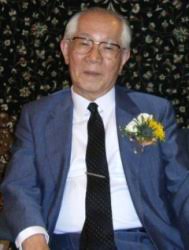
KUROYANAGI, TSUNEO, Japanese scholar of Persian language and literature (1925-2014; Figure 1). As a pioneering specialist in Persian studies in post-World War II Japan, he complemented and built upon the work of the first generation of Japanese scholars of Persian literature and Iranian culture. Kuroyanagi was born in Aichi Prefecture, Japan, in 1925 and entered Tokyo University of Foreign Studies (TUFS) in 1944. He learned Urdu from Reiichi Gamō (1901-77) in the Hindustani Department.
Urdu had been introduced into the university in 1908, after the Russo-Japanese War of 1904-5. Its significance as an important Asian language for the diplomacy of early 20th-century Japan became apparent at that time with the extended reach of imperial foreign policy. (See also JAPAN xiii. TRANSLATIONS OF JAPANESE WORKS INTO PERSIAN.) Gamō was one of the early proponents of Islamic studies in Japan. He was a coworker of Toshihiko Izutsu (1914-93) in the Islamic Area Research Institute (Kaikyōken Kenkyūsho), founded in 1938, which remained active through the years of the Pacific war (1937-45; on the Institute, see Aydın, pp. 24-27). Izutsu, as a historian of Islamic philosophy, in later years would become well-known internationally. Gamō, in this period, was gradually focusing his interest on Iranian culture and Persian literature.
Persian literature, such as Omar Khayyam’s Robāʿiyāt, the Šāh-nāma, Neẓāmi’s Haft Peykar , plus pre-Islamic texts such as the Avesta , was introduced to Japan, in part, in the early 20th century through English and French translations (see JAPAN xii. TRANSLATIONS OF PERSIAN WORKS INTO JAPANESE). Saʿdi’s Golestān already was known, due to its fame among Chinese Muslims as a work of ethics equal to Confucius. Shigeru Araki (1884-1932; see JAPAN vi. IRANIAN STUDIES IN JAPAN, PRE-ISLAMIC PERIOD), who had studied Iranian languages and Zoroastrianism under A. V. Williams Jackson in Columbia University, taught Persian in Tokyo University and translated the Rubaiyat from Persian in 1920. Ryōsaku Ogawa’s later translation of the Robāʿiyāt (1948; see JAPAN xiii) likewise is in the poetical style of early 20th-century Japan and retains high popularity in the present day. Eizō Sawa, a specialist in Urdu at Osaka University of Foreign Studies, translated the Golestān (1951) earlier than Gamō, and it too has an established reputation.
Gamō had started to translate the Golestān shortly after the end of the war but published only later (Gamō, 1964). Kuroyanagi learned Persian through reading the Golestān with him, as well as Khayyam’s Rubaiyat (with reference to Ogawa’s translation). Kuroyanagi also learned Arabic by himself and had close communication with Shinji Maejima (1903-83), a historian of the cultural exchange between East and West and the first translator of the Thousand and One Nights (see ALF LAYLA WA LAYLA) from Arabic into Japanese (Maejima, 1966-81). Gamō, Izutsu, and Maejima were among the few scholars who continued their research on the Islamic area in the early post-war period despite the postwar social disturbance as well as a lack of academic resources after the Islamic Area Research Institute (Kaikyōken Kenkyūsho) was burned down in the bombing of Tokyo in 1945.
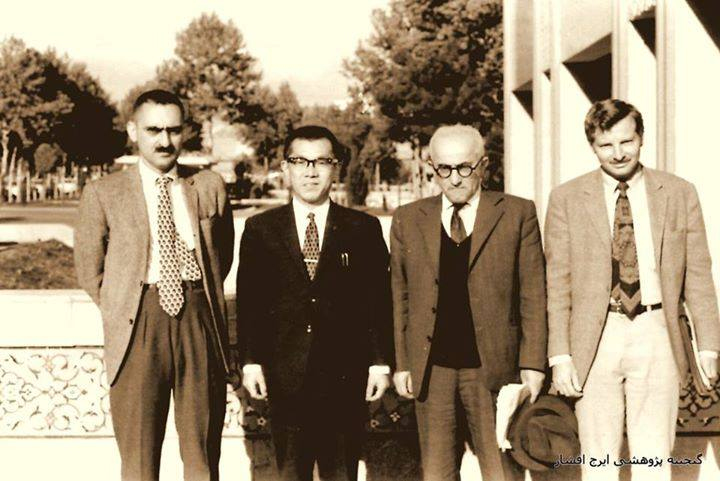
Thus Kuroyanagi began his career in the scholarly atmosphere around these pioneers. Graduating from TUFS in 1947, he was employed as an assistant at the Hindustani Department in 1951. A few years later, by Gamō’s arrangement, Kuroyanagi held a two-year temporary post at the Department of Oriental History of the University of Tokyo. In 1958-60, he studied Persian language and literature at Tehran University under Ḏabiḥ Allāh Ṣafā (1911-99), Moḥammad Moʿin (1914-71), Parviz Natel Khanlari (q.v.; 1914-90), and other scholars. He extended his association and friendship with various Iranian Iranologists, especially with Iraj Afshar (Iraj Afšār, 1925-2011; Figure 2). As Kuroyanagi later reflected in a letter to Afshar, their deep friendship remained until the end of his life, and Afshar’s mentorship and generous support profoundly influenced his academic life (Afshar, 2010). Their friendship is also noted by Afshar in the travel diary from his visit to Japan during 1972-73 (Afshar, 1975; 2014).
The first Persian Department in Japan had been established in 1961 at Osaka University of Foreign Studies and was chaired by Ei’ichi Imoto (1930-2014). He was an Iranologist and linguist of pre-Islamic Iranian languages, who inherited the scholarly tradition of Atsuuji Ashikaga (1901-1983) and Gikyo Itō (1909-1996; see JAPAN vi). TUFS, however, contrary to Gamō’s lifelong hope, lacked a Persian Department until 1980, and so, during the 1960s and 1970s, Kuroyanagi was devoted to the teaching of Persian within the Urdu Department. In this period, he published introductions to Persian grammar (1973a; 1978a; 1982a) and Arabic grammar (1976) with coauthor Kasuke Imori (1937-2012), translations of the Šāh-nāma(1969a), the Qābus-nāma and Čahār maqāla (1969b), Neẓāmi’s Haft peykar (1971a), and Hafez’s Divān(1976a). He also wrote a history of Persian literature (1977) as a concise introduction to post-Islamic Persian literature, based on the works of orientalists such as E. G. Browne (1862-1926) and Jan Rypka (1886-1968), as well as those of Iranian Iranologists, including Ṣafā, ʿAbd-al-Ḥosayn Zarrinkub (1923-99), and others.
With the establishment of the Persian Department at TUFS in 1980, Kuroyanagi further dedicated himself to teaching Persian until his retirement in 1989. He published diverse teaching materials, including Persian literature readers (which sample, e.g., the Golestān, Rubaiyat, Šāh-nāma, and Ḥāfeẓ’s Divān). He also compiled a series of dictionaries—Persian-Japanese (1988), Japanese–Persian (1992), modern Persian (1995), a “new lexicon of Persian” (2002b) containing over 80,000 entries, and a thoroughly revised edition of the Japanese-Persian dictionary (2010a). These are almost the only Persian dictionaries available in Japanese. The three-volume dictionary (1976-79) by Tetsuo Nawata (1936-2013; a linguist of modern Iranian languages) and the translation of Yuri A. Rubinchik’s Persian-Russian dictionary (1970) by Yuriko Furushima (1993), are not accessible for most learners.
Kuroyanagi’s tireless endeavor, continued until his end of life, was to translate Sa‘di’s Bustān (2010b) as well as Aṭṭār’s Manṭeq al-ṭayr (2012). These pioneering dictionaries and translations, while organized with an educational purpose, also display an exquisite literary style of Japanese.
Starting his career as a student of Gamō, the specialist in Urdu as well as Persian, Kuroyanagi’s early interests naturally extended to the influence of Persian literature in India, as well as, e.g., the works of Biruni (1965a), those of Jāmi (1979), Kalila wa Demna (1970d), and Muhammad Iqbal’s (1877-1938) Persian maṯnawi Jāvid-nāma (1968). He also compiled a comparative grammar of Persian, Arabic, and Urdu (2002a) and a comparative dictionary of Persian, Arabic, and Urdu (2008). Gamō’s and Kuroyanagi’s pioneering dedication to Persian literature, during what might be called the “golden age” of Urdu education in Japan in the 1950s, was based on their awareness of the predominant influence of Persian language and literature on Urdu and on India and its culture more generally. Kuroyanagi contributed to broadening the Japanese people’s acquaintance with the Persian language and Persian classical literature as well as the historical and literary background, and his series of translations achieved wide popularity among Japanese literati.
It is worthwhile to note that Kuroyanagi continued Toru Haneda’s (1882-1955) study of a Japanese document dated to the early 13th century, which was dedicated to a Japanese Buddhist priest in China and traditionally is considered to be a Buddhist sutra (Haneda, 1910). It records a few verses of Persian poetry, and Kuroyanagi (1987) identified one of them as a verse from the oldest manuscript of the Šāh-nāma.
Thus, Kuroyanagi’s lifelong effort concentrated on promoting education in Persian language and literature in Japan. He received recognition of his work in the form of the twelfth literary and historical award of the Mahmud Afshar Foundation (Tehran) in 2003. He was a member of the International Advisory Committee of Encyclopædia Iranica from 2008 until his death in 2014.
Kuroyanagi’s endeavor has been continued at TUFS by Emiko Okada (1932-), his coworker and the translator of Ḵosrow o Širin (1977), Leyli o Majnun (1981), Vis-o Rāmin (1990), the Šah-nāma (1999), Rubaiyat (2005), and Yusof o Zolayḵā (2012), and by Morio Fuji (1954-), Kuroyanagi’s student and the translator of Aṭṭār’s Taḏkerat al-awlīāʾ (1998). However, in Japan, the expansion in fields of study focused on post-revolutionary Iran has occurred mainly on the side of the historical and political sciences. By comparison, Persian literature has unfortunately remained as a minor field, retaining a mere handful of specialists.
Bibliography
Abbreviations.
[ACS] Tōkyō Gaikokugo Daigaku Ronshū: Area and Culture Studies.
[JIBS] Indogaku Bukkyōgaku Kenkyū/Journal of Indian and Buddhist Studies (Nihon Indogaku Bukkyōgakkai/Japanese Association of Indian and Buddhist Studies).
[Oriento] Oriento. Bulletin of the Society for Near Eastern Studies in Japan.
[TUFS] Tōkyō Gaikokugo Daigaku/Tokyo University of Foreign Studies.
Selected works by Kuroyanagi (place of publication is Tokyo, unless otherwise noted).
Books, in Japanese:
Iran chihōshi no shiryō (Materials for the study of Iranian local history), Ajia-Afurika bunken chōsa hōkoku 68, 1964.
tr., Abu’l-Qāsem Ferdowsi, Šāh-nāma, as Ō-sho (Shā-nāme): Perushia eiyū jojishi (Book of kings [Šāh-nāma]: Persian heroic epic poetry), 1969a.
tr., Perushia itsuwashū: Kāvūs no sho, Yottsu no kōwa (Persian anecdotal collections: Qābus-nāma , Čahār maqāla), 1969b.
tr., Neẓāmi Ganjavi, Haft peykar, as Shichiōhi monogatari (Seven stories of queens), Tōyō bunko 191, 1971a.
Perushiago nyūmon (Introductory Persian), 1973a; rev. ed., 1983.
tr., ‘Omar Ḵayyām, Robāʿiyāt, as Rubāiyāto, 1974.
Iran: Eikō no kako to genzai (Iran: The glorious past and present), 1975a.
tr., Ḥāfez, Divān (eds., Moḥammad Qazvini and Qāsem Ḡani), as Hāfizu shizu, Tōyō bunko 76, 1976a.
Perushia bungei shichō (Persian literary trends), Sekaishi kenkyū sōsho 23, 1977.
Perushiago kaiwa renshūchō (Persian conversation workbook), 1980a.
tr., Perushia no shinwa: Ō-sho (shā-nāme) yori (Persian myths: From the Book of kings [Šāh-nāma]), 1980b.
Perushia no shijintachi (Persian poets), Oriento sensho 2, 1980c.
Perushiago yonshukan (Persian in four weeks), 1982a.
Perushiago no hanashi (Persian conversation), 1984.
tr., Saʿdi, Golestān, as Barazono (Rose garden), 1985a.
Perushiago jiten (Persian[-Japanese] dictionary), 1988.
Nihongo perushiago jiten (Japanese-Persian dictionary), 1992.
Gendai perushiago jiten (Dictionary of modern Persian), 1995.
Arabiago perushiago urudūgo taishō bunpō (Comparative grammar of Arabic, Persian, and Urdu), 2002a.
Shin perushiago daijiten (New lexicon of Persian), 2002b.
Arabiago perushiago urudūgo taishō jiten (A comparative dictionary of Arabic, Persian, and Urdu), 2008.
Nihongo-perushiago jiten (Japanese-Persian dictionary) rev. ed., 2010a.
tr., Sa‘di, Bustān, as Būsutan: chūsei Iran no jissen dōtoku shishū (Bustān: verse anthology of medieval Iran on practical morality), Tōyō bunko 797, 2010b.
tr., Farid al-Din Atṭār, Manṭeq al-ṭayr, as Tori no kotoba: Perushia shinpishugi hiyu monogatarishi (Speech of the birds: Metaphorical story in verse of Persian mysticism), 2012.
and Hisaya Doi, Indo no shoshūkyō: shūkyō no rutsuba (Religions in India: A melting pot of religions), Ajia bukkyōshi (Indohen 5), 1973b.
and Kasuke Iimori, Arabiago nyūmon (Introduction to Arabic), 1976b.
and Emiko Okada, Yasashii perushiago (Persian [made] easy), 3 vols., 1978a.
Articles, in Japanese:
“Zanj no hanran” (The Zanj revolt), Kōbun (TUFS) 3, 1953, pp. 6-15.
“Arabiajin no shindo ensei” (The Arab expedition to Sind), Kōbun (TUFS) 4, 1954, pp. 82-98.
“Prēmu Chando ni tsuite” (On Prem Chand), JIBS 3/2, 1955, pp. 720-23.
“Abu Muslim ni tsuite” (On Abu Muslim), Kōbun (TUFS) 7, 1956, pp. 1-20.
“Arabiya shiryō oboegaki: Ad-Dinawari ‘Nagaki monogatari no sho’ ni tsuite” (Notes on historical records of the Arabs: on al-Dinavari’s “Book of the long account” [Ketāb al-Aḵbār al-ṭewāl]), Ajia-Afurika hyōron 7, 1957, pp. 18-22.
“Aru-Mukutāru no ran to sono jidai” (Al-Mukhtar’s revolt and his age)” in Tōkyō Gaikokugo Daigaku rokujisshūnen kinen ronbunshū (Collection of essays for the sixtieth anniversary of TUFS), 1958a, pp. 255-74.
“Iran-shiryō oboegaki” (Notes on the historical materials of Iran), Kōbun (TUFS) 10, 1961a, pp. 21-37.
“Nāseru Hosurō no shōgai to sakuhin: perusha no shijin, ryokōka, ismairī hafukyōka” (The life and works of Nāṣer-e Ḵosrow: Persian poet, traveler, and Ismaili propagandist), ACS 8, 1961b, pp. 55-60.
“Abdul Haq to Urudu Sokushin Kyōkai” (Abdul Ḥaq and the Urdu Advancement Society), ACS 9, 1962a, pp. 35-45.
“Qabus-nameh kenkyū josetsu” (An introductory study on the Qābus-nāma), Kōbun (TUFS) 11, 1962b, pp. 113-30.
“Chūsei isuramu ni okeru kyōiku-gakumon-kikan, toku ni al-Madrasa al-Nizamiya to al-Madrasa al-Mustansiriya chūshin to shite” (On educational and scientific institutions in medieval Islam; especially with focus on al-Madrasa al-Niẓāmīya and al-Madrasa al-Mustanṣirīya), ACS 10, 1963a, pp. 125-50.
“Perushia no shinpisugi shijin Attāru to ‘Tori no kotoba’ ni tsuite” (On the Persian mystical poet ʿAṭṭār and his ‘Speech of the birds’ [Manṭeq al-ṭayr]), Isuramu no sekai 1, 1963b, pp. 59-67.
“Aru-Bīrūnī to Indo” (Al-Biruni and India), JIBS 14/1, 1965a, pp. 401-4.
“Kinsei Perushia bungaku ni okeru shinpishugi seijin” (The mystic holy men [Sufis] in early modern Persian literature,” Oriento 7/3-4, 1965b, pp. 95-110.
“Fīrudōsī izen no Shā-nāme” (The Šāh-nāma before Ferdowsi), ACS 14, 1966, pp. 73-89.
“Perushia no shisōkatachi” (Persian thinkers) and “Indo no shisōkatachi” (Indian thinkers), in Seiichi Uno et al., eds., Isurāmu no shisō (Islamic thought), Kōza tōyō shisō 7, 1967a, pp. 177-200 and 201-35.
“Prēmu Chando to kyūgeki ‘Karubarā’” (Prem Chand and the ‘Karbalā’ drama), Indo bunka 7, 1967b, pp. 25-30.
“Nasīru-d-din Tūsī no shōgai to gyōseki” (Life and works of Naṣir-al-Din Ṭusi), Oriento 9/2-3, 1967c, pp. 163-86.
“Ikubāru no ‘Eien no sho’” (Iqbāl’s ‘Book of eternity’,” Indo bunka 8, 1968, pp. 36-44.
“Shīa shoha no shisō to undō” (Thought and movement of the Shia sect), in Matsuo Ara et al., eds., Chūsei nishi Ajia sekai (The world of medieval western Asia), Iwanami shoten kōza sekai rekishi 8, chūsei 2, 1969c, pp. 184-206.
“Arabu to Perushia no bunka-kōryū: Toku ni bungaku wo chūshin to shite” (Cultural exchange between Arabs and Persians: With special reference to literature), in ‘Isuramuka’ ni kansuru kyodō kenkyū hōkoku(Joint research report on “Islamization”), Ajia Afurika Gengo Bunka Kenkyūsho/Institute for the Study of languages and Culture of Asia and Africa (TUFS), 3, 1970a, pp. 137-54.
“Harun-aru-Rashīdo: Abbāsu-chō no kōsei to chōraku” (Hārun al-Rashid: Prosperity and decline of the ʿAbbasids), in Kyu seiki (The ninth century), Nihon to sekai no rekishi 6, 1970b, pp. 276-85.
“Perushia kei isuramu ōchō no hensen” (The Persian series of the Islamic dynasties), Isuramu no sekai 7, 1970c, pp. 46-56.
“Perushia bungaku ni okeru Karīra to Dimuna” (Kalila and Dimna in Persian literature), Oriento 12/1-2, 1970d, pp. 1-16.
“Indo ni okeru perushia bungaku” (Persian literature in India), JIBS 19/1, 1970e, pp. 108-11.
“Sufizumu no bungakuteki tenkai: Rumi ni tsuite” (Literary development of Sufism: On Rumi), in‘Isuramuka’ ni kansuru kyodō kenkyū hōkoku (Joint research report on “Islamization”), Ajia Afurika Gengo Bunka Kenkyūsho/Institute for the Study of languages and Culture of Asia and Africa (TUFS), 4, 1971b, pp. 15-28.
“Nezāmī no Hamuse ni tsuite” (On Neẓāmi’s Ḵamsa), Oriento 12/3-4, 1971c, pp. 121-35.
“Perushia bungaku ni Jamu no shuhai” (The wine cup of Jam in Persian literature), Oriento 17/2, 1975b, pp. 87-100.
“Isuramu bunmei ni okeru Perushiateki yōso” (Persian elements in Islamic civilization), Ajia bunka 12/1, 1975c, pp. 77-89.
“Perushia no kyūtei shijin” (The court poets in Persia),” in Orientogaku ronshū: Mikasanomiya Denka kanreki kinen (A collection of Oriental studies on the occasion of the 60th birthday of His Imperial Highness Prince Mikasa), 1975d, pp. 132-39.
“Perushia shijin Rudaki ni tsuite” (On the Persian poet Rudaki),” in Orientogaku Indogaku ronshū: Ashikaga Atsuuji Hakase kiju kinen (Collected Studies in Oriental and Indian studies, on the occasion of the 77th birthday of Dr. Atsuuji Ashikaga), 1978b, pp. 179-96.
“Perushia shijin Jāmi ni tsuite” (On the Persian poet Jāmi), in Nippon oriento gakkai sōritsu nijūgo shūnen kinen orientogaku ronshū (Collection of Oriental studies for the 25th anniversary of the foundation of the Society for Near Eastern Studies in Japan), 1979, pp. 219-36.
“Isuramu kyōto no gakumon: Chahāru makāra” (The learning of Muslims: Chahār maqāla),” in Isamu Sugi and Shinji Maejima et al., eds., Karifu no sekai (The world of the caliphs), Orientoshi kōza 4, 1982b, pp. 114-23.
“Isuramu no shisō to gakumon (Hana-hiraku Isuramu bunka)” (Islamic thought and science [Islamic culture in flower]),” in Jōhei Shimada, ed., Isuramu no sekai (The Islamic world), Shin NHK shimin daigaku sōsho 15, 1983, pp. 116-24.
“Perushiashi no sutairu ni tsuite” (Styles of Persian poetry), in Orientogaku ronshū: Mikasanomiya Denka koki kinen (A collection of Oriental studies on the occasion of the 70th birthday of His Imperial Highness Prince Mikasa), 1985b, pp. 129-39.
“Wagakuni ni tsutawaru Perushiashi ni tsuite” (On Persian poetry transmitted in our country), in Gamō Reiichi Sensei kinen ronshū (Collection of studies in memory of Prof. Reiichi Gamō), 1987, pp. 212-23.
and Reiichi Gamō, “Kindai no Iran” (Contemporary Iran), in Shinji Maejima, ed., Nishi Ajia shi, new ed., Sekai kakkokushi 11, 1972, pp. 553-71.
Articles, in Persian:
“Adabiyāt-e fārsi dar žāpon,” in Irān-šenāsi: Viže-nāma dar tāriḵ va tamaddon va farhang iran va zabān va adabiyāt-e fārsi; Jašn-nāma-ye ostād Ḏabiḥ Allāh Ṣafā, sāl-e sevvom, šomāre-ye 1, bahār 1371 Š./1992, Tehran, pp. 21-26.
“Šāhnama-šenāsi dar žāpon,” in Ḡolām Reḍā Sotuda, ed., Namiram az in pas ke man zende-am: majmu’e-ye maqālāt-e kongere-ye jahāni-ye bozorgdāšt-e Ferdowsi, Tehrān, 1373 Š./1994, pp. 63-67.
“E‘teqād-e Ferdowsi be sarnevešt dar Šāhnāma,” in Nāṣer Ḥariri, ed., Marg dar Šāhnāma, Tehran, 1379 Š./2000.
Article, in English:
“Sir Sayyid Ahmad Khan and Urdu,” JIBS 7/1, 1958b, pp. 349-53.
References.
Iraj Afshar, Bayāż-e Safar: Yād-dāšt-hā-ye safar dar zamine-ye Irānšenāsi, Ketābšenāsi va nosḵešenāsi, part I, Tehran, 1354 Š./1975.
Idem, “Tāze-hā va pāre-hā-ye Irānšenāsi 61,” Boḵārā 76, 1389 Š./2010, pp. 115-16.
Idem, “Ḵāṭere-ye didār bā Tsuneo Kuroyanagi dar žāpon,” in Boḵārā 102, 1393 Š./2014, pp. 381-83.
Shigeru Araki, tr., “Omaru Hayamu, ‘Yongyōshi‘ (Rubaiyāto) zenyaku” (Complete translation of ʿOmar Khayyam, ‘Quatrains’ [Rubaiyat]”), Chūokōron, 1920, pp. 1-43.
Cemil Aydın, “Orientalism by the Orientals? The Japanesae Empire and Islamic Studies (1931-1945),” Isl âm Araştırmaları Dergisi 14, 2005, pp. 1-36.
Morio Fuji, tr., Farid al-Din Aṭṭār, Taḏkerat al-awlīāʾ, as Isuramu shinpishugi seija retsuden (Biographies of the holy men of Islamic mysticism), 1998.
Yuriko Furushima, Perushiago jiten (Persian-Japanese dictionary), 1993.
Reiichi Gamō, tr., Saʿdi, Golestān, as Barazono. Iran chūsei no kyōyō monogatari (Rose garden: a didactic narrative of medieval Iran), 1964.
Tōru Haneda, “Nihon ni tsutawareru Perushia bun ni tsuite” (Regarding Persian literature transmitted in Japan), Shigaku-kenkyūkai kōenshū 3, 1910, pp. 149-66.
Shinji Maejima, tr., Arabian naito (The Arabian nights), vols. 1-17, 1966-91.
Tetsuo Nawata, Perushiago jiten (Persian-Japanese dictionary), Matsue, 3 vols., 1976-79.
Ryōsaku Ogawa, tr., ʿOmar Khayyam, Rubaiyat, as Rubāiyāto, 1948.
Emiko Okada, tr., Neẓāmi Ganjavi, Ḵ osrow o Širin, as Hosuro to Shīrīn, 1977.
Idem, tr., Neẓāmi Ganjavi, Leyli o Majnun, as Raira to Majunūn, 1981.
Idem, tr., Faḵr al-Din Gorgāni, Vis o Rāmin, as Vīsu to Rāmīn : Perushia no koi no monogatari (Vis and Ramin: a love story of Persia), 1990.
Idem, tr., Abu’l-Qāsem Ferdowsi, Šāh-nāma, as Ō-sho. Kodai perushiya no shinwa, densetsu (The Book of Kings. Myths and legends of ancient Persia), 1999.
Idem, tr., ʿOmar Khayyam, Rubaiyat, as Rubāiyāto, 2009.
Idem, tr., Jāmi, Yusof o Zolayḵā, as Yūsufu to Zuraiha, 2012.
Yuri A. Rubinchik, Persidsko-Russkiĭ slovar’, 2 vols., Moscow, 1970.