



KHORRAMABAD (Ḵorramābād), a town and district in Lorestān, Central Zagros.
Khorramabad and Lorestān have both been of great historical importance until the middle of the 20th century due to the extremely important strategic location of the region and the political and military strength of local leaders. It must be pointed out for the sake of clarity that Lorestān in its historical and ethnological setting covers a much larger area than the present province does. Historically, Lorestān used to be divided into Lor-e Bozorg (Great Lorestān), more or less identical with Baḵtiāri (q.v.) territory and parts of Ḵuzestān, and Lor-e Kuček (Little Lorestān), which since the 16th century is more or less synonymous with the present Lorestān province. In the 19th century, Lor-e Kuček was divided into the regions of Pošt-e Kuh (q.v.; in the present-day province of Ilām [q.v.]) and Piš-e Kuh, identical with the present-day province of Lorestān. Its capital city is Khorramabad.
The physical environment of the Khorramabad region is characterized by the typical structures and landscapes of the Zagros mountain belt and its northwest-southeast oriented sequence of valleys and ridges. As part of the Piš-e Kuh, this mountain range of the same name is a kind of backbone of Lorestān, with the Kuh-e Safid bordering it in the northwest. The southeast borderline can be delineated by the Kašgān River, a tributary to the Seymarra–Kark˚a Rivers. The high ranges of the Kabirkuh Mountain mark the southern border of Lorestān proper. Holeylān, Širvān, Ṭarhān, Rumeškān, Kuh-e Dašt and Bālā Gariva are the main basins, well watered and used agriculturally. The town of Khorramabad itself is located in a commanding position at the foot of the Kuh-e Safid controlling the economically and strategically important route to Borujerd and the central Iranian plateau. The Piš-e Kuh is climatically in a comparatively favorable position; the location of the Zagros ranges vis-à-vis winterly and predominantly westerly moist air masses in combination with high snow cover ensures sufficient precipitation and, originally, a lush vegetation cover. However, these Zagrosian oak forests (xerophilous forests) as well as a shrub vegetation, pistachios, almonds, and maple and a steppe-like undercover are largely destroyed due to charcoal burning and cutting of trees for roads, home construction, and other forms of household uses (Bobek, 1951; idem, 1968). Hydrologically, the Khorramabad region is watered by the Kašgān River and its tributaries, all flowing into the Seymarra River.
Topography, climate, hydrology, and vegetation are the ecological basis of a traditional land use pattern. It has been, and to a certain extent still is, characterized by the juxtaposition of agriculture in the valley bottoms and animal husbandry in the hilly and mountainous sections of the Piš-e Kuh. While agriculture is practiced both as dry farming (deymi) and, wherever possible, by irrigation in the basins, nomadism had been the prevailing form of husbandry for millennia until the first half of the 20th century. In addition, highway robbery and plundering have been a major source of income for the Lor nomads and their leaders, at least until the early 20th century (see Mortensen for a detailed analysis of the Lor tribes and their history).
Khorramabad served as a capital city for ruling Lor tribal leaders of the era from 1184 to 1596, when an Atābak dynasty of Lor-e Kuček (see ATĀBAKĀN-E LORESTĀN) ruled the area in a more or less independent way, however, severely hampered by an almost total destruction through Mongol invasions in the 13th and 14th centuries. After the execution of the last (and probably most famous) atābak of Lorestān, Šāhverdi Khan, by Shah ʿAbbās I in 1006/1597-98, the Safavid ruler installed a new leadership in Khorramabad with the title of wāli (Eskandar Beg, I, pp. 537-41, tr. II, pp. 717-21). These wālis ruled Lorestān between 1597 and 1796, when they were overthrown by Āḡā Moḥammad Khan (q.v.: r. 1789-97), the founder of the Qajar dynasty, replacing them in Khorramabad by a governor-general, while the direct successors of the wāli family withdrew from Khorramabad to the Pošt-e Kuh area. As a consequence, permanent warfare, skirmishes, and rivalries between different fractions of the Lors as well as exploitation of the recalcitrant and rebellious Lors of Piš-e Kuh by the various governors (many of them royal princes of the Qajar dynasty), representing the rather weak central power in Tehran, devastated the natural environment, the economy and society of Lor-e Kuček and its political center Khorramabad (Edmonds, pp. 340-43; Mortensen, pp. 54-60). In the early 20th century, the governors of Lorestān had politically lost all control over their territory and the area was in open turmoil. This led to the intervention in 1922 by Reżā Khan (the later Reżā Shah) that, after almost twelve years of fierce fighting and the sometimes brutal betrayals of tribal leaders and their murder or execution by the central government, ended in military control of the region and the forced sedentarization of most of the Lor nomads (Wilber, pp. 86, 127, 133).
Khorramabad, capital city of this region, situated at a height of approximately 1300 m above sea level, is a reflection of the changing history of the region and its population. At the end of the 19th century, Khorramabad was a town in decay. J. L. Bishop, better known as Isabella Lucy Bird, gives a vivid account of the dilapidated status of this settlement (II, p. 122), echoed by George N. Curzon (II, pp. 276-77): “[Khorramabad is] the present seat of government in Luristan; a distinction which the central position of the town and its physical advantages have secured to it since the Middle Ages. A solitary rock rises suddenly in the jaws of a pass, opening upon a rich plain. At its foot lies the modern town, which does not contain more than 2,000 inhabitants. Its summit is crowned by the Bala Hissar or ruined castle of the Atabegs, which stands up with gloomy outline of walls and towers like some robber stronghold of the Rhine. Here these all-but-independent rulers of a bygone age lived in lordly style, the castle being supplied with water by a deep shaft sunk in the rock to a magnificent spring below. Within the shell of the old fort Mohammed Ali Mirza, the eldest son of Fath Ali Shah, and governor of Luristan, built himself a palace, which is now also in a state of decay. The present governor lives in an edifice at the foot of the rock. The Khorremabad river, spanned by a long bridge of twenty-eight arches, flows below. On the opposite bank, at a little distance, lie the ruins of the Atabegs’ city, of which a quadrangular brick tower with a Naskh inscription, bearing the date 1123 A.D., is a speaking memorial. A battalion of 400 shabby Lurs, called out annually in the spring, is stationed here at a local garrison.”
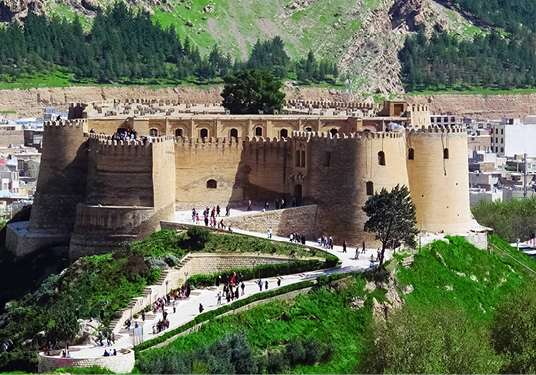
Plate I. The Falak al-aflāk citadel in Khorramabad. Photograph from Creative Commons, licensed under CC-BY-SA-4.0.
While the completion of the Ahvāz–Tehran wagon-road at the turn of the 19th to the 20th century brought a certain improvement of the town’s importance and appearance, it nevertheless remained not much more than a locally important urban center. Thus, it may not be surprising that Jacob Black-Michaud (p. 10) described Khorramabad as “the only town in the region with a history” and as a town which serves as “the only market of importance within Luristan” and which “possesses the only rather poorly supplied bazaar of any size.” Even after the construction of a motor road, linking Khorramabad with Borujerd and after its extension to Khorramshahr (q.v.) and Ābādān (Harrison, p. 55), the overall situation did not improve. Even for the early 1970s, Black-Michaud (p. 12) stated that “by 1969 there was hardly a camp site or village in the whole of Luristan which was not within less than two days’ journey of a bazaar.”
As the population figures indicate, growing from approximately 29,000 in 1950 to 238,000 in 1990 and a total of 373,415 according to the 2016 national census, this situation has changed considerably in the last few decades: The town is now a city that, in addition to its function as and administrative center and capital of the province of Lorestān, offers a wide range of services; it has a university, a number of hospitals, schools of all grades and, of course, also functions as an important commercial center for its hinterland and for the traffic and travelers between Khuzistan and Persia’s heartland. Industries are scarce except for a few factories in foodstuff. The old core of the city, located on the foot of the above-mentioned monolithic rock carrying the citadel, contains the small bazaar, while the modern parts of the city have developed along the river Āb-e Khorramabad and the thoroughfares, especially toward the south. The historical center and, at the same time, an architectural monument of both local and touristic importance is the citadel now known as Falak al-aflāk (PLATE I), the seat of the former atābaks. Its huge dimensions—22.5 m high walls, 8 mighty towers and a 50 m deep well for the water supply of its garrison—was considered to be an impregnable obstacle to any aggressor until its capture by Shah ʿAbbās I in 1597. It was used for a while as a major prison for the detention of political activists, who were banished there after the Coup d’Etat of 1953 (q.v.). This building complex currently hosts a museum in which archeological, historical, and ethnological items are on display, with special reference to Lorestān and the Lors.
Bibliography
Isabella Lucy Bird (Bishop), Journeys in Persia and Kurdistan, Including a Summer in the Upper Karun, 2 vols., London and New York, 1891.
Jacob Black-Michaud, Sheep and Land: The Economics of Power in a Tribal Society, Cambridge and Paris, 1986.
Hans Bobek, Die natürlichen Wälder und Gehölzfluren Irans, Bonner Geographische Abhandlungen 8, Bonn, 1951.
Idem, “Vegetation,” in Cambridge History of Iran I: The Land of Iran, ed. W. B. Fisher, Cambridge, 1968, pp. 280-93.
George N. Curzon, Persia and the Persian Question, 2 vols., London and New York, 1892; repr. London, 1966.
C. J. Edmonds, “Luristan: Pish-i-Kuh and Bala Gariveh,” Geographical Journal 59, 1922, pp. 335-56, 437-53.
Eskandar Beg Torkamān Monši, Tāriḵ-e ʿālamārā-ye ʿabbāsi, ed. Iraj Afšār, Tehran, 1955-56; tr. Roger Savory as History of Shah ʿAbbās the Great, 3 vol., Boulder, 1979-86.
W. B. Fisher, “Physical Geography,” in Cambridge History of Iran I: The Land of Iran, ed. W. B. Fisher, 1968, pp. 3-110.
J. V. Harrison, “South-West Persia: A Survey of Pish-i-Kuh in Luristan,” Geographical Journal 108, 1946, p. 55-72.
Masʿud Kayhān, Joḡrāfiā-ye mofaṣṣal-e Irān, 3 vols., Tehran, 1932-33, II, pp. 459-65.
John Mcdonald Kinneir, A Geographical Memoir of the Persian Empire Accompanied by a Map, London, 1813; repr., New York, 1973.
Inge Demant Mortensen, Nomads of Luristan: History, Material Culture and Pastoralism in Western Iran, London and New York, 1993.
Ministry of Housing and Urban Development: Urban Planning and Architecture Research Center. Demographical Statistics on Iranian Cities 1956-1991, Tehran, 2004.
Ḥosayn-ʿAli Razmārā, ed., Farhang-e joḡrāfiāʾi-e Irān VI, Tehran, 1951, pp. 139-40.
Donald Wilber, Riza Shah Pahlavi: The Resurrection and Reconstruction of Iran 1878-1944, Hicksville, New York, 1975.