



Qajar diplomat, official, and scholar.
MAJD-AL-MOLK I, MIRZĀ MOḤAMMAD KHAN SINAKI LAVĀSĀNI (b. Sinak, 1809; d. Tehran, 4 November 1881), Qajar diplomat, official, and scholar (Figure 1).
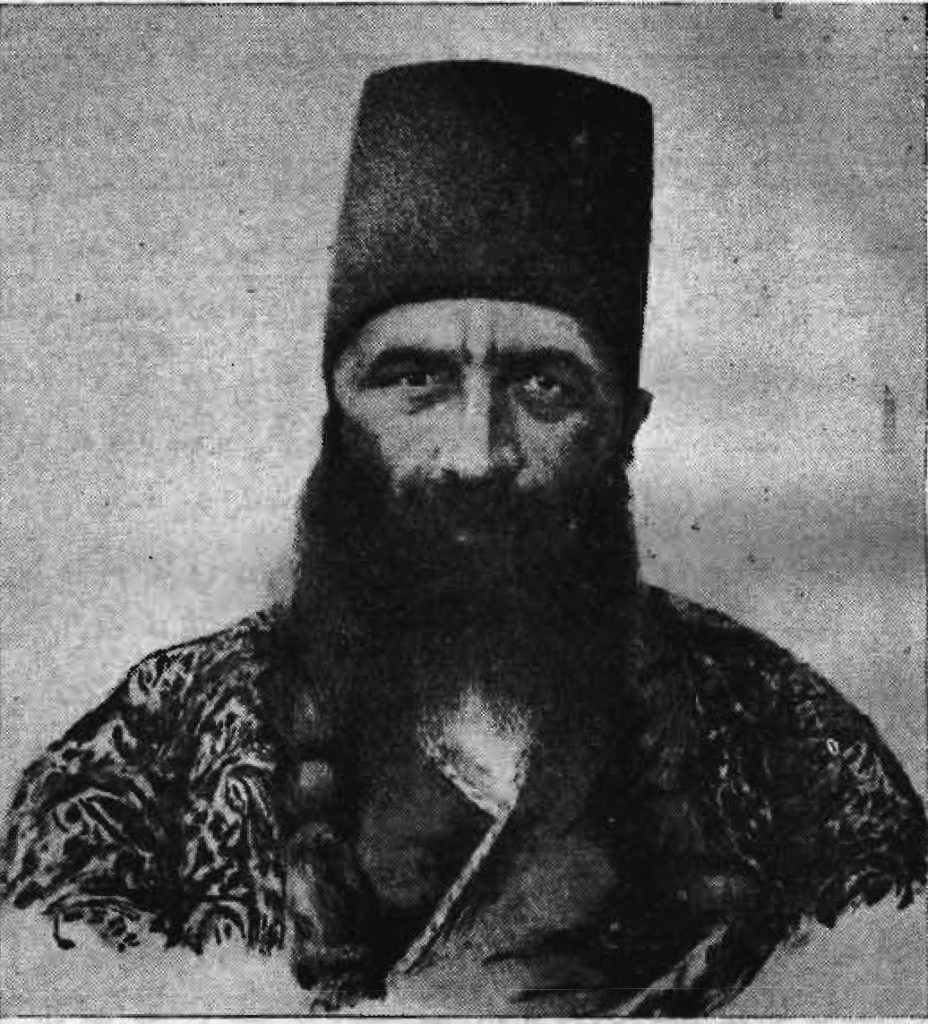
Figure 1. Majd-al-Molk Sinaki. Drawing by Mirzā ʿAbd-al-Moṭalleb Naqqāš-bāši in 1302/1884-85. From Nafisi’s edition of the Resāla-ye majdiya.
Very little information is available about Mirzā Moḥammad Khan’s early life. His paternal grandfather, Bābā Khan, had been a warlord controlling a stretch of territory extending from roughly the village of Sinak in the district of Lavāsānāt (see LAVĀSĀN), northeast of Tehran, to the vicinity of Nur district in the province of Mazandaran, bordering the territory controlled by the powerful warlords of Nuri family (see below). This was during the period of political and civil turmoil culminating in the fall of the Zand dynasty (q.v.; 1751-94) and the consolidation of power by Āḡā Moḥammad Khan Qajar (q.v.; ca. 1742-97), the founder of the Qajar dynasty (1796-1925). In the armed conflict between Āḡā Moḥammad Khan and the disintegrating Zand state, Bābā Khan sided with the Qajar claimant to the throne. It appears Bābā Khan’s subsequent insubordination to Āḡā Moḥammad Khan’s successor to the Qajar throne, Fatḥ-ʿAli Shah (q.v.; r. 1797-1834), resulted in Bābā Khan’s dispossession as a local warlord (Waqār, p. 10). However, Mirzā Mohammad Khan’s father, Fatḥ-ʿAli Beg Lavāsāni, was retained in Qajar service. Mirzā Moḥammad Khan’s mother was a sister of Mirzā Āqā Khan Nuri (see EʿTEMĀD-AL-DAWLA, ĀQĀ KHAN NURI), a scion of the Nuri family of Mazandaran and the future second chief minister (ṣadr-e aʿẓam) of Nāṣer-al-Din Shah (r. 1848-96).
Mirzā Moḥammad Khan appears to have received a traditional education at home, being fond of classical Persian poetry and literature and excelling in calligraphy and eloquent prose composition (Eʿtemād-al-Salṭana, al-Maʾ ā ṯer, p. 196; Majd-al-Molk, Kašf, ed. Nafisi, pp. h, v); skills he continually refined and which also proved advantageous in securing various official posts later in life. According to some later sources, he began his professional career as chief librarian of Qahramān Mirzā (d. 1835), one of the sons of crown prince ʿAbbās Mirzā (q.v.; 1789-1833) in the city of Tabriz in Azarbaijan; other sources maintain it was his father, Fatḥ-ʿAli Beg, who held this post (Maḥbubi Ardakāni, in Eʿtemād-al-Salṭana, al-Maʾā ṯer, ed. Afšār, II, p. 485; ‘Aqeli, p. 144). By 1846, at the latest, Mirzā Moḥammad Khan was living in Tehran and serving as the steward (piškār) to Malek Jahān Ḵānom (1805-73), the first wife of Moḥammad Shah (q.v., r. 1834-48). He was now a high-ranking staff member in the service of Moḥammad Shah’s senior and most powerful wife. Following Moḥammad Shah’s death and the accession to the throne of crown prince Nāṣer-al-Din in 1848, Mirzā Moḥammad Khan accompanied Malek Jahān Ḵānom, now the mother of the reigning monarch and known as Mahd-e ʿOlyā III (the title meaning “Exalted Cradle”), on a pilgrimage to Mecca (Majd-al-Molk, Kašf, ed. Nafisi, p. d). After this pilgrimage, Mirzā Moḥammad Khan was commonly addressed as Haj Mirzā Moḥammad Khan [Sinaki].
Following the appointment of Mirzā Moḥammad Khan’s maternal uncle, Mirzā Āqā Khan Nuri, as chief minister in 1851, Mirzā Moḥammad Khan entered the service of the Ministry of Foreign Affairs (see FOREIGN AFFAIRS). His first diplomatic post was that of the consul (kārpardāz) in the Russian Caspian port city of Astrakhan (q.v.; Ḥāǰǰi Tarḵān) in the Caucasus. On 3 October 1852, Mirzā Moḥammad Khan was awarded a jobba-ye terma state cloak of honor for excellent fulfillment of his consular duties. In October of the following year, he was elevated to the post of first secretary, or first deputy, (dabir-e mahāmm; nāyeb-e a wwal) at the Ministry of Foreign Affairs (Eʿtemād-al-Salṭana, Merʾ āt, II, pp. 117, 134; Majd-al-Molk , Kašf, ed. Nafisi, pp. d, h; Bāmdād, III, pp. 287-88; Maḥbubi Ardakāni, in Eʿtemād-al-Salṭana, al-Maʾ ā ṯer, ed. Afšār, II, p. 485). As first secretary at the foreign ministry, he was dispatched in late 1853 to Tabriz, Iran’s largest city at the time and the seat of the Qajar crown princes, as well as the main location for European and Ottoman consulates. The province of Azarbaijan was also a main center of European and American Christian missionary activities in Iran. In Tabriz, he was tasked with monitoring Iran’s relations with its northern and western neighbors, Imperial Russia and the Ottoman Empire respectively, as well as safeguarding the welfare of foreign nationals and protecting the Iranian minority Christian communities in the province (Ruz- nāma-ye waqāyeʿ-e ettefāqiya, 2 Moḥarram 1270/5 October 1853, p. 3; ibid., 12 Rabiʿ I 1270/21 December 1853, p. 3; ibid., 10 Ramażān 1872/15 May 1856, pp. 2-3; ibid., 15 Rajab 1273/11 March 1857, p. 2; Bāmdād, III, pp. 287-88). He remained in Tabriz until early 1859, also overseeing the availability of affordable bread during a famine in that city in 1857-58 (Ruz- nāma-ye waqāyeʿ-e ettefāqiya, 15 Rajab 1273/11 March 1857, p. 2; 17 Rabiʿ I 1274/5 November 1857, p. 2; 29 Rabiʿ II 1274/17 December 1857, p. 3; 3 Rajab 1274/17 February 1858, p. 2; 24 Rajab 1274/10 March 1858, p. 4; 23 Šaʿbān 1274/8 April 1858, p. 4; 7 Ramażān 1274/21 April 1858, p. 4; 6 Šawwāl 1274/20 May 1858, p. 5). In recognition of his excellence in service, in late December 1855 Mirzā Moḥammad Khan was awarded the Order of the Lion and the Sun first class (see DECORATIONS), followed in October 1856 by a royal robe of honor (see ḴELʿAT), and then another jobba-ye terma in early 1857 (Ruz- nāma-ye waqāyeʿ-e ettefāqiya, 15 Rajab 1273/11 March 1857, p. 2; Eʿtemād-al-Salṭana, Merʾāt, II, pp. 183, 204; idem, Tār iḵ, III, p. 245; Sepehr, 4, p. 349).
In January 1859, Mirzā Moḥammad Khan was invited to Tehran to meet the shah and was received at the court with official pageantry (Ruz- nāma-ye waqāyeʿ-e ettefāqiya, 29 Jomādā II 1275/3 February 1859, p. 2). In April 1859, still serving as first secretary at the foreign ministry, Mirzā Moḥammad Khan was dispatched to the Ottoman Empire for monitoring the implementation of treaties and other arrangements between the two countries as well as assessing the condition, and safeguarding the treatment, of Iranian residents and pilgrims in Ottoman Iraq. On this mission, he was accompanied by his older son Mirzā ʿAli Khan, a secretary at the foreign ministry at the time and the future Amin-al-Dawla (q.v.) (Ruz- nāma-ye waqāyeʿ-e ettefāqiya, 3 Ramażān 1275/6 April 1859, pp. 2-3; Eʿtemād-al-Salṭana, Merʾāt, II, p. 239; idem, Tār iḵ, III, p. 262; Majd-al-Molk, Kašf, ed. Nafisi, p. h). Following his return from Ottoman Iraq, Mirzā Moḥammad Khan was granted a private audience with the shah in recognition of the significance of his mission and its satisfactory fulfillment. An announcement of the royal audience appeared in the official Tehran newspaper Ruz- nāma-ye dawlat-e ʿaliya-ye Irān (2 Rabiʿ II 1277/18 October 1860, p. 3).
In early spring 1862, Mirzā Moḥammad Khan was among a select group of foreign ministry and other officials granted a public audience with the shah. Around the same time, his son Mirzā ʿAli Khan was awarded a jobba-ye terma in recognition of his outstanding service at the ministry, including for his excellent calligraphy (Ruz- nāma-ye dawlat-e ʿaliya-ye Irān, 12 Ramażān 1278/13 March 1862, pp. 5, 6). In July 1862, Mirzā Moḥammad Khan was awarded yet another jobba-ye terma for his service at the foreign ministry and was appointed minister of Pensions and Endowments (waẓ āʾef wa awqāf), with Mirzā ʿAli Khan now promoted to his father’s former rank at the foreign ministry (Ruz- nāma-ye dawlat-e ʿaliya-ye Irān, 17 Ṣafar 1279/14 August 1862, p. 4; Eʿtemād-al-Salṭana, Merʾāt, III, pp. 3, 45; Majd-al-Molk , Kašf, ed. Nafisi, p. h; Ādamiyat, p. 106; Bāmdād, III, p. 288). On 2 Rabiʿ I 1279/28 August 1862, Ruz- nāma-ye dawlat-e ʿaliya-ye Irān (pp. 4-7) carried a detailed announcement of the new regulations, procedures, and duties of the Ministry of Pensions and Endowments, reflecting reforms at the ministry aimed at curbing corruption and misuse of funds. This was followed by similar announcements in the coming months (Ruz- nāma-ye dawlat-e ʿaliya-ye Irān, 3 Rajab 1279/25 December 1862, pp. 5-6; 17 Rajab 1279/8 January 1863, p. 8). Mirzā Moḥammad Khan remained at his new post until June 1865, at which date he was reappointed first secretary at the foreign ministry.
In 1867, at the shah’s request, Mirzā Moḥammad Khan wrote an account of his consular tenure at Astrakhan, with his name appearing in the manuscript as Moḥammad Khan b. Fatḥ-ʿAli Beg (Majd-al-Molk, 1896, pp. 12, 18-19, 213, 214-15). The manuscript, titled Merʾāt al-arż (Mirror of the world), commenced with a general survey of contemporary socio-political and economic world geography, including Iran, largely based on the available Persian translations of European sources. The primary subject of this manuscript, however, was the detailed historical and geo-political and commercial description of Astrakhan up to 1851. The city was of great significance in shipping trade between the Russian Caucasus and Iran and was also the main Russian naval base on the Caspian at the time, as well as having a sizeable Iranian émigré community. The manuscript was only published posthumously in 1896, prepared by Moḥammad Ṣādeq ʿAliābādi (Majd-al-Molk, 1896, p. 218; for the date of the composition of the text, its coverage of Astrakhan’s history up to 1851, and its date of publication, see ibid., pp. 7, 152-53, 218).
In 1867, by which time Mirzā Moḥammad Khan was still serving as first secretary at the foreign ministry, he accompanied the shah on a pilgrimage to Mashhad as one of the many ministers and officials in the royal entourage (Eʿtemād-al-Salṭana, Merʾāt, III, p. 68; Ṣādeq-al-Mamālek, p. 505; Ḥakim-al-Mamālek. pp. 13). During this royal pilgrimage to Mashhad, Mirzā Moḥammad Khan received the title of Majd-al-Molk (Exalted of the Land) and was entrusted with the custodianship of the shrine of Imam Reżā (see ĀSTĀN-E QODS-E RAŻAWI) in Khorasan province (Ḥakim-al-Mamālek, pp. 223, 260, 296; Eʿtemād-al-Salṭana, Merʾāt, III, p. 89; Majd-al-Molk , Kašf, ed. Nafisi, p. h). In the summer of 1868, Mirzā Moḥammad Khan was abruptly recalled to Tehran from Khorasan (Majd-al-Molk, Kašf, ed. Nafisi, p. h; Bāmdād, III, p. 288; Solaymāni, p. 135). He was again reappointed first secretary at the foreign ministry and was awarded yet another order of the Lion and the Sun first class in March 1869 (Eʿtemād-al-Salṭana, Merʾāt, III, p. 108).
In 1870, Mirzā Moḥammad Khan completed a hand-written treatise titled Kašf al-ḡ arāʾeb fi omur al–ʿajāyeb , better known as Resāla-ye majdiya. Whereas Merʾāt al-arż, written in 1867 at Nāṣer-al-Din Shah’s behest, had been replete with platitudes about the shah and his administration of the country, the anonymously authored Resāla-ye majdiya, also notable for its elegant literary style, was an acerbic critique of many aspects of existing Iranian social, political, religious, and cultural conditions and practices, including an unequivocal denunciation of the country’s maladministration. This manuscript, initially exchanging hands among a small group of Mirzā Moḥammad Khan’s most trusted friends, soon gained considerable popularity in reformist circles, with multiplying hand-copied drafts circulating widely for years to come (Cole, pp. 43, 54-5; Sohrabi, pp. 260-62; Bahār, III, pp. 365-66; Ādamiyat, pp. 106-18; Ṭabāṭabāʾi, pp. 127, 351-52, 433-92; Ārianpur, I, pp.149-56; Mostawfi, pp. 44, 435). Future generations of Iranian reformists consulted Resāla-ye majdiya, and it was extensively quoted by the constitutionalist press during the 1906-11 Iranian Constitutional Revolution (q.v.), as in the case of its ultimately incomplete, and occasionally abridged, serialized reproduction in Majala-ye estebdād until the paper ceased publication around the time of the anti-constitutional royalist coup of June 1908 (Gheissari, 2016, pp. 121-22, 159-60, 177-78, 191-94, 211-12, 227-30, 247-48, 264-66, 283-84, 344, 358-61, 399-400, 432-34, 451-52, 467-70, 502-5, 565-68, 584-86, 606-8; idem, 2005, pp. 364 n. 15, 371-76).
In 1858, Nāṣer-al-Din Shah had abolished the office of the chief minister after dismissing Mirzā Āqā Khan Nuri from that post. The shah instead entrusted the conduct of day-to-day affairs of government to the newly-founded Council of State (dār al-šurā-ye dawlati; renamed dār al-šurā-ye kobrā in 1871), with eleven members composed of princes, ministers, and high-ranking officials, along with, after 1859, a Consultative Assembly (maṣlaḥat-ḵ āna), composed of twenty-six officials and administrators (see ADMINISTRATION IN IRAN vi. SAFAVID, ZAND, AND QAJAR PERIODS; Eʿtemād-al-Salṭana, Merʾāt al-boldān, II, pp. 228-29, 249; Ādamiyat, pp. 53-63; Amanat, pp. 338-50, 355-56). Mirzā Moḥammad Khan was appointed a member of the Council of the State in March 1871 (Eʿtemād-al-Salṭana, Merʾāt, III, p. 140; Eʿtemād-al-Salṭana, Tār iḵ, III, p. 320; Majd-al-Molk, Kašf, ed. Nafisi, p. h; Solaymāni, p. 135). In the same month, with the escalation of a nationwide famine (see FAMINES) that had broken out the previous year, Mirzā Moḥammad Khan was placed in charge of the national granary (ʿ amal-e jens-e mamālek-e ma ḥrusa) (Eʿtemād-al-Salṭana, Merʾāt, III, p. 139). By the summer of 1873, when the shah returned from his European tour, Mirzā Moḥammad Khan was again serving as minister of Pensions and Endowments (Eʿtemād-al-Salṭana, Merʾāt, III, p. 186; Mostawfi, p. 129). He continued at that post until his death in 1881, albeit with a possible reassignment to another post and then a third reappointment to the ministry of Pensions and Endowments in the interim, given that according to Eʿtemād-al-Salṭana he held that post on three occasions (Eʿtemād-al-Salṭana, al-Maʾā ṯer, p. 17; idem, Merʾāt , III, p.293 (p. 5 of appendix), 299 (p.11 of appendix); Sāl-nāma-ye dawlat-e ʿaliya-ye Irān, n.p.; Majd-al-Molk, Kašf, ed. Nafisi, p. h).
Mirzā Moḥammad Khan died in 1881 and was buried at the shrine of Shah ʿAbd-al-ʿAẓim (see ʿABD-Al-AẒIM AL-ḤASANI) located in Ray, south of Tehran. He was survived by his wife, the sister of Pāšā Khan Amin-al-Molk, a former minister of justice, as well as by six children. These were two sons–Mirzā ʿAli Khan Amin-al-Dawla, the future reformist chief minister of Moẓaffar-al-Din Shah (r. 1896-1907), and Mirzā Taqi Khan Monši-e Ḥożur Majd-Al-Molk II (q.v.)–and four daughters: Ṭāvus Ḵānom, wife of Mirzā Ebrāhim Moʿtamed-al-Salṭana and mother of Ḥasan Woṯuq-al-Dawla and Aḥmad Qawām (Qawām-al-Salṭana); ʿAẓamat-al-Dawla, wife of Moḥammad-ʿAli Khan ʿAlāʾ-al-Salṭana (q.v.) and mother of Ḥosayn ʿAlāʾ (q.v.); Qamar Ḵānom, wife of Moḥammad-Bāqer Khan Šojāʿ-al-Salṭana, minister of war under Nāṣer-al-Din Shah; and Enbeṣāt-al-Dawla, wife of Mirzā ʿAbd-al-Wahhāb Neẓām-al-Molk, governor of Tehran in the late 1890s (‘Aqeli, pp. 145-48).
Bibliography
Abbas Amanat, Pivot of the Universe: Nasir al-Din Shah Qajar and the Iranian Monarchy, 1831-1896, Berkeley, 1997.
Faridun Ādamiyat, Andiša-ye taraqqi wa ḥ okumat-e qānun: ʿa ṣ r-e Sepahsālār, Tehran, 2006.
Yaḥyā Ārianpur, Az Ṣ abā tā Nimā, 2 vols., Tehran, 1972.
Bāqer ‘Aqeli, Ḵ āndānhā-ye ḥokumatgar-e Ir ā n: Qājāriy a-Pahlavi, Tehran, 2002.
Moḥammad-Taqi Malek-al-Šoʿarāʾ Bahār, Sabk-šenāsi , ya, tāri ḵ-e taṭawwor-e naṯ r-e Fārsi, 3 vols., reprint, Tehran, 2002.
Mehdi Bāmdād, Šarḥ-e ḥ āl-e rejāl-e Irān dar qarn-e 12 wa 13 wa 14 hejri, 6 vols., Tehran, 1968-72.
Juan Cole, “Marking Boundaries, Marking Time: The Iranian Past and the Construction of the Self by Qajar Thinkers,” Iranian Studies 29/1-2, 1996, pp. 35-56.
Moḥammad-Ḥasan Khan Eʿtemād-al-Salṭana, al-Maʾā ṯ er wa’l-ā ṯ ār, Tehran, 1888; ed. Iraj Afšār, with commentaries by Ḥosayn Maḥbubi Ardakāni, as Čehel sāl tāri ḵ -e Irān dar dawra-ye pādšāhi-e Nā ṣ er-al-Din Šāh, 3 vols., Tehran, 1984-89.
Idem, Merʾāt al-boldān-e n ā ṣeri, 4 vols., Tehran, 1877-79.
Idem, Tār iḵ-e montaẓam-e n ā ṣeri, 3 vols., Tehran, 1880-82.
Ali Gheissari, “Despots of the World Unite! Satire in the Iranian Constitutional Press: The Majalleh-ye Estebdad, 1907–1908,” Comparative Studies of South Asia, Africa, and the Middle East 25/2, 2005, pp. 360-76.
Idem, ed., Majalla-ye estebd ā d, Tehran, 2016.
ʿAlinaqi b. Esmāʿil Ḥakim-al-Mamālek, Ruz- nāma-ye Ḥ akim-al-Mamālek, Tehran, 1869.
Moḥammad Khan Majd-al-Molk [Moḥammad Khan b. Fatḥ-ʿAli Beg], Kašf al-ḡ arāʾeb fi omur al– ʿa jāy eb, ed. Saʿid Nafisi, as Resāla-ye majdiya, Tehran, 1942; ed. ʿAli Amini, with introd. by Fażl-Allāh Garakāni, as Bist sāl baʿd az Amir Kabir: R esālaye majdiya, Tehran, 1979; ed. Iraj Amini and Nāṣer Mohājer, as Kašf al-ḡ arāʾeb yā R esāla-ye m ajdiya, Tehran, 2012.
Idem, Merʾāt al-arż , Tehran, 1896.
ʿAbd-Allāh Mostawfi, Šarḥ -e zendagāni-e man, yā Tāri ḵ -e ejtemāʿi va edāri-e dawra-ye Q ājāriya, vol. 1, 2nd ed., Tehran, 1964.
Ruz- nāma-ye dawlat-e ʿaliya-ye Irān.
Ruz- nāma-ye waqāyeʿ-e ettefāqiya.
Mirza Ebrāhim Khan Mostawfi Šaybāni Ṣādeq-al-Mamālek, Montaḵab al-tawāri ḵ-e n ā ṣeri, Tehran, 1889.
Sāl-nāma-ye dawlat-e ʿaliya-ye Irān, Tehran, 1875.
Moḥammad-Taqi Sepehr (Lesān-al-Molk), Nāse ḵ al-tawāri ḵ: salā ṭin-e Qājāria , ed. Moḥammad-Bāqer Behbudi, 4 vols., Tehran, 1965 [1897].
Nader Sohrabi, “Revolution and State Culture: The Circle of Justice and Constitutionalism in 1906 Iran” in George Steinmetz, ed., State/Culture: State-Formation after the Cultural Turn, Ithaca, New York, 1999, pp. 253-88.
Karim Solaymāni, Alqāb-e rejāl-e dawra-ye q ājāriya, Tehran, 2000
Javād Ṭabāṭabāʾi, Taʾamoli dar bāra-ye I rān II: Naẓariya-ye ḥokumat-e qān un dar I rā n baḵš 1: Maktab-e Tabriz va mabāni-e tajaddod- ḵᵛ āhi, Tehran, 2006.
Yusof Waqār, Šāpur-nāma (undated, unpublished manuscript in the family collection of General Moḥammad-Taqi Partovi).