



KOWALSKI, TADEUSZ (b. Châteauroux, France, 22 June 1889; d. Cracow, Poland, 5 May 1948; Figure 1), scholar and founder of modern Oriental studies at Jagiellonian University (Uniwersytet Jagielloński) in Cracow.
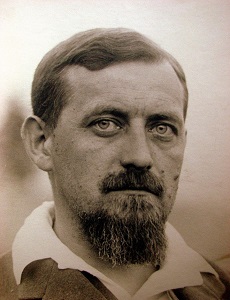
Figure 1. Tadeusz Kowalski, 1945. Photograph courtesy of Urszula Lewicka-Rajewska
Tadeusz Kowalski, having been interested in Oriental languages since an early age, moved to Vienna after finishing high school in Cracow in 1907 in order to study Oriental philology, based on the traditional tri-lingual formula of Arabic, Ottoman Turkish, and classical Persian. His professors were, most importantly, the Semitist David H. Müller (1846-1912), the Arabists Rudolf Geyer (1861-1929) and Max Bittner (1869-1918), and the Egyptologist Hermann Junker (1877-1962). After having defended his doctorate in 1911, Kowalski traveled to Strasbourg and Kiel to broaden his knowledge, with Theodor Nöldeke (q.v.; 1836-1930), Enno Littman (1875-1958), and Georg Jacob (1862-1937), among others. In 1914, on the eve of the First World War, he habilitated at Jagiellonian University in Cracow with a critical edition of the divān of Qays b. Ḵaṭīm (Der Dīwān des Ḳais ibn al- Ḫaṭīm…) and soon after, at the same university, he begun to lecture on Arabic language and literature and the history and culture of the Islamic East. In 1919, the newly independent Polish state nominated Kowalski to the Chair of Oriental Philology, revived after the lapse of a century (it had previously existed at Cracow in 1818-26, held by Wilhelm Münnich from Göttingen). In 1921, the Seminar of Oriental Philology, a didactic unit attached to the Chair, was established under Kowalski’s directorship. Its teaching curriculum comprised the three main languages of the Islamic world, with their respective literatures.
Kowalski was among the founders of the Oriental Committee of the Polish Academy of Learning (Komisja Orientalistyczna Polskiej Akademii Umiejętności), acting as editor of its proceedings (Prace Komisji Orientalistycznej) of which over 30 volumes appeared under his supervision. In summer 1939, he was chosen general secretary of the Academy.
As seen from his numerous programmatic and polemical writings, throughout the whole interwar period Kowalski worked hard for the development of the humanities in general and for the due place of Oriental studies in Poland’s scholarship in particular. He maintained worldwide contacts with learned institutions and individuals (cf. Korespondencja Tadeusza Kowalskiego…, 2007); he was member of the Finno-Ugrian Society of Helsinki, of the Institute of Oriental Studies in Prague, of Csoma de Körös Society of Budapest and holder of honorary membership of the Academy of Arabic Language in Damascus.
In November 1939, Kowalski, together with other professors of Jagiellonian University, was arrested by the occupying German forces, imprisoned in Breslau, and then deported to Sachsenhausen concentration camp (cf. Kowalska-Lewicka, pp. 73-74). Released with a group of professors in February 1940 (probably because of intervention by foreign academics), he returned to Cracow and until the end of the war worked as librarian in the University library (then transformed into a city library), meanwhile participating in clandestine academic and cultural activities.
As soon as the war ended (beginning of 1945), Kowalski resumed his duties, striving for the revival of the Academy of Learning and for resumption of Oriental studies at the University. He died in 1948, having laid firm foundations for the development of the three Middle Eastern philologies in Poland. Being a representative of traditional philology, concerned with the purity of its research methods, Kowalski conceived of Oriental studies as a distinct field of learning, yet he acknowledged the necessity of its embedding in a broader interdisciplinary context. Such an attitude made him collaborate with historians, archeologists, Slavists, and ethnologists, especially in his research on Oriental sources about Slavic antiquities and on the folklore and culture of Turkic peoples.
Tadeusz Kowalski was renowned mainly as an Arabist and Turcologist. In Arabic studies he concentrated on pre-Islamic poetry (his most important works were critical editions of the divāns of two early poets (Der Dīwān des Ḳais ibn al- Ḫaṭīm…, 1914, and Le Dīwān de Ka’b ibn Zuhair, 1950) and on Arabic sources for the early history of Slavic peoples (e.g., a critical edition and translation of a travel report, Relacja Ibrāhīma ibn Ja’ḳūba… 1946). Kowalski’s research in Turkology begun by collecting oral texts from Turkish soldiers in Austrian hospitals during the first world war (Zagadki ludowe tureckie, 1919; Studia nad formą poezji ludów tureckich, 1922); then his consecutive trips to Turkey and to Turkish speaking minorities in the Balkans (1923-24, 1927 and 1936) allowed him to collect rich linguistic and ethnographic material (e.g.. Les Turcs et la langue turque de la Bulgarie du Nord-Est, 1933), as well as to make observations on the modernizing changes in Kemalist Turkey (Turcja powojenna, 1925). His work on Turkish dialects found its roundup in a large entry in the Enzyklopaedie des Islam (“Osmanisch-türkische Dialekte”, 1924). Another area of Kowalski’s study was the language, literature, and culture of Polish-Lithuanian Karaim minority, speaking a dialect of the Kipchak language (hence his friendship and collaboration with that community’s spiritual leader Seraja Szapszał (1873-1961), known as Šāpšāl-ḵān in Persia. A monograph (Karaimische Texte im Dialekt von Troki, 1929) and numerous articles published in Rocznik Orientalistyczny and Myśl Karaimska belong to this field of Kowalski’s research.
Works on Persian literature make a lesser part of Kowalski’s rich output. His work (1934) on Omar Khayyam (q.v.), originally conceived as a short introduction to the translation of Khayyam’s quatrains by the Indologist and linguist Andrzej Gawroński (1885-1927), swelled to a solid study. The text includes chapters on the authenticity of the quatrains (this part based mainly on Christensen’s findings), on the robāʿi as a literary genre, on Khayyam’s life and philosophy, reception of his poetry in the West, and a critical revue of its editions, translations, and studies, Polish Omariana included.
Judging by Kowalski’s lecture delivered at Warsaw University on the millenary of Ferdowsi (“W tysiąclecie narodzin…,” 1934), his fascination with the Šāh-nāma reaches back to the interwar period. Regretably, he did not succeed in taking part in the jubilee conference of Hazāre-ye Ferdowsi in Tehran in 1934 (see FERDOWSI iv. MILLENARY CELEBRATION): Polish authorities choose instead to send a general, Czesław Jarnuszkiewicz, a collector of Oriental weapons (cf. Korespondencja Tadeusza Kowalskiego…, pp. 10, 156). Kowalski’s greatest contribution to Iranian studies is his two-volume work Studia nad Šāh-nāme (Studies on the Šāh-nāma), written during his war-time work as librarian but published only after his death (1952-53). The book (in Polish, with French summary), has no bibliography or critical notes, which makes one suppose that the manuscript had been left unfinished. The first volume consists of a series of essays on particular issues (composition of the Šāh-nāma; its literary value; its philosophical and ethical background; its geographical horizon; the Iranian notion of kingship; attitude towards Turks, Arabs and Christians; Ferdowsi’s religious convictions; women, wars, feasting; etc). The text is illustrated with numerous quotations, translated in Polish prose. The second volume is a detailed summary of the content of Ferdowsi’s poem, according to the edition by Johann Vullers (q.v.; 1803-81) and the version published by Beroukhim Press (Tehran, 1934-36). The book seems to be a sort of preliminary reconnaissance of the subject, probably purposed for some future, more specific inquiry. It brings not much new to knowledge about the Šāh-nāma, yet it may serve as an excellent guide to Ferdowsi’s poem and is its first such detailed presentation to Polish readers. Additionally, a French version of the essay on the Turks in the Šāh-nāma (“Les Turks dans le Šāh-nāme,” 1949); a selection of translations of Ferdowsi’s aphorisms (“Aforyzmy w Szāh-nāme,” 1949); and a study of oaths in the Šāh-nāma (“Przysięgi w ‘Šāhnāme’,” 1956) were published posthumously as separate articles.
Kowalski’s article on modern Afghanistan (“Afganistan w ostatnich latach,” 1924), derived from Nikitin’s report; his erudite comment on the Islamic art exhibition in Cracow (“Uwagi orientalisty na marginesie wystawy…,” 1934); an article on a Jesuite missionary Michał I. Wieczorkowski (“O ks. Michała Wieczorkowskiego T.J. misjonarza perskiego, pracach tureckich,” 1936); and an analysis of Aurel Stein’s (q.v.) Turkish Ā’inalu language materials from Fārs province (Sir Aurel Stein’s Sprachanzeichnungen …, 1937) should also be included among his contributions to Iranian studies.
Kowalski’s attitude towards Persian literature and culture was that of a traditional Islamist scholar. He perceived Iranian culture mainly in the context of Islamic civilization, as one of its three main components (e.g. Na szlakach islamu, 1935, pp. 72-76). He frequently refers in his writings to the long, pre-Islamic past, which makes the culture of Iran unique within the Islamic world, yet his approach to the Old- and Middle- Iranian heritage seems somewhat superficial; he pays more attention to Turkish and Arabic elements within Persian culture. This is the case with the origins of robāʿi poetical form, for which Kowalski looks in Turkish, rather than Iranian, folklore (Studia nad formą poezji…, 37-83; “Omar Chajjam,” 1935, p. 171); or with Persian wine poetry, which he is likely to derive (in polemic with Christensen), from pre-Islamic Arab tradition (“Omar Chajjam,” 1935, pp. 159-60).
Few of Tadeusz Kowalski’s students made Iranology their principal field of research. The Turkologist Ananiasz Zajączkowski (1903-70) and Arabist Józef Bielawski (1910-97), who both became professors of oriental studies at Warsaw University, showed some secondary interest for Persian literature. Marijan Molé (1924-63; q.v.), known for his works accomplished in France, wrote his doctoral dissertation on the Garšāsp-nāma (q.v.) of Asadi Ṭusi (q.v.; d. 465/1072-73) under Kowalski’s supervision (defended in 1948). His work extended far beyond the purely descriptive level of Kowalski’s studies on the Šāh-nāma: Molé broadened the scope of his study to the Avestan and Pahlavi sources and to modern research on Indo-European religion and mythology. Władysław Dulęba (1923-1987) lectured on Persian literature at Jagiellonian University in the years 1965-87, and made a name for himself as translator of Persian poetry (Hafez, Ferdowsi, and other classical poets) into Polish.
Bibliography
Selected works. For a detailed bibliography of Kowalski’s works, see Zajączkowski Włodzimierz, Bibliografia Tadeusza Kowalskiego, Rocznik Orientalistyczny 17, 1951-1952, pp. xvii-xxxvi.
Der Dīwān des Ḳais ibn al- Ḫaṭīm, herausgegeben, übersetzt, erklärt und mit einer Einleitung versehen von…, Leipzig, 1914.
Zagadki ludowe tureckie (Enigmes populaires turques.
Texte turc avec traduction et résumé français), Cracow, 1919.
Studia nad formą poezji ludów tureckich (Études sur la forme de la poèsie des peuples turcs. Avec résumé français), Cracow, 1922.
“Osmanisch-türkische Dialekte,” Enzyklopaedie des Islam IV, Leiden and Leipzig 1924, pp. 991-1011.
“Afganistan w ostatnich latach,” Przegląd Współczesny 12, 1924, pp. 455-58.
Turcja powojenna, Lwów, Warsaw, and Cracow, 1925.
Karaimische Texte im Dialekt von Troki (Teksty karaimskie w narzeczu trockim), Cracow, 1929.
“Uwagi orientalisty na marginesie wystawy kobierców wschodnich w Muzeum Narodowym w Krakowie,” Przegląd Współczesny 3, 1934, 428-42.
“Omar Chajjam,” Przegląd Współczesny 9, 1934, pp. 261-87; 10, 1934, pp. 19-52 (reprint: Na szlakach islamu, 1935, pp. 123-83).
W tysiąclecie narodzin Firdausiego, Przegląd Współczesny 12, 1934, pp. 338-45 (reprint: Przegląd Orientalistyczny 1, 1949, pp. 9-16).
Na szlakach islamu: Szkice z historii i kultury ludów muzułmańskich, Cracow, 1935.
Sir Aurel Stein’s Sprachanzeichnungen im Äinallu-Dialekt aus Südpersien, Cracow, 1935.
“O ks. Michała Wieczorkowskiego T.J. misjonarza perskiego, pracach tureckich (Textes turcs du P.M. Wieczorkowski S.J., missionnaire de Perse),” Rocznik Orientalistyczny 12, 1936, pp. 1-28.
“Ze studiów nad Šāh-nāme,” Sprawozdania PAU 46, 1945, pp. 14-20.
Relacja Ibrāhīma ibn Ja’ḳūba z podróży do krajów słowiańskich w przekazie al-Bekrīego (Relatio Ibrāhīm ibn Ja’ḳūb de itinere Slavico, quo traditur apud al-Bekrī), Cracow, 1946.
“Les Turcs dans le Šāh-nāme,” Rocznik Orientalistyczny 15, 1939-49, pp. 84-99.
“Aforyzmy w Szāh-nāme: Wybrał i z oryginału perskiego przełożył…,” Przegląd Orientalistyczny 1, 1949, pp. 17-22.
Le Dīwān de Ka’b ibn Zuhair, Cracow, 1950.
Studia nad Šāh-nāme (Études sur le Šāh-nāme. Avec résumé français), 2 vols., Cracow, 1952-53.
“Przysięgi w ‘Šāhnāme’,” Rocznik Orientalistyczny 20, 1956, pp. 111-138.
Arabica et islamica: Studia z dziejów islamu i kultury arabskiej, ed. Marek Dziekan, Warsaw, 1997.
Korespondencja Tadeusza Kowalskiego z Janem Rypką i Bedřichem Hroznym (Tadeusz Kowalski’s correspondence with Jan Rypka and Bedřich Hrozny), ed. Dziurzyńska Ewa, Marek Durčansky, and Pavel Kodera, Cracow, 2007.
Sources and studies.
Anna Kowalska-Lewicka, “Tadeusz Kowalski w oczach córki,” in R. Majkowska, ed., Tadeusz Kowalski 1889-1948, Cracow, 1999.
Tadeusz Lewicki, “The Centenary of the Birth of the Late Prof. Dr. Tadeusz Kowalski,” Folia Orientalia 27, 1990, pp. 283-89.
Andrzej Zaborski, ed., Ibrahim Ibn Jakub i Tadeusz Kowalski w sześćdziesiątą rocznicę edycji, Cracow, 2008.
Ananiasz Zajączkowski, “Tadeusz Kowalski i jego prace orientalistyczne (21. VI. 1889 – 5. V. 1948),” Rocznik Orientalistyczny 17, 1951-52, pp. xi-xvi.