



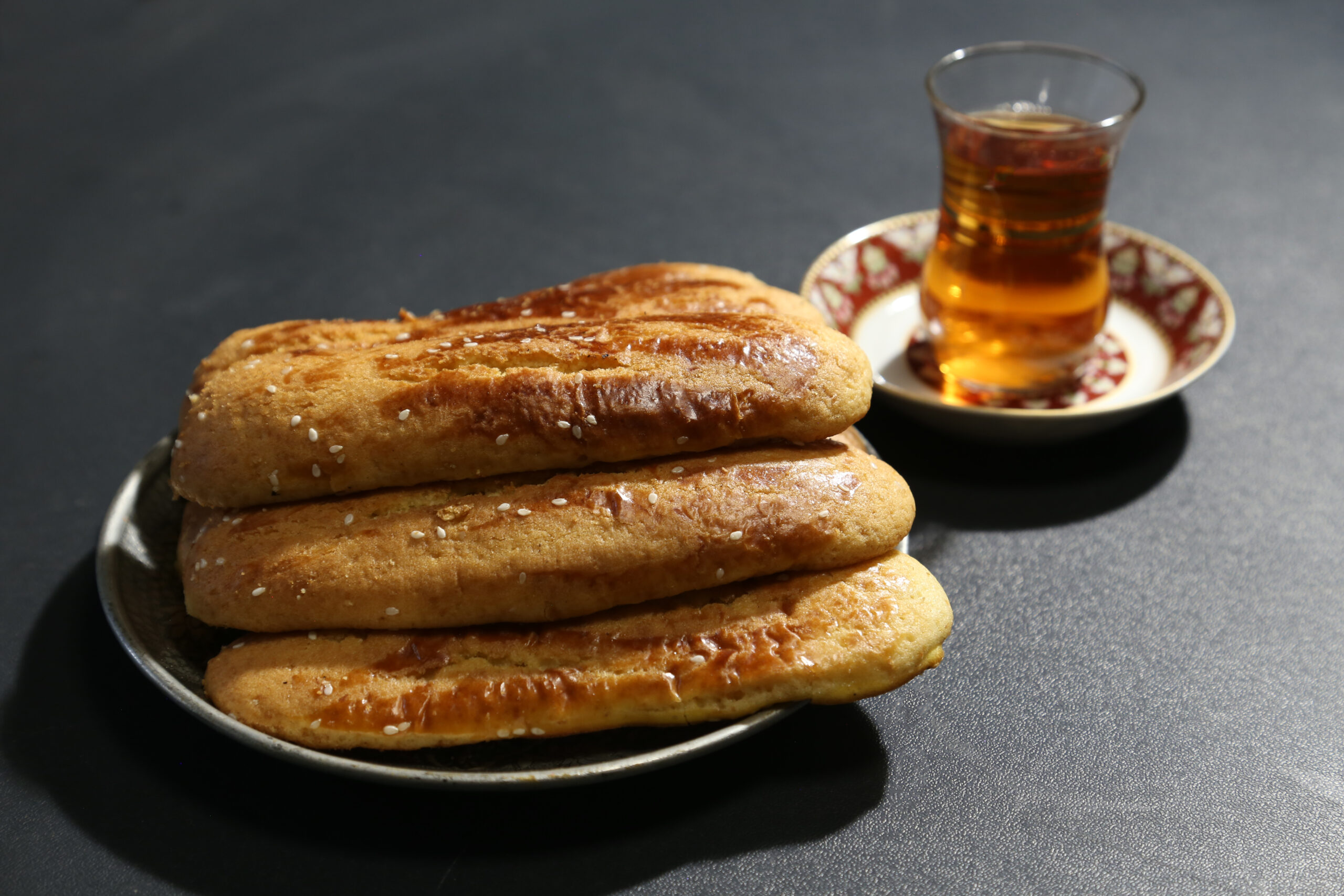
Figure 1. Photograph of Komāj.
KOMĀJ, a type of sweetened flat bread or pie, which originally camel drivers baked in a copper or earthenware pot with a cover, called komājdān, buried in hot ashes (Dehḵodā, s.v. komāj). Komāj bread is usually made with wheat flour and sugar but it is also made with rice flour (Moʿin, III, p. 3054). The dough is made with either water or milk. Komāj is mentioned in a couplet by Abu Esḥāq Širāzi (BOSḤĀQ AṬEʿMA, d. 827 or 830/1423 or 1427) in his Divān-e aṭʿema (Dehḵodā, s.v. komāj: bahr-e kāči o ʿadas dar ḵāna-i bāšam moqim // bā komāj-e garm o yaḵni man ke bāšam dar safar ‘I reside at home for the sake of kāči [a kind of thick soup] and lentils // why should I go away on a journey with warm komāj and yaḵni [a meat stew, see ĀB-GUŠT]’).
In his Kār-nāma dar bāb-e ṭabbāḵi wa ṣaṇʿat-e ān (Manual on cooking and its craft), written in 927/1521, Ḥāji Moḥammad-ʿAli Bāvarči Baḡdādi devotes one chapter to komāj bread and pies including plain komāj, quince komāj, and “bejeweled” komāj. Uncharacteristically for Persian cooking manuals (see COOKBOOKS) prior to the 20th century, Bāvarči’s recipes are very detailed, and he gives descriptions of ingredients for komāj and their quality, methods of preparing and baking komāj, and also methods of moving the cooked komāj onto porcelain platters (Ghanoonparvar, 2017, p. xi). In addition to the ingredients already mentioned, Bāvarči’s komāj include different kinds of nuts such as almonds and pistachios, yogurt, mastic, yeast, musk, rosewater, onions, boiled eggs, oil or butter, mutton, and chicken. Saffron is used in all his recipes and some include cumin, coriander, and lemon juice. Unlike Bāvarči’s cooking manual, the other extant Safavid (q.v.) cookbook, Māddat al-ḥayāt, resāla dar ʿelm-e ṭabbāḵi (The substance of life, a treatise on the art of cooking), which was written by Nur-Allāh, a chef for Shah ʿAbbās I (r. 996-1038/1588-1629), does not even mention the word komāj, nor is the word mentioned in the 19th century Sofra-ye aṭʿema (comp. 1301/1883-84), written by Mirzā ʿAli-Akbar Khan Āšpaz-bāši Kāšāni, chef at the court of Nāṣer-al-Din Shah Qajar (r. 1264-1313/1848-96; QAJAR DYNASTY xiv. Qajar Cuisine).
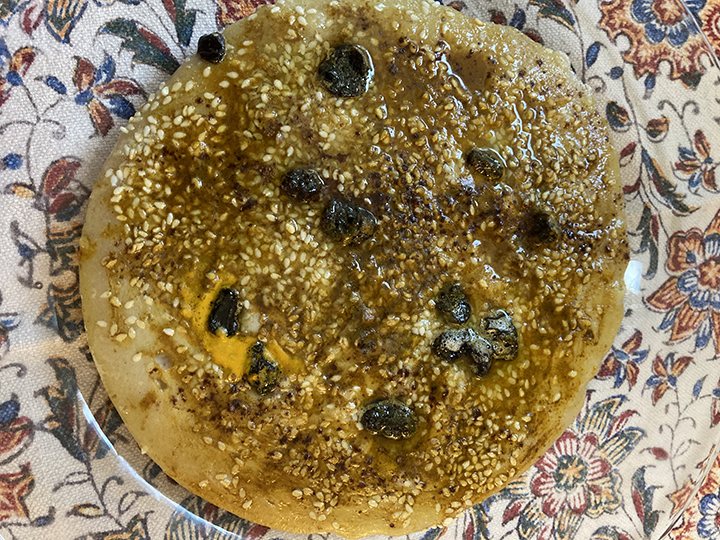
Figure 2. Isfahan-style komāj (called nān-e kāmāji). Photograph courtesy of M. R. Ghanoonparvar.
In contrast to the elaborate Safavid-era recipes for komāj, the modern versions of this food are relatively simple and are merely variations of Bāvarči’s plain komāj. Modern Persian cookbooks rarely include bread, including komāj, recipes. In several provinces including Isfahan, Kurdistan, and Māzandarān, komāj bread is still common. In Isfahan for instance, where this bread is called n ān-e kāmāj i or n ān kāmāj i (Figure 2), it is usually sold in special bakeries called kamājpazi. The round loaves are around 8 to 10 inches in diameter and about half an inch in thickness and are sprinkled with poppy or sesame seeds before baking. Homemade versions of komāj in Isfahan and also in Kurdistan are called n ān-e rowḡani, which is covered with sesame seeds before baking (Ghanoonparvar, 2006, 210-11). Both the bazaar-bought and homemade komāj include sparse amounts of saffron. The main ingredient in the Māzandarān komāj is rice flour, although a small amount of wheat flour is also added for the bread to hold together. Turmeric gives this version its color. Hamadan, Shiraz, and other cities also have their own variety of this bread, and in some cases they use dates or raisins for the topping. In most versions, the dough is prepared with milk rather than water. In contrast to the Isfahan komāj, the diameter of komāj in most other cities and provinces is similar to that of a large cookie.
Bibliography
Abu Esḥāq Širāzi, Divān-e aṭʿama Mawlānā Abu Esḥāq Ḥallāj Širāzi, ed. Ḥ. Eṣfahāni, Istanbul, 1885-86.
Mirzā ʿAli-Akbar Khan Āšpaz-bāši Kāšāni, Sofra-ye aṭʿema, Tehran, 1974.
Moḥammad-ʿAli Bāvarči and Nur-Allāh, Āšpazi-e dawra-ye ṣafawi: Kār-nāma vaMāddat al-hayāt, matn-e do resāla dar āšpazi az dawra-ye Ṣafawi, ed. I. Afšār, Tehran, 1981.
ʿA.-A. Dehḵodā, Loḡat-nāma (kaf-kolomba),Tehran, 1972.
M. R. Ghanoonparvar, Persian Cuisine I: Traditional Foods</em>; II: Regional and Modern Foods, Costa Mesa, Calif., 1982-84; new ed. in one vol., Costa Mesa, Calif., 2006.
Idem, Dining at the Safavid Court: Maddat ol-Hayat [The Substance of Life]: 16th Century Royal Persian Recipes by Nurollah, Costa Mesa, Calif., 2017.
A. Mirzāyef, Abu Esḥāq wa faʿāliyat-e adabi-e u, Dushanbe, Tajikistan, 1971.
M. Moʿin, Farhang-e Fārsi, 6 vols., Tehran, 1963-73.