



Moḥsen Forūḡī’s main interest as an art collector was in the pre-Islamic art of Iran, and in this enterprise he was advised by Roman Ghirshman (q.v.). He collected only items of museum quality, from Luristan bronzes (see BRONZES OF LURISTAN), pottery, and ancient jewelry to Sasanian silver ewers and bowls. A leading expert on Parthian and Sasanian coins, M. Azīzbeglū, helped Forūḡī to acquire a fine collection of those coins. His large collection of Sasanian seals was augmented by clay sealings and bullae (q.v.) at the suggestion of Richard N. Frye. Islamic art objects, such as miniatures, pen boxes and pottery, however, represented only a small part of his collection, but they too were equal to any museum objects.
An indication of the range and quality of the Forūḡī collection in the 1960s can be gleaned from the catalogue of an important exhibition of Persian art which was held at the Petit Palais in Paris from October 1961 to January 1962 (Sept mille ans d’art en Iran: Exposition organisée sous les auspices de l’Association française d’action artistique, Paris, 1962), and for which he and Ghirshman were the chief organizers. Both in their number and quality, the items from the Forūḡī collection compare favorably with those from such participating public institutions as the Archaeological Museum in Tehran, the Louvre, and the Brooklyn Museum (PLATE I, PLATE II, PLATE III). His collection contained some beautiful specimens of pottery from Amlaš (q.v.) which were then just appearing on the market, as well as other items such as small statues and jewelry (numerous items, see the exhibition catalogue, pp. 15-28). Luristan bronzes from his collection were also well represented (pp. 31-80). His growing predilection for objects from the Sasanian period could also be surmised from some fine objects, including silver cups (p. 139, nos. 798-801, p. 140, nos. 808, 809, p. 141, nos. 812, 813) as well as glass cups and flasks (p. 145, no. 839; p. 146, no. 850). On the other hand, there were only a few indications (p. 147, nos. 853 and 856) of the future richness of his collection in seals and bullae. Art of the Islamic period also interested him and were represented in the exhibition (several items, pp. 166-91), and lacquer work dating from 1699 to the 19th-century (pp. 198- 200, nos. 1111-20) as well as 18th and 19th-century oil paintings (p. 204, nos. 1150-56).
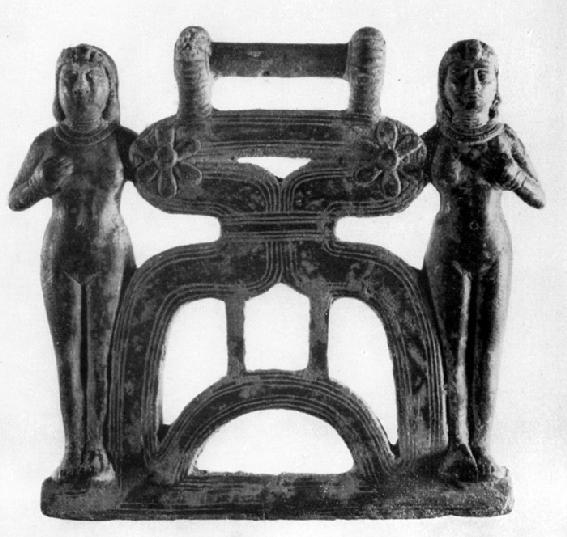
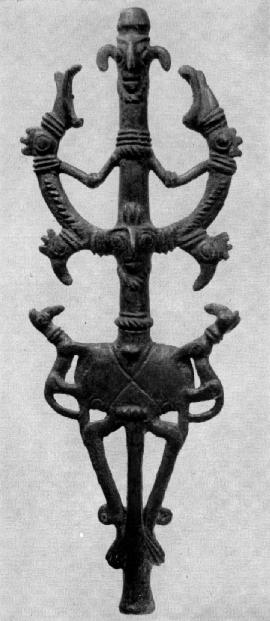
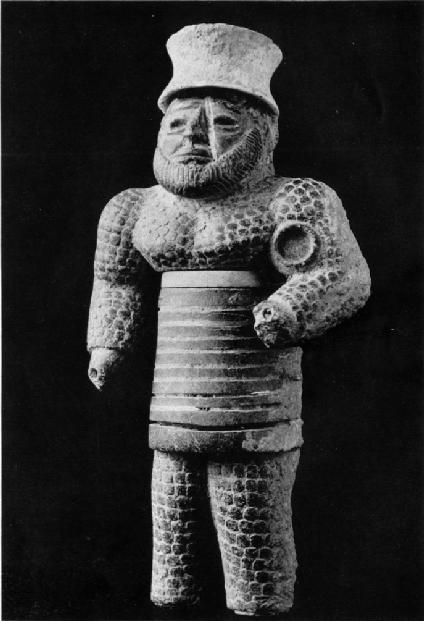
Forūḡī’s house in Tehran was a small museum where new acquisitions were displayed in glass cases, and visiting scholars were always welcomed and assisted in studying his collections. Some items from his collection were donated to the Louvre during his lifetime (for a list of donations from 1957 to 1977, see Amiet, Stud. Ir. 15, 1986, p. 246). As described in the above biography, Forūḡī’s art collection was transferred after the Revolution of 1979 to the Archaeological Museum (Mūza-ye Īrān-e bāstān) in Tehran, where some of the items are now on permanent display. Forūḡī did not have a complete catalogue of all his objects, but several items which have been subjects of the scholarly articles mentioned in the bibliography to his obituary by Pierre Amiet and Philippe Gignoux (Stud. Ir. 15, 1986, pp. 245-48) give an indication of the richness of the collection.