



AUBIN, JEAN (b. Ligugé, 2 January 1927; d. Jumelles, 17 January 1998; Figure 1), prominent French historian of pre-modern Iran, the Indian Ocean world, and early modern Portugal.
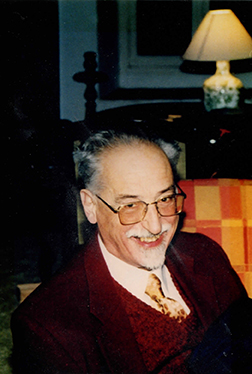
Born into a family of printers, Jean Aubin obtained a degree in Persian in 1948 from the École des Langues orientales (from 1968, The National Institute for Oriental Languages and Civilizations, INALCO). In 1949, he went to Iran, first as a scholarship recipient at the University of Tehran and subsequently as a scholar-in-residence (1951-55) at the Institut Franco-Iranien de Recherche (see FRANCE xiii. INSTITUT FRANÇAIS DE RECHERCHE EN IRAN). From 1964 until his retirement in 1994, Aubin was a research professor at the École Pratique des Hautes Études (EPHE; for the history of Islamic Iran), where he founded the Centre d’Études Islamiques et Orientales d’Histoire Comparée. From 1986 to 1992, he was simultaneously director of studies at the École des Hautes Études en Sciences Sociales (EHESS; the history of Renaissance Portugal and its expansion in Asia), where he established the Centre d’Études Portugaises. Aubin also founded in 1971 two journals that he subsequently edited, Moyen-orient et Océan Indien (XVIe-XIXe siècles) and Mare Luso-indicum. He died on 17 January 1998 in Jumelles, in Maine-et-Loire, when, despite his fragile health, he still had many works in progress at his office (details on his career in Bouchon, pp. 9-15; Aigle, 2018, pp. 11-24).
Aubin was a pioneer in many fields of research and a source of inspiration for historians of medieval Iran. He referred to the area covered by Iranian civilization as the “Iranian world” because he had found that Iran as a unity did not exist and that researchers had not paid enough attention to the diversity of the regions that make it up. His stays in Iran had allowed him to acquire a deep knowledge of people and landscapes. He asserted that “local history is the natural framework for analytical research and only analysis at the level of regions, cantons, and cities will allow us to measure the cohesion and the interplay of social forces” (“Liminaire,” 1971, p. ix).
Jean Aubin always relied on a vast body of primary sources, very often unedited ones. His first concern was to edit and publish a number of historical texts (Muntakhab al-tavārīkh-i Mu’ini, 1957; “Note sur quelques documents Aq Qoyunlu,” 1956; Note préliminaire sur les archives du Takya du Tchîma-rûd, 1955). He established relations with eminent Iranian scholars such as Iraj Afšār (1925-2011), Moḥammad Moʿin (1918-71), and Saʿid Nafisi (1895-1966). He discovered in the latter’s library several manuscripts of the lives of saints which he subsequently edited (“Fragments historiques concernant Bam sous les Timourides et les Qara-Qoyunlu,” 1954; Matériaux pour la biographie de Shâh Niʿmatullah Walí Kermânî, 1956).
At the beginning of Aubin’s career, many areas of the history of pre-modern Iran had not yet prompted much interest from scholars. He noted in 1955 that the Safavid (q.v.) period had been very neglected despite the abundance of documentary sources from as early as the 16th century. A decade later, he lamented that scholarship had not progressed beyond the “modalités politiques de la dilatio regni gengiskhanide” and little was still known about the internal life of the Mongol Empire (“L’ethnogénèse,” 1969, p. 65). The broad geopolitical vision of history that characterizes Aubin led him to avoid specializing in either a particular period or in a specific geographical territory, as his publications attest (list in Studia Iranica 27/1, 1998, pp. 9-14; Le Latin et l’Astrolabe II, 2000, pp. 29-28).
In 1953, Aubin devoted his first article (“Les princes d’Ormuz du xiiie au xve siècle”) to the kingdom of Hormuz (13th-15th centuries; see HORMUZ ii. ISLAMIC PERIOD); in it, his orientation as a historian of vast expanses is already expressed. The maritime and commercial activities of the cities of the Persian Gulf (q.v.) had favored the formation of a significant Iranian diaspora in the Indian Ocean (q.v.; “Y a-t-il eu interruption du commerce,” 1963; “Quelques remarques sur l’étude de l’Océan Indien occidental,” 1972; “Marchands de la Mer Rouge et du Golfe Persique,” 1988). His interest in Hormuz at the beginning of the 16th century then led him to become one of the most eminent scholars of the “Portuguese Renaissance” (Portugal during the 15th and 16th centuries) and its expansion in Asia (“Le royaume d’Ormuz au début du xvie siècle,” 1973). Entering the Lusitanian world via Hormuz, he wanted to illuminate knowledge of the countries of the Indian Ocean basin through both Islamic sources and Portuguese archives, the richness and interest of which he discovered during his first trip to Lisbon; they clarified details that Persian sources left in obscurity. After learning the Portuguese language and palaeography of the 16th century, he immersed himself in the Portuguese archives. His contribution to Lusitanian studies is immense (Le Latin et l’Astrolabe I-III, 1996, 2000, 2006).
One can say without exaggerating that Jean Aubin represented one of the currents of “connected history” in France. Starting from the Iranian world, Aubin became interested in international trade and diplomatic relations between the Persian Gulf and India. He explained that the expression “ports of India” does not designate ports situated on the coast of India, but ports that “traffic with India,” and that, in this sense, the expression is often applied to Hormuz (“Les relations diplomatiques entre les Aq-qoyunlu et les Bahmanides,” 1971, p. 13). The issue of the Persian diasporas very early on caught Aubin’s attention, who turned his gaze to Siam during the reign of King Narai (1656-88). He had been drawn to this distant outpost of Iran because in the capital there were many structured Muslim communities (“Les Persans au Siam,” 1980). He left several writings on the Bahmanids (see BAHMANID DYNASTY; “Indo-Islamica I. La vie et l’œuvre de Nīmdihī,” 1966; “De Kûhbanân à Bidar: la famille Ni‘matullahī,” 1991) explaining that the rulers of this dynasty maintained close relations with Iran due to the significant Persian element in the Deccan (q.v.).
Orientalist knowledge, which has generally characterized that of historians of Islam, acquired an international dimension thanks to Aubin. Its approach is that of “connected history,” which interprets historical changes on a large and a small scale and whose concern is to break down geographical or cultural compartmentalization. Aubin did not draw up a comprehensive historical summary, but much of his research was written within this perspective. This globalizing approach may seem paradoxical for a follower of local history; nevertheless, it does not conflict with his manner of approaching history at the level of regions, towns, and villages since he adopts in both cases the same pointillist approach to the analysis of his sources, which constitutes the basis for his whole method as a historian.
Jean Aubin was one of the first Islamicists to take an interest in the resources of hagiographic literature (q.v.). In 1956, he realized that the life of a saint could be a good document for local history. He asserted that historical facts are lived facts and that a rich and shifting mental life coexists with small events gleaned from the pages of a few chronicles (Matériaux, p. 1). Aubin shares with us in his work on small rural saints of the Timurid period his reflections on the psychological aspect of a situation for which he had previously outlined the historical framework (Deux sayyids de Bam au xve siècle, 1956; “Un santon quhistānī de l’époque timouride,” 1967). However, if Aubin managed to write a real regional monograph on social life, the economy, and tribal history at that time from these hagiographic texts, it is because he supplemented them with other sources such as chronicles, geographical, and literary sources. He strove to combine the most disparate information to build his historical works. The confrontation of sources belonging to different literary genres is characteristic of all of his research.
From his earliest writings, Aubin was interested in historical geography, a field of research in which he was a master. He was the first to note the tendency of the Persian language not to distinguish between a territory and its main locality. Shiraz (q.v.) can refer to the city but also to “le (territoire qui dépend de) Chiraz, la province du Fārs” (“Éléments pour l’étude des agglomérations urbaines dans l’Iran médiéval,” p. 68). In his articles on Sirāf, Aubin succeeded in showing that, contrary to what had been asserted until then, the decline of this important port in the Persian Gulf was not violent but spread out over nearly two centuries (“La ruine de Sîrâf,” 1959; “La survie de Shîlâu,” 1969).
An authority on the Iranian provinces, Aubin was able to guide us through cities, informing us about the buildings, the inhabitants, and the whole, small world of the shaikhs of the ḵānaqāhs (q.v.), the craftsmen, the peasants, and the landowners. Historical geography, generally considered as an austere discipline, becomes, thanks to the stylistic variety of Jean Aubin, alive and human. He realized that variations in the geological and biological landscape had an impact on regional economic and social life, and that geographic particularities also played a role in cases of armed conflicts and the deployment of troops (“La guerre au Kirman en l’an mil,” 1981; “La question de Sīrǧān au xiiie siècle,” 1977). This same attention to geographical details is found in his article “Les sunnites du Lārestān”(1965). The geographical position of this marginal and difficult-to-access area, in connection with maritime India, had allowed Sunni communities to maintain openings to the outside after the imposition of Shiʿism by the Safavids. In his study of the main roads of Khorasan during the Mongol period, he showed how since the 11th century the historical map of Iran had undergone profound transformations following the influx of pastoral populations and the spread of “grande nomadisme.” A communications network that was distinct from the long-distance network then developed. He explained that these two networks intersected or merged at points where their junction endowed them with strategic importance unrelated to the actual value of the place (“Réseau pastoral et réseau caravanier,” 1971, p. 105).
Aubin also distinguished himself as one of the best specialists on Il-Khanid history (see IL-KHANIDS). His work on the upheavals engendered by the Mongol invasion has received wide circulation. He approached the history of Iran at that time from various angles and tried to measure the impact of the influx of nomadic populations, especially in Khorasan and Azarbaijan, on the indigenous people and the landscape. The question of the interaction between populations of Turko-Mongolian and Iranian origins is implied in many of his publications. He was very interested early on in the interbreeding between Mongols and sedentary peoples in a well-documented article on the Qaraunas/Negüderis (see GOLDEN HORDE) published in 1969, in which he studied the historical conditions of the formation of this ethnic group, resulting from marriages between Mongol invaders in India and the local women. His research on land ownership in Azarbaijan, published in 1976, was original in approach and particularly rich. It revealed a rural world heavily affected by the presence of the Turko-Mongolian tribes in the province. Contrary to the ideas conveyed in the chronicles, written in urban areas, that encourage the perception of a village society driven from its lands by famine or the misdeeds of the soldiery, the village remains in Mongol Iran a vibrant entity. Here again, the use of sources belonging to different genres (archives and hagiographic texts) allowed Aubin to shed light on the “chicane des ruraux disputant leurs droits aux puissants et les realia des existences paysannes” (“La propriété foncière en Azerbaydjan,” 1975, p. 81).
The collapse of power after the death of the Il-Khan Abu Saʿid Bahādor Khan (q.v.; 1305-35) favored the birth of a new state, that of the Sarbedārs (q.v.). Here again, Aubin had shown himself to be a shrewd historian in understanding the true nature of this movement that had been described as a “popular” one (“La fin de l’état Sarbadār du Khorassan,” 1974; “Aux origines d’un mouvement populaire médiéval,” 1976). Born out of a village effervescence, in which no family had a hereditary monopoly on power, the Sarbedār state had been treated as a “republic of brigands” (Grousset, p. 466) or even as a “Shiite republic” (Mazzaoui, p. 66). Aubin came to contradict these assertions and engaged in a study of the different political power relations in the province, based on a careful analysis of often contradictory and religiously oriented sources. He understood that this movement was more complex and that, from its inception in 1335 until its rallying to Tamerlane in 1381, it was made up of multiple social currents (“Le khanat de Čagataï,” 1976). The Sarbedār movement was in part a reflection of the deteriorating demographic and agricultural situation in Khorasan in the second half of the 14th century.
Most of Jean Aubin’s work on the Il-Khanid period (1256-1335) is devoted to the relations between the Turko-Mongol elites and the Persian administrative personnel. In 1991, he wrote that during the collapse of the Mongolian regime there was once again “la collaboration entre émirs et vizirs, entre ‘le sabre et la plume’” (“Le Quriltai de Sulṭân-Maydân,” p. 186).
Aubin’s monumental work was Émirs mongols et vizirs persans dans les remous de l’acculturation, published in 1995. This book was the result of the assiduous use of sources over several decades. Aubin’s handwritten notes, on which appear additions of new sources, bear witness to this, as do the erasure or rewriting of entire sentences. For Aubin, it was not a question of studying the relations between Mongols and Persians as relations between models of civilization, but among factions involving both peoples. He strove to untie the complex web of relations between the Persian personnel of the divan and the Mongol emirs and to reconstitute the matrimonial alliances which could unite these two social groups that had, for better or for worse, a shared destiny for a century. He spent an incredible amount of time establishing and reconstructing the facts, adding the small details which had escaped him on a first reading of the sources.
The Safavid period also aroused the interest of Aubin at a time when this field of research was not as developed as it is today and very few sources had been critically edited. He devoted three essays to the political and social history of Iran under Shah Esmāʿil I (q.v.; 1487-1524), rejecting the conventional opinion at that time that associated the Safavid movement with the establishment of a nation-state in Iran at the beginning of the 16th century (1959, 1984, 1988). Vladimir Minorsky (q.v.; 1877-1966) saw the advent of the Safavid dynasty as a third Turkmen wave. Indeed, Shah Esmāʿil remained in the line of his predecessors, and if there were discontinuities that needed to be marked they would have to be placed later on. The Qizilbash (Qezelbāš, Tk. Qızılbaç: the name applied to the Shiʿite Turkmen tribes who supported the establishment of the Safavid state) revolution had been socially conservative, but the elites had retained all their privileges, and the status of mortmain property was respected. The Qizilbash thus attracted figures who had nothing to do with the advance of the Safavid armies in Iran. However, as innovative as he was, Aubin’s contribution to Safavid studies is less significant than for his other works, notably on the Mongols and Portugal.
All of Jean Aubin’s writings are like milestones laying out a path for the reader to follow, to open up new avenues of research, to discover the richness that can be drawn from a hagiographic text, or from the edition of a play, or some folios in the archives. Aubin’s taste for attention paid to a detail, a fact seemingly irrelevant but it actually sheds light on the motivations of two protagonists, the logic of whose situation we do not understand, as well as his comments, often laconic, sometimes make it difficult to read his writings. There is a true Jean Aubin-style that composes the history of Iranian societies as a writer would. His scientific language is literary; he uses metaphor with ease; he sometimes uses outdated words. This is probably one of the reasons for the modest dissemination of his research. Another reason “is that Aubin was viewed as somewhat of an outsider to the debate on the Islamic city. In French academia in particular, this field was seen as the preserve of specialists of the Arab world of North Africa and Syria, and Iran was often viewed as a matter of very different study” (Paul, p. 22). He was also averse to the hegemony of the English language in scholarly publications (see “Letter to the Editor,” 1989). Nevertheless, despite the relatively limited circulation of his work, Aubin has influenced and guided the research of many scholars of Iranian history.
An autodidact, Jean Aubin was a historian unlike any other; he refused offers of a Festschrift and insisted that there should be no obituaries. His wife and intellectual companion was Françoise Aubin (1932-2017), historian of Mongolian society of the 13th century and a great figure in Asian Studies. She edited and published his posthumous works.
Bibliography
Detailed bibliographies of works by Jean Aubin may be found in Studia Iranica 27/1, 1998, pp. 9-14, compiled by Jean and Jacqueline Calmard; Le Latin et l’Astrolabe: Recherches sur le Portugal de la Renaissance, son expansion en Asie et les relations internationales II, eds. Françoise Aubin and Geneviève Bouchon, Lisbon, 2000, pp. 29-38; Études sur l’Iran médiéval: Géographie historique et société, ed. and introd. Denise Aigle, Paris, 2018, pp. 367-71.
Works by Aubin.
Deux sayyids de Bam au xve siècle: Contribution à l’histoire de l’Iran timouride, Wiesbaden, 1956.
L’ambassade de Gregório Peirera Fidalgo à la cour de Châh Soltân-Hosseyn, 1696-1697, Lisbon, 1971.
Émirs mongols et vizirs persans dans les remous de l’acculturation, Paris, 1995.
Le Latin et l’Astrolabe: Recherches sur le Portugal de la Renaissance, son expansion en Asie et les relations internationales I, Lisbon, 1996 (collection of articles revised by the author); II, Lisbon, 2000 (collection of articles revised by the author); III, Lisbon, 2006 (studies on the reign of King Manuel I, 1495-1521, edited posthumously by Luís Filipe Ferreira Reis Thomaz from papers left by the author).
Études sur l’Iran médiéval: Géographie historique et société, ed. and introd. Denise Aigle, Paris, 2018.
Editions of texts.
“Fragments historiques concernant Bam sous les Timourides et les Qara-Qoyunlu,” Farhang-e Irān-Zamin 2/2-3, 1954, pp. 94-232.
Note préliminaire sur les archives du Takya du Tchîma-rûd, Archives persanes commentées 2, Tehran, 1955 (19 pp.).
Matériaux pour la biographie de Shâh Ni‘matullah Walí Kermânî, Tehran, 1956.
“Note sur quelques documents Aq Qoyunlu: Archives persanes commentées 1,” in Mélanges Louis Massignon I, Damascus, 1956, pp. 123-47.
Muntakhab al-tavārīkh-i Muʿini: taʾlīf-i 816 va 817 Hijrī Qamarī (Anonyme d’Iskandar), Tehran, 1957/1958.
“Un soyurghal Qara-Qoyunlu concernant le bulûk de Bawânât-Harât-Marwast: Archives persanes commentées 3,” in S. M. Stern, ed., Documents from Islamic Chanceries: First Series, Oxford, 1965, pp. 159-70 with 10 pl.
Articles.
“Les princes d’Ormuz du xiiie au xve siècle,” Journal Asiatique, 1953, pp. 77-138.
“La ruine de Sîrâf et les routes du Golfe Persique aux XIe et XIIe siècles,” Cahiers de Civilisation médiévale II/3, 1959, pp. 295-301; repr. in Études sur l’Iran médiéval: Géographie historique et société, Paris, 2018, pp. 53-62.
“Šāh Ismāʿīl et les notables de l’Iraq persan (Études safavides I),” Journal of the Economic and Social History of the Orient 2/1, 1959, pp. 37-81.
“Y a-t-il eu interruption du commerce par mer entre le Golfe Persique et l’Inde du XIe au XIVe siècle,” Studia 11, 1963, pp. 165-71.
“Les sunnites du Lārestān et la chute des Safavides,” Revue des études islamiques 33, 1965, pp. 151-71.
“Indo-islamica, I. La vie et l’œuvre de Nīmdihī,” Revue des études islamiques 34, 1966, pp. 61-81.
“Un santon quhistānī de l’époque timouride,” Revue des études islamiques 35, 1967, pp. 185-216.
“La survie de Shîlâu et la route de Khunj-o-Fâl,” Iran 7, 1969, pp. 21-37 (repr. in É
tudes sur l’Iran médiéval. Géographie historique et société, Paris, 2018, pp. 63-90).
“L’ethnogénèse des Qaraunas,” Turcica 1, 1969, pp. 65-94; repr. in Études sur l’Iran médiéval: Géographie historique et société, Paris, 2018, pp. 251-77.
“Éléments pour l’étude des agglomérations urbaines dans l’Iran médiéval,” in S. M. Stern et A. Hourani, eds., The Islamic City: A Colloquium, Oxford, 1970, pp. 65-75; repr. in Études sur l’Iran médiéval: Géographie historique et société, Paris, 2018, pp. 29-38.
“Liminaire,” Le monde iranien et l’Islam 1, 1971, pp. vii-ix.
“Réseau pastoral et réseau caravanier: Les grand’routes du Khurassan à l’époque mongole,” Le monde iranien et l’Islam 1, 1971, pp. 105-30; repr. in Études sur l’Iran médiéval: Géographie historique et société, Paris, 2018, pp. 91-114.
“Les relations diplomatiques entre les Aq-qoyunlu et les Bahmanides,” in C. E. Bosworth, ed., Iran and Islam: In Memory of the Late Vladimir Minorsky, Edinburgh, 1971, pp. 11-15.
“Quelques remarques sur l’étude de l’Océan Indien occidental au XVIe siècle,” Agrupamento de Estudos de Cartografia Antiga LXXXV, Coimbra, 1972, 13 pp.
“Le royaume d’Ormuz au début du xvie siècle,” Mare Luso-indicum 2, 1973, pp. 77-179.
“La fin de l’état Sarbadâr du Khorassan,” Journal Asiatique, 1974, pp. 95-118.
“La propriété foncière en Azerbaydjan sous les Mongols,” Le Monde iranien et l’Islam 4, 1975-76, pp. 79-132; repr. in Études sur l’Iran médiéval: Géographie historique et société, Paris, 2018, pp. 171-219.
“Aux origines d’un mouvement populaire médiéval: Le cheykhisme du Bayhaq et du Nichâpour,” Studia Iranica 5/2, 1976, pp. 213-24; repr. in Études sur l’Iran médiéval: Géographie historique et société, Paris, 2018, pp. 299-309.
“Le khanat de Čaġataï et le Khorassan (1334-1380),” Turcica 8, 1976, pp. 16-60.
“La question de Sīrǧān au xiiie siècle,” Studia Iranica 6/2, 1977, pp. 285-90.
“La guerre au Kirman en l’an mil,” Studia Iranica 8/2, 1981, pp. 213-224; repr. in Études sur l’Iran médiéval: Géographie historique et société, Paris, 2018, pp. 39-46.
“Les Persans au Siam sous le règne de Narai (1656-1688),” Mare Luso-indicum 4, 1980, pp. 95-126.
“Révolution chiite et conservatisme: Les soufis de Lâhejân, 1500-1514 (Études safavides II)”, Moyen Orient & Océan Indien: Middle East & Indian Ocean XVe-XIXe 1, 1984, p. 1-40.
“Marchands de la Mer Rouge et du Golfe Persique au tournant des 15e et 16e siècles,” in Marchands et hommes d’affaires de l’Océan Indien et de la Mer de Chine (13e-20e siècles), Paris, 1988, pp. 83-90.
“Letter to the Editor,” Iranian Studies 22/4, 1989, pp. 124-25.
“De Kûhbanân à Bidar: la famille Ni‘matullahī,” Studia Iranica 20/2, 1991, pp. 233-61.
“Le Quriltai de Sultân-Maydân (1336),” Journal Asiatique, 1991, pp. 175-97; repr. in Études sur l’Iran médiéval: Géographie historique et société, Paris, 2018, pp. 279-97.
“Chroniques persanes et relations italiennes: Notes sur les sources narratives du règne de Šāh Esmâʿil Ier,” Studia Iranica 24/2, 1995, pp. 247-59.
Other works cited:
Denise Aigle, “L’œuvre de Jean Aubin (1927-1998) et l’histoire globale,” in Jean Aubin, Études sur l’Iran médiéval: Géographie historique et société, ed. and introd. Denise Aigle, Paris, 2018, pp. 11-24.
Geneviève Bouchon, “ Introduction,” in Le Latin et l’Astrolabe: Recherches sur le Portugal de la Renaissance, son expansion en Asie et les relations internationales II, Lisbon, 2000, pp. 9-15.
René Grousset, L’Empire des steppes: Attila, Gengis-Khan, Tamerlan, 4th ed., Paris, 1965.
Michel Mazzaoui, The Origins of the Ṣafawids: Šīʿism, Ṣūfism, and the Ġulāt, Wiesbaden, 1972.
Jürgen Paul, “Jean Aubin’s Article ‘Elements for the Study of Urban Agglomerations in Medieval Iran’ in Context,” Eurasian Studies 16, 2018, pp. 21-38.