



ḴOʾI, ESMĀʿIL (Esmail Khoi/Khoui; b. Mashhad, 30 June 1938; d. London, 25 May 2021; Figure 1), Iranian poet, educator, and political activist. An influential intellectual figure in Iran, he lived in exile in Britain after the Revolution of 1979 and became an outspoken critic of the contemporary regime in Iran.
Early life and teaching career. As apparent from the etymology of the name Ḵoʾi, the family originally came from the town of Ḵoy (see KHOY) in West Azarbaijan. According to Ḵoʾi’s own recollections, recorded in an extensive television interview with the BBC Persian Service in London (interview by Jamšid Barzegar, 31 January 2009), his father was a truck driver who also owned several other trucks and who was a member of the Tudeh party (see COMMUNISM i-iii). His trucking business at first secured a comfortable life for his family. During his final years however, along with a steep decline in his health, the family’s financial situation also deteriorated rapidly. He died in 1956, aged 46, leaving the young Esmāʿil and the rest of the family in financial distress. They received some support from Esmāʿil’s maternal uncle, who also provided the necessary funds for the young and promising student to pursue his studies in Mashhad and later move to Tehran in 1957. He enrolled as a student in the Dāneš-sarā-ye ʿĀli (see EDUCATION xix), where he studied philosophy and educational sciences. Having graduated top of his class, he was granted a government scholarship in 1961 to study philosophy at the University of London. After receiving his MPhil. degree, Ḵoʾi returned to Tehran and began teaching at the Dāneš-sarā-ye ‘Āli, by then renamed Teachers’ Training College (Karimi-Hakkak and Beard, p. xvi). He had already made a name for himself as a gifted young poet and a well-read leftist polemicist siding with those intellectuals who opposed the shah’s regime.
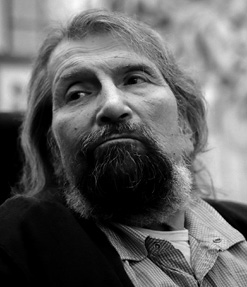
Figure 1. Esmāʿil Ḵoʾi in 2020. Photograph courtesy of Salar Khosrojerdi
While in London, Ḵoʾi had met an Italian student, Franca Gallio, who became his first wife and with whom he had a son (Hooman Khoui, who committed suicide in London in 1995) and a daughter (Atossa). Later in Iran, Ḵoʾi fell in love with and married Roksānā Ṣabā, the daughter of the renowned musician Abu’l-Ḥasan Ṣabā (q.v.). They had two daughters. Ṣabā, one of his daughters from the second marriage, is a journalist in London and lived with her father in the last two decades of his life.
Poetry. Ḵoʾi will be remembered first and foremost as a poet, skilled in both traditional and modern styles, and one of only half a dozen influential modern poets to make an impact after Nimā Yušij (q.v.), regarded as the founder of modern Persian poetry. During his adolescence in Mashhad, and encouraged by a high school teacher impressed by his first attempt at composing a poem, Ḵoʾi began writing poetry, mostly ḡazal s (q.v.) in the traditional mode. By 1956, he had already penned a number of ḡazals and summoned up sufficient courage to publish his first book of poems (Bitāb ‘Impatient’), using the nom-de-plume Soruš Ḵoʾi, with the Ketābforuši-e Nāderi press in Mashhad. The collection received a warm reception in the highly conservative literary circles of the province and in its local press. This included a laudatory review in Aftāb-e šarq (see KHORASAN xxviii) by ʿAli Šariʿati (1933-77), who cited a well-known verse from Hafez (q.v.) to express his admiration for the young poet’s precocity (Ḵoʾi, BBC interview, 31 January 2009).
Earlier, Ḵoʾi had written a long article in defense of the traditional style of poetry and hence critical of Nimā Yušij and his innovations. Ironically, shortly after moving to Tehran and becoming familiar with modern poetry (še’r-e now) and reading poems by the likes of Mehdi Aḵavān-Ṯāleṯ (see AKHAVAN-E SALESS), who was also from Mashhad but had moved to Tehran in the 1940s, Ḵoʾi himself joined the modernist movement. At the same time, he regretted publishing his first book of poems and never allowed it to be reprinted (Ḵo’i, BBC interview, 31 January 2009).
Later in life, and particularly during his long years of exile in London, he wrote many non-traditional poems, the majority showing him to be a faithful follower, if not imitator (as some have accused him), of Aḵavān. But after the publication of his first book, he was in no hurry to publish a new book of poems. His second volume of poetry, Bar ḵeng-e rāhvār-e zamin (On the swift steed of the earth), appeared in 1967, eleven years after his first book. In subsequent years, Ḵoʾi published six more volumes of poetry. The collection Bar bām-e gerdbād (On the roof of a whirlwind, 1970) contains some of his most frequently cited and anthologized poems from this period, including “Dar emtedād-e zard-e ḵiābān” (Along the yellow of the street) and “Šemāl niz” (The north too).
After the revolution of 1979, with the increasing pressure on the active members of the Writers’ Association of Iran (Kānun-e nevisandegān-e Irān) and particularly after the summary trial and execution in 1981 of his friend, the poet, director, and actor Saʿid Solṭānpur, Ḵoʾi no longer felt safe and lived at the homes of various friends before leaving the country secretly via Pakistan. In his famous poem “Bāzgašt be Borgio Verezzi” (Returning to Borgio Verezzi), he gives a vivid picture of his sojourn in the Italian town, staying with his former wife until he could enter Britain with travel documents as a refugee in 1983.
In exile, Ḳoʾi devoted most of his time to composing poems. By the time of his death in 2021, he had left behind an impressively voluminous life’s work that included more than 70 collections of poems (not counting selections, reprints, or translations), the great majority published in his years of exile by presses in Europe and the United States.
Whether writing in traditional forms or composing modern poetry, Ḵoʾi used a recognizably Khorasani diction close to that of past masters from Nāṣer-e Ḵosrow to Moḥammad-Taqi Bahār (q.v.) and, in modernist poetry, to Aḵavān, who had similarly employed such a diction. He used this language with vigor, confidence, and pride. Similar to Aḵavān, he found fault with the way a careless and “corrupted” Persian was being used by some poets from Tehran and other provinces (Yousef, 2020, pp. 275-76). On occasion, he wrote articles on these subjects to correct what he saw as the improper use of the language and had also his own suggestions and style for spelling (Ḵoʾi, “Dar gostara-ye emlā”; Yousef, 1993). He was a moderate follower of the language purification movement with its nationalist underpinning.
So far as poetic forms were concerned, after his initial phase of writing ḡazals (1950s) and the next few years under the strong influence of Aḵavān (1960s), Ḵoʾi appeared receptive to different kinds of experimentation. He did not abandon meters altogether in his modernist poems but allowed himself greater freedom in their deployment, similar to and even more so than Forūḡ Farroḵzād (q.v.) in her last, posthumously published collection (1974), Imān biāvarim be āḡāz-e faṣl-e sard (Let us believe in the beginning of the cold season).
If one attempts to find the most salient features of Ḵoʾi’s poetry in an overview of more than seventy books of poems, three distinct types of poets will emerge (regardless of using traditional or modern forms), although the dividing lines separating these three images of the poet are often blurred and frequently overlap.
The first image of Ḵoʾi is as an author of lyrical verse, love poems, and occasionally even erotic poems—poems that praise beauty in [wo]man and nature. Ḵoʾi had coined the word ḡazalvāra (ḡazal-like), for his own lyrical poems written in a modern style. Another group of poems that belong here are his meyḵānagi (meyḵāna being a tavern) poems, those in praise of wine (as in the traditional ḵamriyāt, q.v.) and/or describing intellectuals in the atmosphere of Tehran’s taverns in the 1960s to 1970s (on these, see Nafisi; Karimi-Hakkak and Beard, p. xviii). As first and foremost a poet of passion and love (palpable even in many of his political poems), he rarely wrote poems that could show some aesthetic distance, and the poet was conspicuously present in almost everything that he wrote (Yousef, 2002, pp. 303-7). One of his ḡazalvāra (“Ḡazalvāra 5,” written in 1968 and published in Az ṣedā-ye soḵan-e ʿešq, Tehran, 1970) begins with:
Dar man emšab tarannom-e ḡazali-st
Delam emšab setāra-bārān ast
Vāža-hā rā ḵabar konid
Vāža-hā rā ḵabar konid
Tā ke bā kuza-hā-ye ḵāli-ye ḵiš
Bešetāband su-ye man, k-emšab
Dar man ast ānče dar daf-e bārān
Vānče dar nā-ye češma-sārān ast.
There’s the trilling of a ḡazal in me tonight
There’s a shower of stars in my heart tonight
Call up the words
Call up the words
To run to me with their empty pitchers
For I have in me tonight all that there is in the rain’s tambourine
And in the brook’s flute.
Second, Ḵoʾi composed contemplative or philosophical poems, which could be as short as aphorisms, and brief observations or longer meditations on any subject (concrete or abstract) and any topic, trying to elucidate, illuminate, define, and explain them. He wrote many poems that either show what position poetry occupied in his life or shed light on his approach to poetry. When philosophizing about the meaning and nature of love, he may come close to the first image, that of a lyrical poet; when arguing against religious dogma and its inherent absurdities from the point of view of an atheist, he is not far from his stance as a committed writer discussed below as the third aspect. The quatrain “Ḵodā-vaš” (Godlike), dated 1996, is from Jahān-e tāzaʾi mi-āfarinam (I’ll create a new world), a collection of quatrains published in 2000:
Gereftam bahr-e mā fardā nabāšad,
Be-joz nāmi ze mā bar jā nabāšad:
Ḵodā-vaš zistim, ān-sān ke, bi-šak,
Jahān bi mā jahān bā mā nabāšad.
Suppose that there is no tomorrow for us,
Nothing left of us but a name:
We lived Godlike in such a way that, no doubt,
The world without us and the world with us would not be the same.
Third and finally, Ḵoʾi can be seen in his role as a committed poet writing socio-critical poems either in a subtle way in free style, following the example of Nimā’s so-called “social symbolism,” or using traditional forms (mostly qaṣida and robāʿi) and lashing out openly against tyranny, religious authoritarianism, and the atrocities of the reigning theocracy. In what he wrote after the 1979 Revolution, and especially in exile, one observes his radicalization and the use of a more direct language; this becomes obvious when one compares poems such as “Dar emtedād-e zard-e ḵiyābān” and “Šemāl niz” (both from the collection Bar bām-e gerdbād, 1970) with “Yek čehra az Saʿid” (a moving elegy written in 1981 after Solṭānpur’s execution) or the powerful qaṣida “Nowruzāna” (written in 1996) in which he curses the regime in Iran: “May everyone’s wishes be fulfilled, but not yours! / May everyone’s days be happy, but not yours!”
To these must be added his satirical works, many of them written during the years when he worked closely in London with the famous satirist Manučehr Maḥjubi (1937-89) as a contributor to the latter’s satirical weekly Āhangar. Somewhere close to this less serious kind of verse (“light verse” would be a misleading term here) are also his eḵwāniyāt, versified messages, often humorous, exchanged between friends and poets, an epistolary genre with a long precedence in Persian literature.
Ḵoʾi’s poems have been translated into different languages, and some published in book form, among them two selections translated into English by Michael Beard and Ahmad Karimi-Hakkak (Edges of Poetry, 1995, and Outlandia, 1999) and a selection translated into German by Kurt Scharf (Am Fenster der Erinnerung, 2012). Ḵoʾi has written poems in English too, selections of which were published as Voice of Exile (2002, reprinted 2020) and What-is Shall Be What-is-Not: Rubaiyat (2020). His work was the subject of numerous works of literary criticism, several of which were written while he was still alive (e.g., those by Awsiāʾ; Tira-gol; Moʿtaqedi). Ḵoʾi was also the recipient of several poetry awards, such as the Forūḡ Farroḵzād Literary Award (Iran, 1973) or the Coburg Rückert-Preis in 2010 (https://www.coburg.de/rueckert).
Other works by Ḵoʾi. A look at the titles of the books that Ḵo’i published apart from his poems reveals the range of his interests and involvements. He edited two books written by his former professor of philosophy, Maḥmud Human (Mahmoud Houman, q.v.; Ḵoʾi’s only son was named after him), and published them in one volume as Ḥāfeẓ in Tehran in 1968. He and Daryuš Āšuri collaborated on a translation of Friedrich Nietzsche’s Also sprach Zarathustra as Čonin goft Zartošt: ketābi barā-ye hama kas va hič kas, but only the first volume was published (1970, second printing in 1973) before their partnership ended and Āšuri pubished a revised complete translation independently. In 1971, Ḵoʾi published a long polemical interview as Jedāl bā moddaʾi (Debate with a pretender) as well as a collection of articles, talks, and shorter interviews as Az šeʿr goftan (Talking about poetry). In the same year, he published a translation of Sean O’Casey’s play The Shadow of a Gunman (as Dar puštpe šir: terāžedi dar do parda). In 1976, he published his talks with Houman on poetry as Šeʿr čist? (What is poetry?). The year 1978 saw the publication of Āzādi, ḥaqq, va ‘adālat (Freedom, right, and justice), a controversial debate with the sociologist Eḥsān Narāqi. Also in 1978, shortly before the revolution, his long essay Šenāḵt-nāma-ye Ardašir Moḥaṣṣeṣ appeared as a book that included cartoons by the artist Ardeshir Mohassess (q.v.).
Ḵoʾi published numerous articles on various topics (mostly on poetry or language; later, in exile, also on political topics) as well as book reviews and prefaces to books by others. He wrote in an elegant but idiosyncratic style; it was usually enough to read only a couple of sentences to realize who the author was.
Ḵoʾi as activist and member of the Iranian Writers’ Association. Ḵo’i was a founding member of the Iranian Writers’ Association in Iran in 1968. The Association soon ceased to act collectively after several of the signatories were subjected to arrest or intimidation by the government. However, Ḵoʾi remained one of its most prominent and ardent members when it became active again in the period preceding the Revolution of 1979. At the historic “Dah šab-e šeʿr” (Ten nights of poetry) event at the Goethe Institute (q.v.) in Tehran in 1977, Ḵoʾi was one of the poets who read out their poems from the podium to the huge audiences that gathered there each evening. He was also elected as a member of the new executive board of the Association. After the Revolution, the Association was officially banned in 1981, and some members, including Ḵoʾi, as mentioned above, went into hiding for fear of their lives (Karimi Hakkak, 2019, pp. 75-83). Later, in exile, he was again actively involved in both the Iranian Writers’ Association (in Exile) and PEN Iran (in Exile), frequently giving talks and participating in reading sessions in different European countries as well as in North America. While in exile, Ḵoʾi, along with the poet Nāder Nāderpur (q.v.), was denounced in the Tehran Friday prayers, which was tantamount to declaring him persona non grata and effectively banning publication or distribution of his works in Iran. In the case of Ḵo’i, this was a prompt response to the public declaration of support he had made for the writer Salman Rushdie following Ayatollah Khomeini’s fatwā (q.v.) sanctioning a death sentence on him (the text of the open letter to which he was a signatory was published in The New York Review of Books, 14 May 1992). Ḵoʾi, already suffering from the depravations of a life in exile, was further distressed by this ban, which cut all his ties with his audience in Iran. He often mentioned this in his poems and talks, although he sometimes tried to show his defiance as in the following robāʿi titled “Az kohna šodan” (On aging) from 1992 (published in 1994 in Yek tekka-am āsemān-e ābi beferest, a collection of robāʿiyat):
Māhi ze gazand-e āb key mi-tarsad?
Az gom šodan āftāb key mi-tarsad?
Gu nagḏārand še‘r-e man čāp šavad.
Az kohna šodan šarāb key mi-tarsad?
Did ever fish fear to be hurt by water?
Did ever the sun fear to get lost?
Let them ban the publication of my poems.
Did ever wine fear aging?
In the decade before the 1979 Revolution, Ḵoʾi had befriended several leftist activists, most notably [Amir] Parviz Puyān and Masʿud Aḥmadzāda, two of the founding figures of the Fedā’iān-e ḵalq organization (see COMMUNISM iii) that had embarked on an armed struggle against the Pahlavi regime. Puyān was killed in a raid by the secret police (SAVAK) in May 1971 and Aḥmadzāda was executed in February 1972. After the Revolution, Ḵoʾi began collaborating with this organization, and his involvement became more intense in exile (with the branch of the organization known as the Aqalliyat [Minority]) for at least a few years. He ultimately chose to remain an independent voice of the Iranian دdiaspora in opposition to the Islamic Republic.
Bibliography
There have been many interviews with Ḵoʾi, and a number of documentaries have been made that can be accessed online, not to mention the hundreds of recordings of his poems or live readings and talks recorded and posted online (e.g., notably https://sounds.bl.uk/Arts-literature-and-performance/Between-two-worlds-poetry-and-translation/024M-C1340X0019XX-0000V0). A video of the BBC interview conducted by the journalist Jamšid Barzegar in London on 31 January 2009 was published online on 28 June 2015 (available at https://www.youtube.com/watch?v=lsMVrz4Q70E, accessed 4 July 2022). It is 70 minutes long and much of the personal information in this entry is derived from reminiscences by Ḵo’i as recorded there. A short interview for Radio Farda on 10 September 2006 is available at https://www.radiofarda.com/a/287708.html (accessed 4 July 2022). An interview on the occasion of his 80th birthday was conducted by Ṣādeq Ṣaba for Radio Iran International (https://www.youtube.com/watch?v=jIx-M5AUEyE). Ḵoʾi often repeats the same recollections almost verbatim in these interviews.
Volumes of poetry by Ḵoʾi (in chronological order).
Bi-tāb, Mashhad, 1956.
Bar ḵeng-e rāhvār-e zamin, Tehran, 1967.
Bar bām-e gerdbād, Tehran, 1970.
Zān rahrowān-e daryā, Tehran, 1970.
Az ṣedā-ye soḵan-e ʿešq, Tehran, 1970.
rātar az šab-e aknuniyān, Tehran, 1971.
Bar sāḥel-e nešastan va hastan, Tehran, 1973.
Mā budegān, Tehran, 1978.
Kābus-e ḵun-serešta-ye bidārān, London, 1984.
Dar nā-behangām, London, 1984.
Zirā zamin zamin ast, London, 1984.
Dar ḵābi az hamāra-ye hič, Los Angeles, 1988.
Gozāra-ye hazāra, London, 1991. Az farāz va forud-e jān va jahān, Frankfurt am Main, 1991.
Kār-nāma-ye Esmāʿil Ḵoʾi: šeʿr, 2 vols., Spånga, 1991-96 (collected poems).
Negāh-hā-ye parišān be naẓm, London, 1993. Yek tekka-am āsemān-e ābi beferest, London, 1994.
Ḡazal-qaṣida-ye āḡuš-e ʿešq va čehra-ye zibā-ye marg, London, 1997.
Az mihan ānče dar čamedān dāram, Los Angeles, 1997.
Ḡazal-qaṣida-ye man-hā-ye man, Toronto, 1998.
Nahang dar ṣaḥrā, Los Angeles, 1999.
Pežvāk-e jān-sorud-e del-āʾinagān, Germany, 1999.
Šāʿer-e ḵalqam, dahan-e mihanam, London, 1999.
Jahān-e tāzaʾi mi-āfarinam, Stockholm, 2000.
ʿEšq, in ḵerad-e bar-tar, Austin, 2000.
Tā enfejār-e gerya, Austin, 2000.
Voice of Exile, Atlanta, 2002.
Keyhān-e dard. Sang bar yaḵ. Az bām-e āh: jānāna-ye še’r va jān-e zibāʾi, 4 vols. in one, Atlanta, 2003.
Kār-nāma-ye Esmāʿil Ḵoʾi, Vol. V, Atlanta, 2003 (a volume of collected works).
Kohan-soruda-hā, Atlanta, 2004 (collection of poems in traditional forms, reprint of four previous books in one volume).
Zin sāya-sār-e por-barg, Tehran, 2005.
Qahqāh-e na-šenidani-ye marg va velāyat-e šah-šeyḵ, 2 vols. in 1, London, 2011.
Man bā man-e man begu-maguʾi dāram, London, 2016.
Ažir-e šeʿr, London, 2016. Jān va jahān-e šeʿr, London, 2016.
In ḵašm ru be hāri-st, London, 2016.
Az pošt-e eynaki ke omid ast, London, 2016.
Dar hamin-jā rastḵizi niz hast, London, 2016.
Bā zur-e kur-e kargadani, āh, nadānestan, London, 2016.
Čarḵa-ye ranj, London, 2016. Dariḡ, mādarakam!, London, 2016.
Bā tiša-ye ṣedā-ḵafa-kon-dār, London, 2016.
Hanuz dar čamedānam če dāram az mihan?, London, 2016.
ʿArab-zada-st anirān be čašm-e man, na ʿarab, London, 2016.
Čang-hā-ye ḵarčang, London, 2016. Nā-ham-jahāni, London, 2016.
Bā ḵun va bā jonun-aš, London, 2016.
Sargarm-e kār-e margidan, London, 2016.
Va bi-kiši-am kiš bas!, London, 2016.
Ḡobār-rubi az āʾina-ye ḵerad, London, 2016.
Ham-kāsegān-e marg, London, 2016.
Nahang dar ābgir, London, 2016.
Dar bi- ḡorurestān, London, 2017.
Dar barzaḵ-e panāh-juyān, London, 2017.
Ḵošā kaz ḵašm saršāri, London, 2017.
What-Is Shall Be What-is-Not: Esmail Khoi Rubaiyat, Atlanta, 2020.
Miān-e didan va vā-didan, Atlanta, 2020.
Šekārči-e pir, Atlanta, 2020.
Gonāh va pādafrāh, Atlanta, 2020.
Az čida-goli, Atlanta, 2020.
Ensān in ast, Atlanta, 2020.
Hamiša-nuši, Atlanta, 2020.
Negāh kon be hamin bāmdād!, Atlanta, 2020.
Vāže-gar, Atlanta, 2020.
Dar zij-e ārezu, Atlanta, 2020.
Hanuz man hastam, Atlanta, 2020.
Ey šeʿr, bebaḵšāy, Atlanta, 2020.
Dar entehā-ye budan, Atlanta, 2020.
ā’er če mi-konad, Atlanta, 2020.
Čel sāl raft, Atlanta, 2020.
Dir nemišavad, delam!, Atlanta, 2020.
Other works by Ḵoʾi.
Az še’r goftan, Tehran, 1971.
Še’r čist?, Tehran, 1976 (dialogue with Maḥmud Human).
“Dar gostara-ye emlāʾ,” in Faṣl-e ketāb 10-11, Winter-Spring, 1992, pp. 39-55.
Sources.
Māšāʾ-Allāh Ājudāni, “Šā’eri va vasvasa-ye soḵanvari,” Faṣl-e ketāb 12-13, Winter-Spring 1993, pp. 107-19; repr. in Kašfi, ed., 2002, pp. 13-28.
Parviz Awṣiāʾ (Parviz Owsia), Naqdvāraʾi bar šeʿr-e Esmāʿil Ḵoʾi, London, 1983.
Maḥmud Gudarzi, “Ḵoʾi: andišmandi puyā,” in Kašfi, ed., 2002, pp. 235-52.
Nāṣer Ḥariri, Darbāra-ye honar va adabiyāt: goft o šonudi bā Simin Behbahāni, Ḥamid Moṣaddeq, Bābol, 1989.
Ahmad Karimi-Hakkak, “Šā’er-e šodanhā-ye modām va farāyandhā-ye nā-tamām,” in Kašfi, ed., 2006, pp. 72-89.
Idem, A Fire of Lilies: Perspectives on Literature and Politics in Modern Iran, Leiden, 2019.
Ahmad Karimi-Hakkak and Michael Beard, trs., Edges of Poetry: Selected Poems of Esmail Khoi, a Bilingual Parallel Text in English and Persian, Santa Monica, 1995, “Introduction.”
Nasim Ḵāksār, “Šeʿr yaʿni negāh kardan va šeʿr-e Esmā’il negāh mikonad,” in Kašfi, ed., 2002, pp. 135-48.
Ṣamṣām Kašfi (Samsum Kashfi), ed., Jān-e del-e šeʿr: negāhi čand ba šeʿr-e Esmāʿil Ḵoʾi, Atlanta, Ga., 2002, repr. 2006.
Maḥmud Moʿtaqedi, Be rasm-e ḥaqiqat va zibāʾi: zendegi va šeʿr-e Esmāʿil Ḵoʾi, Tehran, 2015.
Majid Nafisi (Naficy), “Masti dar šeʿr-e Esmāʿil Ḵoʾi,” in Kašfi, ed., 2002, pp. 253-66.
Erik Nakjavani, “Introduction,” in Esmāʿil Ḵoʾi, Outlandia: Songs of Exile, tr. Ahmad Karimi-Hakkak and Michael Beard, Vancouver, 1999, repr. in Kašfi, ed., 2002, English section, pp. 19-31.
Idem, “Esmaïl Khoï, Edges of Poetry: Selected Poems of Esmaïl Khoï,” North Dakota Quarterly 63/2, 1996, pp. 206-212 (book review, repr. in Kašfi, ed., 2002, English section, pp. 7-18).
Idem, “The Poet as Observer and Creative Explorer,” Iranian Studies 44/1, 2011, pp. 77-98.
Reżā Qanādān, “Boḥrān dar šeʿr-e Ḵo’i,” in Kašfi, ed., 2002, pp. 153-202.
Maliḥa Tira-gol, Andiša dar šeʿr-e Esmāʿil Ḵoʾi va ḵāstgāh-e ejtemāʿi-e ān, Los Angeles, 1993, reprinted 1996.
Saeed Yousef (Saʿid Yusof), “Bāz ham dar gostara-ye emlā,” in Fāḵta: Faṣl-nāma-ye honar va adabiyāt 5-6, 1993, pp. 44-59.
Idem,”Ḥess-e zabān va ḥassāsiyat-e zabāni,” Šahrvand / Shahrvand (Toronto) 431, 22 October 1999.
Idem, “Jedāl bā moddaʿi-e ṯāni,” Poetry Periodical / Gāh-nāma-ye viža-ye šeʿr 1, 1995; repr. in Kašfi, ed., 2002, pp. 266-92.
Idem, “Šerkat dādan-e moḵāṭab dar farāyand-e sorāyeš,” in Kašfi, ed., 2002, pp. 293-315.
Idem, “Akhavān: From Tus until Just Short of Yush,” in M. Ashtiany and M. Maggi, eds., A Turquoise Coronet: Studies in Persian Language and Literature in Honour of Paola Orsatti, Wiesbaden, 2020, pp. 271-87.