



Over the past 150 years, the quatrains of Khayyam have been translated into English more often than the verse of any other Persian poet. The bibliographies of Ambrose Potter and Jos Coumans together list nearly one hundred translators and editors for the Rubaiyat in English. Out of this mass of material, however, only a few dozen translations enjoyed considerable circulation or exerted lasting influence on the tradition of the Rubaiyat in English. These can be heuristically divided into two categories: those based directly on the Persian, and those based on previous translations in English or other languages.
Scattered quatrains by Khayyam had been translated into English by Gore Ouseley (q.v., 1770-1844) and the Rev. Henry George Keene (1781-1864), but it was the verse paraphrase of Edward FitzGerald (q.v., 1809-83) that made Khayyam a household name for Anglophone readers (PLATE I). FitzGerald’s rather free translation was based on two manuscripts, the now famous Ouseley manuscript in the Bodleian Library and a much later manuscript held in the library of the Asiatic Society in Calcutta, which has since been lost (Elwell-Sutton, p. 173). Both manuscripts were available to FitzGerald in copies provided to him by his friend Edward Cowell (q.v.), who, in 1858, published an article on Khayyam in the Calcutta Review that included lineated prose translations of a number of quatrains. One year later, FitzGerald published his own translation in iambic pentameter following the common aaba rhyme scheme of the Persian. Although robāʿis are always independent poems, FitzGerald’s Rubáiyát forms a larger structured whole. He writes of the poem as “most ingeniously tesselated into a sort of Epicurean Eclouge in a Persian Garden” (FitzGerald, 1980, II, p. 323). It initially failed to sell, but the work’s popularity increased steadily over the next decade. In 1868, a second, revised edition was published; in addition to other changes, it included an expanded introduction in which FitzGerald criticized J. B. Nicolas’ 1867 translation of the Rubaiyat, done into French prose, in which Khayyam was represented as a devout Sufi (see KHAYYAM vii). Two more editions were to follow during FitzGerald’s lifetime, and it has been reedited and reprinted many times since.
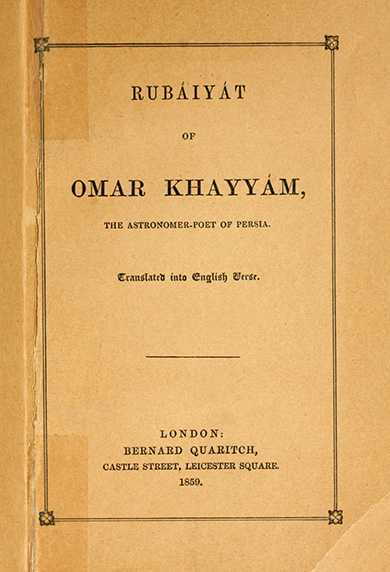
PLATE I Cover of first edition of FitzGerald’s Rubáiyát.
As the popularity of the Rubáiyát grew in the final decades of FitzGerald’s life and after his death, a wave of new translations was produced by amateur orientalists—often ex-civil servants of the British government in India—keen to offer more “literal” representations of Khayyam’s poetry. Among verse translators, one of the earliest and most influential was E. H. Whinfield of the Bengal Civil Service. In 1882, he published a translation of 253 quatrains; in 1883, he published an edition of the Persian text of 500 quatrains, from a variety of sources, along with verse translations; and in 1893, he published a new translation of 267 quatrains. His translations keep the form established by FitzGerald, but hew closer to the original Persian, and they are organized alphabetically according to the Persian rhyme letter. Another early translator in colonial service was E. A. Johnson (a.k.a. Johnson Pasha), who, between 1887 and 1913, published several versions of his Khayyam translation based on a lithograph edition from Lucknow. In 1898, the English litterateur John Payne released a translation of 845 quatrains, which was also largely based on the Lucknow lithograph. Payne’s translations do not follow a fixed English meter, but rather seek to imitate “the different rhythms” of the Persian and preserve the radif (Payne, p. lxxi); the result is not always easy to decipher. A similar approach was taken Michael Kerney, who worked as a cataloger for Bernard Quaritch, the famous bookseller and distributor of FitzGerald’s Rubáiyát; Kerney produced a handful of quatrains “literally rendered into the meter and according to the rhyme of the original” (Garrard, p. 143; Dole, p. lxxxii). A translation by Jessie Cadell was published posthumously in 1899; she had learned Persian in India, where her husband had been stationed, and had published a scholarly article on FitzGerald and Khayyam in Fraser’s Magazine, in which she criticized FitzGerald’s translation as “a poem on Omar, rather than a translation of his work” (Cadell, 1879, p. 650). Like FitzGerald, she renders the quatrains into iambic pentameter, but the rhyme scheme varies. In 1910, Alexander Rogers, a prolific translator of Persian and former member of the Indian Civil Service, published a translation of 160 quatrains. In 1915, a “line for line” verse translation in tetrameter was published by John Pollen, president of the British Esperanto Association; his translation is introduced by Sultan Muhammad Shah (1877-1957), the third Aga Khan (see ĀQĀ KHAN iii), and the book includes an appendix with Esperanto renderings of the opening quatrains of FitzGerald’s version.
Contemporary with the above-mentioned verse translations, Khayyam was also being translated into English prose. The first major prose version was published in 1889 by Justin Huntly McCarthy, an Irish politician and litterateur who taught himself Persian expressly to read Khayyam. He writes that he chose prose because it “can give the meaning more nearly than any verse could” and that it would be “absurd” to attempt a verse translation and thereby invite comparisons with FitzGerald (McCarthy, p. xi). He includes 466 quatrains, presumably taken from the Whinfield and Nicolas editions. The influence of Nicolas’ translations is apparent in some of his own (Dole, p. lxxix). In 1898, the polymath Edward Heron-Allen (q.v.) published a facsimile and transcription of the Ouseley manuscript that included a lineated prose translation for each quatrain. The following year he compiled a concordance of Fitzgerald’s Rubáiyát, attempting to identify the Persian original (or originals) behind each English rendering, and again including his own translations. (A similar concordance, but accompanied by “literal translations” in verse, was compiled by E. H. Rodwell in 1931). In 1928, the German diplomat and orientalist Friedrich Rosen, who had previously translated Khayyam into German, published a lineated English prose translation of 329 quatrains from an allegedly early manuscript, the Persian text of which he had edited in 1925.
FitzGerald’s paraphrase was received even more enthusiastically in the United States than in Britain, and a number of Americans were inspired to translate Khayyam during the late 19th and early 20th centuries. John Leslie Garner, a resident of Milwaukee and a prolific translator from European languages, published a translation of Khayyam in 1888 entitled The Strophes of Omar Khayyam; it was republished in 1898 as The Stanzas of Omar Khayyam. In 1906, E. F. Thompson, a Massachusetts lawyer, bibliophile, and secretary of the Omar Khayyám Club of America, published a translation of 878 quatrains in the standard FitzGeraldian form, by then practically a recognized English verse form in its own right. One of his fellow club members, George Roe of San Antonio, Texas, published his own translation the same year; it included only 122 quatrains, but with copious notes and references. At that time, the president of the Omar Khayyám Club of America was Nathan Dole; he did not produce a translation himself, but he did compile a massive “multi-variorum edition” of FitzGerald’s quatrains, collated with other English, German, French, Italian, and Danish translations. Also noteworthy is the translation by the Rev. Isaac Dooman, who was born in Persia, educated in the United States, and served as an Episcopalian missionary in Japan. It was published in 1911 and contains 180 quatrains in decasyllables in the standard rhyme scheme. After the onset of World War I, new translations were published at a considerably slower rate, in both the United States and in Britain. Nevertheless, they continued to be produced. In 1933, for example, a new translation in (mostly) unrhymed hexameter was published by David Eugene Smith, a professor of mathematics at Columbia University; he did not know Persian, but worked from a “verbatim translation” provided by his collaborator, Hashim Hussein (PLATE II).
Beginning in the 1920s and continuing throughout the century, Khayyam was rendered into English by a number of Indian (and later Pakistani) scholars and translators, including versions by Jamshedji Saklatwalla (1922), A. R. Tariq (1968), and A. C. Bose (1977, published posthumously). Govinda Tīrtha’s study of Khayyam, The Nectar of Grace (1941), also included copious original translations.
Early translators such as Cadell and Whinfield recognized that many of the quatrains in the Khayyamian corpus were likely spurious, and concerns about the authenticity of their source material intensified in the first decades of the 20th century with the work of Valentin Alekseevich Zhukovskiĭ (q.v.) and Arthur Christensen (q.v.).
Thus, it was with great excitement that scholars and translators learned of two early manuscripts, dated 1259-60 and 1207-8 and acquired by Chester Beatty (see CHESTER BEATTY LIBRARY) and the Cambridge University Library in 1948 and 1950, respectively. Neither manuscript contained new quatrains, but they suggested that Khayyam was recognized as a poet earlier than previously thought, and that a core of several hundred poems lay at the heart of the ever-expanding later corpus. In 1949, A. J. Arberry (q.v.) published a transcription of the Chester Beatty manuscript along with a “literal prose translation,” and, in 1952, he published a complete verse translation of the Cambridge manuscript. Instead of following the poetic form set by FitzGerald, he opted to translate each quatrain into two abba stanzas in iambic tetrameter on the model of Tennyson’s In Memoriam. In 1961, J. C. E. Bowen published a translation of sixty quatrains from the Cambridge manuscript using several different verse forms, accompanied by Arberry’s prose translations. The authenticity of these early manuscripts, however, was challenged by scholars such as Vladimir Minorsky and Mojtabā Minovi (qq.v.), and now most scholars agree that they are forgeries, as Bowen himself acknowledged in the introduction to the 1976 edition of his translation.
The specter of forgery was raised yet again in 1967 with the publication of a controversial collaborative translation by Omar Ali-Shah, brother of the popular Sufi teacher Idries Shah, and Robert Graves, the famed English poet. Their translation is allegedly based on a 12th-century manuscript in the possession of the Shah family, from which Ali-Shah made a literal prose translation and Graves then rendered into free verse. In the introduction to the work, they both criticize FitzGerald for taking liberties with the text and obscuring its sufistic orientation. Bowen and L. P. Elwell-Sutton (q.v.), however, have convincingly argued that this manuscript (which has never been made available to scholars) cannot be authentic, if it exists at all, and that the ultimate source of the translation is Heron-Allen’s 1899 concordance.
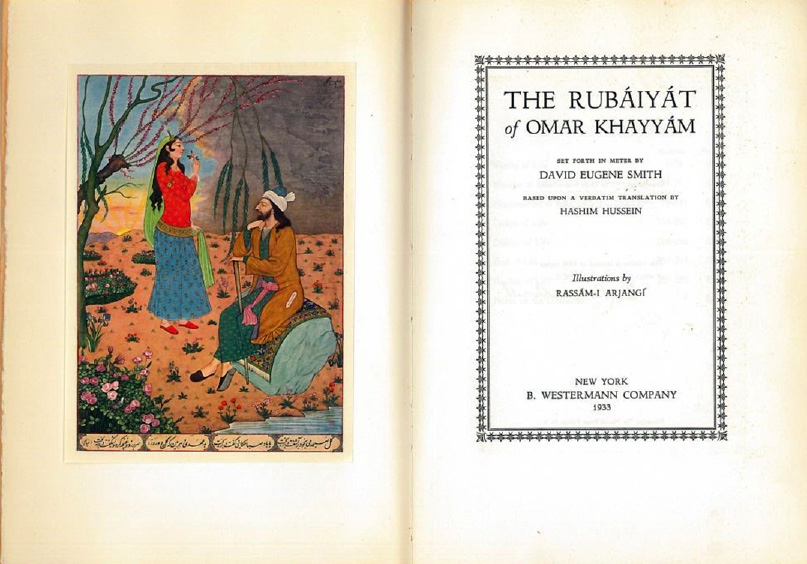
PLATE II The Smith translation of the Rubaiyat, 1933.
Beginning in the 1930s, attempts were made by Iranian scholars to isolate an authentic core of quatrains by comparing the themes and style of the earliest attested verses with those in the expanding corpus, assuming that genuine quatrains by Khayyam should exhibit some level of consistency. Ṣādeq Hedāyat, ʿAli Dašti, and Moḥammad ʿAli Foruḡi (qq.v.) all produced small collections using this procedure, which is admittedly rather subjective. Nevertheless, these collections, especially the 178 quatrains collected by Foruḡi, have formed the basis of many translations since the 1970s, including the lineated prose translation of Parvine Mahmoud (1969), the prose translation of Parichehr Kasra (1975), the free verse rendering of Peter Avery (q.v.) and John Heath-Stubbs (1979), and the rhyming translation of Sunil Ray (1988).
Since the 1970s, more and more translations of Khayyam into English have been made by native speakers of Persian, often Iranians living abroad or with professional interests in English translation. In 1971, the lexicographers Abbas Aryanpur-Kashani and Manoochehr Aryanpur published a rhyming translation of 154 quatrains. In 1973, Mehdi Nakosteen, a professor of education at the University of Colorado Boulder, rendered 398 quatrains “from various Persian editions of Khayyam” in the standard FitzGeraldian form (Nakosteen, p. xiv). In 1991, Ahmad Saidi published a translation of 165 quatrains, arranged thematically, with meticulous notes and cross-references; he too uses the traditional iambic pentameter and rhyme scheme. A large, bilingual collection of Persian quatrains from different poets was published in 2000 by Reza Saberi under the name A Thousand Years of Persian Rubaiyat, including 173 quatrains by Khayyam. Although they do not rhyme, a radif-like structure has been preserved in some of them. Shahrokh Golestan’s Wine of Nishapur, published in 1988, combines the free verse translations of Karim Emami (q.v.) with the calligraphy of Nassrollah Afje’i and Golestan’s own quietly meditative photographs; it is a welcome alternative to the orientalist imagery found in many editions of FitzGerald’s Rubáiyát.
Although most translators working directly with the Persian have presented Khayyam as a hedonist and skeptical epicurean, or at the very least a multifaceted individual prone to moments of doubt and free-thinking, others such as Nicolas, Tariq, Tīrtha, and Graves have advocated mystical readings of the quatrains, a tradition that has continued in recent decades. In 1984, a set of free verse translations by Iftikar Azmi was published in a luxurious, folio-sized edition by The Whittington Press under the title The Mirror and the Eye. Its introduction characterizes Khayyam as a Sufi and presents the quatrains as products of his various mystical states. A slim set of translations by Nahid Angha, published by the International Association of Sufism (of which Angha is a co-founder), includes Khayyam as a “Sufi poet.” Another example is the collaborative translation of Mary O’Connell and Roshanak Vahdani, published in 2004, which includes a glossary of the allegedly symbolic meaning of Khayyam’s bacchic and amatory imagery.
Many English versions of Khayyam are not based directly on the Persian, but are reworkings of French, German, or previous English translations. Such “indirect translations” were especially popular at the end of the 19th century and in the first decades of the 20th. Several were made by well-known poets, but most were composed by amateurs who simply felt an affinity with Khayyam and FitzGerald and wanted to engage with the material on the model of the latter. When they display some level of fidelity to their sources, they can be distinguished from the many parodies, responses, and original poems inspired by the Rubaiyat (often misleadingly presented as “translations”), which are beyond the scope of the present survey.
The earliest indirect translation was by Louisa Costello, who, in 1840, translated a handful of quatrains into English from Joseph von Hammer-Purgstall’s (q.v.) 1818 German translation (Potter, p. 103). She was followed by Ralph Waldo Emerson (q.v.), who was deeply influenced by Persian poetry, which he also accessed via the German; he translated verses from Saʿdi and Hafez (qq.v.) into English, as well as three quatrains from Khayyam (Yohannan, pp. 299-302). In 1862, Whitley Stokes, who is said to have first “discovered” FitzGerald’s Rubaiyat and circulated it among the Pre-Raphaelites, rendered a handful of quatrains into English verse from the prose translations of Cowell and Garcin de Tassy, and included them in a pirated reprint of FitzGerald’s poem that he produced in Madras (Drew, p. 96).
The most successful indirect translation, in commercial terms, was doubtlessly that of Richard Le Gallienne, first published in 1897. In his introduction, he proclaims his inability to read Persian an advantage, and professes his chief obligation to be to McCarthy’s prose translation (Le Gallienne, p. 13). But his ultimate model was, of course, FitzGerald; he maintains the form FitzGerald popularized and adopts his method of arrangement. Although Le Gallienne’s version was a critical flop, it sold very well, with multiple editions published in the United States and Britain (Potter, pp. 110-11). The Le Gallienne translation itself became source material for further renderings. In 1936, Frank Ankenbrand reworked several of Le Gallienne’s quatrains into a collection of self-styled “vignettes”—short haiku-like poems—that he published under the title A Persian Rose Garden.
McCarthy’s prose was an especially popular source for non-Persophone versifiers. The famed folklorist and poet Andrew Lang reworked a handful of McCarthy’s translations for his Ban and Arrière Ban in 1894. A few years later, Frederick York Powell, a professor of modern European history at Oxford, published twenty-four quatrains “turned into English on the familiar model from M. Nicolas and Mr. Justin McCarthy’s versions” (Powell, p. 18). In 1901, Charles G. Blanden, amateur poet and former mayor of Fort Dodge, Iowa, published Omar Resung, a versification based on McCarthy’s prose; he reworked each quatrain into eight lines of iambic trimeter. In 1899, the New England poet and playwright Elizabeth Alden Curtis published a collection of one hundred quatrains, introduced by Richard Burton, the famous translator of The Arabian Nights. Although she does not specify her sources, she seems to have been working from Heron-Allen’s prose translations, just as she rendered his prose translations of Bābā Ṭāher ʿOryān’s (q.v.) quatrains into verse in 1902. In 1909, Arthur Talbot also published a “literal” versification based on Heron-Allen, as did C. S. Tute in 1926.
Other indirect translators relied primarily or exclusively on Nicolas, including Baron Corvo (a.k.a. Frederick Rolfe) an English writer, artist, and photographer who produced a rather stilted prose translation in 1903; Francis Dyson, who translated 172 of Nicolas’ quatrains into “musical verses of varied metre” in 1916 (Dyson, p. 6); and Horace Thorner, who published a verse translation of 101 quatrains in 1955, based on Nicolas and FitzGerald’s posthumous fifth edition.
The production of indirect translations slowed as the century progressed, excepting a blip in 1959, the centennial of FitzGerald’s first edition. That year, Ankenbrand published another collection of vignettes, this time based on McCarthy’s prose translation, under the title Kings in Omar’s Rose Garden. I. D. du Plessis, a major South African poet who had previously written only in Afrikaans, also published an English version of the Rubaiyat, based on Arberry’s translation of the Cambridge manuscript. In 1968, W. G. Burton released one of the last widely available indirect translations of note, based on his readings of FitzGerald, Winfield, Payne, and Arberry. Neither a poet nor an orientalist, but an agricultural scientist, Burton represented a continuation of the amateur literary engagement that had characterized the Rubaiyat tradition in English for the past hundred years.
Bibliography
- Nahid Angha, tr., Selections: Poems from: Khayam, Rumi, Hafez, Moulana Shah Maghsoud, San Rafael, 1991.
- Frank Ankenbrand, tr., A Persian Rose Garden: Rendered into Vignettes from the Metrical Paraphrasing of Richard Le Gallienne from Several Literal Translations of Omar Khayyam, Philadelphia, 1936.
- Idem, tr., Kings in Omar’s Rose Garden: Rendered into Vignettes from the Translation of Justin Huntly McCarthy, Swarthmore, 1959.
- A. J. Arberry, ed. and tr., The Rubāʿīyāt of Omar Khayyām: Edited from a Newly Discovered MS Dated 658 (1259-60) in the Possession of Chester Beatty Esq., London, 1949.
- Idem, tr., Omar Khayyám: A New Version Based Upon Recent Discoveries, London, 1952.
- Idem, ed. The Romance of the Rubáiyát: Edward FitzGerald’s First Edition Reprinted with Introduction and Notes, London, 1959.
- Abbas Aryanpur-Kashani and Manoochehr Aryanpur, trs., The Rubaiyat of Omar Khayyam: A New Translation, Tehran, 1971.
- Peter Avery and John Heath-Stubbs, trs., The Ruba’iyat of Omar Khayyam, London, 1979.
- Iftikar Azmi, tr., The Mirror and the Eye, Andoversford, 1984.
- Bābā Ṭāher, The Lament of Bābā Tāhir: Being the Rubāʿiyāt of Bābā Ṭāhir, Hamadānī (ʿUryān), ed. Edward Heron-Allen, tr. Elizabeth Brenton Curtis, London, 1902.
- Esmail Z. Behtash, “The Reception of FitzGerald’s Rubáiyát ofʿUmarKhayyám by the Victorians,” in A. A. Seyed-Ghorab, ed., The GreatʿUmarKhayyām: A Global Reception of the Rubáiyát, Leiden, 2012, pp. 203-14.
- Charles G. Blanden, tr., Omar Resung, Chicago, 1901.
- A. C. Bose, tr., Rubaiyat-i-Omar Khayyam, Calcutta, 1977.
- John Charles Edward Bowen, tr., A New Selection from the Rubaiyat of Omar Khayyam, London, 1961; 2nd ed., 1976.
- Idem, “The Rubāʿiyyāt of Omar Khayyam: A Critical Assessment of Robert Graves’ and Omar Ali Shah’s Translation,” Iran 11, 1973, pp. 63-73.
- W. G. Burton, tr., One Hundred and Fifty Rubáiyát of Omar Khayyám, Ryde, 1968.
- Jessie E. Cadell, “The True Omar Khayam,” Fraser’s Magazine 19, no. 113, May 1879, pp. 650-59.
- Idem, tr., The Ruba’yatof Omar Khayam [sic], London, 1899.
- Arthur Christensen, Critical Studies in the Rubáʿiyát ofʿUmar-i-Khayyám: A Revised Text with English Translation, Copenhagen, 1927.
- Frederick Baron Corvo, tr., The Rubaiyat of Umar Khaiyam: Done into English from the French of J. B. Nicolas by Frederick Baron Corvo Together with a Reprint of the French Text, London, 1903.
- [Louisa Costello], tr., “Specimens of Persian Poetry (Fifth Series),” Fraser’s Magazine 21, no. 124, April 1840, pp. 414-25.
- Idem, ed. and tr., The Rose Garden of Persia, London, 1845.
- Jos Coumans, The “Rubáiyát of Omar Khayyám”: An Updated Bibliography, Leiden, 2010.
- [Edward B. Cowell], “Omar Khayyam, The Astronomer-Poet of Persia,” Calcutta Review 30, no. 59, March 1858, pp. 149-62.
- Elizabeth Alden Curtis, tr., One Hundred Quatrains from the Rubáíyát of Omar Khayyám, Gouverneur, 1899.
- ʿAli Dašti, Dami bā Ḵayyām, Tehran, 1966; tr. L. P. Elwell-Sutton, as In Search of Omar Khayyam, London, 1971.
- Nathan Haskell Dole, Rubáiyát of Omar Khayyám: English, French, German, Italian, and Danish Translations Comparatively Arranged in Accordance with the Text of Edward FitzGerald’s Version, 2 vols., Boston, 1905.
- Isaac Dooman, tr., The Rubáiyát of Omar Khayyám, Boston, 1911.
- John Drew, “The Second (1862 Pirate) Edition of the Rubáiyát of Omar Khayyám,” in Adrian Poole et al., eds., FitzGerald’s “Rubáiyát of Omar Khayyám”: Popularity and Neglect, London, 2013, pp. 93-107.
- I. D. du Plessis, tr., From A Persian Garden: New Quatrains of Omar Khayyám; Renderings Based on the Arberry Version of the Teheran Manuscript, 2nd ed., London, 1960.
- Francis Dyson, tr., A Selection of Quatrains from Omar Khayyam, the Persian Poet: Translated from the French of J. B. Nicolas, Sydney, 1916.
- L. P. Elwell-Sutton, “The Omar Khayyam Puzzle,” The Journal of the Royal Central Asian Society 55, no. 2, 1968, pp. 167-79.
- Edward FitzGerald, The Letters of Edward FitzGerald, ed. Alfred McKinley Terhune and Annabelle Burdick Terhune, 4 vols., Princeton, 1980.
- Idem, tr., Rubáiyát of Omar Khayyám: A Critical Edition, ed. Christopher Decker, Charlottesville, 1997.
- John Leslie Garner, tr., The Strophes of Omar Khayyám, Milwaukee, 1888; 2nd edition, The Stanzas of Omar Khayyam, Philadelphia, 1898.
- Garry Garrard, A Book of Verse: The Biography of the “Rubáiyát of Omar Khayyám,” Stroud, 2007.
- Idem, “Edward Heron-Allen: A Polymath’s Approach to FitzGerald’s Rubáiyát of Omar Khayyám,” in Adrian Poole et al., eds., FitzGerald’s “Rubáiyát of Omar Khayyám”: Popularity and Neglect, London, 2013, pp. 109-26.
- Shahrokh Golestan, The Wine of Nishapur: A Photographer’s Promenade in the Rubāiyāt of Omar Khayyām, Paris, 1988.
- Robert Graves and Omar Ali-Shah, trs., The Original Rubaiyyat of Omar Khayaam: A New Translation with Critical Commentaries, London, 1967.
- Edward Heron-Allen, ed. and tr., The Ruba’iyat of Omar Khayyām: Being a Facsimile of the Manuscript in the Bodleian Library at Oxford, with a Transcript into Modern Persian Characters, London, 1898.
- Idem, ed. and tr., Edward FitzGerald’s Rubâ’iyât of Omar Khayyâm with Their Original Persian Sources Collated from His Own MSS., and Literally Translated, London, 1899.
- Parichehr Kasra, tr., The Rubāʿīyāt ofʿUmarKhayyām, Delmar, 1975.
- [Michael Kerney], “Omar Khayyam’s Rubaiyyat,” The Cornhill Magazine 15, no. 90, December 1890, pp. 627-28.
- Omar Khayyam [ʿOmar Ḵayyām], Robāʿiyāt-e Ḥakim Ḵayyām-e Nišāburi, ed. Moḥammad ʿAli Foruḡi and Qāsem Ḡani, Tehran, 1941-42.
- Idem, Tarānahā-ye Ḵayyām, ed. Ṣādeq Hedāyat, Tehran, repr., 1974.
- Andrew Lang, Ban and Arrière Ban: A Rally of Fugitive Rhymes, London, 1894.
- Richard Le Galliene, tr., Rubáyiát of Omar Khayyám: A Paraphrase from Several Literal Translations, New York, 1897.
- Parvine Mahmoud, tr., The Rubaiyat: A Literal Translation, Tehran, 1969; 2nd edition published as The Rubaiyat: A Selection; The Original Persian Text and a Literal Translation and an Introduction, New York, 1996.
- Robert Bernard Martin, With Friends Possessed: A Life of Edward FitzGerald, London, 1985.
- Justin Huntly McCarthy, tr., The Rubaiyat of Omar Khayyam, London, 1889.
- Vladimir Minorsky, “The Earliest Collections of O. Khayyam,” in Yádnáme-ye Jan Rypka: Collection of Articles on Persian and Tajik Literature, Prague, 1967, pp. 107-18.
- Mojtabā Minovi, “Tawżiḥ,” Rāhnamā-ye ketāb 6/3, April 1963, pp. 238-40.
- Mehdi Nakosteen, tr., The Rubaiyyat of Omar Khayyam (Extensive Topical Selections), Boulder, 1973.
- J. B. Nicolas, tr., Les quatrains de Khèyam, Paris, 1867.
- Mary O’Connell and Roshanak Vahdani, trs., Omar Khayyam: Poems of Longing and Rebellion, Sydney, 2004.
- Johnson Pasha, tr., The Rubaiyāt of Omar Khayyām: Translated from the Lucknow Edition, London, 1913.
- John Payne, tr., The Quatrains of Omar Kheyyam of Nishapour: Now First Completely Done into English Verse from the Persian, in Accordance with the Original Forms, with a Biographical and Critical Introduction, London, 1898.
- John Pollen, tr., Omar Khayyām: Faithfully and Literally Translated (from the Original Persian), London, 1915 (revised from previous publications in the Asiatic Review, 1914-15).
- Ambrose George Potter, A Bibliography of the “Rubáiyát of Omar Khayyám”: Together with Kindered Matter in Prose and Verse Pertaining Thereto, London, 1929; repr. Hildesheim, 1994.
- Frederick York Powell, tr., Quatrains from Omar Khayyam, Oxford, 1901 (previously published in The Pageant, 1897, pp. 106-8).
- Sunil B. Ray, tr., Omar Khayyam Rediscovered: The Roba’iyat Translated from the Original, Calcutta, 1988.
- E. H. Rodwell, ed. and tr., ’Omar Khayyám: Persice ’Umar-i-Khayyám, The Persian Text with Paraphrase, and the First and Fourth Editions of FitzGerald’s Translation, London, 1931.
- George Roe, tr., Rubá’iyát of Omar Khayyám: A New Metrical Version Rendered into English from Various Persian Sources, Chicago, 1906.
- Alexander Rogers, tr., Rubaiyat of Omar Khayam: Translated into English Verse in the Original Meter, Ilford, 1910.
- Friedrich Rosen, ed., Robāʿiyāt-e ḤakimʿOmarḴayyām, Berlin, 1925.
- Idem, ed. and tr., The Quatrains of ‘Omar-i Khayyām: Persian Text Taken from the Two Newly Discovered Oldest Manuscripts with an English Prose Version, London, 1928.
- Idem, tr., The Quatrains of ‘Omar Khayyām, New York, 1930.
- Reza Saberi, tr., A Thousand Years of Persian Rubáiyát: An Anthology of Quatrains from the Tenth to the Twentieth Century Along with the Original Persian, Bethesda, 2000.
- Ahmad Saidi, tr., Ruba’iyat of Omar Khayyam, Berkeley, 1991.
- David Eugene Smith, tr., The Rubáiyát of Omar Khayyam: Set Forth in Meter by David Eugene Smith Based upon a Verbatim Translation by Hashim Hussein, New York, 1933.
- Whitley Stokes, “Quatrains from ’Omar Khayyám,” The Academy 27, no. 663, Jan. 17, 1885, pp. 44.
- Arthur B. Talbot, tr., Quatrains of Omar Khayyám: From a Literal Prose Translation, by Edward Heron-Allen, of the Earliest Known Manuscript (Bodleian Library: Ouseley MSS., No. 140), London, 1909.
- Adam Talib, “Le Gallienne’s Paraphrase and the Limits of Translation,” in Adrian Poole et al., eds., FitzGerald’s “Rubáiyát of Omar Khayyám”: Popularity and Neglect, London, 2013, pp. 176-92.
- A. R. Tariq, tr., Rubāiyāt of Omar Khayyam, Lahore, 1968; 2nd ed., 1975.
- Eben Francis Thompson, tr., The Quatrains of Omar Khayyam of Nishapur: Translated from the Persian into English Verse, Including Quatrains Now for the First Time So Rendered, Worcester, 1906.
- Horace Thorner, tr., The Rubaiyat of Omar Khayyam: A New Version, London, 1955.
- Govinda Tīrtha, The Nectar of Grace:ʿOmarKhayyām’s Life and Works, Allahabad, 1941.
- C. S. Tute, tr., The Ruba’iyāt of Omar Khayyām: The Literal Translation of The Ousely [sic] MS. at Oxford with a Rendering into English Verse, Exeter, 1926.
- Joseph von Hammer-Purgstall, Geschichte der schönen Redekünste Persiens, Vienna, 1818.
- E. H. Whinfield, tr., The Quatrains of Omar Khayyám: Translated into English Verse, London, 1882; 2nd rev. ed., 1893.
- Idem, ed. and tr., The Quatrains of Omar Khayyám: The Persian Text with an English Verse Translation, London, 1883.
- John D. Yohannan, Persian Poetry in England and America: A 200-Year History, Delmar, N.Y., 1977.