



Since 2011, excavations and surveys carried out by the French Archaeological Mission at Qasr Shemamok (Mission Archéologique Française à Qasr Shemamok-Kilizu [MAFQS]), led first by Olivier Rouault and currently by Maria Grazia Masetti-Rouault, have provided data attesting the occupation of the site since the Early Bronze Age, then continuing through the Assyrian, Achaemenid, Hellenistic, and Parthian periods, until the early Sasanian era (Masetti-Rouault and Rouault, 2014; 2015; 2016; 2019; Rouault, 2016; Rouault et al., 2018a; 2018b).
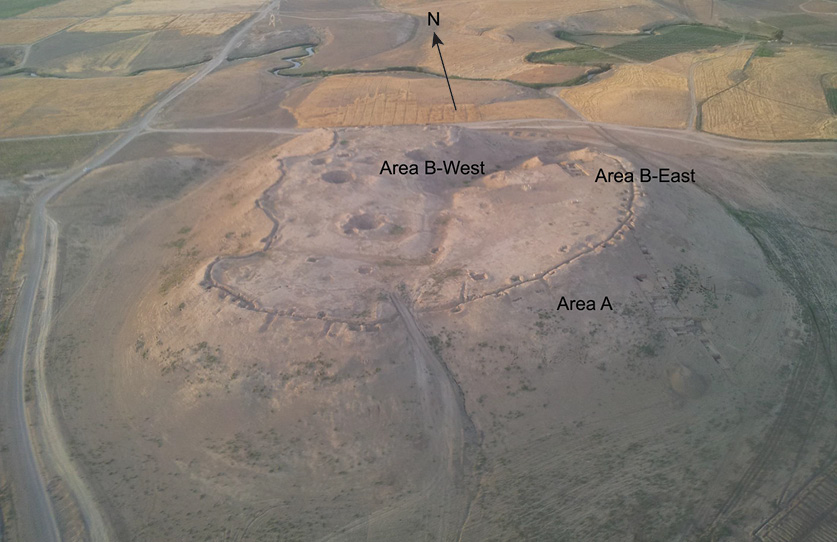
Figure 1. Aerial view of Qasr Shemamok (Qaṣr Šemāmok) with areas of excavation (© MAFQS).
Excavations in area A, on the southern slope of the tell, and area B, on its northern side (Figure 1), have confirmed the identification of the site as an important urban center during the Neo-Assyrian and the Middle-Assyrian eras, thanks to the discovery, on one hand, of a monumental baked-bricks ramp with the inscription of the king Sennacherib (r. 704-681 BCE) (Figure 2) (Rouault et al., 2018a, p. 228-30; 2018b, p. 261-62), and, on the other hand, of the remains of baked-bricks flooring inscribed in the name of the king Adad-nirari I (r. 1295-1264 BCE) (Figure 3; Masetti-Rouault and Rouault, 2016). Epigraphic discoveries have shown that the city was already part of the Middle-Assyrian empire in the first half of the 13th century BCE, while just before it seems to have been known as the town of “Tu’e,” ruled by a king of Hurrian origin in the reign of Kunsih, probably a principality within the Mittanian confederation (Masetti-Rouault and Rouault, 2019).
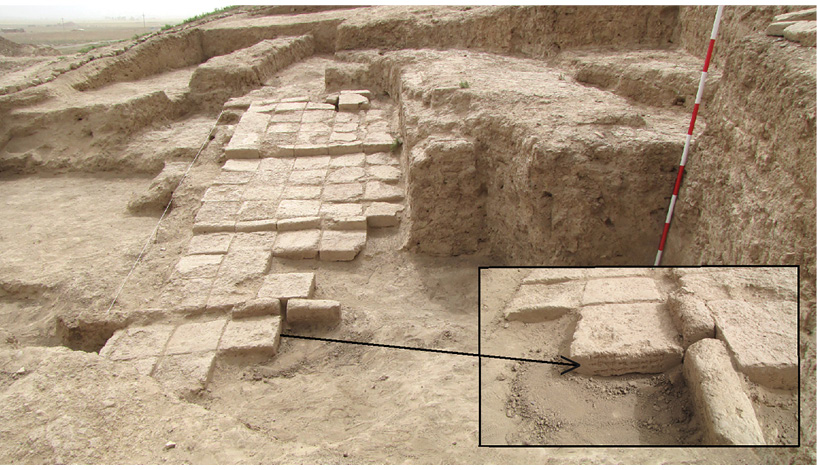
Figure 2. Baked-bricks ramp with inscription of king Sennacherib in Area A (© MAFQS).
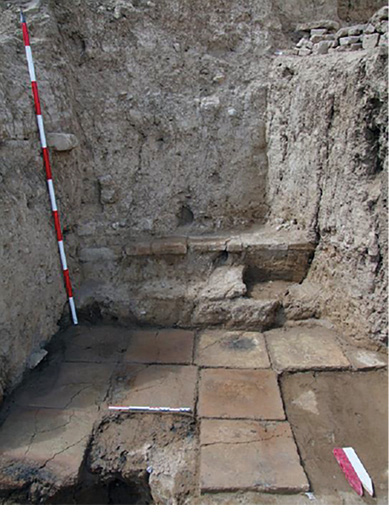
Figure 3. Baked bricks floor with inscription of king Adad-nirari I in Area B (© MAFQS).
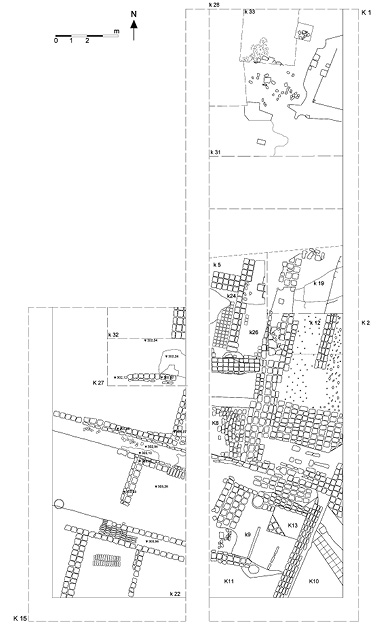
Figure 4. Site plan of the Parthian/Sasanian administrative building in Area B-East (© MAFQS).
As for the post-Assyrian periods, both area A and area B show evidence of domestic settlements dated to the Achaemenid and then to the Hellenistic/Seleucid era (Masetti-Rouault and Calini, 2016, p. 210-211; Rouault et al., 2018b, p. 258-60), covered by the remains of important buildings of administrative and/or military nature showing several construction phases and attributed to the Parthian and early Sasanian eras (Figures 4 and 5) (Rouault et al., 2018b, p. 262-72). The ceramic assemblage (see CERAMICS) from these levels includes both glazed and unglazed specimens (Figure 6). The glazed ware, which seems to be more characteristic of a late Parthian/early Sasanian occupation of the site, consists of several fragments showing a variety of colors from blue to light green, yellow, or white, sometimes with incised geometrical motifs or applied “pastille” decorations (Masetti-Rouault and Calini, 2016, p. 209-210; Rouault et al., p. 282-83).
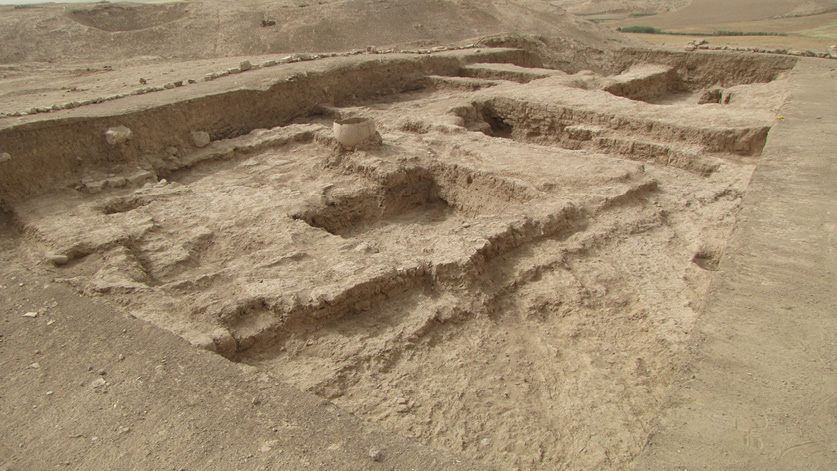
Figure 5. Remains of the Parthian/Sasanian administrative building in Area B-East (© MAFQS).
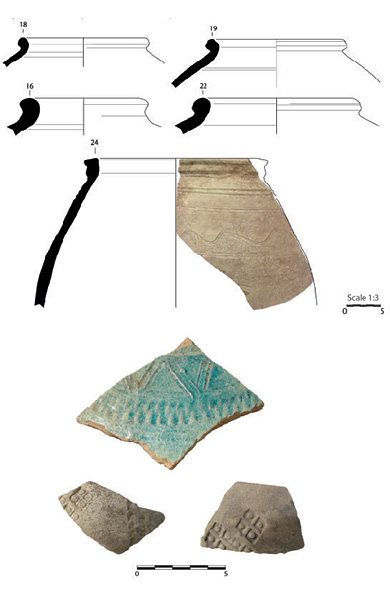
Figure 6. Ceramic assemblage dated to the Parthian era (© MAFQS).
Significant parallels come from several Assyrian capitals in northern Mesopotamia, such as Nineveh, Nimrud, and Aššur. But the relatively small amount of finer decorated and glazed vessels might represent a distinctive feature of local and regional production, in comparison with contemporary pottery from the Euphrates valley and central and southern Mesopotamia. The unglazed ware consists mostly of closed shapes, mainly “heavy rimmed jars” often characterized by combed or incised wavy line decorations, as well as storage jars with traces of bitumen. Close parallels dated from the beginning to the mid-3rd century CE are present in northern Mesopotamia, for example at Aššur (Hauser, 1996), as well as at Qalʿa Yazdegerd (Keall and Keall, 1981) on the extreme westerly edge of the Zagros mountain range. Some sherds are characterized by the so-called “diamond ware” impressed decoration, more typical of the last phase of the Parthian settlement in northern Mesopotamia, with parallels dated to the 3rd century CE from ʿAin Sinu/Zagurae (30 km east of Singara) (Oates and Oates, 1959) and Hatra (q.v.) (Venco Ricciardi, 2008).
On the basis of the ceramic material, Parthian and Sasanian periods seem to be in part overlapping, Sasanian diagnostic types being mainly simple shapes that could have developed for the most part from earlier local ceramic industries, whereas forms based on new specific types, such as those imitating Sasanian metal vessels are not present. It is also worth noting the discovery at the top of the citadel of a silver drachm dated to the reign of Hormozd II (q.v.; r. 303-9 CE), recognizable thanks to the winged crown with a bird protome with a pearl in its beak and a globe over it, and two attendants looking toward a fire altar on the reverse (Figure 7).
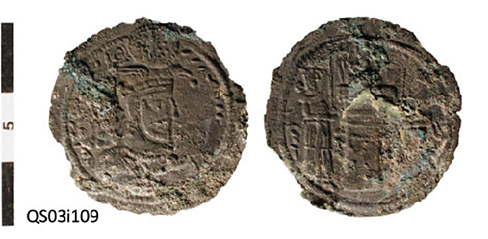
Figure 7. Silver drachma of Hormozd II (© MAFQS).
Bibliography
Stefan Hauser, “The Production of Pottery in Arsacid Ashur,” in Karin Bartl and Stefan Hauser, eds., Continuity and Change in Northern Mesopotamia from the Hellenistic to the Early Islamic Period: Proceedings of a Colloquium Held at the Seminar für Vorderasiatische Altertumskunde, Freie Universität Berlin, 6th – 9th April, 1994, Berlin, 1996, pp. 55-85.
Edward Keall and Marguerite Keall, “The Qal’eh-i Yazdigird Pottery: A Statistical Approach,” Iran 19, 1981, pp. 33-80.
Maria Grazia Masetti-Rouault and Ilaria Calini, “Materials from French Excavations in Erbil Area (2011-2013): Qasr Shemamok,” in Konstantinos Kopanias and John MacGinnis, eds., The Archaeology of the Kurdistan Region of Iraq and Adjacent Regions, Oxford, 2016, pp. 209-18.
Maria Grazia Masetti-Rouault and Olivier Rouault, “Recent Research in the Erbil Region: 2011 Excavations in Qasr Shemamok – Kilizu (Iraqi Kurdistan),” in Piotr Bieliński et al., eds., Proceedings of the 8th International Congress on the Archaeology of the Ancient Near East, 30 April – 4 May 2012, University of Warsaw II: Excavation and Progress Reports; Posters, Wiesbaden, 2014, pp. 133-48.
Idem, “French Excavations in Qasr Shemamok-Kilizu (Iraqi Kurdistan): The First Mission (2011),” in Alfonso Archi, ed., Tradition and Innovation in the Ancient Near East: Proceedings of the 57th Rencontre Assyriologique Internationale at Rome, 4-8 July 2011, Winona Lake, Ind., 2015, pp. 481-89.
Idem, “French Excavations in Qasr Shemamok, Iraqi Kurdistan (2013 and 2014 Campaigns): The Assyrian Town and Beyond,” in Rolf Stucky, Oskar Kaelin, and Hans-Peter Mathys, eds., Proceedings of the 9th International Congress on the Archaeology of the Ancient Near East, 9-13 June 2014, University of Basel III: Reports, Wiesbaden, 2016, pp. 107-11.
Idem, “Another Town in the Northern Mesopotamia Plains: A Summary of the Excavations at Qasr Shemamok (Kurdistan, Iraq), 2017-2018,” in Agnieszka Pieńkowska, Dariusz Szeląg, and Iwona Zych, eds., Stories Told around the Fountain: Papers Offered to Piotr Bielinski on His 70th Birthday, Warsaw, 2019, pp. 417-32.
David Oates and Joan Oates, “Ain Sinu: A Roman Frontier Post in Northern Iraq,” Iraq 21/2, 1959, pp. 207-242.
Olivier Rouault, “Qasr Shemamok (Ancient Kilizu), a Provincial Capital East of the Tigris: Recent Excavations, and New Perspectives,” in John MacGinnis, Dirk Wicke, and Tina Greenfield, eds., The Provincial Archaeology of the Assyrian Empire, Cambridge, U.K., 2016, pp. 151-61.
Olivier Rouault et al., “Qasr Shemamok-Kilizu (Kurdistan d’Irak), les campagnes de 2011 (9 avril-15 mai et 16 octobre-5 novembre),” Études Mésopotamiennes / Mesopotamian Studies 1, 2018a, pp. 212-53.
Idem, “Qasr Shemamok-Kilizu (Kurdistan d’Irak), les campagnes de 2012 (6 avril-20 mai et 11-31 octobre),” Études Mésopotamiennes / Mesopotamian Studies 1, 2018b, pp. 254-303.
Roberta Venco Ricciardi, “Hatra e il suo territorio: un problema storico,” in Raffaella Pierobon Benoit, ed., Tell Barri: Storia di un insediamento antico tra Oriente e Occidente, Naples, 2008, pp. 139-168.