



KUST, literally “direction, side” (MacKenzie, p. 52), in Middle Persian epigraphic sources has two well-differentiated technical uses in the administrative geography of the late Sasanian Empire and is correlated to the administrative reforms of Ḵosrow I (q.v., r. 531-79).
The term is used on two distinct levels: (1) Kust is a quarter of the empire defined according to the cardinal points; and (2) Kust is an associated term in the name of a province.
1. As a quarter of the empire. Ḵosrow I abolished the function of the unique Ērān-spāhbed, literally “the commander of the army of the Iranians” (see SPĀHBED) and replaced it with four Ērān-spāhbeds, to each of whom was assigned a territory defined by the four cardinal points: Kust-ī xwarāsān ‘side of the East’ (Figures 1-2); Kust-ī-nēmrōz ‘side of the South’ (Figures 3-7); Kust-ī xwarōfrān / xwarārān ‘side of the West’ (Figures 8-9); and Kust-ī Ādurbādagān ‘side of Ādurbādagān’ (i.e., the North; Figures 10-12). Twelve official seals of Ērān-spāhbed are now known. Note: The figures for this article use the following symbols: […] Reliable reconstruction; […?] Less reliable reconstruction; (…) Doubtful reading; <…>; Addition; {…} Deletion; (?) Interpretation uncertain.
However, the term Kust-ī-Ādurbādagān is also used on an administrative seal that provides some specifications as to its northern limit. Since Kust-ī-Ādurbādagān belongs, without a doubt, to Ērānšahr (see ĒRĀN, ĒRĀNŠAHR), “the country of the Iranians,” the other geographical names mentioned on the seal—Šahr-ī-Mūgān, Bāzāhā (?), Armen—are territories belonging to An-Ērānšahr‘the country of non-Iranians’ (Figure 13).
Unfortunately, no primary source has emerged that would have known the geographical limits of each kust, so we must continue to rely on post-Sasanian textual sources. Traditionally, two texts have been used to determine the area of each kust. The Šahrestānīhā ī Ērānšahr (q.v.), “The Provincial Capitals of Iran,” is a small treatise in Middle Persian that lists the provincial capitals of each of the four kust. The redaction we know dates from the third quarter of the 8th century. One may assume that this division into four kust had not remained fixed since the time of Ḵosrow I and that their composition had evolved over time, which has been reflected by slight modifications made by the successive copyists. Another source, perhaps from the same period, is The Geography of Ananias of Širak (q.v.) in Armenian, previously attributed to pseudo Movsēs Xorenacʿi (q.v.). As the author was Armenian, he also counts for the “side of the North” An-Ērānšahr ‘the country of non-Iranians’, which includes many South Caucasian regions, as Armen. These two textual sources have recently been compared with each other and also confronted with data from primary sources, mainly sigillographic (Gyselen, pp. 127-39). The result is a map of the four kust, the division of which, however, remains partly hypothetical (Map 1).
2. As a term in the name of a province. Implying an entirely different territorial dimension, the term kust appears in a very specific formulation of certain province names: Frāx-kar-Pērōz-kust-ī-šahrestān (Figure 14); Frāx-kar-Pērōz-kust-ī-Wad (Figure 15); Hamadān-kust-ī-Abhar (Figure 16); Hamadān kust-ī-šahrestān (Figure 18); Māh-kust-ī-Nēmāwand (Figure 20); Māh-kust-ī-Wastān (Figure 21).
So far, the sigillographic evidence is favoring the idea that in this precise context the term kust, followed by the term šahrestān ‘side of the provincial capital’ or a place name, designates half of Māh, Frāx-kar-Pērōz, and Hamadān. In this last case, the introduction of the term kust results certainly from a territorial administrative reform of Kosrow I. Indeed, in the 6th century, the provinces Abhar (Figure 17) and Hamadān (Figure 19) have also administrative seals under their name only. Moreover, the province Hamadān attested in the 6th century perpetuates the existence of this province already mentioned in the 3rd century under Šāpur I (q.v., r. 239-70; ŠKZ §48, Huyse, I, p. 60). It could be that the administrative reform that changed Hamadān’s name to Hamadān-kust-ī-šahrestān took place at the same time as a monetary reform that led to the change of the monetary acronym AH of Hamadān to AHM around the year 540 CE.
A similar evolution can be traced for Hamadān-kust-ī-Abhar, formerly known as Abhar, but no other source allows formulating hypotheses for the other four provinces that contain the term kust.
See also SPĀHBED.
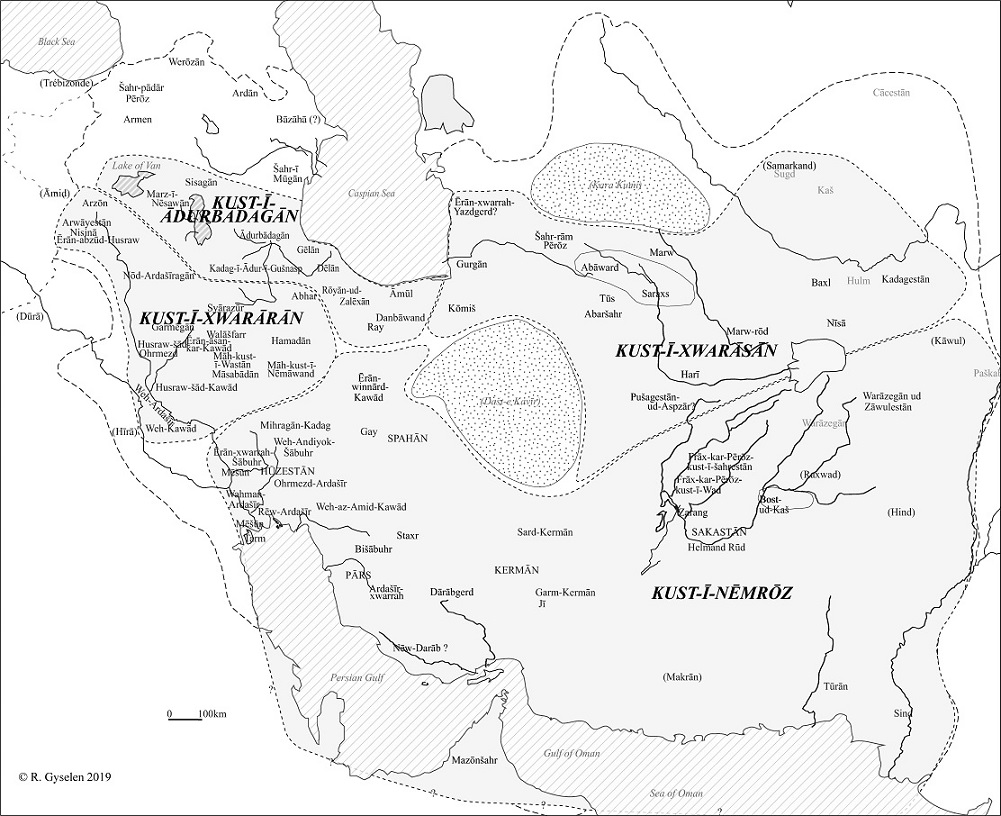
Map 1. Map of the four kust of Ērānšahr, after Gyselen, 2019, pp. 276-77, map 5a-b. (All illustrations for this article reproduced by permission of the author.)
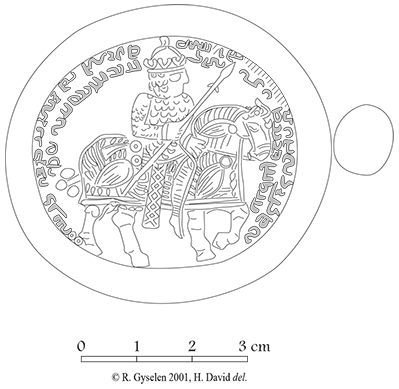
Figure 1. Official seal of Cihr-Burzēn, commander of the army of the Iranians of the side of the East (under Ḵosrow I).Transliteration: At 4 o’clock, on the outer line: čtl bwlcyny ZY (…)pty W hwjtk hwslwdy [LBA]. At 4 o’clock, on a second line: ʾylʾn kwsty ZY hwlʾsʾn spʾhpty.Transcription: cihr-burzēn ī … bed ud hujadag-husraw wuzurg ērān kust-ī-xwarāsān spāhbed.Translation: Cihr-Burzēn, …bed and well-omened (is) Ḵosrow, grandee, commander of the army of the Iranians of the side of the East.
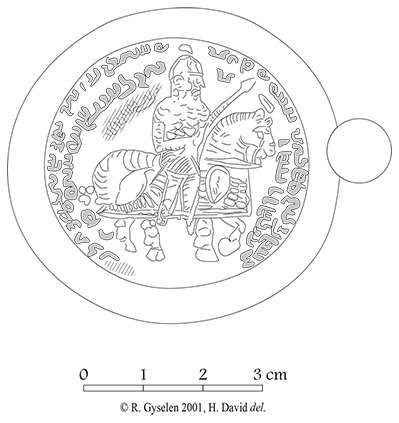
Figure 2. Official seal of Dād-burz-Mihr, commander of the army of the Iranians of the side of the East (under Hormozd IV).Transliteration: At 5 o’clock, on the outer line: dʾt bwlcmtly ZY ʾ[s]ppty ZY pʾhlwby W hwjtk ʾwhlmzdy LB[A]. At 4 o’clock, on a second line: ʾylʾn …] ZY hwlsʾsʾn spʾhpty. At 11 o’clock, on a third line: ʾpzwnˈ (?).Transcription: dād-burz-mihr aspbed-ī-pahlaw ud hujadag-ohrmazd wuzurg ērān kust-ī-xwarāsān spāhbed.Translation: Dād-burz-Mihr aspbed-ī-pahlaw and well-omened (is) Ohrmazd, grandee, commander of the army of the Iranians of the side of the East.
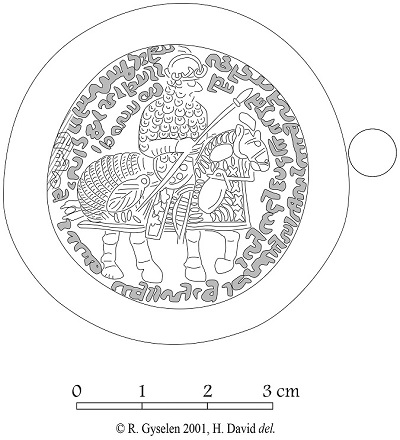
Figure 3. Official seal of Pīrag, Commander of the army of the Iranians of the side of the South (under Ḵosrow I).Transliteration: At 4 o’clock, on the outer line: pylky ZY štlwlʾc W hwjtk hwslwdy LBAy ʾylʾn kwsty [ZY]. At 3 o’clock, on a second line: nymlwcy spʾhpty.Transcription: pīrag ī šahr-warāz ud hujadag-husraw wuzurg ērān kust-ī-nēmrōz spāhbed.Translation: Pīrag, boar of the empire, well-omened (is) Ḵosrow, grandee, commander of the army of the Iranians of the side of the South.
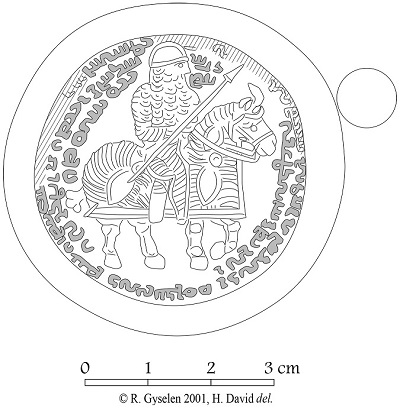
Figure 4. Official seal of Pīrag, Mihrān, Commander of the army of the Iranians of the side of the South (under Ḵosrow I).Transliteration: At 4 o’clock, on the outer line: pylky ZY štlwlʾc W hwjtk hwslwdy LBAy ʾylʾn kwsty [ZY]. At 3 o’clock, on a second line: nymlwcy spʾhpty. At 11 o’clock, on a third line: mtrʾn.Transcription: pīrag ī šahr-warāz ud hujadag-husraw wuzurg ērān kust-ī-nēmrōz spāhbed mihrān.Translation: Pīrag, boar of the empire, well-omened (is) Ḵosrow, grandee, commander of the army of the Iranians of the side of the South, (of the) Mihrān (family).
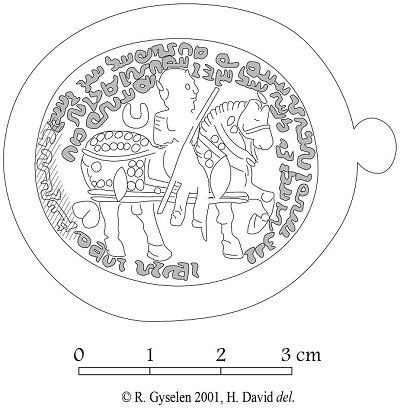
Figure 5. Official seal of Wēh-Šābuhr, commander of the army of the Iranians of the side of the South (under Ḵosrow I).Transliteration: At 5 o’clock, on the outer line: wyd šhpwhly ZY ʾsppty ZY pʾlsyk k štl(?)…pty W hwjtk. At 4 o’clock, on a second line: hwslwdy LBAy ʾylʾn kwsty ZY nymlwc. At 11 o’clock, on a third line: spʾhpty.Transcription: weh-šabuhr ī aspbed-ī-parsīg (ud šahr-hazārbed?) ud hujadag-husraw wuzurg ērān kust-ī-nēmrōz spāhbed.Translation: Wēh-Šābuhr, Parthian aspbed and šahr-…-bed and well-omened [is] Ḵosrow, grandee, commander of the army of the Iranians of the side of the South.
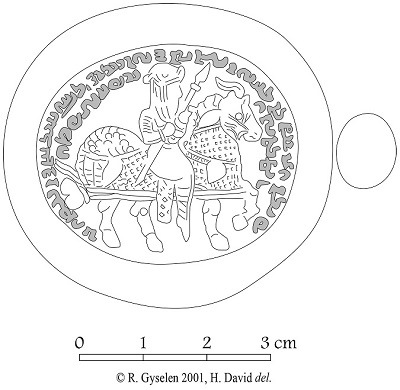
Figure 6. Official seal of Wahrām, commander of the army of the Iranians of the side of the South (under Ḵosrow I).Transliteration: At 5 o’clock, on the outer line: wlhlʾn ZY nʾm hw[ʾ]st hwslwdy ʾtwlmʾhʾn (nywʾn?)pt W šʾpstn W hwjt. At 5 o’clock, on a second line: n hwslwdy LBA ʾylʾn kwstˈ ZY nymlwcˈ. At 11 o’clock, on a third line: spʾhptˈ.Transcription: wahrām ī nām-xwāst-husraw ādurmāhān [nēwān]bed ud šābestan ud hujadag-husraw wuzurg ērān kust-ī-nēmrōz spāhbed.Translation: Wahrām, (whose) name (is) wanted by Ḵosrow, Ādurmāhān, commander of the braves (?) and eunuch and well-omened [is] Ḵosrow, grandee, commander of the army of the Iranians of the side of the South.
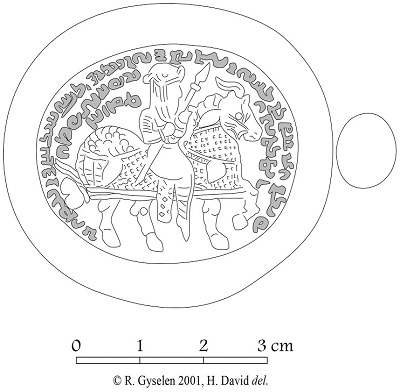
Figure 7. Official seal of Wahrām, commander of the army of the Iranians of the side of the South (under Hormozd IV).Transliteration: At 5 o’clock, on the outer line: wlhlʾn ZY nʾmhw[ʾst hw](slwdy) [ʾtwr]mʾhʾn …pty [š]ʾpstny štl hcʾlwpt. At 5 o’clock, on a second line: W hwjtk ʾwhlmzdy LBAy ʾylʾn kwsty ZY nymlwcy. At 1 o’clock, on a third line: ʾt spʾhpty.Transcription: wahrām ī nām-xwāst-husraw ādurmāhān (nēwān?)bed ud šābestan šahr-hazārbed ud hujadag-ohrmazd wuzurg ērān kust-ī-nēmrōz spāhbed.Translation: Wahrām, (whose) name (is) wanted by Ḵosrow, Ādurmāhān, commander of the braves (?), eunuch, hazāruft and well-omened (is) Hormozd, grandee, commander of the army of the Iranians of the side of the South. (The letters ʾt = AT represent an abbreviation of the name Ādurmāhān.).
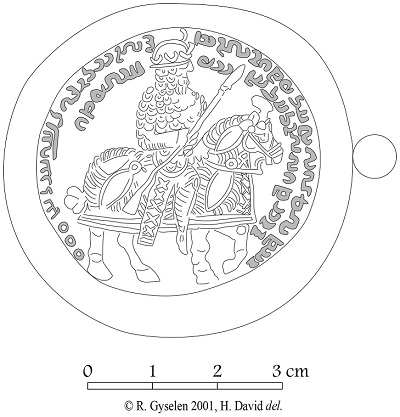
Figure 8. Official seal of Wistaxm, commander of the army of the Iranians of the side of the West (under Ḵosrow I).Transliteration: At 5 o’clock, on the outer line: wsthm ZY hcʾlpty W hwjtk hwslwdy LBAy ʾylʾn. At 4 o’clock, on a second line: kwsty ZY hwlʾlʾn spʾhpty.Transcription: wistaxm ī hazārbed ud hujadag-husraw wuzurg ērān kust-ī-xwarārān spāhbed.Translation: Wistaxm, hazārbed, well-omened (is) Ḵosrow, grandee, commander of the army of the Iranians of the side of the West.
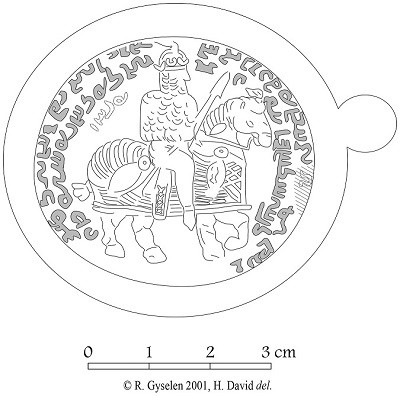
Figure 9. Official seal of Wistaxm, commander of the army of the Iranians of the side of the West (under Hormozd IV).Transliteration: At 5 o’clock, on the outer line: [ws]thm [ZY] hcʾlpty … W hwjtk ʾwhlm[zdy]. At 4 o’clock, on a second line: LBAy ʾylʾn kwsty ZY hwlplʾn spʾhpty. At 10 o’clock, on a third line: plhwˈ.Transcription: wistaxm ī hazārbed … ud hujadag-ohrmazd wuzurg ērān kust-ī-xwarārān spāhbed farrox.Translation: Wistaxm, hazārbed, …, well-omened (is) Hormozd, grandee, commander of the army of the Iranians of the side of the West; blessed.
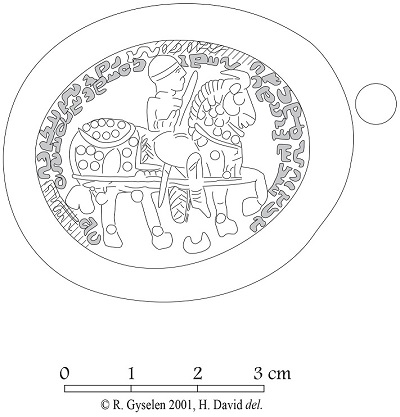
Figure 10. Official seal of Gōrgōn/Gulgōn, commander of the army of the Iranians of the side of the North (under Ḵosrow I).Transliteration: At 5 o’clock, on the outer line: gwlgwny ZY mtlʾny … W hwjtk hwslwdy L[BA]. At 4 o’clock, on a second line: ʾylʾn kwsty ZY ʾtwlpʾtkʾn spʾhpty.Transcription: gōrgōn ī mihrān …ud hujadag-husraw wuzurg ērān kust-ī-ādurbādagān spāhbed.Translation: Gōrgōn/Gulgōn, (of the) Mihrān (family), … and well-omened (is) Ḵosrow, grandee, commander of the army of the Iranians of the side of the North.
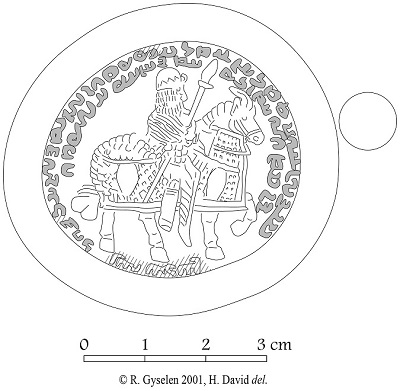
Figure 11. Official seal of Sēd-ōš, commander of the army of the Iranians of the side of the North (under Ḵosrow I).Transliteration: At 4 o’clock, on the outer line: sydhwšy ZY mtlʾn štl ʾ[s]ppty W hwjtk hwslwdy L[BA ʾylʾn]. At 4 o’clock, on a second line: kwsty ZY ʾtwlpʾtkʾn spʾhpty.Transcription: sēd-ōš ī mihrān šahr-aspbed ud hujadag-husraw wuzurg ērān kust-ī-ādurbādagān spāhbed.Translation: Sēd-ōš, (of the) Mihrān (family), šahr-aspbed and well-omened (is) Ḵosrow, grandee, commander of the army of the Iranians of the side of the North.
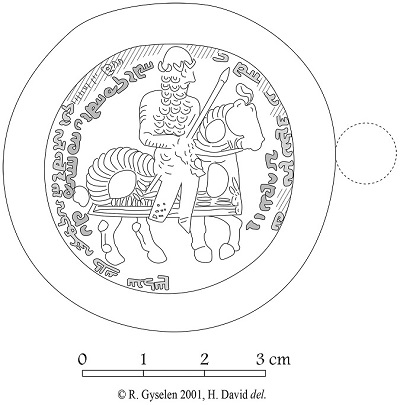
Figure 12. Official seal of …-Ḵosrow, commander of the army of the Iranians of the side of the North (under Hormozd IV).Transliteration: At 4 o’clock, on the outer line: …ʾp[…]hwslwd … (štl)…[st]ʾn ..? W hwjtkʾwhlmzdy LBA ʾylʾn. At 4 o’clock, on a second line: kwsty ZY ʾtwlpʾt
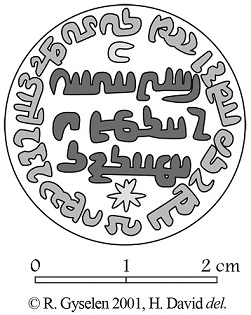
Figure. 13. Administrative seal of an āmārgar of Šahr-ī-Mūgān and Kust-ī-Ādurbādagān, Bāzāhā and Armen.Transliteration: In the center, on three lines: 1. bʾcʾhʾy, 2. W ʾlmny, 3. ʾmʾlkl. In the margin, at 1 o’clock: štly ZY mwdʾn W kwsty ZY ʾtwlpʾtkn.Transcription: šahr-ī-mūgān ud kust-ī-ādurbādagān bāzāha ud armen āmārgar.Translation: Āmārgar of Šahr-ī-Mūgān and Kust-ī-Ādurbādagān, Bāzāhā, and Armen.
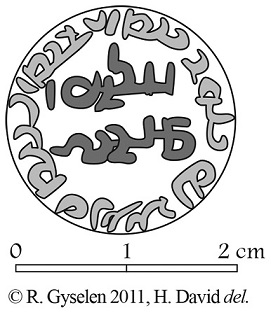
Figure 14. Administrative seal of a mowūh of Āluh,
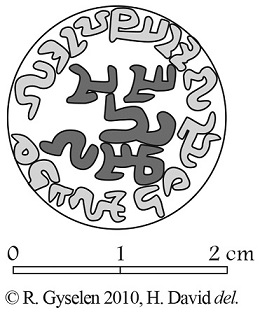
Figure 15. Administrative seal of a mowūh of Ōgōl,
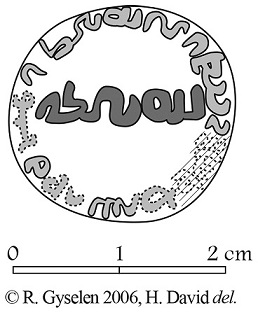
Figure 16. Administrative seal of a mowbed of Hamadān, side of Abhar.Transliteration: In the center: [ʾ]phly. In the margin, at 6 o’clock: ʾh[m]t[ʾn] (kwst ZY ʾphly) mgwpty.Transcription: abhar hamadān-kust-ī-abhar mowbed.Translation: ABHAR mowbed of Hamadān, side of Abhar. (The letters ABHAR represent an abbreviation of Hamadān-kust-ī-Abhar.)
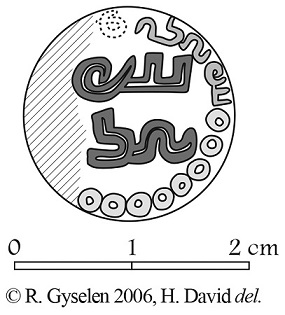
Figure 17. Administrative seal of a mowbed of Abhar.Transliteration: In the center, on two lines: 1. ʾp, 2. hl.In the margin, at 3 o’clock: ʾphly m[gwpt?].Transcription: abhar abhar mowbed.Translation: ABH
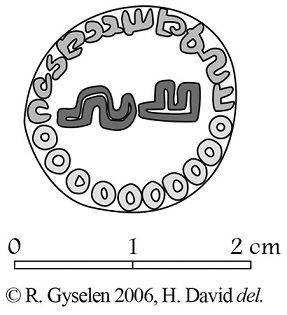
Figure 18. Administrative seal of a mowūh of Hamadān-frāx-kar,
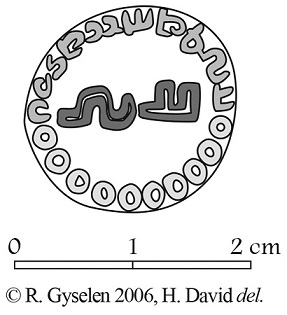
Figure 19. Administrative seal of a šahrab of Hamadān.Transliteration: In the center: ʾh. In the margin, at 3 o’clock: ʾhmtʾn štlpy oooooooooo.Transcription: ʾh (= ha) hamadān šahrab.Translation: AH šahrab of Hamadān. (The letters AH represent an abbreviation of Hamadān.)
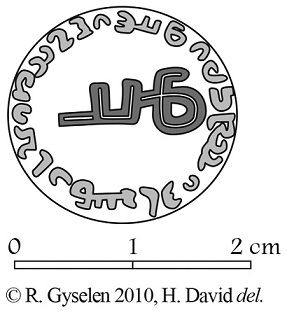
Figure 20. Administrative seal of a šahrab of Māh, side of Nēmāwand.Transliteration: In the center: mʾ. In the margin, at 7 o’clock: mʾdy kwsty ZY nymʾwndy štlpy.Transcription: mā mād-kust-ī-nēmāwand šahrab.Translation: MA šahrab of Māh-kust-ī-Nēmāwand. (The letters MA represent an abbreviation of Māh, side of Nēmāwand.)
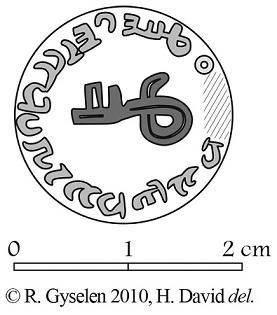
Figure 21. Administrative seal of a šahrab of Māh, side of Wastān.Transliteration: In the center: mʾ. In the margin, at 1 o’clock: mʾdy kwsty ZY wstʾn št[lpy] o.Transcription: mā mād-kust-ī-wastān šahrab.Translation: MA šahrab of Māh, side of Wastān. (The letters MA represent an abbreviation of Māh-kust-ī-Wastān.)
Bibliography
Rika Gyselen, La géographie administrative de l’empire sassanide: Les témoignages épigraphiques en moyen-perse, Res Orientales 25, Bures-sur-Yvette, 2019.
Philip Huyse, Die dreisprachige Inschrift Šābuhrs I. an der Ka‘ba-i Zardušt (ŠKZ), Corpus Inscr. Iran., pt. III: Pahlavi Inscriptions. vol. I, texts 1, 2 vols., London, 1999.
David Neil MacKenzie, A Concise Pahlavi Dictionary, Oxford, 1971; repr. with addenda and corrigenda, 1986.