



BOSWORTH, CLIFFORD EDMUND (b. Sheffield, 29 December 1928; d. Somerset, 28 February 2015), prominent British Orientalist, historian of medieval Arab and Iranian worlds with an impressive record of publications.
Life. Clifford Edmund Bosworth was born at 30 Perigree Road in Sheffield, England, on 29 December 1928. His father, Clifford Bosworth (1899-1964), was an assistant pay clerk for the Board of Guardians, later a clerical officer for the Ministry of Pensions and National Insurance. His mother, who was originally from Peterborough and was the daughter of a newspaper reporter, was Gladys Constance née Gregory (1900-1988). His grandfather had worked in the steel industry as a fitter. Edmund was an only child. He was educated at Sheffield City Grammar School, where he already showed a precocious aptitude for history. Before beginning his university education, like all young men at that time, he spent two years of national service, in the army (1947-49), where he said he learned to type, a crucial skill for his highly successful future academic career. He was awarded an Exhibition at St. John’s College, Oxford (1949-52), where he read Modern History, a course focused on the Western world.
At Oxford, Bosworth also sang in a choir and rowed on the river. Among his friends was an American student who was learning Arabic. Intrigued by this, Bosworth started studying this language too. He was awarded a first-class B.A. degree in Modern History in 1952. He then joined the Civil Service, moving to Edinburgh to take up a post for a brief period in the Department of Agriculture for Scotland at St. Andrews House. Nevertheless, he found time to carry on learning Arabic with the help of William Montgomery Watt (1909-2006), Head of the Department of Middle Eastern Studies at the University of Edinburgh. In 1954, he returned to academic life, beginning an M.A. honors degree at the University of Edinburgh. There he studied Arabic, Persian, and Turkish, again achieving a first-class degree in 1956. Immediately after his success at Edinburgh, he was invited to become Lecturer in Arabic at the University of St. Andrews. It was there that he wrote his doctoral dissertation, entitled “The Transition from Ghaznavid to Seljuq Rule in the Islamic East,” under the supervision of Montgomery Watt, and he was awarded his Ph.D. in 1961. He remained in his post at St. Andrews from 1956 to 1967, with a year’s temporary appointment as a visiting associate professor at the University of Toronto (1965-66). In 1967, following the retirement of Charles Fraser Beckingham (1914-98), he accepted the Chair of Arabic at the University of Manchester, where he remained until his retirement in 1990. He then moved to a new home in Castle Cary in the picturesque south-western county of Somerset. He much enjoyed being affiliated to the University of Exeter from 2004 as a visiting professor, and concurrently he held an honorary fellowship at St. David’s College, Lampeter in the University of Wales. In this semi-retirement, he continued to publish steadily an immense amount of high-quality scholarly work with undiminished enthusiasm and passion for his subject. By this time, he had gained a deservedly worldwide reputation as a historian of medieval Islam with special expertise in the far-flung Iranian world.
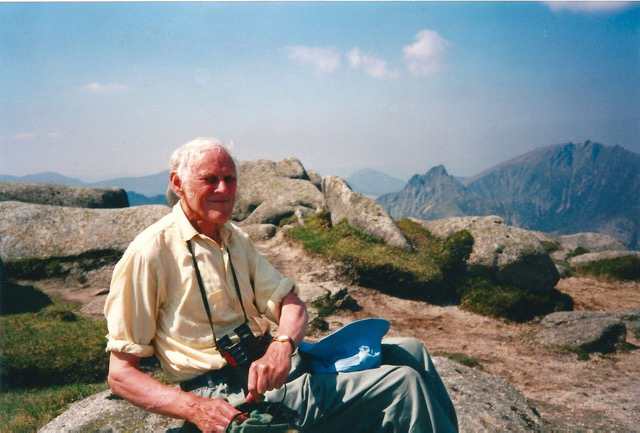
Bosworth’s personal life proved very happy. He met Annette Ellen Todd (b. 1933) at St. Thomas’ Church in Corstorphine, Edinburgh, while he was employed in the Department of Agriculture for Scotland. They were married on 19 September 1957 and had three daughters and six grandchildren. Bosworth loved going for long walks in the countryside in Scotland, and especially on the beautiful Isle of Arran (Figure 1). Indeed, Scotland always held a special place in his heart. He was a good-natured, shy, and kindly person, never pushing himself forward in a conversation, and he relished being teased. He enjoyed serving as a church warden in his later years. He found time regularly to visit his alma mater, St. John’s College, Oxford, for reunion dinners. He was a life-long member of the National Trust. A knowledgeable enthusiast for numerous aspects of Victorian culture, he was the proud owner of some de Morgan tiles, a connoisseur of church architecture, and above all an avid collector of books. His interests extended to crime fiction, to the series of post-war Pan paperbacks on a phenomenally wide range of subjects (though the single volume needed to complete his set perpetually eluded him) and to 19th-century travel guides, especially the Baedeker volumes. Music mattered to him, and he enjoyed going to classical music concerts (personal information in this section kindly supplied by the Bosworth family).
Works. Within the academic field of medieval Islamic history, Edmund Bosworth’s contribution was quite simply stellar. His prodigious energy and enthusiasm for his research lasted the whole of his long life and emphatically saw no slowing down in his “retirement.” The outstanding variety of subjects which he chose to analyze was nothing short of astonishing. His first publication was an article on the “Bahrāʾ” in the second edition of the Encyclopedia of Islam in 1960, and his last published work was the “Ghurids of Khurasan” in 2015, the year of his death.
The total of his publications was 21 single-authored books, 229 articles or book chapters, 15 edited or co-edited books, and an eye-watering 699 articles (from 1959-2014) in the second edition of the Encyclopedia of Islam. He also wrote articles for the Dictionary of the Middle Ages and the Encyclopedia of Arabic Literature (for a complete list see O’Neal). From a much later starting date, Bosworth wrote a highly impressive 324 articles in the Encyclopædia Iranica (1982-2014 and some published posthumously), and served as one of its consulting editors. He was active for much of his career as a co-editor for major projects, such as The Legacy of Islam (1974) and the two-part fourth volume of the UNESCO series entitled The History of Civilizations in Central Asia (1998-2000). So even the three volumes published from 1977 to 1996 in the Variorum Reprints series and containing 62 of his articles, while full of good things, represent only a minute part of his published work in article form.
Sometimes Bosworth, prompted by his curiosity and sense of intellectual daring, ventured into areas of study he normally avoided. Some examples of this kind of writing included his two books entitled The Medieval Islamic Underworld: The Banū Sāsān in Arabic Society and Literature (2 vols., 1976) and Bahāʾ al-Dīn ʿĀmilī and His Literary Anthologies (1989), an attempt to train a searchlight on what many regard as a dark age in Arabic literature, namely the 16th to 17th centuries. The work on the “Banū Sāsān,” a term used to describe medieval rogues, beggars, and con-men, was a tour de force of original scholarship involving the translation of long and difficult Arabic poems and, alongside that daunting task, ferreting out the meanings of their recondite argot. In that process, he painted a vivid and compelling picture of the seamy side of medieval Muslim society as seen from below.
Edmund Bosworth was keen to promote the merits of other celebrated scholars in his field, and he edited a book about them: A Century of British Orientalists 1902-2001 (2001). In the same vein, he was an assiduous writer of obituaries of senior scholars in the field (for the list see Azad). He kindly helped bygone colleagues such as Richard Bell, who had died in 1952; in this case he co-edited with Mervyn E. J. Richardson, a scholar of Hebrew, a radical and important unfinished work by Bell, entitled A Commentary on the Qur’an (1991). In similar vein, he edited expanded reprints of the masterpieces of two great Russian scholars, the third edition (1968) of Turkestan down to the Mongol Invasion by Vasilĭ V. Barthold (q.v.) and the second edition (1970) of Vladimir F. Minorsky’s (q.v.) Ḥudūd al-ʿĀlam: ‘The Regions of the World’. He also repeatedly edited or co-edited volumes in honor of other prominent scholars; these included a Festschrift for Bernard Lewis (1989), a memorial volume for Vladimir Minorsky (1971), and a Festschrift for Laurence Elwell-Sutton (q.v; 1983).
A brief glance at the list of Edmund Bosworth’s publications makes it clear that he was very much in the mold of those great 19th-century European scholars of Islamic studies who possessed far wider research interests than most of today’s scholars in this field. His work falls into several categories, although these can overlap. His abiding interest was the history of the “Mašreq,” the eastern Islamic world, and especially Afghanistan. The reason for this is not far to seek: Most likely, it is the fruit of an extended three-month journey he made in the mid-1960s to Iran, Afghanistan, and Pakistan, at a time when these countries were wide open to travellers from the West. This gave him first-hand experience of people, climate, spectacular landscapes, and medieval monuments and, on a more intuitive level, the feel of the land. That enriched his studies of this entire area, and especially of Afghanistan and Sistān, with a firm practical grounding and sense of place. The second volume of his Festschrift, entitled The Sultan’s Turret (2000) is dedicated to Iranian and Turkish studies, and it is a clear reminder of his passionate commitment to the study of these areas of the Islamic world. This early field trip, then, paid rich dividends for many decades; and among its souvenirs were some 11th-century glazed floor tiles which he had bought in Ghazna.
It is therefore not surprising that he published during the course of his long life seven single-authored monographs which dealt with the history of these two countries. From the time of completing his doctoral dissertation “The Transition from Ghaznavid to Seljuq Rule in the Islamic East,” he remained fascinated by the history of the eastern Iranian world for the rest of his life. He published two excellent books on the Ghaznavids (q.v.), The Ghaznavids: Their Empire in Afghanistan and Eastern Iran 994-1040 (1973) and The Later Ghaznavids: Splendour and Decay. The Dynasty in Afghanistan and Northern India 1040-1186 (1977). The earlier periods were covered in exhaustive detail in two other books: Sīstān Under the Arabs: From the Islamic Conquest to the Rise of the Ṣaffārids (1968) and The History of the Saffarids of Sistan and the Maliks of Nimruz (1994). But his crowning achievement in this field is his magisterial three-volume translation of and commentary on The History of Beyhaqi (2011), a wonderfully annotated work that he alone among living scholars could have brought to completion. It was subsequently edited before publication by Mohsen Ashtiany. A subset of this interest is his lifelong commitment to elucidating the complexities of Saljuq history, highlights of which include his book-length contribution to Volume V of The Cambridge History of Iran (1968) and his translation of the A ḵbār al-dawla al-saljūqiya attributed to Ṣadr-al-Din Ḥosayni (fl. 622/1225), accompanied by extensive commentary (2011).
In numerous learned articles, Bosworth resurrected many a forgotten dynasty of the wider Iranian world but also tackled intriguing cultural issues such as the invention of the fountain pen or the ultimogeniture of the Ghaznavids. And his encyclopaedia articles included, as Geert Jan van Gelder noted, such out-of-the-way items as “thief,” “riddle,” and “yoghurt” (p. 17).
In later years, Bosworth also visited the Arab world to attend conferences in Kuwait and Beirut, and his research publications on Arabic subjects were impressively diverse and interesting. He wrote meticulous studies of medieval Arabic culture and administration, from code-breaking to beggars to the concept of ḏemma (see JEZYA); on many aspects of warfare; on heterodox religious movements; on the interplay between Persian and Arabic literature, history and political thought; on the interface between Islam and Byzantium; and besides writing a trio of important articles on Turkish onomastic, he developed various perspectives that illuminated the impact of the Turks on the Islamic world. Almost all of the research topics he explored involved the extensive use of medieval Arabic and Persian sources (for further major themes, see Azad, pp. 172-73).
He did not choose to edit Arabic and Persian texts; but he greatly enjoyed a prolific career as a translator of such works, to which he added substantial commentaries, and it was in the latter that his erudition, which was both wide and deep, came into its own. He enthusiastically translated and annotated four of the forty volumes of The History of al-Ṭabarī (XXXII, 1987; XXX, 1989; XXXIII, 1991; and V, 1999). He also published other translations of important medieval Arabic texts, such as Al-Maqrizi’s Book of Contention and Strife Concerning the Relations Between the Banū Umayya and the Banū Hāshim (1980) and The Book of Curious and Entertaining Information by Ṯaʿālebi (1968). The latter was a very widely appreciated translation, laying bare as it did numerous neglected aspects of medieval Arab and Persian society, including ingrained prejudices, the life of luxury, trading networks, and much more. The most important of his translations of Persian works, apart from the History of Beyhaqi volumes, was The Ornament of Histories. A History of the Eastern Islamic Lands AD 650-1041: The Original Text of Abû Sa‘îd ‘Abd al-Ḥayy Gardīzī (2011). His phenomenal output of publications, and especially the production rate that he maintained in his retirement, shows clearly that he remained an ardent researcher until a few months before his death.
Edmund Bosworth’s interests went far beyond the grand sweep of Islamic history and high culture at the courts of caliphs and sultans. His desire to discover new facets of medieval Middle Eastern history led him to examine little-known byways of Muslim society, and the commentaries that are so integral a part of his translations gave ample scope for such explorations. His enthusiasm was also aroused by travellers’ tales. On two occasions, he “relaxed” by writing about British visitors to the Middle East. His first work of this kind, called An Intrepid Scot: William Lithgow of Lanark’s Travels in the Ottoman Lands, North Africa and Central Europe, 1609-21 (2006), followed this indefatigable observer with obvious relish through southern Europe, Greece, Turkey, Syria, the Holy Land, Damascus, Egypt, North Africa, and Malta. And his very last book, Eastward Ho! Diplomats, Travellers and Interpreters of the Middle East and Beyond, 1600-1940, published in 2012 when he was 83, was also about travel. His instinctive affinity with the Victorians shines through this work.
Perhaps the outstanding proof of the great width of Bosworth’s interests was his remarkable work on the many Islamic dynasties, which encapsulated what was perhaps his principal academic center of gravity: the political history of the medieval Islamic world. His first attempt to order and chronicle them was published in 1967 and listed 82 dynasties. Thereafter he patiently accumulated information over the next three decades or so before producing The New Islamic Dynasties: A Chronological and Genealogical Manual in 1996. This extremely thorough work was much more ambitious, for while the overall arrangement lists 186 dynasties, it subdivides many dynasties into cadet or collateral lines, so that the total number of dynasties, including their separate branches, comes to exactly 300 dynasties in 186 sections, each accompanied by a summary account which sets that dynasty or group of dynasties in its historical context. The work as a whole testifies to his astonishing bibliographical range and acumen, to the staggering reach of his knowledge and to his tireless search for key relevant material. The result of this intensive labor of love is a magnificent work of reference which, thanks to its multiple indices, is a pleasure to use.
Edmund Bosworth did much more than work on his own research and teaching; he had an unwavering sense of duty and public service, and this led him to undertake, quietly and with steady devotion, and alongside the duties of being the long-term head of his department in Manchester, a remarkable range of tasks that promoted the field of Islamic studies generally. He was a meticulous and marvelously efficient correspondent. For many years, he was one of a small phalanx of internationally renowned scholars charged with the detailed oversight of the second edition of the prestigious Encyclopaedia of Islam (q.v.). Simultaneously, he co-edited the Journal of Semitic Studies, plus the monograph series which underpinned that journal financially. Above all, he co-edited—for an incredible forty years—the journal Iran. He was, moreover, generous in sharing his knowledge and helping young scholars, both at home and abroad. He was very happy to come back regularly to Edinburgh to act as external Ph.D. examiner for postgraduates working on Islamic history, and he supervised the doctorates of many budding scholars from Islamic countries.
In the course of a stellar academic career, Edmund Bosworth was awarded many distinctions, including visiting or honorary professorships at the University of Toronto (1965-66), UCLA (1969), Kuwait University (1975), the University of Wales, Lampeter (1997), and the Institute of Arab and Islamic Studies at the University of Exeter (2004-2013). He was elected a Fellow of the British Academy in 1992. He served as the President of the British Society for Middle Eastern Studies (1983-1985); a Fellow in the Center for the Humanities at Princeton University (1984); Sir Hamilton Gibb Visiting Fellow at the Middle East Center, Harvard University (1997); and an honorary member of the Hungarian Academy of Sciences (2004). He received the Triennial award of the Royal Asiatic Society (2004); the British Society for Middle Eastern Studies award for services to Middle East studies (2007); and, at the University of California at Los Angeles, the Levi Della Vida Award for Excellence in Islamic Studies (2010). He was awarded the UNESCO Avicenna Silver Medal in 1998, the Dr. Mahmud Afshar Foundation Prize for contributions to Iranian Studies in 2001, and the prize given by the Ministry of Culture and Islamic Guidance, Tehran, for contributions to Iranian historical studies in 2003.
As a historian, Bosworth excelled at the accumulation of relevant information and the unearthing of data rather than at propounding theories or teasing out immanent patterns and grand themes. Politics and chronology occupied him more than economic and social developments. But his versatility encompassed very much more than this—for example, religious developments, as shown by his work on the Ḵorramis (q.v.) and on Bahāʾ-al-Din ʿĀmeli (q.v.), or the argot and practices of the criminal medieval underworld. Over nearly half a century of devoted labor, he rewrote the history of the pre-Mongol Iranian world in Islamic times with special emphasis on Central Asia, eastern Iran, and Afghanistan. His range of geographical and onomastic expertise rivalled that of the two great Russian masters in those fields, Barthold and Minorsky. His searching studies illumined the previously obscure histories of numerous minor dynasties such as the Ziyarids, Taherids, Saffarids, and Kākuyids (qq.v); of regions such as Čaḡāniān (q.v.) and Nimruz; and of neglected but significant episodes such as the exploits of the Peacock Army in early Islamic Sistan.
It would be fair to say that no scholar has done more original work on the history of the Iranian Islamic world before 1220 than Bosworth. But there is more. In retrospect his impact on the wider field of Islamic studies beyond the charmed circle of historians of the pre-Mongol Iranian Islamic world is most visible in two outstanding achievements: his remarkable body of translations of, and extensive commentaries on, Arabic and Persian sources—political, historical, literary, social and religious—and his colossal and indispensable reference work on the Islamic dynasties.
Bibliography
For a complete and detailed bibliography of C. E. Bosworth’s published works see Michael O’Neal, “In Memoriam: Clifford Edmund Bosworth,” Al-ʿUṣūr al-Wusṭ ā : The Bulletin of Middle East Medievalists 23, 2015, pp.179-217.
Cited works by Bosworth (in chronological order).
“Bahrāʾ,” in The Encyclopaedia of Islam I, Leiden and London, 1960, p. 938.
The Islamic Dynasties, Islamic Surveys 5, Edinburgh, 1967.
The Laṭāʼif al-maʻārif of Thaʻālibi: The Book of Curious and Entertaining Information, Edinburgh, 1968.
“The Political and Dynastic History of the Iranian World (A.D. 1000-1217),” in The Cambridge History of Iran V: The Saljuq and Mongol Periods, ed. J.A. Boyle, Cambridge, 1968, pp. 1-202.
Sīstān Under the Arabs: From the Islamic Conquest to the Rise of the Ṣaffārids (30-250/651-864), Rome, 1968.
W. Barthold, Turkestan down to the Mongol Invasion, 3rd ed. with additional chapter and further addenda and corrigenda by C. E. Bosworth, London, 1968.
Ḥudūd al-ʿĀlam: ‘The Regions of the World’, tr. V. Minorsky, 2nd ed., ed. C. E. Bosworth, London, 1970.
Iran and Islam: In Memory of the Late Vladimir Minorsky, Edinburgh, 1971.
The Ghaznavids: Their Empire in Afghanistan and Eastern Iran 994-1040, Beirut, 1973.
The Mediaeval Islamic Underworld: The Banū Sāsān in Arabic Society and Literature, 2 vols., Leiden, 1976.
The Later Ghaznavids: Splendour and Decay. The Dynasty in Afghanistan and Northern India 1040-1186, New York, 1977.
Al-Maqrizi’s Book of Contention and Strife Concerning the Relations between the Banū Umayya and the Banū Hāshim, Manchester, U.K., 1980.
Qajar Iran: Political, Social, and Cultural Change, 1800-1925, Studies Presented to Professor L .P. Elwell-Sutton, eds. Edmund Bosworth and Carole Hillenbrand, Edinburgh, 1983.
The History of al-Ṭabarī XXXII: The Reunification of The ʿAbbāsid Caliphate: The Caliphate of al-Maʾmūn A.D. 812-833/A.H. 198-213, Albany, N.Y., 1987.
The History of al-Ṭabar ī XXX: The ʿAbbāsid Caliphate in Equilibrium: The Caliphates of Mūsā al-Hādī and Hārūn al-Rashīd A.D. 785-809/A.H. 169-193, Albany, N.Y., 1989.
The Islamic World from Classical to Modern Times: Essays in Honor of Bernard Lewis, Princeton, N.J., 1989.
Bahā’ al-Dīn ʿĀmilī and His Literary Anthologies, Manchester, U.K., 1989.
Richard Bell, A Commentary on the Qur’an, 2 vols., eds. C. E. Bosworth and M. E. J. Richardson, Manchester, U.K., 1991.
The History of al-Ṭabarī XXXIII: Storm and Stress along the Northern Frontiers of the ʿAbbāsid Caliphate: The Caliphate of al-Muʿtaṣim A.D. 833-842/A.H. 218-227, Albany, N.Y., 1991.
The History of the Saffarids of Sistan and the Maliks of Nimruz (247/861 to 949/1542-3), Costa Mesa, Calif., 1994.
The New Islamic Dynasties: A Chronological and Genealogical Manual, New York, 1996.
The Arabs, Byzantium, and Iran: Studies in Early Islamic History and Culture, Brookfield, Vt., 1996.
The History of al-Ṭabar ī V: The Sāsānids, the Byzantines, the Lakhmids, and Yemen, Albany, N.Y., 1999.
A Century of British Orientalists 1902-2001, Oxford, 2001.
An Intrepid Scot: William Lithgow of Lanark’s Travels in the Ottoman Lands, North Africa and Central Europe, 1609-21, Burlington, Vt., 2006.
The History of Beyhaqi (The History of Sultan Masʿud of Ghazna, 1030-1041) by Abu’l-Faẓl Beyhaqi, tr. by C.E. Bosworth and revised by Mohsen Ashtiany, 3 vols., Boston, Mass., 2011.
The History of the Seljuq State: A Translation with Commentary of the ʿAkhbār al-dawla al-saljūqiyya, New York, 2011.
The Ornament of Histories. A History of the Eastern Islamic Lands AD 650-1041: The Original Text of Ab ū Saʿ īd ʿAbd al-Ḥayy Gardīzī, London and New York, 2011.
Eastward Ho! Diplomats, Travellers and Interpreters of the Middle East and Beyond, 1600-1940, London, 2012.
“Ghurids of Khurasan” in A. C. S. Peacock and D. G. Tor, eds., Medieval Central Asia and the Persianate World: Iranian Tradition and Islamic Civilisation, London, 2015, pp. 210-21.
Festschrifts and Variorum Reprints Series.
The Medieval History of Iran, Afghanistan, and Central Asia, London, 1977.
Medieval Arabic Culture and Administration, London, 1982.
Studies in Honour of Clifford Edmund Bosworth I: Hunter of the East: Arabic and Semitic Studies, ed. Ian Richard Netton, Leiden and Boston, 2000.
Studies in Honour of Clifford Edmund Bosworth II: The Sultan’s Turret: Studies in Persian and Turkish Culture, ed. Carole Hillenbrand, Leiden and Boston, 2000.
Obituaries.
Roger Allen, “Clifford Edmund Bosworth,” Journal of Semitic Studies 40/2, Autumn 2015, pp. 283-85.
Arezou Azad, “In Memoriam: Clifford Edmund Bosworth,” Al-ʿUṣūr al-Wusṭ ā : The Bulletin of Middle East Medievalists 23, 2015, pp. 167-78.
Geert Jan van Gelder, “Obituary for Edmund Bosworth,” The International Society for Iranian Studies Newsletter 36/1, 2015, pp. 17-19.
Robert Hillenbrand, “C. Edmund Bosworth 1928- 2015,” Iran 53/1, 2015, pp. v-vii.
Ian Richard Netton, “An Appreciation of the Life of Professor Clifford Edmund Bosworth,” 5 May 2015, available at http://socialsciences.exeter.ac.uk/iais/newsandevents/news/archive/articles/anappreciationofthelifeof.html (accessed 5 December 2021).