



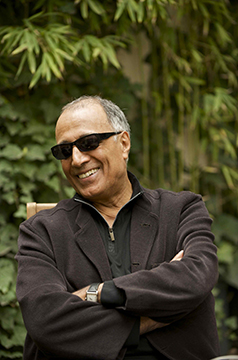
Figure 1. Abbas Kiarostami. Photograph by Marion Stalens, Eye Steel Film, 7 April 2010. Licensed under CC-BY-2.0.
KIAROSTAMI, ABBAS (ʿAbbās Kiārostami; b. Tehran, 22 June 1940; d. Paris, 4 July 2016; Figure 1), Iranian filmmaker, photographer, poet, installation artist.
Abbas Kiarostami grew up in a crowded blue-collar household. His childhood coincided with one of the most turbulent political eras in Iran’s modern history, which ended with the ouster of the democratically elected Prime Minister Moḥammad Moṣaddeq in 1953 (see COUP D’ETAT OF 1332 Š./1953). He has referred to his painter/decorator father’s calm demeanor during this period as being one of the two major influences of his early life, along with his growing interest in poetry (Ṣāʾebi).
Abbas Kiarostami’s films and career defy easy classifications. The deceptively simple surface layers of his films belie the depth and complexity of their inner layers. His five-decade long career is distinguished by periods of shifting cinematic experimentation and the variety of artistic endeavors he engaged in. A steady stream of great films in the 1980s and 1990s made him a towering figure of the world cinema, and his early films were re-discovered and recognized in numerous retrospectives of his work across the world. Phillip Lopate, an American film scholar once noted, “We live in the Age of Kiarostami, as once we did in the Age of Godard” (Thomson, pp. 561-62), a celebratory nod to Kiarostami’s cinematic influence and an acknowledgment of his films as reflections of our shared humanity.
Kiarostami developed an interest in painting in high school and pursued a major in graphic arts at the Faculty of Fine Arts of the University of Tehran (see FACULTIES OF THE UNIVERSITY OF TEHRAN ii) in 1960. It took him thirteen years to graduate since he had to work to support himself (Bahārlu, p. 14). His early jobs included a stint as a traffic cop (an experience that served him well later in making the documentaries Be tartib yā bedun-e tartib ‘Orderly and disorderly’ [1981] and Hamšahri ‘Fellow citizen’ [1983]) and many years of working for advertising agencies that resulted in the production of numerous commercials. He began his film career by designing title sequences for feature films, most notably the epoch-making Masʿud Kimiāiʾi’s Qeyṣar (1969).
In 1970, Kiarostami was invited to start a filmmaking department at the Institute for the Intellectual Development of Children and Young Adults (KĀNUN-E PARVAREŠ-E FEKRI-E KUDAKĀN VA NOWJAVĀNĀN), commonly known as Kānun in Iran. His short film Nān o kuča (Bread and the alley, 1970), about a silent confrontation between a small boy on his way home and an unfriendly dog in a quiet alley, was the first of a series of films for children that helped train Kiarostami himself as a filmmaker. The string of films he made at Kānun over two decades before and after the revolution established him as an artist with a knack for making films for children. However, the reputation may have deprived him of the recognition his Iranian New Wave contemporaries were enjoying as elite filmmakers whose sophisticated films appealed to discerning cineastes. He was almost invisible before the revolution and had to wait for more than a decade for his films to start shining in international film festivals.
Kiarostami’s most noteworthy pre-revolutionary films included Mosāfer (The Traveler; 1974), Gozāreš (The Report; 1977) and Qażiya, šekl-e avval, šekl-e dovom (Case no. 1, case no. 2; 1979). Mosāfer, his first feature-length film after three shorts, follows the travails of a determined provincial schoolboy who dreams of going to Tehran to watch a national soccer match. He fights insurmountable odds to get there only to fall asleep in the stadium and wake up after the match is over. The film reflected the influence that Italian Neorealism had on Kiarostami in the early stages of his film career. He used non-actors in real locations to dramatize the plight of the dispossessed people whose modest dreams could easily turn into a mirage. The film also showed Kiarostami’s inclination to explore themes not typically associated with children films or the mission of Kānun, which encouraged a more optimistic and inspirational outlook in its cultural products. Kiarostami admitted later in his career that he was not particularly interested in making films for children, but his employment at Kānun did not allow him other choices (as told to the present author in the feature-length documentary film “Friendly Persuasion”). That explains why the films he made outside of Kānun were for adult audiences, and the films he made there were not necessarily suitable for child viewers, though they all featured child characters.
Gozāreš, the first film he made outside of Kānun, was a significant departure for Kiarostami, with a cast of major adult characters that included the rare presence of a female lead. It was a dark and uncompromising account of four days in the life of a tax assessor who grapples with professional setbacks and marital strife. The film was also noteworthy for the daring decision Kiarostami made to break with convention and record the film’s sound simultaneously on the set, abandoning the more reliable but less authentic practice of shooting films without sound and dubbing them in post-production, a common practice in Iranian cinema at the time. Despite the accolades the film received, Kiarostami considered Gozāreš his most atypical film due to its confrontational tone and tense scenes that were in sharp contrast with the gentler touch of his later films.
Qażiya, šekl-e avval, šekl-e dovom is a unique film that could have only been made in 1979. Its shooting started during the chaotic days of the revolution, and continued through the transitional period that marked the fall of Moḥammad Reża Pahlavi (r. 1941-79) and the establishment of the Islamic Republic, a rare and brief period of democracy in Iran, as a radical socio-political change was in the making.
Kiarostami used his familiar semi-documentary approach in this absorbing film essay to elicit reactions from twenty elite Iranians to a hypothetical classroom situation: A teacher hears a student banging on his desk each time he turns to blackboard to finish the drawing of a diagram of an ear. He is unable to spot the culprit but expels seven students from the back of the class where the jarring noise comes from and bans them from returning until they expose the identity of the disruptive student. The interviewees’ responses exemplified a nascent revolutionary spirit as they mostly denounce the teacher for his authoritarian way of dealing with the problem and praise the students for their camaraderie and resistance.
The film was banned shortly after it was made, perhaps due to the defiant note on which it ended or the presence of two women among the interviewees who appeared without Islamic attire. Although it is meant to be viewed within the context of the revolutionary days of 1979, the film’s indictment of authoritarianism still resonates in today’s Iran. It also reveals some early signs of self-reflexivity and “distanciation” (emphasizing the presence of the camera, slate, long fades) that increasingly appeared in his post-revolutionary films. The film was made at a time when there was a great deal of debate and existential uncertainty about the future of Iranian cinema. The tumultuous post-revolutionary circumstances in Iran gradually created a closed society and, along with tight censorship of the media, made it more challenging for filmmakers to follow the pre-revolutionary tradition of realist cinema.
Kiarostami was fortunate to be working for Kānun, where the kind of “educational” films he was making provided a safe haven for him to continue his work without the inevitable interruptions that plagued the careers of many of his colleagues. Ḵāna-ye dust kojāst (Where is the friend’s house; 1986), a quintessential Kiarostami film, was a product of this period. It provided an escape for Kiarostami from urban settings into rural environments, and a chance to make leisurely-paced lyrical films that seemed simple and accessible, but infused with deeper layers of meaning. With a title borrowed from a poem by the renowned poet Sohrāb Sepehri (q.v., 1928-80), the film marks Kiarostami’s stylistic transition from the unembellished realism of his pre-revolutionary films to a distinctly Iranian poetic realism that also imbued two films that followed, namely, Zendegi va digar hič (Life and nothing more, also known as “And Life Goes On”; 1991) and Zir-e deraḵtān-e zaytun (Through the olive trees; 1993) and formed an unintended trilogy, identified later by its setting, the vibrant landscapes of the village of Koker and its surroundings in northern Iran.
The film’s simple tale of a village boy trying to find his classmate’s house to return his notebook and save him from possible punishment heralded a fresh wave of thematically and aesthetically original films that defined Iran through a humanistic prism. This alternative view was pleasantly at odds with what the western media had been reporting from the politically turbulent Iran.
The films in the trilogy were not made consecutively. In the five-year interval between Ḵāna-ye dust kojāst and Zendegi va digar hič, Kiarostami made two of his best known films: the documentary Mašq-e šab (Homework; 1989) and the semi-documentary Close Up (1990). Mašq-e šab was inspired by Kiarostami’s own experience with his younger son Bahman’s homework difficulties. He shot a series of sobering interviews with an assortment of schoolboys about the subject and turned the kids’ tales of misery into an astonishing essay on the roots of patriarchy and dictatorship.
Close Up, arguably Kiarostami’s most acclaimed film due to its ranking among the top fifty films of all time in a poll by the prestigious film magazine Sight and Sound in 2012, was a disturbing meditation on identity crisis in a society going through a brutal transition. It re-enacted the trial of a film-obsessed unemployed man, Ḥosayn Sabziān, who had impersonated the filmmaker Mohsen Makhmalbaf (Moḥsen Maḵmalbāf) to deceive a middle class family into financing him to make a “movie” about them. The misguided Sabziān reminds Kiarostami in one scene that he is the Mosāfer’s ambitious boy who was left behind, a remark that also sheds light on Kiarostami’s fascination with unusual characters whose dreams are beyond their reach.
The whole notion of reconstruction of reality through film comes under close scrutiny in Close Up when in its climax scene the imposter and his idol meet and share a ride on a Makhmalbaf’s motorbike. The scene’s audio was repeatedly interrupted due to some technical problems, resulting in the loss of significant portions of the two men’s conversation, as the scene was being shot. Kiarostami’s acceptance of this technical flaw and his refusal to fix it in post-production signaled a clear attempt on his part to cool down the emotional impact of a potentially gripping denouement. He effectively reminds the audience they are just watching a film and invites them to participate in filling in whatever narrative gaps they may perceive due to an apparent technical deficiency. The fact that he shoots the whole scene in long shots helps the audience remain suitably detached and objective.
The elements of meta-cinema gradually took center stage in Kiarostami’s evolving paradigm of cinematic discourse in the 1990s. The imposing presence of the film camera in Mašq-e šab, the self-reflexivity of Close Up, and the ease with which he continued to navigate the lines between documentary and fiction became key signature elements of Kiarostami’s work.
The medium itself also turned into a character in Kiarostami’s films, and his growing interest in exploring its message-shaping characteristics changed him irreversibly as an artist. The stylistic differences in the Koker trilogy’s films are clear manifestations of his new heightened awareness. While the first film is virtually free of meta-cinema, the other two are self-consciously about the process of framing reality in film and its ramifications.
Despite their time gap, what connects the films in the Koker trilogy is how each narrative feeds off of the one preceding it. When a devastating earthquake razed vast areas of northern Iran in 1990, including where Ḵāna-ye dust kojāst had been shot, Kiarostami decided to go back to the village and search for the two real-life brothers he had cast as classmates in the film. As the quest unfolds, Kiarostami juxtaposes the scenes of destruction in the earthquake-stricken areas with the survivors’ resilience and the majesty of the still standing olive trees to compose a celebratory paean to simple joys of life in the face of death and devastation. The director playing Kiarostami’s alter ago is accompanied by his son, as perhaps a reminder of the children they are looking for. They fail to find the kids, ironically as the child protagonist of Ḵāna-ye dust kojāst had similarly failed to find his friend’s house. However, each film ends on a note of altruism. The boy does the homework on behalf of his friend, and the director helps two other boys. In Kiarostami’s humanistic wonderlands, it is the journey itself that matters; even a failed search can produce a measure of moral enhancement.
While the earthquake was the raison d’être of Zendegi va digar hič, one of its scenes inspired the narrative for Zir-e deraḵtān-e zaytun. It involved two survivors of the earthquake and their seemingly romantic liaison, which is debunked in its expanded multiple-take version in the third film. The film continues to display Kiarostami’s fascination with examining the transforming power of film by contrasting the realities of the survivors’ lives and the fiction of the film-within-a-film being shot under the direction of yet another actor playing Kiarostami’s role.
Kiarostami’s vision seemed to grow darker as contemplating death became a central theme in Ṭaʿm-e gilās (Taste of cherry; 1997), about a middle-aged man driving through Tehran’s suburban hills looking for someone to bury him after he commits suicide. The film was a late addition to Cannes Film Festival’s competition line-up after it cleared a few hurdles in Iran, apparently due to the religious sensitivities regarding suicide, but it managed to win the top award Palme d’Or (in a tie with Shohei Imamura’s Japanese film The Eel), arguably the most prestigious award an Iranian film had ever won up until that time.
Taʿm-e gilās’s last scene, after the conclusion of the film’s plot, showed the film crew behind the scene, including the protagonist we had seen in a grave moment earlier, who is offering Kiarostami a cigarette. The epilogue seems to indicate Kiarostami can no longer make films without resorting to some form of “distancing” device. The mechanics of signification becomes more important than what is signified and plot schematics in his films. He consistently attempts to subvert the established codes of filmmaking by imposing limits on himself as a filmmaker and allowing viewers considerable space for charting their own paths as they go through the viewing experience.
Perhaps his growing awareness of the power of media in re-framing and redefining reality explains his engagement in multiple artistic endeavors as poet, photographer, and video installation artist. If he thought one visual medium was not affording him what he needed, he would choose another. If film, video, and photography did not work for him, he would turn to poetry. His first book of haiku style poetry, Walking with the Wind, was published in 2001 and was followed by two other volumes of his own poetry as well as several books on his interpretations of the classic poetry of Hafez, Saʿdi and Rumi (qq.v.).
Poetry seemed to inform the titles of Kiarostami’s films as well. He borrowed a line from the renowned poet Foruḡ Farroḵzād (q.v., 1935-67) for his first film after the Koker trilogy, Bād mā-rā ḵwāhad bord (The wind will carry us, 1999). The film chronicles the journey of a group of men from Tehran to a Kurdish village in Western Iran to cover the funeral of an old lady whose death is believed to be imminent. But she does not die and the wait leaves the group idling away in the village. The film is an exercise in deducing information based on what is implied. Omissions andellipses abound. Some characters are mentioned but never shown. Some are disembodied and represented through their voices. Kiarostami’s typical mise-en-scène extends beyond the loose borders of his open frames. Signs and clues are scattered inside and outside the frames, enabling viewers to make inferences either while watching the film or in subsequent contemplations.
Kiarostami used storytelling devices like slow disclosure, a method of sharing information gradually, but subverted them by not fully disclosing. Ironically, it made for a more realistic discourse, since in real life information is never as neatly packaged as it is in well-constructed fiction films. He started to refer to his films as “half-made” as an acknowledgment of the audience’s role in constructing the other half. By withholding information from viewers, he left them on their own to complete the film as they wished. He created an active viewing climate and empowerd an otherwise passive audience to become his partners in the creative process.
Kiarostami also gradually trimmed the scale of his productions to reduce the filmmaking experience from a collective endeavor to an almost solitary act of artistic expression. The advent of digital technology helped him considerably in his attempts to temper the medium to his own specifications and further develop a minimalist approach.
With 10 (2002) Kiarostami charted a territory he was being accused of neglecting: women’s issues. But he staged the film in one of his old settings: inside a car. Similar to the male protagonist’s journey in Taʿm-e gilās, 10 follows a female driver in ten episodes as she picks up an assortment of female passengers to effectively turn the car into a forum for discussing women’s conditions in Iran.
Kiarostami continued his experimentations with 5 (2003) a compilation of five single-shot vignettes capturing seemingly uneventful scenes on a Caspian Sea beach, 10 on Ten (2004) and Roads of Kiarostami (2005), two manifests of his artistic inclinations and philosophical perspectives, and Shirin (2008) in which he gathered a galaxy of Iranian actresses, old and new, to register their silent reactions to the screening of a romantic movie.
Kiarostami’s growing international cachet as one of the most original talents to appear on the international film scene prompted foreign film outlets to invite him to make films outside of Iran. Despite two modest attempts, ABC Africa (2001) about the Ugandan orphaned children of AIDS victims, and Tickets (2005), part of an episodic film about a train journey in Italy, Kiarostami was hesitant about making a feature-length film abroad. But his increasingly difficult working conditions in Iran finally broke his resistance.
Certified Copy (Copie conforme; 2010), the first of the two films he shot respectively in Italy and Japan, was about the shifting identities and puzzling encounters of a British man and a French woman. It marked Kiarostami’s first collaboration with a major international star, Juliette Binoche, and became his biggest box office success with a global gross of $7,736,632 (“Box Office Mojo,” March 11-June 16, 2011). His Japanese-set film, Like Someone in Love(2012) also revolved around an unusual relationship involving a young student and a retired professor.
Kiarostami’s final film 24 Frames (2017) was a nod to his love for photography. He selected 24 photographs and recreated what he imagined might have preceded and followed the moments they were shot. He then digitally animated those moments into a series of single long shots, visually reminiscent of his haiku poetry. The film also paid homage to the artistic tradition of Persian miniature, where images with extremely detailed and intricate designs afford viewers a measure of freedom of perception. Kiarostami opened a window to a series of soothing views of nature and allowed his audience the rare luxury of viewing them as if they were in a museum.
24 Frames, a summation of aesthetic elements and audience-engagement strategies Kiarostami employed throughout his long career, was a particularly effective example of his reductive experimentations: No plot, no actors, no characters, no dialogue, not even a director to impose a vision through camera movement or editing. The film was shown posthumously at Cannes, one year after Kiarostami’s death from complications of gastrointestinal surgery in 2016.
Although Kiarostami was the most prominent ambassador of Iranian arts in the tumultuous decades following the Islamic revolution, the government authorities and some Iranian film aficionados never fully embraced him. He was frequently accused of catering to the tastes of his foreign admirers and failing his compatriots (Cheshire, p. 36).
Among thousands of people who attended Kiarostami’s funeral, some carried posters reading “The First Welcome, The Last Farewell,” which ironically referred to the gathering as the first real demonstration of appreciation and support for him. Alas, it was also a bitter last goodbye.
See also CINEMA ii. FEATURE FILMS.
Bibliography
Works by Kiarostami
Hamrāh bā bād, trs. Ahmad Karimi-Hakkak and Michael Beard, as Walking with the Wind, Cambridge, Mass., 2001.
Ḥāfeẓ be revāyat-e Kiārostami, Tehran, 2006.
Saʿdi az dast-e ḵištan faryād, Tehran, 2007.
Ātaš dar bād: jozʾi az Kolliyāt-e Šams, 2 vols., Tehran, 2011.
Āb, gozida-yi az ašʿār-e Nimā, Tehran, 2011.
Bād va barg, Tehran, 2011.
Šab-e ʿāšeqān-e bi-del, Tehran, 2015.
Šab nadārad sar-e ḵāb, Tehran, 2015.
ʿAbbās Kiārostami, darhā va yādhā, Tehran, 2016.
Dād az ḡam-e tanhāyi, Tehran, 2018.
Studies.
Silke von Berswordt-Wallrabe and Olliver Fahle, eds., Abbas Kiarostami: die Erzeugung von Sichtbarkeit, Marburg, 2014.
Dario Cecchi, Abbas Kiarostami: Immagine la vita, Rome, 2013.
Alberto Elena, The Cinema of Abbas Kiarostami, London, 2005.
Frédéric Sabouraud, Abbas Kiarostami: Le Cinéma Revisité, Rennes, 2010.
Selected obituaries,
Matthew Abbott, Abbas Kiarostami and Film-Philosophy, Edinburgh, 2017.
Richard Brody, “Postscript: Abbas Kiarostami, 1940-2016,” The New Yorker, July 5, 2016 [http://www.newyorker.com/culture/richard-brody/postscript-abbas-kiarostami-1940-2016].
William Grimes, “Abbas Kiarostami, Acclaimed Iranian Filmmaker, Dies at 76,” The New York Times (4 July 2016) [https://www.nytimes.com/2016/07/05/movies/abbas-kiarostami-iranian-filmmaker-dies.html].
Emily Todd VanDerWerff and Aja Romano, “Why You Should Know Abbas Kiarostami—and His 6 Most Legendary Films,” Vox (6 July 2016) [https://www.vox.com/2016/7/6/12100250/abbas-kiarostami-guide-to-his-best-films].
Elio Ugenti, Abbas Kiarostami: Le Forme Dellimmagine, Rome, 2018.
Additional Studies:
Jamsheed Akrami, Friendly Persuasion: Iranian Cinema after the 1979 Revolution, New York, 2000 (Kino Lorber films; a documentary featuring interviews with Iranian filmmakers).
Idem, A Walk with Kiarostami, New York, 2003 (Kino Lorber films; a documentary shot in Ireland featuring informal chats with Kiarostami).
ʿAbbās Bahārlu, ʿAbbās Kiārostami, Tehran, 2000.
“Box Office Mojo by IMDbPro” (11 March-16 June 2011) [https://www.boxofficemojo.com/release/rl3712517633/weekend/].
Godfrey Cheshire, Conversations with Kiarostami, New York, 2019.
Zāven Qukāsiān, Majmuʿa maqālāt dar naqd va moʿarefi-ye āṯār-e ʿAbbās Kiārostami, Tehran, 1996.
Iraj Karimi, ʿAbbās Kiārostami, filmsāz-e reʾālist, Tehran, 1986.
Phillip Lopate, “Remembering Abbas Kiarostami,” The American Scholar (5 August 2016) [https://theamericanscholar.org/remembering-abbas-kiarostami/#.XlHhjTJKjm4].
Marjān Ṣāʾebi, Ḵānaʾi bā širvāni-ye qermez: goftogu bā ‘Abbās Kiārostami va Āydin Āḡdāšlu, Tehran, 2016.
Mehrnaz Saeed-Vafa and Jonathan Rosenbaum, Abbas Kiarostami, Urbana and Chicago, 2003.
David Thomson, The New Biographical Dictionary of Film, New York, 2014.